
Which Clinical Research Jobs Are Most Exposed to AI? Reddit Debate Across Data, Monitoring, PV, Regulatory & Project Roles
Artificial intelligence is reshaping clinical research employment, but its impact varies dramatically between departments. Clinical data associates face increasing automation of routine queries, pharmacovigilance teams are seeing AI-assisted case processing, and clinical research associates are watching monitoring workflows evolve. Reddit discussions reveal concerns about reduced hiring, disappearing entry-level responsibilities, and the increasing importance of specialized expertise. For professionals considering a clinical research career without experience, understanding these risks can influence which roles, professional certifications, and practical skills deserve investment.
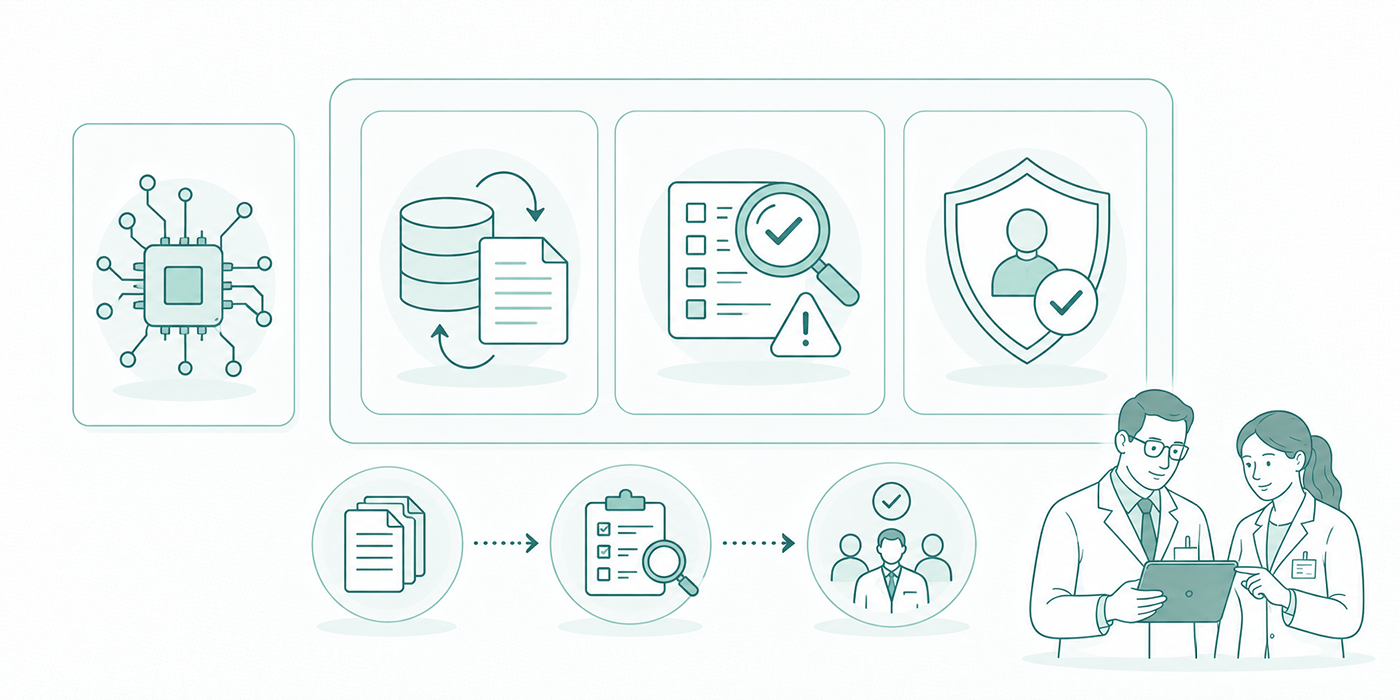
1. Which Clinical Research Jobs Are Most Vulnerable to AI Automation in 2026?
Clinical research positions face different levels of automation exposure depending on how much of their work involves repetitive processing, standardized documentation, predictable decision rules, and independent clinical judgment.
The highest exposure generally appears in positions involving structured data entry, routine case processing, administrative reporting, document classification, and standardized quality checks.
Conversely, positions requiring patient interaction, clinical interpretation, complex investigations, regulatory accountability, and cross-functional leadership tend to have stronger protection against complete automation.
Why Reddit professionals disagree about AI replacing clinical research jobs
In clinical research career discussions, professionals frequently express competing expectations about automation.
Some expect artificial intelligence to reduce demand for entry-level data management, pharmacovigilance, and trial administration positions. Others argue that regulated clinical research creates substantial barriers to fully automated decision-making because documentation, patient safety, and data integrity require defensible oversight.
Both perspectives identify legitimate workforce pressures.
For example, automating first-pass data queries could reduce time spent on repetitive activities while increasing the amount of data one employee can manage. Employers might respond by improving turnaround times, reallocating workers to quality investigations, or reducing future hiring.
Someone evaluating clinical research certification versus experience should recognize that employers may increasingly value professionals who can investigate unusual findings instead of merely processing standardized records.
The three levels of clinical research automation risk
Task automation: Software performs specific activities such as extracting safety case details, drafting monitoring reports, or identifying missing essential documents.
Workforce compression: Organizations maintain existing services with fewer employees because individual professionals can oversee larger workloads.
Role consolidation: Responsibilities previously divided between several job titles become concentrated within fewer positions.
These effects can occur at different rates across departments and employers.
A clinical trial assistant performing document filing may face greater task exposure than a clinical research coordinator managing participant visits.
Similarly, a junior pharmacovigilance associate processing straightforward reports performs different work from a safety scientist conducting complex benefit-risk evaluations.
For candidates comparing clinical research assistant, CTA, and CRC opportunities, the composition of daily responsibilities matters more than a job title alone.
Five indicators of high AI exposure
Evaluate any position using these questions:
Standardization: Does most of the work follow consistent templates and predefined procedures?
Digital availability: Can software access the inputs without additional human interaction?
Decision complexity: Are most decisions based on fixed rules rather than contextual assessment?
Verification requirements: Can automated results be checked quickly and reliably?
Stakeholder dependence: Does the work require direct communication, judgment, persuasion, or accountable leadership?
Positions scoring highly on standardization and digital availability, with relatively little judgment-intensive work, are stronger candidates for automation.
Professionals studying ICH E6(R3) career expectations should pay particular attention to quality management and risk-proportionate oversight.
Those competencies help distinguish professionals capable of supervising automated workflows from employees performing activities that software can increasingly support.
| Clinical Research Jobs & AI Exposure: 30-Role Decision Matrix (2026) | ||||
|---|---|---|---|---|
| Clinical Research Role | AI Exposure | Tasks AI Can Automate | Human-Critical Responsibilities | Best Career Defense |
| 1. Clinical Data Entry Associate | Very High | Transcription, field validation | Source discrepancy investigation | Learn EDC validation |
| 2. Clinical Data Associate | High | Query generation, routine checks | Data error investigation | Master discrepancy management |
| 3. Clinical Data Manager | Moderate | Edit-check drafting, reports | Database quality decisions | Develop data governance expertise |
| 4. Clinical Data Standards Specialist | Moderate | Mapping suggestions | Standards interpretation | Learn CDISC and validation |
| 5. Statistical Programmer | Moderate–High | Code drafting, table generation | Statistical implementation and QC | Strengthen SAS/R validation |
| 6. Biostatistician | Moderate | Routine analysis support | Study design, estimands, inference | Own statistical strategy |
| 7. Central Monitoring Analyst | High | Anomaly detection, risk scoring | Clinical risk investigation | Master risk-based monitoring |
| 8. Clinical Research Associate | Moderate | Visit reports, tracking, reminders | Site oversight and escalation | Build complex monitoring expertise |
| 9. Senior CRA | Low–Moderate | Documentation, trend analysis | Major site remediation | Lead CAPA and inspections |
| 10. Monitoring Report Reviewer | High | Completeness and consistency checks | Substantive quality assessment | Develop risk-focused review |
| 11. Clinical Research Coordinator | Low–Moderate | Scheduling, prescreening assistance | Participant coordination | Master site operations |
| 12. Clinical Research Assistant | Moderate | Administrative support, data entry | Participant logistics | Gain supervised trial experience |
| 13. Clinical Trial Assistant | High | Filing, tracking, routine reporting | Document reconciliation | Learn trial oversight processes |
| 14. TMF Specialist | High | Indexing, classification, QC flags | Inspection readiness | Master document governance |
| 15. Site Feasibility Analyst | High | Site scoring, questionnaire review | Operational capacity verification | Develop feasibility expertise |
| 16. Patient Recruitment Specialist | Moderate | Matching, outreach segmentation | Participant communication | Build recruitment and retention skills |
| 17. PV Case Processing Associate | Very High | Case intake, extraction, coding suggestions | Case assessment and quality review | Master complex ICSR evaluation |
| 18. Drug Safety Specialist | Moderate–High | Narrative drafting, duplicate detection | Complex safety assessment | Develop safety compliance expertise |
| 19. Safety Signal Scientist | Moderate | Signal screening, prioritization | Benefit-risk interpretation | Strengthen signal evaluation |
| 20. PV Quality Auditor | Low–Moderate | Trend analysis, evidence retrieval | Audit findings and CAPA | Build inspection expertise |
| 21. Regulatory Affairs Associate | Moderate–High | Document preparation, checks | Regulatory interpretation | Master regional regulations |
| 22. Regulatory Affairs Manager | Moderate | Drafting, intelligence searches | Submission strategy | Develop authority interaction skills |
| 23. Regulatory Medical Writer | Moderate–High | First drafts, standardized sections | Scientific interpretation | Master evidence traceability |
| 24. Regulatory Submissions Specialist | High | Publishing and assembly checks | Submission exception handling | Learn eCTD lifecycle management |
| 25. Clinical Project Coordinator | High | Minutes, trackers, status reports | Escalation coordination | Develop operational decision skills |
| 26. Clinical Trial Manager | Moderate | Dashboards, risk summaries | Cross-functional decisions | Build governance leadership |
| 27. Clinical Project Manager | Moderate | Forecasting, schedule scenarios | Budget and delivery decisions | Master recovery planning |
| 28. Clinical Trial Budget Analyst | High | Reconciliation, routine forecasting | Contract exception analysis | Learn financial risk management |
| 29. Medical Monitor | Low | Safety summaries, trend detection | Clinical safety judgment | Strengthen medical oversight |
| 30. Principal Investigator | Low | Administrative analytics | Participant safety and trial oversight | Strengthen GCP accountability |
2. Clinical Data Management vs CRA Monitoring: Which Jobs Will AI Transform First?
Clinical data management and clinical monitoring represent two distinct models of AI disruption.
Clinical data professionals work extensively with structured electronic records, programmed validation rules, and recurring data-cleaning activities. Clinical research associates combine digital review with site communication, investigation, risk assessment, and regulatory oversight.
This distinction affects both hiring demand and long-term career development.
Clinical data management: the greatest threat is workforce compression
Clinical data associates traditionally review electronic case report forms, identify missing values, raise queries, reconcile inconsistencies, and verify data before database lock.
Many of these activities are suitable for partial automation.
A system can identify mismatched dates, incomplete adverse-event records, unexpected laboratory values, or discrepancies between related datasets.
The more important question is what happens after the software identifies a problem.
Consider a patient whose electronic case report form contains an unexpected laboratory result. An automated check flags the value. A knowledgeable data professional must determine whether the issue reflects incorrect transcription, a legitimate clinical abnormality, a unit conversion error, or a protocol-defined exception.
Each possibility requires different follow-up.
This is why professionals who develop data quality and investigation expertise may become more valuable as routine processing becomes faster.
The major employment concern is reduced demand for routine production capacity. An organization that previously required numerous employees to perform first-pass reviews may eventually allocate a larger proportion of that work to automated systems.
For candidates encountering the clinical research entry-level experience barrier, this could make technically limited entry positions more competitive.
Higher-value capabilities include:
EDC edit-check development and testing.
Clinical data standards and mapping.
Discrepancy root-cause investigation.
Medical coding reconciliation.
Data review specifications.
Database lock readiness.
Data integrity and audit-trail evaluation.
Statistical programming: AI-generated code introduces validation challenges
Statistical programmers face increasing exposure in code drafting, repetitive table generation, standardized listings, and routine programming documentation.
However, clinical trial statistical outputs require far more than code that successfully executes.
AI-generated programming can contain incorrect treatment assignments, population definitions, missing-data assumptions, or denominator calculations.
Even a small error can materially affect the interpretation of trial results.
Professionals who understand statistical analysis plans, CDISC standards, independent validation, and reproducibility are better positioned than programmers relying primarily on code generation.
The strongest career strategy combines programming fluency with the ability to identify errors that automated code review may overlook.
CRA monitoring: automation will affect documentation before complex oversight
Clinical research associates perform several activities that AI can support efficiently.
These include report drafting, outstanding-action tracking, document completeness checks, visit scheduling, and centralized identification of potential quality concerns.
Yet a CRA investigating a repeated informed-consent error must establish what happened, determine whether participants were affected, communicate with responsible site personnel, and escalate findings appropriately.
These responsibilities depend on clinical context, organizational procedures, and judgment.
Professionals developing risk-based monitoring expertise, clinical trial data verification skills, and remote and on-site monitoring capabilities can strengthen their position.
Understanding site monitoring procedures also helps professionals recognize where automation can support operational quality without eliminating necessary oversight.
Why ICH E6(R3) matters to AI adoption
ICH E6(R3) emphasizes proportionate approaches to quality management, reliable trial results, and oversight appropriate to risks affecting participant protection and data reliability.
These principles are relevant to automation because sponsors and investigators must maintain appropriate control over activities performed using technology.
The guidance itself does not establish predictions about AI-related job losses.
Professionals familiar with ICH E6(R3) career implications, investigator GCP responsibilities, and clinical trial quality management gain a clearer understanding of what responsible automation must preserve.
For professionals planning to become a CRA without previous monitoring experience, this creates a concrete development priority: learn how monitoring findings lead to meaningful decisions.
Career takeaway: Routine data processing and monitoring administration face substantial automation potential. Investigative oversight, quality decisions, and defensible clinical interpretations provide stronger long-term differentiation.
3. Will AI Replace Pharmacovigilance and Regulatory Affairs Professionals?
Pharmacovigilance and regulatory affairs are especially important in the AI employment debate because both rely heavily on documentation, structured workflows, and specialized regulations.
However, the consequences of incorrect outputs create strong requirements for quality control and expert oversight.
Pharmacovigilance: routine case processing faces substantial automation pressure
Individual Case Safety Report processing frequently involves intake, information extraction, completeness checking, terminology coding, duplicate identification, narrative preparation, and quality review.
Modern AI systems can assist with several of these activities.
For example, software may extract medication names, event descriptions, treatment dates, and reporter information from a source document. It may also suggest coding terms and flag missing case details.
The difficult work involves determining whether extracted information accurately reflects the report.
A case may contain multiple suspected medications, inconsistent onset dates, incomplete follow-up information, or complex medical terminology.
These situations require careful evaluation.
For professionals considering pharmacovigilance careers in 2026, the central issue is whether their role will involve only standardized case processing or provide opportunities for more advanced safety assessment.
The greatest automation exposure appears in repetitive intake and documentation tasks.
More specialized activities include:
Complex ICSR evaluation.
Safety signal assessment.
Aggregate safety reporting.
Benefit-risk evaluation.
Safety database quality oversight.
Pharmacovigilance inspections.
Regulatory compliance assessment.
Developing skills in clinical trial safety monitoring, global pharmacovigilance compliance, and PV audit preparation can support progression into responsibilities requiring broader expertise.
What Reddit discussions reveal about pharmacovigilance automation
Professional discussions frequently highlight three concerns: routine production tasks becoming increasingly automated, uncertainty surrounding junior hiring, and limited time for existing workers to develop advanced technical skills.
Some professionals also observe that AI-related work is being integrated into established safety operations and systems teams rather than consistently appearing under newly created job titles.
This creates an important distinction between demand for AI-related expertise and demand for employees with AI in their job title.
A pharmacovigilance specialist responsible for evaluating automated case-processing errors may perform important technology-related work while retaining a traditional safety job title.
Anyone researching whether AI will replace pharmacovigilance positions should consider this changing distribution of duties.
For beginners exploring pharmacovigilance jobs without experience, understanding case-processing fundamentals remains important.
A stronger development plan also includes medical terminology, regulatory reporting requirements, quality review, and complex case interpretation.
Regulatory affairs: document preparation is more exposed than regulatory strategy
Regulatory professionals prepare submissions, interpret requirements, coordinate labeling, maintain regulatory documentation, and communicate with health authorities.
AI can accelerate document preparation, regulatory intelligence searches, submission formatting, and comparison of guidance materials.
However, applying regulatory requirements to a specific development program requires expertise.
A system might retrieve an appropriate regulatory document but fail to recognize that its recommendations apply to a different therapeutic product, development stage, or jurisdiction.
Regulatory professionals must verify applicability and defend consequential decisions.
Understanding IND and NDA submission requirements becomes especially important for workers seeking to progress beyond routine document production.
The strongest regulatory careers increasingly combine document expertise with strategy, clinical evidence interpretation, submission planning, and risk assessment.
Medical writing: AI reduces drafting effort but increases the importance of verification
Medical writers often work with standardized document structures.
AI can assist with first drafts, literature summaries, formatting, and synthesis of structured source material.
Yet clinical study reports, regulatory summaries, and safety narratives require accurate interpretation of underlying evidence.
An automated draft might overstate efficacy, overlook clinically important limitations, or incorrectly connect statistical findings to clinical conclusions.
A skilled medical writer must assess these problems using traceable sources.
Professionals trained in clinical trial data integrity and ethical clinical research conduct possess relevant foundations for understanding why documentation accuracy matters.
Medical writing may therefore experience substantial productivity changes even when experienced scientific reviewers remain essential.
For clinicians comparing medical monitor and medical science liaison careers, advanced scientific interpretation and clinical judgment remain valuable differentiators.
Career takeaway: Pharmacovigilance case processing and regulatory document production face significant automation exposure. Safety assessment, regulatory strategy, evidence verification, and quality governance offer more defensible specialization opportunities.
What Is Your Biggest AI Career Risk in Clinical Research Right Now?
Select your biggest concern to see a practical career action.
4. Are Clinical Project Managers, CTMs, and Site Coordinators Safer From AI?
Clinical project management and site operations illustrate why career security depends heavily on the specific responsibilities a professional performs.
AI can automate substantial amounts of reporting, forecasting, administrative tracking, and scheduling. However, clinical trial delivery also requires negotiation, operational judgment, participant communication, and accountable decisions involving multiple stakeholders.
These differences create distinct exposure levels within the same department.
Clinical project coordinators: administrative responsibilities face greater pressure
Clinical project coordinators frequently update study trackers, distribute meeting minutes, request progress updates, consolidate status reports, and monitor deliverable completion.
Many of these activities involve information already available within digital project management systems.
AI-supported platforms can identify overdue milestones, summarize outstanding responsibilities, and generate routine reports from structured project data.
A coordinator whose position revolves around moving information between systems may consequently face greater workforce pressure.
Career resilience improves when the coordinator can investigate missed deadlines, identify underlying operational problems, coordinate stakeholders, and escalate issues appropriately.
Professionals who understand clinical trial timelines and milestone management are better prepared to move from administrative reporting into operational support with greater decision-making value.
Clinical trial managers: interpreting problems matters more than reporting them
Clinical trial managers oversee study execution across sites, monitoring teams, vendors, recruitment activities, and operational deliverables.
AI can help identify enrollment trends, analyze monitoring findings, and forecast delays.
Consider a multicenter trial where software predicts enrollment will finish eight weeks behind schedule.
The forecast identifies a problem, but management must determine its cause.
Possible explanations include restrictive eligibility criteria, inadequate site resources, competing trials, slow participant identification, or differences between projected and actual patient populations.
Each cause requires a different response.
A CTM must evaluate available options, coordinate with responsible stakeholders, and determine whether intervention is feasible within protocol, budget, and operational constraints.
These responsibilities reward professionals skilled in clinical trial quality management, research project leadership, and trial milestone management.
For professionals considering a CRA-to-clinical-trial-manager transition, the ability to resolve cross-site problems provides stronger advancement evidence than experience producing monitoring documentation alone.
Clinical project managers: complex trade-offs resist straightforward automation
Clinical project managers work across budgets, staffing, vendors, timelines, risk management, and sponsor expectations.
AI can improve financial forecasts and operational visibility, but project recovery involves decisions with consequences for multiple departments.
Suppose a study experiences rising monitoring costs while site enrollment is falling.
The project manager must consider whether additional monitoring resources are justified, whether vendor agreements require amendment, and whether operational changes will affect subsequent study milestones.
These decisions require contextual understanding, commercial judgment, and communication.
A professional experienced in clinical trial budget management, cross-functional team leadership, and clinical project close-out develops broader responsibilities than administrative project reporting.
The critical distinction is whether the professional owns project decisions or primarily prepares information for someone else to interpret.
Clinical research coordinators: direct patient responsibilities provide resilience
Clinical research coordinators typically manage study visits, participant communications, protocol-required logistics, regulatory documentation, and operational coordination.
Automation can support visit scheduling, eligibility prescreening, participant reminders, and administrative data entry.
However, participants present complex circumstances that require real-time human interaction and appropriate clinical escalation.
A participant may experience unexpected symptoms, misunderstand study instructions, or require changes to a scheduled visit.
Coordinators must respond within their training and delegated authority while maintaining protocol compliance and appropriate participant protection.
This makes patient retention expertise, protocol adherence, and investigator oversight knowledge important career assets.
Professionals developing clinical trial site operations skills can strengthen their understanding of how individual site activities affect broader study quality.
For coordinators exploring a CRC-to-clinical-trial-manager pathway, documented experience resolving operational problems can become a valuable foundation for advancement.
Which clinical operations roles offer stronger career resilience?
Roles involving substantial human interaction, accountability, and complex decisions generally offer stronger protection against complete automation.
Clinical research coordinators, experienced CRAs, clinical trial managers, and clinical project managers often retain responsibilities requiring these capabilities.
However, their administrative workloads may still shrink significantly.
Workers should therefore evaluate how much of their employment value comes from investigating problems, coordinating complex activities, and making reliable decisions.
Career takeaway: Clinical operations professionals can improve their long-term prospects by progressing from report preparation toward documented ownership of quality, operational risk, and study delivery outcomes.

5. How to Future-Proof Your Clinical Research Career Against AI: A Practical 90-Day Plan
Professionals concerned about AI-driven workforce changes need a development strategy based on demonstrable competencies.
Generic AI awareness offers limited differentiation if employers can provide basic software training to existing employees.
More meaningful career protection comes from combining clinical research expertise with the ability to evaluate automated outputs, investigate exceptions, maintain compliance, and solve operational problems.
Days 1–15: Audit your responsibilities for automation exposure
Begin by listing your recurring work activities.
Separate them into four categories:
Routine administrative work.
Structured technical processing.
Judgment-intensive investigation.
Stakeholder communication and decision-making.
Estimate how much time each category consumes.
For example, an employee spending most of the week preparing standardized reports has a different exposure profile from someone investigating significant safety or data-integrity issues.
Identify the tasks where automation could reduce manual effort and the responsibilities where deeper expertise would increase your value.
For professionals choosing their first clinical research position, this assessment can reveal whether a role offers useful technical development or mainly repetitive administrative work.
Days 16–30: Strengthen regulatory and quality foundations
Focus on the requirements that govern reliable clinical research.
These include GCP principles, data integrity, participant safety, essential documentation, protocol compliance, audit trails, and risk management.
AI outputs can contain incorrect statements, fabricated references, omitted details, or inappropriate interpretations.
Clinical research professionals must understand how to detect these issues and document corrections.
Evaluate GCP certification options based on relevance to your intended role, and review ICH E6(R3) training expectations.
Understanding ethical conduct and participant safety is particularly important when using technology-supported workflows.
Days 31–45: Develop an advanced skill connected to your role
Select one specialization that moves beyond routine processing.
For clinical data professionals, useful areas include EDC validation, edit-check specifications, discrepancy investigation, and database quality oversight.
For CRAs, prioritize risk-based monitoring, clinical trial data verification, and protocol deviation investigations.
For pharmacovigilance professionals, focus on safety signal evaluation and monitoring, regulatory compliance, and quality audit preparation.
For project professionals, build stronger capabilities in milestone recovery, budget planning, and cross-functional leadership.
Days 46–60: Create a practical proof-of-skill portfolio
Employers benefit from seeing evidence of technical judgment.
Develop simulated case exercises using fictional information or materials you have explicit permission to use.
A CRA candidate could create a monitoring scenario containing consent discrepancies, missing delegation documentation, and delayed safety reporting. The exercise should explain how each issue would be investigated, escalated, and documented.
A pharmacovigilance candidate could review a synthetic adverse-event case and demonstrate how incomplete information, coding ambiguity, and reporting obligations would be assessed.
A data management candidate could develop a mock edit-check specification and explain how to identify inappropriate query triggers.
A project management candidate could build a fictional enrollment recovery plan comparing alternative interventions, budgets, and operational risks.
These exercises can help address the entry-level research experience challenge.
Clearly identify simulated projects as training work rather than actual professional experience.
Days 61–75: Learn to evaluate AI-generated work
Practice reviewing automated outputs for accuracy, completeness, traceability, and compliance.
For example, use approved or synthetic information to evaluate an AI-generated monitoring summary against the underlying fictional visit notes.
Identify omitted findings, unsupported statements, incorrect classifications, and missing follow-up actions.
A PV professional could apply a similar approach to a synthetic case narrative.
A regulatory professional could verify a generated summary against the current text of the relevant guidance.
This demonstrates the ability to supervise technology-supported workflows.
Never upload confidential sponsor documents, identifiable patient information, unpublished clinical data, or other restricted materials into unapproved AI systems.
Understanding the principles behind clinical trial data integrity and regulatory quality management supports responsible evaluation.
Days 76–90: Position yourself for advancement
Translate your development into credible career evidence.
Update your resume to emphasize investigation, validation, quality improvement, compliance, and operational problem-solving.
Prepare interview examples explaining how you identified a problem, evaluated evidence, selected an appropriate response, and documented the outcome.
Ask employers whether their clinical research teams use automated systems for data management, safety processing, monitoring, or project reporting.
Also ask how staff are trained to review and correct automated outputs.
Candidates comparing site, CRO, and sponsor career opportunities should examine the responsibilities and development opportunities available within each organization.
For established employees, consider progression into quality assurance, risk-based oversight, technical validation, safety assessment, regulatory strategy, or clinical trial management.
Those pursuing CRA-to-CTM advancement should demonstrate cross-site operational judgment.
Those exploring pharmacovigilance specialization should emphasize safety expertise and quality-focused responsibilities.
The goal is to become capable of managing increasingly sophisticated workflows while retaining responsibility for the decisions that matter.
Career takeaway: Strong clinical research careers will increasingly depend on technical literacy, domain expertise, quality judgment, and measurable contributions to patient safety and trial reliability.
6. FAQs: AI Automation, Clinical Research Job Security, and Future Career Opportunities
-
Roles involving repetitive, standardized digital processing face the greatest task-automation exposure. These include clinical data entry, routine data-query management, pharmacovigilance case intake, TMF document classification, regulatory publishing support, and administrative project coordination.
Actual job losses depend on employer adoption, validation costs, and workforce decisions.
For candidates comparing entry-level clinical research jobs, positions providing supervised investigation, quality review, and regulatory experience may offer stronger long-term development.
-
AI can automate portions of monitoring documentation, site tracking, scheduling, and administrative review.
However, CRAs and CRCs perform responsibilities requiring participant interaction, site oversight, investigation, and communication.
Professionals strengthening clinical trial monitoring skills, protocol deviation management, and patient retention strategies can build expertise in activities requiring contextual judgment.
-
Pharmacovigilance remains a viable career field, although repetitive case-processing responsibilities face significant automation potential.
Specialized areas such as signal detection, complex case evaluation, aggregate safety assessment, and regulatory compliance require deeper expertise.
Candidates should evaluate the pharmacovigilance career outlook and understand AI-related drug safety automation risks before selecting a specialization.
-
AI can assist project managers with scheduling, forecasting, dashboards, and routine reporting.
However, managing clinical trials involves financial decisions, vendor negotiations, operational risk, stakeholder coordination, and regulatory responsibilities.
Professionals experienced in clinical research project quality management and clinical trial leadership develop capabilities that extend beyond administrative project tracking.
-
Clinical data management continues to offer opportunities in data quality, system validation, standards implementation, and database oversight.
Beginners should develop expertise beyond routine data entry and straightforward query processing.
Understanding the clinical research entry-level hiring problem can help candidates prioritize roles offering practical technical development.
-
Certifications can remain useful when they establish relevant regulatory knowledge, technical foundations, and professional competence.
Their value depends on employer recognition, curriculum relevance, and the candidate's ability to apply what they have learned.
Professionals comparing clinical research certification ROI should consider whether training prepares them for quality oversight, compliance, and real clinical research responsibilities.
Knowledge of GCP requirements remains especially relevant when assessing technology-supported trial activities.
