Clinical Research Certification Pennsylvania: Everything You Need to Know for 2025–2026
Pennsylvania’s growing life sciences ecosystem has become a central hub for clinical research, hosting thousands of ongoing trials and biotech startups across Philadelphia, Pittsburgh, and Hershey. As demand for qualified CRAs, CRCs, and clinical project managers surges, recognized certification is now a career-defining requirement. This guide breaks down every essential detail about earning your Clinical Research Certification in Pennsylvania (2025–2026) — from training and exams to internship opportunities and salaries — powered by CCRPS’s globally recognized, ICH-GCP and FDA 21 CFR–aligned programs.

1. Understanding Pennsylvania’s Clinical Research Landscape
Pennsylvania ranks among the top five U.S. states for active clinical studies, driven by the University of Pennsylvania Health System, UPMC, and GlaxoSmithKline operations. With 19% projected job growth through 2026, competition for regulated research roles is steep — making CCRPS certification indispensable.
Professionals who earn certification demonstrate proficiency in ICH-GCP, HIPAA, and FDA compliance, equipping them for both on-site and decentralized trials. As seen in other regions such as Clinical Research Certification Utah and Clinical Research Certification Virginia, accreditation from CCRPS opens pathways to higher-paying, sponsor-facing roles.
Pennsylvania Clinical Research Certification Outlook (2025–2026)
| Key Factor | 2025–2026 Data for Pennsylvania |
|---|---|
| Projected Job Growth | 19% increase in CRA/CRC roles |
| Average Annual Salary (CRA I–III) | $82,000–$115,000 |
| Entry-Level Pay | $60,000–$68,000 |
| Top Hiring Cities | Philadelphia, Pittsburgh, Hershey, Allentown |
| Leading Employers | UPMC, Merck, GSK, Penn Medicine |
| Recommended Certification | CCRPS Clinical Research Certification |
| Training Duration | 6–8 weeks (self-paced online) |
| Exam Format | 100-question proctored exam |
| Passing Score | 75% |
| Renewal Cycle | Every 3 years (24 CE credits) |
| Accreditation Standards | ICH-GCP, FDA 21 CFR, HIPAA |
| Remote Work Availability | ~42% hybrid/remote roles |
| Top CRO Recruiters | Parexel, ICON, IQVIA, Labcorp |
| Internship Duration | 8–12 weeks (CCRPS partnerships) |
| Career Pathway | CRC → CRA → Project Manager → Director |
2. How to Earn Your Clinical Research Certification in Pennsylvania
Earning Clinical Research Certification through CCRPS combines academic rigor with hands-on clinical context. The step-by-step process includes:
Enroll in the CCRPS Clinical Research Certification program, which meets ICH-GCP and FDA Part 312 standards.
Complete online modules on ethics, data management, and regulatory reporting.
Pass the 100-question exam to validate applied knowledge.
Apply your training through CCRPS’s internship network in top cities like Pittsburgh and Hershey.
Renew every 3 years by earning continuing education credits through CCRPS courses.
Many professionals also benchmark with Clinical Research Certification Vermont or Clinical Research Certification West Virginia to explore cross-state career expansion.
3. Job Market Insights & Salary Outlook
Pennsylvania’s clinical research salaries outpace the national average, with CRAs earning $82,000–$115,000 and senior research managers exceeding $140,000 annually. The state’s biotech corridor between Philadelphia and Harrisburg has seen an influx of remote CRA positions, offering flexibility and higher pay for CCRPS-certified professionals.
Employers like Merck, Penn Medicine, and Parexel prefer CCRPS graduates for their ICH-GCP proficiency and sponsor-readiness. Job trends mirror those seen in Clinical Research Certification Washington and Clinical Research Certification Wisconsin, highlighting the rising dominance of hybrid roles across major U.S. research states.
What’s Stopping You from Getting Certified in Pennsylvania?
4. Internship & Placement Opportunities
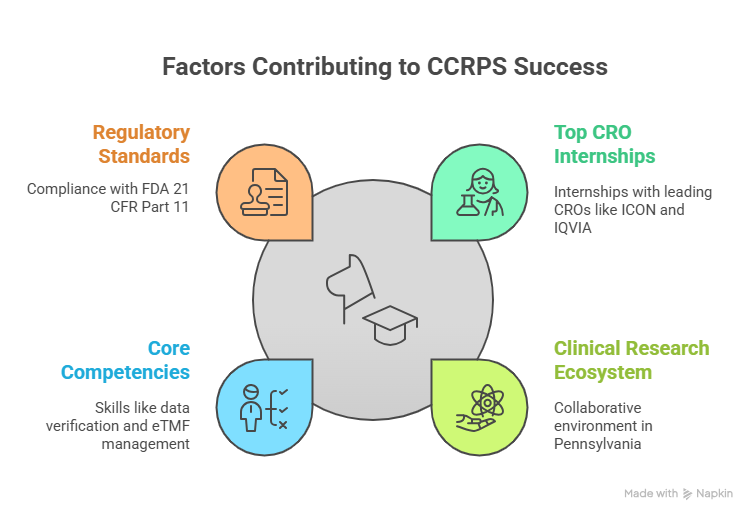
CCRPS helps graduates secure internships with top CROs like ICON, IQVIA, and Parexel, offering structured 8–12 week placements in clinical monitoring, site coordination, and patient documentation.
Pennsylvania’s clinical research ecosystem mirrors the collaborative success of Clinical Research Certification Oregon and Clinical Research Certification Ohio, offering cross-state learning pathways.
Internships through CCRPS allow students to apply core competencies like source data verification, eTMF management, and regulatory document preparation, building employer-ready skill sets aligned with FDA 21 CFR Part 11 standards.
5. Why CCRPS Certification Is the Smartest Choice for Pennsylvania Professionals
CCRPS remains the top choice for Pennsylvania professionals because it provides globally accredited, self-paced learning that matches industry hiring needs. Its certification meets international benchmarks followed by programs like Clinical Research Certification Wyoming and Clinical Research Certification West Virginia.
Graduates often secure roles within 3–6 months of completion, many advancing to CRA II or Project Lead positions within a year. The career ROI makes CCRPS certification one of the highest-value credentials for those entering or transitioning into research operations.
6. FAQs: Clinical Research Certification in Pennsylvania (2025–2026)
-
A bachelor’s degree in life sciences, health, or related fields is ideal. CCRPS accepts applicants with equivalent medical or research experience.
-
Most candidates finish the course in 6–8 weeks, depending on pace.
-
Yes — major employers like UPMC, Penn Medicine, and Parexel accept CCRPS-certified candidates.
-
Absolutely. CCRPS’s platform is fully online, accessible from any device, and globally accredited.
-
Yes. Graduates gain access to CCRPS’s internship portal connecting them with CROs and research hospitals.
-
Three years, renewable through continuing education credits.
-
Entry-level: ~$60K; Mid-level CRA: ~$95K; Senior: $130K+.
