Clinical Research Certification South Dakota: Everything You Need to Know for 2025-2026
South Dakota is quietly emerging as a key hub for clinical research, driven by hospital expansions and biotech investments in Sioux Falls and Rapid City. For professionals entering this growing field, clinical research certification is now a must-have — not just for credibility but to meet ICH-GCP and FDA 21 CFR compliance standards. This guide breaks down everything you need to know about getting certified in South Dakota for 2025–2026, from job outlook to training paths and internship opportunities.

1. Understanding South Dakota’s Clinical Research Ecosystem
Clinical research in South Dakota is expanding faster than ever. With a projected 16% growth in research roles by 2026, opportunities are flourishing for Clinical Research Associates (CRAs) and Clinical Research Coordinators (CRCs) who hold recognized credentials.
The CCRPS Clinical Research Certification offers ICH-GCP–aligned training that’s trusted by hospitals, CROs, and biotech startups. South Dakota’s research sector mirrors neighboring states like North Dakota and Minnesota — both showing how certification accelerates hiring and salary growth.
Professionals certified through CCRPS master core topics such as FDA 21 CFR Part 312, HIPAA privacy, and protocol development. This ensures alignment with hospitals like Sanford Health and Avera Research Institute, which dominate South Dakota’s trial landscape.
South Dakota Clinical Research Certification Outlook (2025–2026)
| Key Factor | 2025–2026 Data for South Dakota |
|---|---|
| Projected Job Growth | 16% statewide increase in CRA/CRC roles |
| Average CRA Salary | $76,000 – $108,000 annually |
| Entry-Level CRC Pay | $54,000 – $62,000 per year |
| Top Hiring Cities | Sioux Falls, Rapid City, Brookings, Aberdeen |
| Common Employers | Avera Research, Sanford Health, CRO partnerships |
| Recommended Certification | CCRPS Clinical Research Certification |
| Course Duration | 6–8 weeks (self-paced online) |
| Exam Requirement | 100-question proctored exam |
| Minimum Passing Score | 75% |
| Renewal Cycle | Every 3 years (24 CE hours) |
| Accreditation Standards | ICH-GCP, FDA 21 CFR, HIPAA |
| Hybrid/Remote Availability | ≈ 42% of CRA roles |
| Top CRO Partners | IQVIA, PPD, Parexel, ICON |
| Internship Duration | 8–12 weeks |
| Career Progression | CRC → CRA → Regulatory Manager → Director |
2. Steps to Earn Your Clinical Research Certification in South Dakota
To build a strong clinical research career in South Dakota, follow these steps:
1. Enroll in an Accredited Course:
Join the CCRPS Clinical Research Certification Program which aligns with FDA and ICH-GCP guidelines.
2. Complete Structured Modules:
You’ll master protocol design, safety management, and data monitoring — essential for roles at major sponsors like Parexel.
3. Pass the CCRPS Exam:
The 100-question proctored test ensures comprehension of global compliance, SOPs, and site management.
4. Apply Learning in Real Trials:
CCRPS provides internship access through CRO partnerships that connect graduates with active Phase I–IV studies.
5. Renew Certification:
Maintain your license every three years through CCRPS continuing education.
Compare these requirements with those in Tennessee and Utah to gauge regional differences.
3. Salary Outlook and Market Demand in South Dakota
Certified CRAs and CRCs in South Dakota earn between $54,000–$108,000, depending on experience and specialization. Salaries spike in oncology and cardiology trials, which are the most active domains statewide.
The CCRPS Clinical Research Certification gives professionals the edge to negotiate better pay with employers like Sanford Health and Avera Research.
For comparison, certified CRAs in North Carolina and Florida can see similar growth patterns.
What’s Holding You Back from Getting Certified in South Dakota?
4. Internship and Placement Opportunities in South Dakota
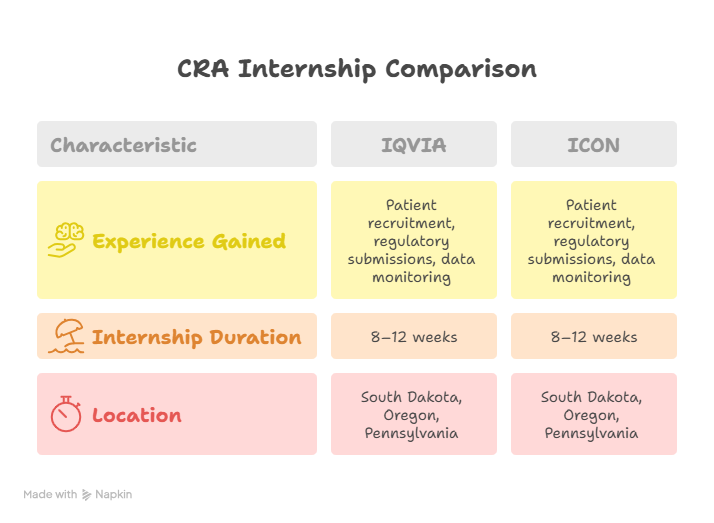
South Dakota offers multiple entry points for aspiring CRAs through partnerships between hospitals and research networks. The CCRPS Internship Portal helps graduates connect with CROs such as IQVIA and ICON for structured placements.
Through these internships, you’ll gain experience in patient recruitment, regulatory submissions, and data monitoring. Many students later transition to full-time CRA roles with firms that also operate in Oregon and Pennsylvania.
Internship durations average 8–12 weeks, providing enough exposure to both site-level and remote monitoring systems.
5. Why CCRPS Is the Best Option for South Dakota Professionals
CCRPS stands out for its FDA-compliant, globally recognized certification model. Unlike traditional academic programs, CCRPS is designed around practical skill development, preparing students for real sponsor audits and protocol adherence.
Its self-paced structure makes it accessible to full-time healthcare workers and life science graduates. Students also benefit from CCRPS’s expansive CRA certification library, which includes guides for Alabama and New York professionals.
6. FAQs: Clinical Research Certification in South Dakota (2025–2026)
-
A bachelor’s degree in life sciences or healthcare qualifies you for CCRPS certification.
-
Typically, 6–8 weeks through CCRPS’s online modules.
-
Yes, CCRPS credentials are recognized by Avera Research, Sanford Health, and regional CROs.
-
Yes — the entire CCRPS program is available online, including exams.
-
Yes, through its internship portal and CRO partnerships across South Dakota.
-
Three years, renewable with 24 continuing education credits.
-
Entry-level pay ≈ $54K; mid-level CRAs earn $90K–$108K; senior roles exceed $130K.
