
Clinical Research Certification New Mexico: Everything You Need to Know for 2025–2026
New Mexico’s clinical research field is growing rapidly, thanks to expanding trial networks, university research centers, and biotech startups. Hospitals like UNM Health and Presbyterian Research are creating demand for certified professionals who understand FDA and ICH-GCP regulations. If you want to thrive in this competitive landscape, a CCRPS Clinical Research Certification is your gateway. This guide breaks down training pathways, salaries, internships, and career growth for professionals seeking certification in New Mexico for 2025–2026.

1. The Importance of Clinical Research Certification in New Mexico
Certification isn’t optional anymore — it’s the standard employers expect. The CCRPS Clinical Research Certification proves mastery of global standards such as FDA 21 CFR, ICH-GCP, and HIPAA.
It prepares professionals for roles that involve data validation, site management, and audit readiness.
You can compare regional growth trends with states like North Carolina, New York, or Oregon. Each shows how certification creates leverage for CRA and CRC positions.
New Mexico Clinical Research Certification Outlook (2025–2026)
| Key Factor | 2025–2026 Data for New Mexico |
|---|---|
| Projected Job Growth | 19 % statewide increase in research positions |
| Average CRA Salary | $75 000 – $105 000 annually |
| Entry-Level Pay | $58 000 – $65 000 per year |
| Top Hiring Cities | Albuquerque, Santa Fe, Las Cruces, Roswell |
| Major Employers | UNM Health, Presbyterian, Lovelace Health Research |
| Recommended Certification | CCRPS Clinical Research Certification |
| Training Duration | 6–8 weeks (self-paced) |
| Exam Type | 100-question proctored test |
| Passing Score | 75 % minimum |
| Renewal Requirement | Every 3 years, 24 CE credits |
| Remote Job Availability | ≈ 45 % hybrid/remote opportunities |
| Top CRO Partners | IQVIA, ICON, Parexel, Syneos Health |
| Internship Duration | 8–12 weeks |
| Career Path | CRC → CRA → Regulatory Manager → Project Lead |
2. How to Earn Your Clinical Research Certification in New Mexico
Step 1: Enroll in an accredited course
Join the CCRPS Clinical Research Certification program designed for both beginners and experienced professionals.
Step 2: Complete training modules
The program covers protocol writing, source documentation, safety reporting, and regulatory ethics.
Step 3: Pass the CCRPS exam
A 100-question online exam evaluates understanding of ICH-GCP and data management.
Step 4: Apply knowledge through internships
CCRPS connects learners to trial sites in New Mexico and other states like Ohio and Oklahoma.
Step 5: Maintain certification
Renew every 3 years by completing 24 continuing-education credits through CCRPS modules.
3. Internship and Placement Opportunities
Through its internship portal, CCRPS places graduates with CROs and hospitals like IQVIA, Syneos, and Presbyterian Research Group. Students gain real exposure to data management systems and monitoring site visits.
You can explore more internship comparisons in South Carolina and Rhode Island.
What’s Stopping You From Getting Certified in New Mexico?
4. Clinical Research Job Market in New Mexico
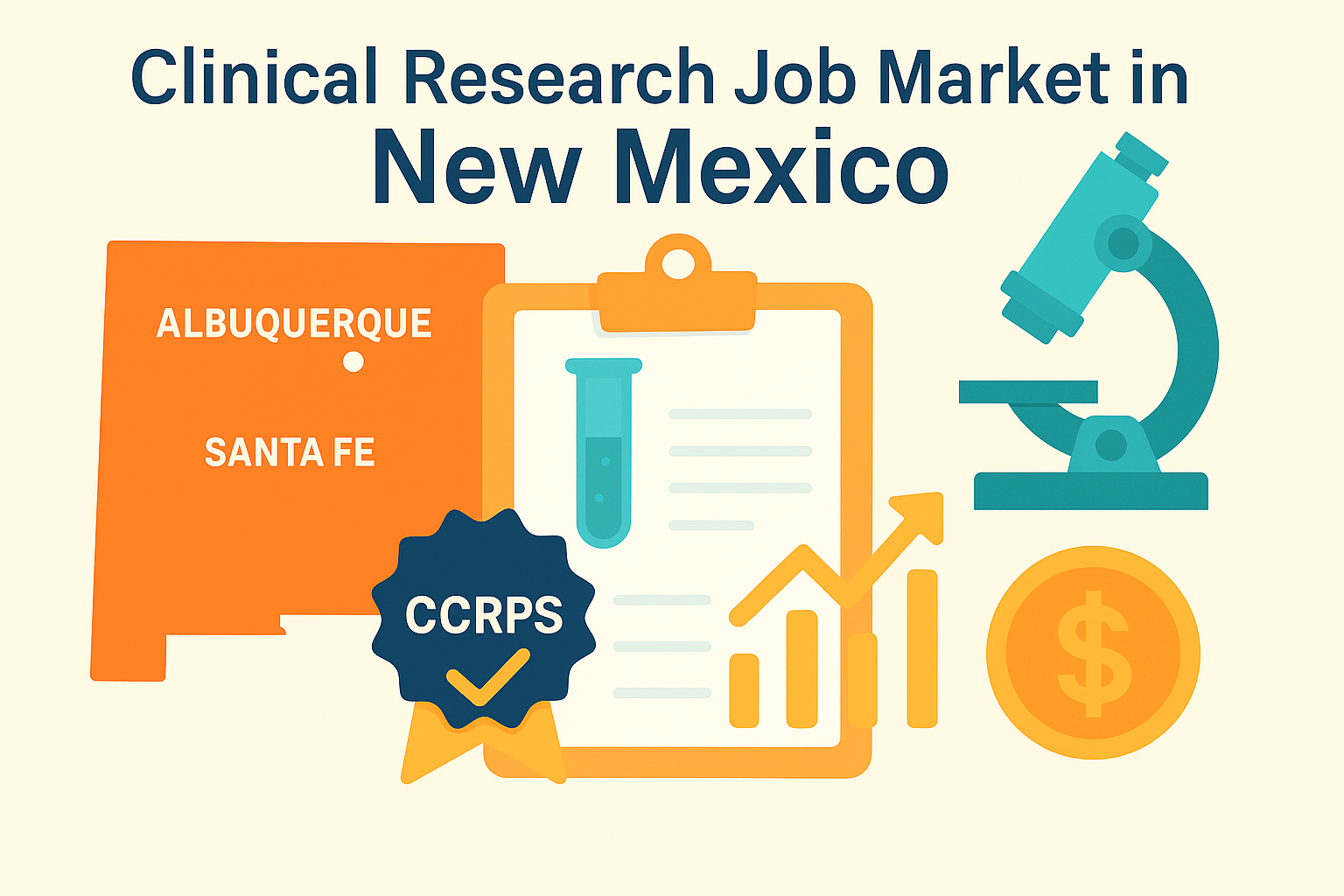
The biotech corridor between Albuquerque and Santa Fe is becoming a hub for sponsored research. With more than 120 active clinical trials, local employers prioritize certified CRAs and CRCs.
Those with CCRPS credentials report higher job placement rates and salaries compared to uncertified peers.
Graduates can also benchmark market demand against Utah or Vermont.
5. Why CCRPS Is the Smartest Choice for New Mexico
CCRPS provides globally accredited programs, trusted by leading CROs and institutions across the U.S.
Graduates consistently advance from entry-level CRC to mid-tier CRA or Regulatory Lead within 12–18 months.
The CCRPS Clinical Research Certification is recognized by employers in New Mexico, Oklahoma, and North Carolina, ensuring career mobility and competitive advantage.
For comparison, view similar guides for West Virginia, Wisconsin, or Washington.
6. FAQs: Clinical Research Certification in New Mexico (2025–2026)
-
Applicants need a bachelor’s degree in healthcare, life sciences, or related fields.
-
It typically takes 6–8 weeks to finish the self-paced course.
-
Yes, CCRPS offers 100 % online training and examination.
-
Yes — graduates gain access to exclusive internship and hiring networks.
-
Each certification lasts 3 years and requires renewal with 24 CE credits.
-
Yes — organizations like Presbyterian Research and UNM Health accept CCRPS credentials.
-
Entry-level CRCs earn around $58K, while CRAs earn between $85K–$105K annually.
