
How Technology is Shaping New Medical Treatments?
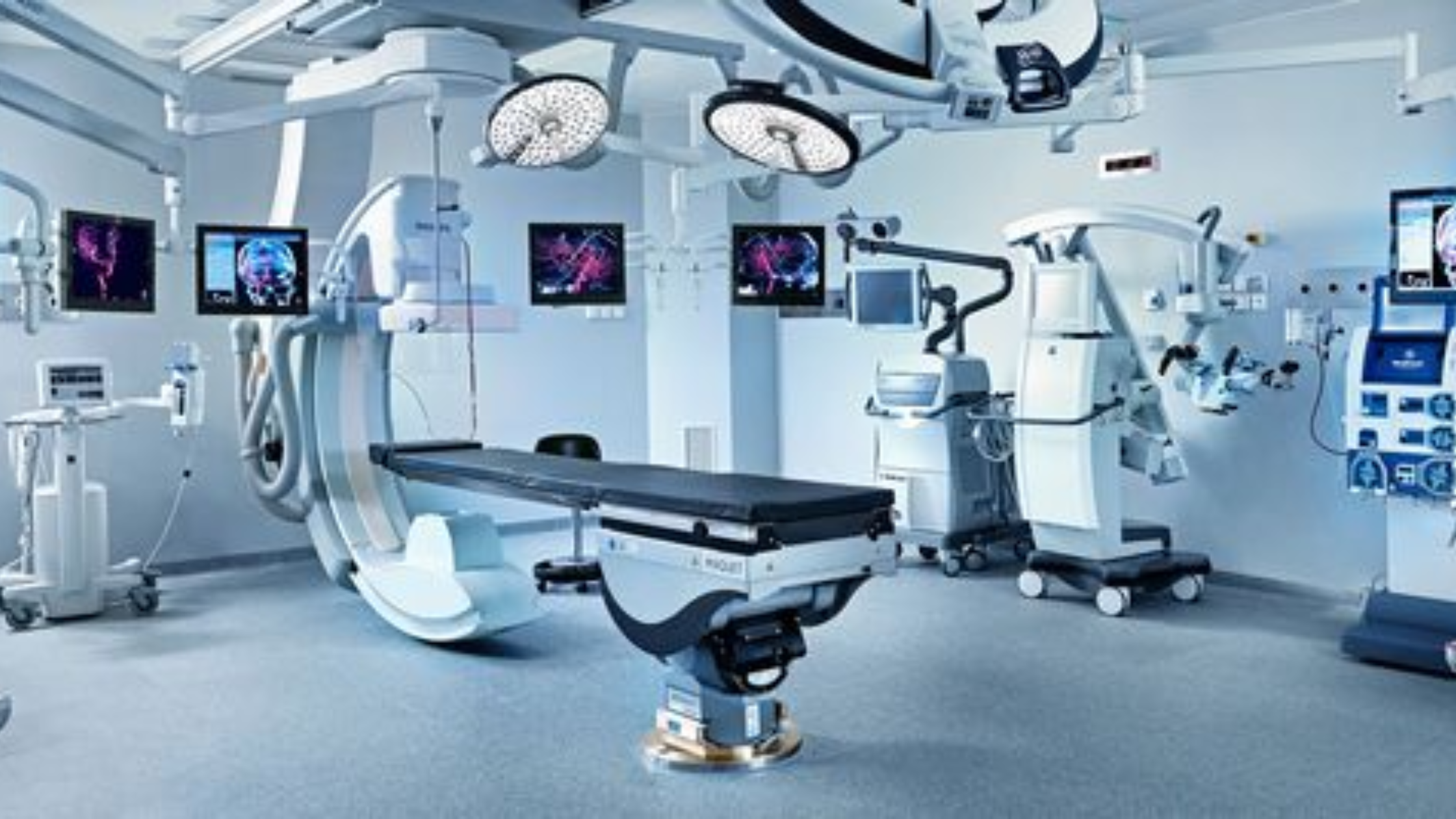
In 2025, the healthcare landscape is undergoing a transformative shift, driven by rapid advancements in technology. Artificial Intelligence (AI), Virtual Reality (VR), and robotics are at the forefront of this revolution, reshaping medical treatments, improving patient outcomes, and enhancing operational efficiency. This comprehensive exploration delves into how these technologies are redefining healthcare delivery and what the future holds.
The Integration of Artificial Intelligence in Healthcare
Revolutionizing Diagnostics and Treatment Planning
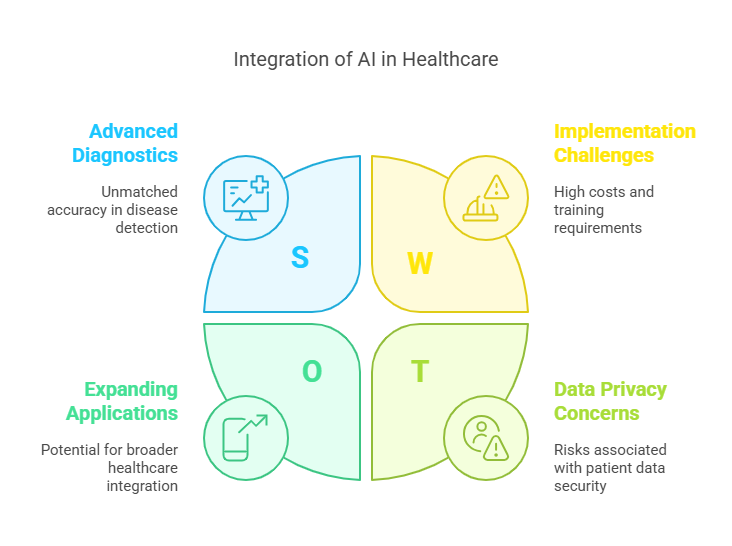
AI has become an indispensable tool in modern medicine, offering unprecedented capabilities in diagnostics and treatment planning. Machine learning algorithms analyze vast datasets to identify patterns, enabling early detection of diseases such as cancer and cardiovascular conditions. For instance, AI-powered imaging systems can detect anomalies in radiographs with remarkable accuracy, assisting radiologists in making precise diagnoses.
Moreover, AI facilitates personalized treatment plans by considering individual patient data, including genetics, lifestyle, and comorbidities. This tailored approach enhances treatment efficacy and minimizes adverse effects.
Enhancing Operational Efficiency
Beyond clinical applications, AI streamlines administrative tasks, reducing the burden on healthcare professionals. Natural language processing algorithms automate documentation, allowing clinicians to focus more on patient care. Predictive analytics optimize resource allocation, ensuring that hospitals are adequately staffed and equipped to meet patient needs.
Virtual Reality: Transforming Medical Training and Patient Care
Immersive Medical Education
VR technology is revolutionizing medical education by providing immersive, interactive training environments. Medical students and professionals can practice complex procedures in a risk-free virtual setting, enhancing their skills and confidence. This hands-on experience is invaluable in preparing practitioners for real-world scenarios.
Pain Management and Rehabilitation
In patient care, VR serves as an effective tool for pain management and rehabilitation. By immersing patients in calming virtual environments, VR can distract from pain and reduce the need for pharmacological interventions. Additionally, VR-based rehabilitation programs engage patients in interactive exercises, promoting adherence and accelerating recovery.

Robotics: Precision and Efficiency in Surgery
Advancements in Robotic-Assisted Surgery
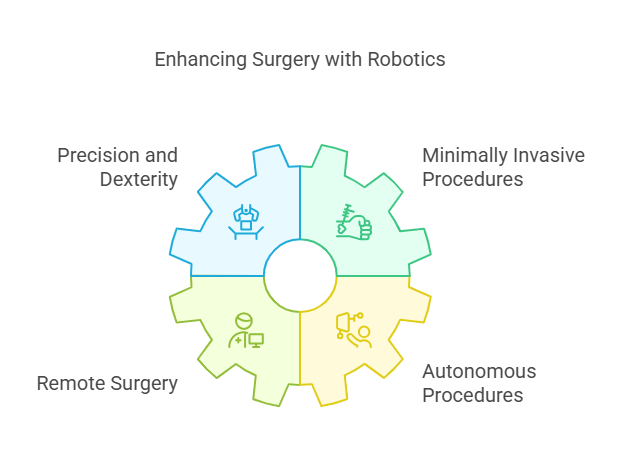
Robotic systems have significantly enhanced surgical precision, allowing for minimally invasive procedures with reduced recovery times. Surgeons operate robotic instruments with high dexterity, performing complex tasks through small incisions. This approach minimizes tissue damage, lowers infection risk, and leads to better patient outcomes.
Remote and Autonomous Procedures
Emerging technologies enable remote surgeries, where specialists can operate on patients from distant locations using robotic systems. This capability is particularly beneficial in providing expert care to underserved or remote areas. Furthermore, research is underway to develop autonomous robotic procedures, where AI guides surgical tasks with minimal human intervention, promising increased efficiency and consistency.
Improving Patient Outcomes and Healthcare Efficiency
Personalized Medicine
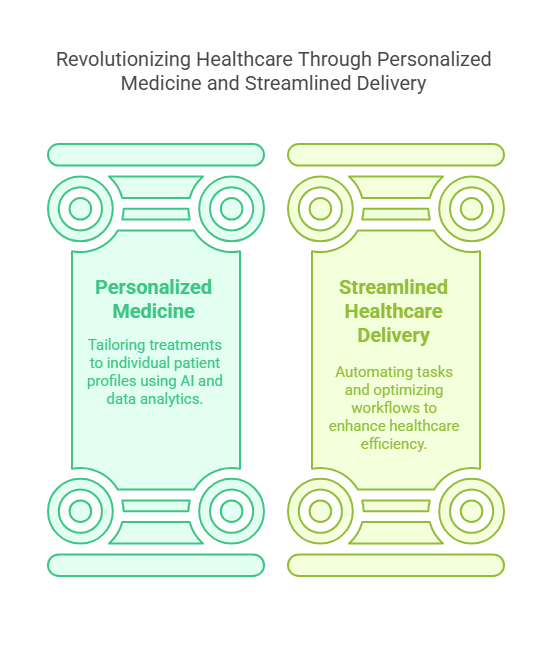
The integration of AI and data analytics facilitates personalized medicine, where treatments are tailored to individual patient profiles. By considering genetic information, environmental factors, and lifestyle, healthcare providers can devise targeted therapies that improve efficacy and reduce side effects.
Streamlined Healthcare Delivery
Technological advancements streamline healthcare delivery by automating routine tasks, optimizing workflows, and enhancing communication among care teams. Electronic health records (EHRs) provide centralized access to patient information, reducing errors and improving coordination. Telemedicine platforms expand access to care, particularly for patients in remote or underserved regions.
Risks Associated with these Technologies
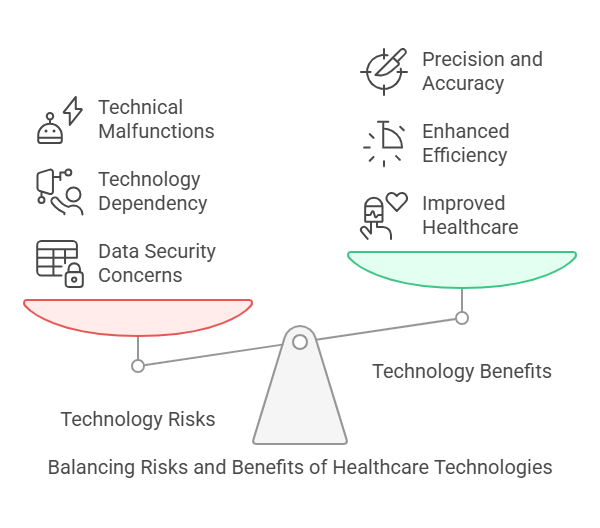
While the advancements in AI, VR, and robotics have significantly improved healthcare, there are some potential risks and challenges.
Data Security Concerns: The reliance on digital systems and AI-powered tools means sensitive patient data is constantly being collected, stored, and transmitted. This increases the risk of cyberattacks, which could expose private health information.
Technology Dependency: Over-reliance on technology might lead to diminished human expertise, especially if healthcare professionals become overly dependent on AI for decision-making, which could be problematic if the technology fails or is flawed.
Technical Malfunctions: Robotics and AI systems are susceptible to malfunctions or errors. If a robotic surgery system or diagnostic AI system fails during a critical moment, it could lead to severe patient outcomes.
Limited Access and Inequality: Not all regions or healthcare settings have the infrastructure to integrate advanced technologies like AI or robotics, which can create disparities in the quality of care between affluent and underserved areas.
Ethical Considerations: The increasing use of AI and robotics in healthcare raises ethical questions, particularly regarding patient consent, the autonomy of AI systems, and the role of human oversight in critical healthcare decisions.
10 Lesser-Known Facts About Technology in Healthcare
AI in Predicting Epidemics: AI algorithms analyze social media and search engine data to predict disease outbreaks before they occur. (Source)
VR for Phobia Treatment: VR exposure therapy effectively treats phobias by gradually exposing patients to their fears in a controlled virtual environment. (Source)
Robotic Exoskeletons: Wearable robotic exoskeletons assist patients with mobility impairments, aiding in rehabilitation and improving quality of life. (Source)
AI in Drug Development: AI accelerates drug discovery by predicting molecular interactions, significantly reducing development time and costs. (Source)
VR in Cognitive Rehabilitation: VR programs are used to rehabilitate cognitive functions in patients with brain injuries or neurological disorders.
Robotics in Elderly Care: Robotic companions provide social interaction and monitor health parameters for elderly individuals living alone.
AI in Radiology: AI enhances radiology by detecting subtle changes in imaging that may be overlooked by the human eye.
VR for Surgical Planning: Surgeons use VR to plan complex surgeries by visualizing patient-specific anatomy in three dimensions.
Robotic Pharmacy Systems: Automated robotic systems in pharmacies accurately dispense medications, reducing errors and wait times.
AI Chatbots for Mental Health: AI-powered chatbots provide immediate mental health support, offering coping strategies and resources.
Related Blogs
How New Medical Treatments Revolutionizing Chronic Disease Management?
What You Need to Know About the Future of Medicine?
Emerging Medical Treatments in 2025
Explore Courses for Clinical Research Career
Courses Available:
Conclusion
In conclusion, technology is playing a pivotal role in reshaping healthcare, with AI, VR, and robotics driving significant advancements in diagnostics, treatment, and patient care. While these innovations bring numerous benefits, such as improved accuracy, personalized treatments, and enhanced operational efficiency, they also present challenges that must be carefully managed. As we move into 2025, the future of healthcare will continue to rely on a balance between cutting-edge technology and ethical, secure, and patient-centered practices. At CCRPS, we remain committed to supporting healthcare innovations that improve outcomes while ensuring safety and accessibility for all.
Frequently Asked Questions (FAQs)
-
AI analyzes vast datasets to identify patterns and anomalies, assisting clinicians in making more accurate diagnoses.
-
Yes, VR is employed in various therapies, including pain management, physical rehabilitation, and mental health treatments.
-
Robotic surgery offers increased precision, smaller incisions, reduced blood loss, and faster recovery times.
-
Technological tools like patient portals and mobile apps empower patients to actively participate in their healthcare.