
How New Medical Treatments Revolutionizing Chronic Disease Management?

Chronic diseases like diabetes, heart disease, and autoimmune disorders affect millions of lives worldwide. As of 2025, over 55% of adults globally live with at least one chronic condition, according to the World Health Organization. However, a wave of innovative medical treatments and technologies is transforming how these diseases are managed. From AI-driven diagnostics to gene editing, the future of chronic care is smarter, faster, and more personalized.
In this blog, we explore the latest breakthroughs in chronic disease treatment, focusing on diabetes, cardiovascular disease, and autoimmune disorders. You'll also discover 10 lesser-known facts, 2025 updates, and answers to common questions.
New Approaches to Diabetes Treatment
Diabetes is no longer just about insulin injections and dietary control. A new wave of treatment strategies is improving long-term outcomes and giving patients more autonomy over their health.
1. Continuous Glucose Monitoring (CGM)
Continuous Glucose Monitors (CGMs) like Dexcom G7 and FreeStyle Libre 3 have become the standard for modern diabetic care.
Key benefits include:
Real-time glucose tracking via sensors placed on the skin
Mobile app integration for data analysis
Custom alerts for hypo- and hyperglycemic episodes
These devices significantly reduce reliance on finger-prick tests and empower patients with instant insights into how food, exercise, and stress affect their glucose levels.
2. Smart Insulin Pens and Pumps
Smart insulin delivery devices such as the Omnipod 5 now offer automated insulin adjustments by integrating with CGMs.
Advantages include:
Algorithm-based dosage calculations
Tubeless and wearable design
Remote monitoring for pediatric and elderly patients
These systems make insulin management more precise, improving both compliance and health outcomes.
3. GLP-1 Receptor Agonists
Originally designed to support gut motility, GLP-1 receptor agonists like Ozempic and Mounjaro are now major players in Type 2 diabetes management.
Notable benefits:
Lowered blood glucose levels
Promotes sustainable weight loss
Reduced risk of cardiovascular events
4. Gene Therapy and Stem Cell Research
Biotech firms like Vertex Pharmaceuticals are testing therapies that regenerate beta cells destroyed in Type 1 diabetes.
Highlights include:
Gene-editing to restore natural insulin production
Stem cell implants that mimic pancreas functions
Potential one-time treatment instead of lifelong insulin use
While still in trial stages, these treatments signal a shift from disease management to a potential cure.

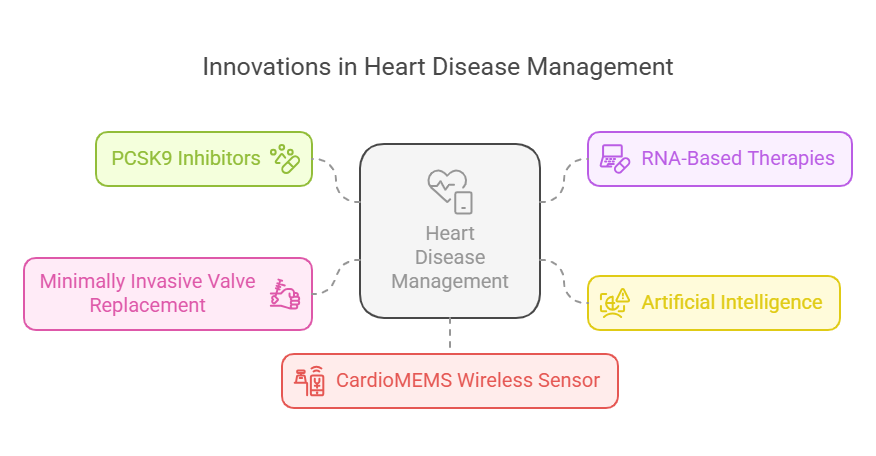
Breakthroughs in Heart Disease Management
Heart disease is the world’s leading cause of death, but new treatments in 2025 are focusing on prevention, personalization, and precision medicine.
1. PCSK9 Inhibitors
Injectables like Repatha and Praluent offer an alternative to statins by blocking PCSK9 proteins, which regulate cholesterol levels.
Key benefits:
Reduces LDL cholesterol by over 60%
Fewer muscle-related side effects
Effective for patients with genetic hypercholesterolemia
2. RNA-Based Therapies
Inclisiran, a cutting-edge RNA interference drug, suppresses PCSK9 production in the liver with just two annual injections.
Advantages:
High compliance due to fewer doses
Works well with other heart medications
Ideal for high-risk cardiovascular patients
3. Artificial Intelligence for Early Detection
Wearable devices and hospital-grade tools now integrate AI algorithms to analyze heart rhythm and predict cardiovascular risks.
Popular uses include:
Apple Watch detecting atrial fibrillation (AFib)
Smart sensors for early heart failure detection
Risk stratification for cardiac events
4. Minimally Invasive Valve Replacement (TAVR)
Transcatheter Aortic Valve Replacement (TAVR) lets doctors replace faulty heart valves without traditional surgery.
Why it matters:
Shorter hospital stays
Lower surgical risk for elderly patients
Often performed under local anesthesia
This method is a game-changer for patients who aren't candidates for open-heart surgery.
5. CardioMEMS Wireless Sensor
This implantable sensor monitors pulmonary artery pressure in heart failure patients and transmits data to healthcare providers remotely.
Benefits include:
Early detection of fluid buildup
Fewer hospital visits
Better medication management
2025 Update: Integrating AI and Digital Health in Chronic Care
The biggest shift in 2025 is the fusion of AI, digital health platforms, and genomics to streamline care for chronic disease patients.
1. Predictive Analytics for Disease Flare-Ups
AI can now analyze patterns in health data to forecast events like:
Hypoglycemia in diabetics
Heart failure episodes
Lupus flare-ups
Example: Machine learning algorithms trained on wearable sensor data have reached 90%+ accuracy in predicting high-risk cardiac events.
2. Virtual Care and Telemedicine
Virtual care platforms like Teladoc Health, Amwell, and MyChart have become essential for chronic disease management.
Key features:
Video consultations
Medication refills and adjustments
Seamless integration with lab reports and health records
Patients now receive high-quality, continuous care from the comfort of their homes.
3. Personalized Medicine Through Genetic Testing
In 2025, genetic testing is faster and more affordable, enabling treatment plans tailored to each patient’s genetic makeup.
Applications include:
Choosing the right antidepressant based on CYP2D6 gene variants
Avoiding medications with known adverse gene interactions
Determining autoimmune disease risk factors early
Related Blogs
What You Need to Know About the Future of Medicine?
Emerging Medical Treatments in 2025

10 Lesser-Known Facts About Chronic Disease Treatments
Diabetes reversal has been achieved in trials using gastric sleeve surgery on non-obese patients. (Source)
Cold exposure therapy is being trialed for autoimmune conditions like RA. (Source)
A bionic pancreas powered by AI is currently in FDA trials.
AI cardiologists in Japan correctly diagnose 95% of arrhythmias—better than humans.
An oral insulin pill may be on the market by late 2025.
CAR-T cell therapy for lupus has shown complete remission in 5/5 trial patients.
Gene-edited pigs are being studied for future organ transplants to manage end-stage heart disease.
A new vaccine for Type 1 diabetes (Diamyd) is in Phase III clinical trials.
CRISPR gene editing has entered human trials for treating genetic causes of heart failure.
Wearable kidney tech may soon offer dialysis-free management of chronic kidney disease (CKD).
Explore Courses for Clinical Research Career
Courses Available:
Conclusion
The landscape of chronic disease management is rapidly evolving, offering patients more hope than ever before. As we move deeper into 2025, technologies like AI, personalized medicine, and gene editing are no longer futuristic—they're real tools changing lives.
For those looking to stay ahead of medical trends and access educational resources, CCRPS offers certified programs and training for healthcare professionals committed to cutting-edge patient care.
Frequently Asked Questions (FAQs)
-
Gene therapy and stem cell-based beta cell regeneration are some of the most promising breakthroughs, aiming for a long-term functional cure for Type 1 diabetes.
-
Yes, RNA-interference drugs have been shown to be safe with minimal side effects, requiring only 2 injections per year to control LDL levels.
-
Yes, with over 90% accuracy in some studies, AI combined with wearable data can detect abnormal cardiac patterns before symptoms emerge.
-
In clinical trials, CAR-T therapy has induced remission in patients with severe lupus and is currently being expanded to other conditions like MS and RA.
-
The use of genetic testing to guide medication and therapy choices is becoming standard, reducing trial-and-error and enhancing treatment efficacy.