
Passing Your Medical Science Liaison Certification Exam Proven Tips
Medical Science Liaison (MSL) exams aren't about memorizing drug names or regurgitating journal articles — they’re a strategic test of cross-functional expertise, stakeholder fluency, and compliance precision. If you're prepping for the Medical Science Liaison Certification by CCRPS, you already know you're not just being evaluated on scientific knowledge. You're being measured on how well you apply that knowledge in real-world cross-talk between science and strategy. What makes this exam especially tough isn’t the volume — it’s the blurred boundaries between roles, regulations, and clinical nuance. Whether you're already in the field or transitioning from academia or pharma, passing the MSL exam demands targeted preparation and tactical execution.
In this guide, I’ll break down what top scorers do differently: how they study, what they prioritize, and how they translate MSL fieldwork into passing power. You’ll get zero fluff, no vague pep talks — just actionable frameworks to help you pass your certification without wasting time or energy on things that don’t move the needle.

Understanding the MSL Exam Scope
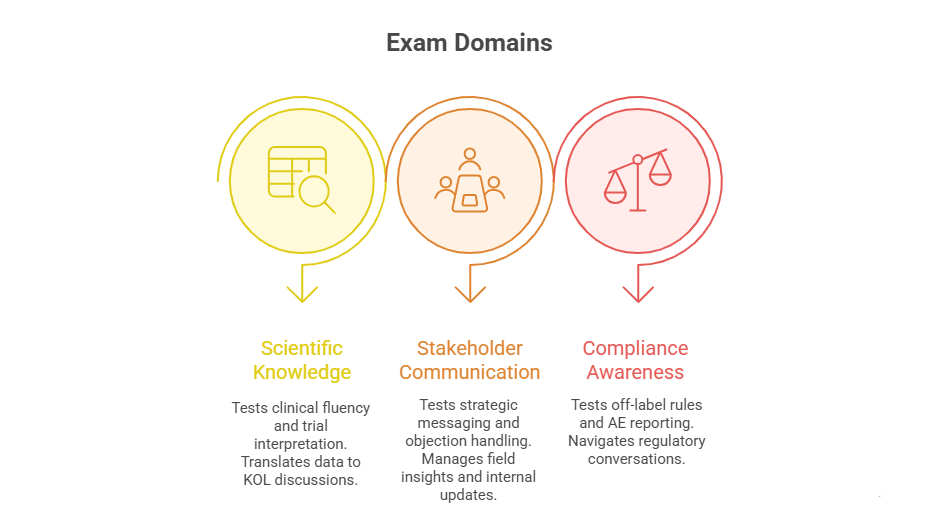
The Medical Science Liaison Certification by CCRPS isn’t a generic knowledge test — it’s a role-aligned assessment that demands clarity in both scientific expertise and field-based execution. Many candidates underestimate how integrated the competencies are. This section breaks down the two major dimensions the exam tests you on: science and stakeholder strategy.
Scientific and Clinical Knowledge Domains
Your foundation will be tested across core clinical science, but not in isolation. You’re expected to demonstrate how you translate that knowledge into value in conversations with KOLs and healthcare professionals. Focus your prep around:
Therapeutic area fluency: You should be able to speak confidently about the disease state, treatment modalities, and trial pipelines.
Clinical trial interpretation: Go beyond endpoints. Understand inclusion/exclusion criteria, sample size logic, and biostatistical relevance.
Literature evaluation: Expect to be assessed on your ability to critically appraise a journal article for clinical validity and commercial context.
Safety data: Know the difference between AE, SAE, and SUSAR — and how these terms matter in field conversations.
Product lifecycle knowledge: Recognize the clinical and regulatory milestones in Phase I–IV trials and how MSLs communicate these with nuance.
The exam won’t ask you for rote memorization. It will test if you can apply real-world insight under regulatory pressure, especially when handling off-label inquiries or responding to HCP objections with compliance-anchored responses.
Stakeholder Communication and Strategy
Being scientifically sound is not enough. The exam evaluates how well you function as a bridge between internal teams and external experts. That includes:
Stakeholder mapping: Know how to segment KOLs based on influence, access, and relevance.
Scientific engagement models: Be fluent in structured engagement approaches — pre-call planning, objection handling, and post-visit insights logging.
Internal alignment: MSLs support medical, commercial, and regulatory arms. Expect questions around cross-functional updates and alignment.
Field insight collection: You must show how to distill HCP feedback into actionable summaries without violating compliance.
Strategy integration: The exam tests your ability to inform launch strategies, advisory boards, and publication planning through real-world field insights.
You’ll be expected to move from data to dialogue, and from information to influence — all while staying aligned with legal, ethical, and medical boundaries. This section isn’t about guessing the “right answer.” It’s about showing the right application of your role.
Smart Study Techniques for Busy MSLs
If you're balancing fieldwork, stakeholder prep, and internal meetings, you don’t have time to waste on low-yield study tactics. The Medical Science Liaison Certification by CCRPS demands precision — both in what you study and how you retain it. Here are proven, high-ROI techniques designed for time-strapped MSLs.
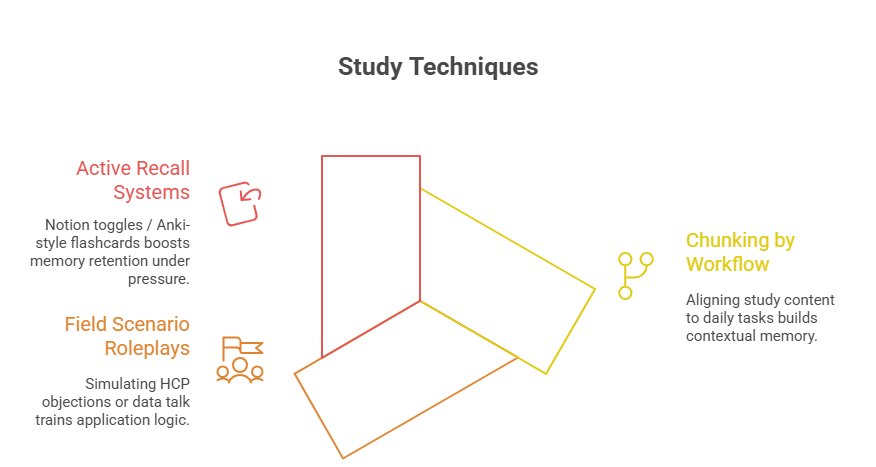
Chunking Concepts by Functional Relevance
Don’t organize your notes by textbook chapters. Instead, map them to daily MSL functions:
Pre-call planning: Review trial updates, off-label guidelines, and stakeholder history.
In-field discussion: Focus on disease mechanisms, recent publications, and safety data trends.
Post-call insights: Practice summarizing clinical conversations into field reports that matter.
By framing study around workflow, you engage contextual memory, which leads to faster recall under pressure. Use case-based flashcards — not generic Q&A — to simulate situational memory.
Group content into buckets like:
Advisory boards → compliance considerations
Journal clubs → critical literature skills
Safety inquiries → regulatory response language
Functional chunking helps you think like an MSL, not just study like a student.
Leveraging MSL Field Scenarios in Prep
Abstract knowledge won’t get you far. Instead, turn real or simulated field interactions into exam scenarios:
Reconstruct a recent HCP objection and write down a compliant, medically accurate response.
Practice synthesizing three trial updates into a clear, one-minute summary for a thought leader.
Roleplay objection handling for common post-launch safety concerns.
By treating field scenarios as live prep, you sharpen your application thinking and make the exam feel familiar. The test favors candidates who can think operationally under scrutiny, not just recite facts.
Active Recall and Notion-style Note Review
Passive review is a waste of time. Use spaced repetition with active recall prompts built directly into your notes.
Every key concept should have a “Question” block.
Use toggle cards to quiz yourself before revealing the answer.
Color-code concepts by confidence level and frequency of review.
Pair this with short, high-frequency review sessions — 10–15 minutes daily — rather than marathon cramming. Your goal isn’t just retention. It’s fast-access recall under exam stress.
Managing Exam Pressure Strategically
Passing the Medical Science Liaison Certification by CCRPS isn’t just about what you know — it’s about how well you recall and apply that knowledge under pressure. Most candidates don’t fail because of a knowledge gap. They fail because their system collapses under time or stress. Here's how to build mental resilience and tactical confidence.
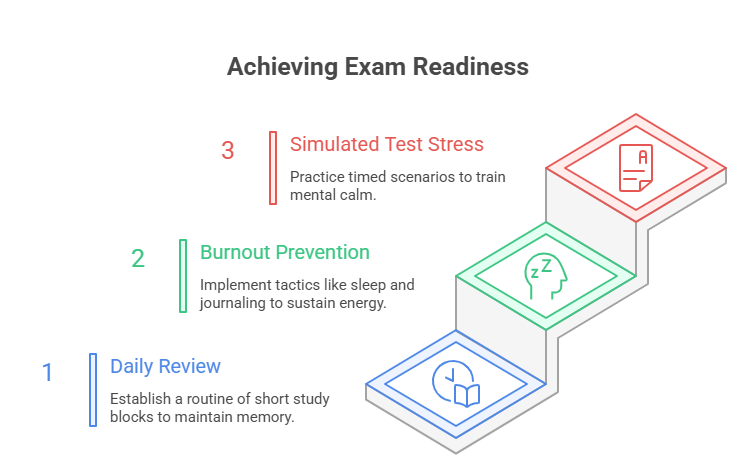
Daily Review Frameworks
You need a non-negotiable daily system that keeps your brain warm, even on busy workdays. Use this three-tiered structure:
Morning Quick Review (15 min)
Hit your high-priority flashcards — trial phases, compliance terms, HCP engagement models. These refresh your working memory anchors.Lunchtime Reinforcement (20 min)
Choose one core theme (e.g., advisory board strategy) and do a focused review using a journal summary, MSL case study, or visual notes.Evening Recap (15–20 min)
Recall what you used during the day in actual field conversations or internal calls. Write down what stuck and what didn’t. This review method helps your brain file concepts into long-term memory.
Make the review cumulative. The more days a concept appears, the less you need to revisit it, thanks to the spacing effect. You’re not just studying — you’re training recall timing and confidence.
Preventing Mental Burnout
Burnout kills performance. Here’s how to block it before it starts:
Protect pre-exam sleep: Sleep is the single greatest contributor to memory consolidation. Never compromise it the night before the test.
Batch your anxiety: Set one time per day to worry or journal. Outside that window, don’t entertain self-doubt. It compartmentalizes fear.
Use micro-rewards: After each 25-minute study sprint, give yourself something small — a walk, a podcast, a coffee. It resets your dopamine loop, keeping motivation intact.
Practice low-stakes stress: Simulate the exam with time-locked questions and a notepad-only rule. The more your brain experiences tension in training, the less it overreacts during the real thing.
This isn’t mindset fluff — this is cognitive load management. You're building a brain that performs under pressure, not just under ideal study conditions.
Key Focus Areas to Prioritize
Not all content domains are created equal. The Medical Science Liaison Certification by CCRPS weighs heavily on your ability to operate at the intersection of science, strategy, and compliance. These aren’t abstract topics — they reflect the highest-risk areas MSLs navigate in the real world. Focusing your prep here isn’t optional — it’s essential.
Regulatory and Compliance Updates
If there's one section where candidates freeze, it’s compliance. You’ll be expected to:
Distinguish between on-label vs. off-label engagements with HCPs — and how to document them compliantly.
Understand what triggers a reportable adverse event and the steps you’re expected to follow.
Know the difference between scientific exchange vs. promotional messaging — especially during cross-functional collaborations.
This isn’t just rote memorization. The exam tests real-world decisions under regulatory scrutiny. Study the gray areas, not just the black-and-white definitions.
Prioritize reviewing:
Global regulatory bodies (FDA, EMA, PMDA) and their field guidance.
Sunshine Act, Fair Balance, and HCP transfer of value rules.
SOP-driven decision trees for real-life MSL scenarios.
Advisory Board Dynamics and Ethics
Ad boards are where scientific exchange meets legal exposure. You’ll face scenario-based questions around:
Structuring compliant ad board agendas.
Selecting advisors without conflict-of-interest violations.
Gathering strategic insights without steering discussion toward promotion.
Study how to:
Justify the scientific need for each board and each invitee.
Balance commercial goals with ethical KOL engagement.
Document insights while avoiding bias and misinterpretation.
Also, brush up on how MSLs report advisory board outcomes internally without triggering improper promotional influence.
Evidence Communication in Field Visits
This is one of the most practical and testable skill sets in the exam:
Learn how to distill complex data (e.g., Kaplan-Meier curves, NNT, safety profiles) into field-friendly formats.
Practice summarizing trial outcomes within 60–90 seconds, tailored to your stakeholder’s expertise level.
Understand how to handle pushback without veering into speculation or off-label discussion.
You’re not just a scientist — you’re a clinical translator in real time. The exam will reflect that.
| Focus Area | Why It Matters | Exam Emphasis |
|---|---|---|
| Regulatory Compliance | Ensures proper field conduct and risk mitigation | High – especially in scenario-based questions |
| Advisory Board Ethics | Protects scientific integrity and avoids promotion | Moderate to High |
| Evidence Communication | Converts complex data into field conversations | Medium – often tested via roleplay prompts |
Mistakes MSL Candidates Commonly Make
Even the most experienced candidates fall short by preparing in the wrong direction. The Medical Science Liaison Certification by CCRPS is built to surface your blind spots — especially if you’ve been operating more intuitively than systematically. Below are two of the most common missteps that quietly sabotage your performance.
Neglecting the Compliance Angle
Scientific strength won’t save you if your answers violate promotional boundaries or bypass reporting protocols. Many MSLs who’ve excelled in the field get too comfortable with grey zones — and that comfort is punished on the exam.
Watch for these pitfalls:
Treating off-label discussions casually without clearly noting the boundaries of scientific exchange.
Forgetting the reporting flow for adverse events — especially when initiated by a passive HCP comment.
Using internal stakeholder terms in field documentation (e.g., “KOL pushback on positioning”) — which could be interpreted as promotional influence.
The exam isn’t testing if you know what’s legal. It’s testing whether your thought process is compliance-first by instinct, not just by training.
If you’ve spent years functioning in “relationship-first” mode, you’ll need to retrain how you structure and phrase field conversations — especially in documentation and advisory reports.
Underestimating Time-Based Questions
The second big mistake? Thinking this is a test of knowledge depth only. It’s not. The test is paced to stress your time prioritization and decision-making under pressure.
Here’s what derails candidates:
Spending too much time dissecting scientific nuance instead of choosing the most operationally sound answer.
Overanalyzing distractors in scenario-based items, when the best response is often about regulatory logic, not nuance.
Failing to flag and return to longer calculation-based questions — losing precious time.
To avoid this, simulate exams with:
Timed blocks (e.g., 20 questions in 30 minutes).
Flagging mechanisms for questions you’re 70% sure on — don’t aim for perfection in real-time.
Practicing “second-best” decision making: the exam often tests whether you can choose the best available compliant option, not the perfect one.
| Common Mistake | Why It Fails | What to Do Instead |
|---|---|---|
| Ignoring Compliance Scenarios | Triggers regulatory red flags on exam | Practice with off-label objection scripts |
| Overthinking Every Question | Wastes time and leads to missed answers | Use best compliant option, flag, and move on |
| Lack of Scenario Practice | Fails to simulate real test pacing or tone | Take full timed mocks weekly |
Why the CCRPS MSL Certification Sets You Apart
The Medical Science Liaison Certification by CCRPS isn’t just a checkbox — it’s a strategic accelerator that signals your readiness for high-impact field roles in biotech, pharma, and medical device industries. What makes it different isn’t only the content — it’s the precision with which it evaluates role-aligned competence.
Here’s what sets this certification apart from other options:
Role-specific rigor: The exam is designed by active MSLs for working MSLs. It doesn’t test generic clinical science — it tests the ability to navigate regulatory nuance, evidence delivery, and stakeholder dynamics under real-world pressures.
Strategic focus: While other certifications focus on knowledge depth, CCRPS emphasizes knowledge translation — how you turn trial data, safety profiles, and regulatory shifts into field-ready messaging.
Compliance-first modeling: Every scenario in the exam is vetted for its alignment with ICH-GCP, FDA, EMA, and global compliance standards. You’re not only tested on science, but on whether you’d pose a risk or asset in regulated conversations.
Professionals who hold the CCRPS certification are seen as:
Immediately deployable in launch-prep and post-launch roles.
Capable of functioning across commercial, medical, and regulatory lines without oversight.
Trained in cross-functional fluency — especially during advisory boards, scientific exchange events, and safety updates.
From a hiring manager’s lens, a CCRPS-certified MSL signals:
You already understand field medical operations and don’t need months of onboarding.
You’ve been vetted not only for science but for judgment, documentation discipline, and stakeholder handling.
You’ve shown the initiative to invest in career-aligned, compliance-conscious upskilling — not just a résumé booster.
If you're serious about operating at the intersection of clinical science, strategic engagement, and regulatory intelligence, this is the credential that sets you apart.
Frequently Asked Questions
-
The most effective strategy is to combine active recall, real-world case application, and daily micro-reviews. Instead of passive reading, simulate how you'd handle field scenarios: summarize clinical trials, handle off-label questions compliantly, and distill advisory board insights. Use Notion-style toggle flashcards with compliance flags and therapeutic mappings. Break down your review into 3 sessions per day: morning anchor recall, mid-day deep dive, and evening synthesis. Most high scorers also use spaced repetition platforms like Anki, tagging each concept by stakeholder relevance. The goal isn’t to memorize — it’s to train recall speed, compliance fluency, and strategic framing under time pressure.
-
On average, professionals need 4–6 weeks of focused prep, assuming 1–2 hours daily. If you’re currently in an MSL or clinical role, your real-world experience gives you a baseline advantage — but don’t underestimate the compliance-heavy scenario sections. If you're transitioning from academia or the bench, budget closer to 8 weeks to get comfortable with field application frameworks. The CCRPS Medical Science Liaison Certification is scenario-driven, so you’ll need both knowledge and executional thinking. Always simulate time-bound quizzes weekly and review errors critically. It’s not just study hours that count — it’s how often you practice application logic.
-
Yes — the CCRPS MSL Certification is one of the most role-specific credentials recognized globally. It’s designed for working professionals and is mapped to real-world MSL competencies — not just academic science. Hiring managers in pharmaceuticals, biotech, and CROs often list this certification in preferred qualifications because it signals you’re not just qualified — you're field-ready. The curriculum aligns with industry expectations around compliance, trial literacy, and stakeholder handling. Unlike generalized science certifications, this one signals you’ve been vetted on communication judgment, insight capture, and regulatory nuance. It positions you as a low-risk, high-readiness candidate across launch and post-launch stages.
-
The exam includes scenario-based MCQs that evaluate decision-making in real-world MSL situations. Expect questions on:
Responding to off-label requests compliantly
Summarizing trial data for various HCP types
Managing field insights without bias
Navigating advisory board dynamics
Identifying regulatory red flags
It’s not just factual recall — the test measures your situational awareness, especially around stakeholder engagement, compliance guardrails, and communication strategy. Many questions include time constraints and ask for the best compliant decision, not just the textbook answer. Practicing with mock case studies or timed quizzes can significantly improve performance.
-
Yes, the Medical Science Liaison Certification exam by CCRPS is fully online and accessible worldwide. You must meet basic eligibility: either 1) a science-related degree (PharmD, PhD, MD, etc.) or 2) equivalent experience in a clinical, pharma, or regulatory role. Once approved, you’ll receive login access to the learning portal and exam dashboard. The exam is proctored digitally and typically consists of 120 scenario-based questions, with a passing score of 80%. No travel is required, and you can schedule your exam slot within 60 days of enrollment. The platform also allows pause-and-resume flexibility, which helps busy professionals.
-
If you don’t pass on your first attempt, CCRPS offers one free retake. But more importantly, your performance breakdown highlights your weak zones — compliance, evidence delivery, stakeholder strategy, etc. You’ll receive a domain-level report so you can focus your second attempt with precision. Most candidates who fail do so because they underestimate time pressure or approach questions too academically rather than operationally. Between attempts, CCRPS encourages revisiting their case libraries and applying field-scenario logic. If you fail a second time, additional attempts may require a small fee, but the exam is designed to be passable with strategic preparation.
Final Thoughts
Passing the Medical Science Liaison Certification by CCRPS isn’t about checking off a study list — it’s about thinking like an MSL before you even get the role. The exam is a pressure test for the exact competencies you’ll be using on day one: scientific translation, compliance navigation, and stakeholder strategy. If your preparation mirrors the realities of field engagement, you’ll walk into that test not just ready — but overprepared.
Whether you're pivoting from research or already in the field, this certification proves you’ve internalized what separates a good MSL from a trusted scientific partner. Study smart. Train under pressure. And align every step of your prep with the compliance-driven, insight-fueled DNA of this role.
If you’ve made it this far in the blog, you’re already serious. Now let’s make sure you’re certified.
