How to Choose the Right New Medical Course?

In 2025, the medical field is evolving faster than ever, driven by innovation, technology, and shifting patient needs. From AI-assisted diagnostics to specialized emergency care, new medical courses are popping up to meet these challenges. But with so many options available, selecting the right program can feel overwhelming. Choosing wisely isn’t just about credentials—it’s about shaping your future in healthcare.
Why Medical Professionals Need Constant Learning in 2025?
In 2025, the landscape of medicine continues to change rapidly, driven by technological advancements, emerging global health challenges, and new treatment modalities. Medical professionals must engage in continuous education to remain relevant and effective in their practice. This need for constant learning is not just a matter of professional growth—it’s essential for maintaining the highest standards of patient care. The post-COVID era has particularly emphasized the importance of adaptable skills, while AI integration in healthcare demands that physicians, nurses, and healthcare administrators are constantly updating their knowledge base.
The Role of Continuous Education Post-COVID and AI Integration
The COVID-19 pandemic was a wake-up call for healthcare systems worldwide, highlighting the importance of staying ahead of emerging threats, enhancing patient care strategies, and improving healthcare delivery. The healthcare industry witnessed an acceleration in digital health solutions, including telemedicine, AI, and machine learning. As healthcare technology rapidly advances, continuous education ensures that medical professionals are equipped with the latest knowledge on how to apply these innovations effectively. Without ongoing learning, healthcare workers may fall behind in integrating new technologies into their daily practices.
Telemedicine: The rise of telemedicine since COVID-19 has transformed how healthcare is delivered, enabling remote consultations, diagnostics, and even treatments. This shift requires healthcare professionals to be well-versed in the tools and technologies involved in telehealth.
AI in Healthcare: AI is becoming increasingly integral in diagnosing diseases, analyzing medical data, and streamlining administrative tasks. Medical professionals must stay up-to-date with the latest AI technologies and their application in diagnostics, treatment planning, and patient management.
High-Paying Specialties Requiring Certifications
In 2025, certain medical specialties continue to command high salaries due to the increasing demand for specialized skills. Pursuing certifications in these fields is not just about career advancement—it’s also an opportunity to secure higher-paying roles. Specializing in advanced medical practices often requires additional training and certifications that help professionals stand out in the competitive healthcare market.
Emergency Medicine: With the constant need for skilled emergency responders, certifications in emergency medicine, trauma care, and life-saving procedures are invaluable. These courses are essential for those looking to work in high-pressure, fast-paced environments.
Orthopedic Surgery: Specializations in orthopedic surgery, particularly those focused on minimally invasive techniques, require specific certification. The growing demand for procedures like joint replacements and spinal surgeries makes this a lucrative specialty.
Radiology: As diagnostic imaging technology continues to improve, certifications in radiology and sub-specialties like interventional radiology are increasingly in demand. Radiologists who are proficient in advanced imaging techniques, such as MRI and CT scans, are compensated well for their expertise.
Plastic and Reconstructive Surgery: Surgeons specializing in cosmetic and reconstructive surgery, especially those using cutting-edge techniques, have high earning potential. Pursuing additional certifications in cosmetic surgery can open doors to high-paying opportunities in both clinical and private practice settings.
Trends in Telemedicine, Regenerative Medicine, and Public Health
As the healthcare industry adapts to the evolving needs of patients, certain trends are defining the future of medical education. Staying on top of these trends is crucial for healthcare professionals looking to provide the best care while remaining competitive.
Telemedicine: The post-pandemic world has solidified telemedicine as a critical component of healthcare delivery. With patients seeking convenient and accessible healthcare, medical professionals must be skilled in telehealth platforms, understanding the nuances of remote patient care, and complying with telemedicine regulations.
Regenerative Medicine: Regenerative medicine is transforming the treatment of conditions related to aging, tissue damage, and disease. Stem cell therapies, tissue engineering, and gene therapies are at the forefront of this field, and medical professionals need to understand the science behind these treatments to offer the latest care options.
Public Health: Public health education continues to be in high demand as the world navigates post-pandemic recovery and prepares for future health crises. Professionals with expertise in epidemiology, health policy, and global health initiatives play a critical role in managing public health systems. As a result, certifications in public health are increasingly valuable for those seeking leadership roles.

Step-by-Step: How to Evaluate New Medical Courses?
Choosing the right medical course is a crucial decision that impacts both your career and your ability to provide the best care to patients. With so many options available, it's important to have a structured approach to evaluating which courses are worth your time and investment. The following step-by-step guide will help you assess new medical courses effectively, ensuring that you make an informed decision that aligns with your professional goals and aspirations.
Step 1: Define Your Career Goals
Before you start evaluating medical courses, it’s important to have a clear understanding of your career objectives. Your goals will guide your course selection process and ensure that the courses you choose are aligned with your ambitions. Are you looking to specialize in a particular field, broaden your general medical knowledge, or enhance your skills for advancement? Take the time to reflect on the following:
Specialization vs. Generalization: Are you pursuing a specific specialization like cardiology, orthopedic surgery, or public health? Or do you need a more general qualification to enhance your medical knowledge?
Short-term vs. Long-term Goals: Consider if you are aiming for immediate career advancement or a long-term investment in your medical expertise. Some courses may provide quicker career benefits, while others may take years to yield substantial results.
Geographic Considerations: Some courses are tailored for specific geographic regions or healthcare systems. If you are planning to work internationally or in a certain area, it’s important to choose courses recognized in that market.
Defining your career goals upfront will help you narrow down course options and choose the most relevant ones for your future.
Step 2: Research the Course Provider's Credibility
Once you’ve defined your goals, the next step is to evaluate the credibility of the course provider. A reputable provider ensures that the course content is accurate, high-quality, and relevant to current medical practices. Here’s what to look for when assessing credibility:
Accreditation: Make sure the provider is accredited by relevant medical organizations or educational bodies. This accreditation confirms that the course meets specific educational standards and that your qualification will be recognized.
Reputation: Research the provider’s reputation in the healthcare education space. Look for reviews, testimonials, and case studies of students who have completed courses with them. Providers with a long history of successful graduates are more likely to offer high-quality programs.
Partnerships: Check if the provider collaborates with recognized hospitals, universities, or industry leaders. Strong partnerships often indicate a high level of credibility and offer networking opportunities after completion.
Step 3: Check Course Accreditation & CME Points
Accreditation is one of the most important factors in choosing a medical course. A recognized accrediting body ensures that the course is of a high standard and that the certification will be respected by employers and professional organizations. For many medical courses, Continuing Medical Education (CME) credits are essential for maintaining licensure or certification. Here’s what to check:
Accrediting Organizations: Look for courses accredited by well-known bodies like the Accreditation Council for Continuing Medical Education (ACCME), the American Medical Association (AMA), or the National Board of Medical Examiners (NBME). These organizations set the standard for medical education in many countries.
CME Credits: For practicing physicians and healthcare providers, CME credits are required to maintain licensure. Ensure the course offers accredited CME points that will count toward your licensing or certification requirements.
Accreditation and CME credits are essential for ensuring the course holds value and can support your long-term career development.
Step 4: Analyze the Curriculum
When evaluating a new medical course, it’s critical to thoroughly review the curriculum. The content of the course should be comprehensive, up-to-date, and tailored to the skills you want to develop. Pay attention to the following aspects:
Content Relevance: Ensure the curriculum includes the most current practices, technologies, and regulations in the medical field. In 2025, this could mean incorporating AI, telemedicine, and advanced therapeutic techniques.
Balance of Theory and Practice: The curriculum should balance theoretical knowledge with practical, hands-on learning. Courses that combine lectures with real-world application are more beneficial in helping you retain and apply your knowledge.
Specialization or Generalization: If you are pursuing a specialized field, ensure the course dives deep into the specific area you want to learn. For example, a course in cardiology should cover topics such as ECG interpretation, advanced heart disease treatments, and new cardiology technologies.
Step 5: Check for Hands-on Training or Simulation Labs
Medical education is not just about lectures and textbooks—it’s about real-world experience. One of the most valuable aspects of medical courses is the opportunity to engage in hands-on training, clinical practice, and simulation-based learning. Consider the following:
Simulation Labs: These labs allow students to practice medical procedures in a controlled, risk-free environment. Whether it’s learning how to insert an IV, perform a surgical procedure, or use diagnostic tools, simulation labs offer invaluable practical experience.
Clinical Placements: Some medical courses offer clinical placements or internships in hospitals or healthcare facilities. These placements give you the chance to apply your knowledge in real-world settings and learn from experienced professionals.
Online vs. In-person Learning: Some hands-on components may be available in online courses through virtual simulations or practical exercises. However, for certain specialties, in-person training may be essential.
A course with hands-on training ensures that you are not just absorbing information but also developing the skills necessary to succeed in a clinical setting.
Step 6: Look at Peer Reviews and Outcomes
Peer reviews and course outcomes provide valuable insights into the effectiveness of a course. Reading reviews from previous students or healthcare professionals who have completed the course will help you gauge its quality and practical benefits. Consider the following:
Student Testimonials: Look for testimonials on the course website, independent review sites, or social media platforms. Honest reviews can give you a sense of the course’s strengths and weaknesses.
Graduate Success Rates: Many reputable course providers publish data on the success rates of their graduates. This can include employment rates, certification pass rates, and career advancement statistics.
Instructor Quality: Check the credentials and experience of the instructors. They should be experienced professionals in their field and able to offer both theoretical and practical expertise.
Step 7: Compare Cost vs Value
Cost is a major consideration when selecting any medical course, but it should not be the sole deciding factor. The value of the course should outweigh its cost. Consider the following:
Course Fees: Compare the fees of similar courses. While some courses may appear more affordable, they may not offer the same quality of content or accreditation as higher-priced options.
Financial Aid: Some medical courses offer scholarships, grants, or payment plans. Check to see if financial assistance is available to help offset the cost.
Return on Investment (ROI): Consider how the course will impact your career in the long run. Will it help you specialize in a high-demand field, increase your earning potential, or open up new career opportunities? The right course should offer a significant return on your investment in terms of career advancement and job satisfaction.

High-Demand Medical Courses in 2025
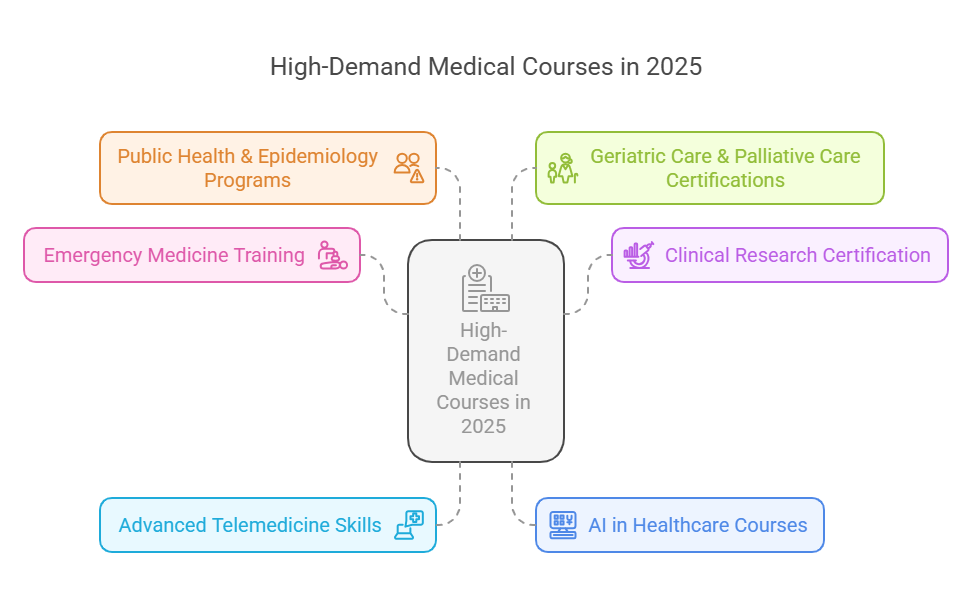
As the healthcare landscape continues to evolve, certain medical courses have become highly sought after due to changing patient needs, technological advancements, and global health challenges. In 2025, professionals who specialize in these fields are expected to be in high demand, as they address critical issues in healthcare delivery, patient care, and medical innovation. Below are some of the most high-demand medical courses in 2025, each offering exciting career opportunities for those who are looking to advance their expertise.
Emergency Medicine Training
Emergency medicine is a dynamic and high-pressure field that requires quick decision-making, extensive knowledge, and practical skills. With increasing health emergencies, natural disasters, and unexpected accidents, the need for skilled emergency medical professionals is growing. Emergency medicine training prepares healthcare workers to respond efficiently to acute medical situations, trauma, and critical care needs.
Course Focus: The curriculum typically covers advanced life-saving techniques, trauma care, emergency surgery, and disaster preparedness.
Skills Developed: Learners acquire hands-on skills in patient triage, resuscitation, and stabilization, along with knowledge of managing diverse medical emergencies.
Career Opportunities: Emergency physicians, paramedics, trauma surgeons, and emergency care nurses are in high demand globally.
Training in emergency medicine not only offers the chance to make a significant impact on patient outcomes but also provides healthcare professionals with the skills needed to work in fast-paced, high-stress environments.
Clinical Research Certification
Clinical research plays a critical role in developing new medical treatments, therapies, and technologies. As the healthcare industry moves toward more personalized treatments and innovations, clinical researchers are at the forefront of conducting studies that evaluate the effectiveness of new drugs, medical devices, and treatment protocols. A clinical research certification program equips professionals with the knowledge and skills to conduct clinical trials and research projects.
Course Focus: Topics covered often include research design, ethical issues in clinical trials, regulatory compliance (e.g., FDA guidelines), data analysis, and patient recruitment.
Skills Developed: Learners gain proficiency in conducting randomized controlled trials, understanding clinical data, and adhering to regulatory and ethical standards.
Career Opportunities: Clinical research coordinators, clinical trial managers, medical scientists, and regulatory affairs specialists are in demand across research institutions, hospitals, and pharmaceutical companies.
With an increasing focus on evidence-based practices and advancements in medical treatments, clinical research professionals will continue to be essential to the healthcare sector’s growth.
Advanced Telemedicine Skills
Telemedicine has become a cornerstone of modern healthcare delivery, especially since the COVID-19 pandemic highlighted the importance of remote care. In 2025, telemedicine skills are essential for healthcare providers who need to offer virtual consultations, diagnostics, and follow-up care. These courses teach the technical and clinical skills needed to operate telemedicine platforms effectively and provide quality care remotely.
Course Focus: Training covers areas such as telehealth technology, virtual patient consultations, remote monitoring tools, and handling digital health records.
Skills Developed: Students learn to use telemedicine platforms, communicate with patients remotely, perform digital diagnoses, and manage remote patient data securely.
Career Opportunities: Telemedicine specialists, virtual care providers, telehealth coordinators, and digital health consultants are in high demand, particularly as healthcare systems look to expand telehealth services.
As the telemedicine field continues to grow, medical professionals who are well-versed in these technologies will play a key role in enhancing accessibility and efficiency in healthcare delivery.
AI in Healthcare Courses
Artificial intelligence (AI) has begun revolutionizing healthcare by improving diagnostic accuracy, streamlining administrative tasks, and enhancing treatment planning. AI in healthcare courses provide professionals with the tools to integrate AI technologies into their practice and decision-making processes. These courses are especially relevant as AI continues to shape the future of medicine, from diagnostics to patient management.
Course Focus: The curriculum focuses on understanding AI algorithms, machine learning models, and the application of AI in imaging, diagnostics, and predictive analytics.
Skills Developed: Learners acquire the ability to work with AI tools, interpret machine learning models, and apply AI in clinical decision-making, disease prediction, and patient care strategies.
Career Opportunities: AI specialists in healthcare, data scientists, AI health consultants, and medical researchers specializing in AI applications are highly sought after in hospitals, medical tech companies, and research labs.
As AI’s role in healthcare continues to expand, professionals with expertise in this field will be essential for implementing AI-driven solutions to improve healthcare outcomes and optimize clinical workflows.
Public Health & Epidemiology Programs
Public health and epidemiology have never been more important than in the post-pandemic world. Public health professionals are responsible for preventing disease outbreaks, managing public health crises, and promoting community well-being. Epidemiologists study the patterns and causes of diseases, offering insights into how they spread and how to mitigate their impact. As health crises continue to emerge, the demand for experts in these fields will only grow.
Course Focus: Public health and epidemiology programs often include topics such as infectious disease control, population health, health policy, biostatistics, and social determinants of health.
Skills Developed: Students gain expertise in disease surveillance, outbreak management, public health intervention, data analysis, and health communication strategies.
Career Opportunities: Epidemiologists, public health researchers, health policy advisors, and global health experts are in demand in governmental agencies, NGOs, healthcare organizations, and international health bodies.
As health emergencies continue to rise worldwide, the expertise of public health and epidemiology professionals will be essential in safeguarding communities and improving overall health outcomes.
Geriatric Care & Palliative Care Certifications
With the aging population growing rapidly, the demand for specialized care for elderly patients is on the rise. Geriatric care focuses on the health and wellness of older adults, while palliative care is focused on providing relief from the symptoms and suffering of serious illnesses. Both specialties require compassionate, personalized care and are highly rewarding fields for medical professionals.
Course Focus: Courses in geriatric care and palliative care focus on managing chronic conditions, end-of-life care, pain management, and addressing the unique needs of older patients.
Skills Developed: Learners acquire the skills to assess geriatric health conditions, provide symptom management, and deliver compassionate care to patients with serious or terminal illnesses.
Career Opportunities: Geriatricians, palliative care specialists, hospice care providers, and long-term care nurses are highly sought after, especially as the aging population increases globally.
For healthcare professionals seeking to make a significant impact in the lives of older adults, certifications in geriatric and palliative care offer fulfilling career paths with significant demand in hospitals, nursing homes, and hospice care settings.
Who Should Enroll in These Courses?
Registered nurses
Physicians looking to specialize
Paramedics seeking advancement
Health administrators
Medical students interested in niche fields
10 Lesser-Known Facts About Medical Courses in 2025
Some micro-certifications can be completed in 4 days (Source)
Accredited online simulations are now recognized by major boards
Blockchain tech is being used to issue verifiable course certificates (Source)
90% of hospital systems prefer candidates with at least one post-grad certificate (Source)
Courses in “medical coding with AI” are growing in demand
CME credits can now be earned via AR/VR platforms
Certain certifications are eligible for government funding in 2025
Courses in “clinical documentation improvement” are trending
Integrative medicine certifications are now evidence-backed
CCRPS offers one of the fastest-growing pediatric emergency certification programs
Related Blogs
Emerging Medical Treatments in 2025
How Technology is Shaping New Medical Treatments?
What You Need to Know About the Future of Medicine?
How New Medical Treatments are Revolutionizing Chronic Disease Management?
Explore Courses for Clinical Research Career
Courses Available:
Conclusion
Choosing the right medical course in 2025 means thinking beyond the basics—it's about staying relevant in a field shaped by technology, evolving patient needs, and global healthcare trends. Whether you're just starting or pivoting your career, making an informed decision backed by credible insights is key. Trusted platforms like CCRPS simplify this journey with expert-led, accredited courses tailored to meet modern medical challenges.
Frequently Asked Questions (FAQs)
-
When selecting a medical course, it's essential to evaluate several factors, such as:
Your Career Goals: Define what specialty or area of expertise aligns with your long-term objectives.
Course Accreditation: Ensure the program is accredited by recognized organizations, which guarantees its quality and recognition.
Curriculum and Learning Mode: Look for courses that offer a well-rounded curriculum and practical learning experiences, such as hands-on training or clinical placements.
Provider Reputation: Research the course provider's track record, faculty expertise, and industry connections.
Cost vs Value: Evaluate the cost of the course in relation to the career opportunities it may open up for you.
-
To ensure a medical course is current with the latest healthcare trends, look for the following:
Curriculum Updates: Check if the course content is regularly updated to reflect emerging trends in areas like AI in healthcare, telemedicine, and regenerative medicine.
Course Reviews: Look for reviews from past students or industry professionals to see if the course material aligns with current practices.
Instructor Expertise: Ensure the instructors are industry experts with experience in current medical technologies or research.
Affiliation with Industry Leaders: A course partnered with prominent healthcare institutions or industry leaders is likely to provide the most up-to-date information.
-
Online medical courses can be highly effective, especially if they are designed with interactive elements such as:
Virtual Simulations: Some online courses include simulation labs or virtual patient interactions, which mimic real-life medical situations.
Interactive Platforms: Online platforms often provide forums, webinars, and direct communication with instructors, enhancing the learning experience.
Flexibility: Online courses allow students to learn at their own pace and schedule, making them ideal for professionals who need to balance work with study.
-
In 2025, the following specialties are expected to be in high demand due to emerging trends:
Emergency Medicine: With more frequent health emergencies and accidents, specialists are needed to handle acute care.
Clinical Research: Ongoing medical research and the development of new treatments require skilled researchers.
Telemedicine: With the growth of virtual healthcare, professionals with telemedicine training are increasingly sought after.
Geriatrics: The aging population will drive the demand for specialists in geriatric care and palliative medicine.
AI in Healthcare: As AI technology becomes more integral in diagnostics and patient management, expertise in this field will be essential.