Clinical Research Certification Michigan: Everything You Need to Know for 2025-2026
Michigan’s healthcare sector is expanding fast — and so is the demand for qualified clinical research professionals. Hospitals, biotech firms, and CROs in Detroit, Ann Arbor, and Grand Rapids are investing heavily in clinical trials and compliance talent, creating thousands of roles for certified professionals. But many candidates still struggle to understand how to get certified, what career paths exist, and how to stand out in a competitive research environment.
This guide breaks down everything you need to know about earning your Clinical Research Certification in Michigan for 2025–2026, including eligibility, training programs, salary insights, and key trends. Each section is packed with value, insights, and internal CCRPS resources designed to help you advance from clinical support to leadership roles in the research ecosystem.

1. Understanding the Clinical Research Landscape in Michigan
Michigan’s research ecosystem is built on three pillars: academic research institutions, private biotech expansion, and hospital-based trials. The University of Michigan’s clinical research network alone supports over 4,000 active studies, while private players like Henry Ford Health and Beaumont Health are expanding sponsored trials in oncology, cardiology, and precision medicine.
What’s changing in 2025–2026 is the integration of AI-driven trial management and hybrid clinical operations. Regulatory bodies now expect trial coordinators, CRAs, and project managers to demonstrate ICH-GCP competency — something achievable through CCRPS’s ICH-GCP Certification Online.
As Michigan strengthens its position as a Midwest research hub, certified professionals with Clinical Research Associate (CRA) training or Clinical Project Management credentials are projected to lead a 17% job growth across the state by 2026.
2. How to Get Certified in Michigan
The path to becoming certified is structured yet flexible. CCRPS’s Clinical Research Certification remains the gold standard because it aligns with ICH-GCP, FDA 21 CFR Part 11, and ISO 14155:2020 requirements — critical for anyone entering Michigan’s trial space.
Here’s a roadmap:
Enroll in an accredited program like CCRPS’s Clinical Research Certification, which provides self-paced learning and real-case exposure.
Master Good Clinical Practice (GCP) — the foundation of ethical and compliant research.
Complete 50–60 hours of online learning through CCRPS modules recognized by global sponsors.
Pass the CCRPS Certification Exam and earn digital credentials verifiable on LinkedIn and HR platforms.
Internal link examples include Clinical Research Certification Nevada and Clinical Research Certification North Carolina for comparison.
3. Salary Insights and Job Growth Trends
Michigan’s average certified research professional salary jumped 14% in 2024 and continues to rise in 2025. The median salary for CRAs now exceeds $95,000 annually, while Clinical Project Managers earn around $115,000.
A key driver is the state’s transition toward hybrid and decentralized trial formats, where certified professionals handle regulatory documentation, remote monitoring, and site coordination. Completing a Clinical Project Management Course through CCRPS can fast-track promotion eligibility for these roles.
Hospitals, academic centers, and private CROs increasingly require GCP and CRA certifications, available through CCRPS Online.
Poll: What’s Your Biggest Barrier to Clinical Research Certification?
4. Career Opportunities After Certification (Expanded)
After earning a Clinical Research Certification in Michigan, professionals can explore multiple tracks — from clinical operations to regulatory management. Entry-level graduates often begin as Clinical Research Coordinators (CRCs), assisting in site monitoring and patient data management. With 6–12 months of experience, they typically progress to Clinical Research Associates (CRAs), overseeing protocol adherence and data validation across multiple trial sites.
Michigan’s growing CRO presence — including ICON, IQVIA, and Parexel — means certified professionals can also secure remote CRA roles, allowing flexible work-from-home setups. Those who complete the CCRPS Clinical Project Management Certification often step into lead CRA or project management roles, earning between $110,000–$130,000 annually.
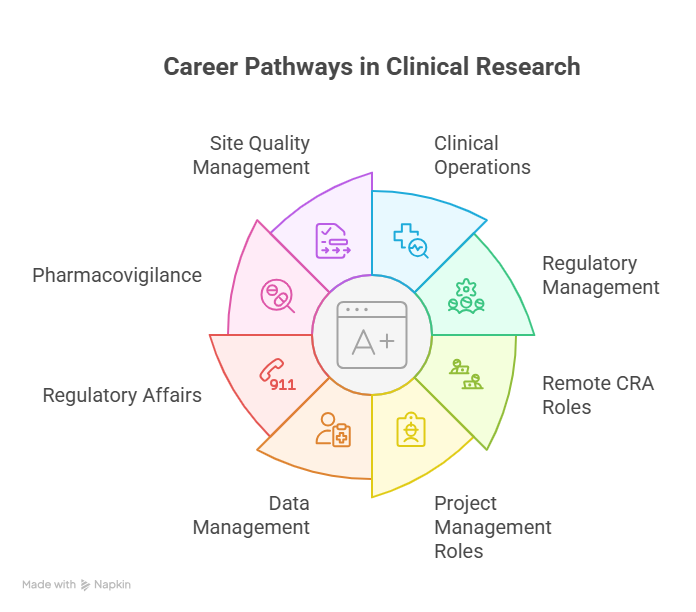
Beyond traditional roles, certification also opens doors to Data Management, Regulatory Affairs, Pharmacovigilance, and Site Quality Management — all high-demand segments as Michigan integrates AI and cloud-based clinical platforms. Professionals with dual certifications (CRA + GCP) from CCRPS Online are seeing a 42% faster climb into mid-level management positions.
Clinical research leadership roles are also expanding. Project Managers with CCRPS credentials are increasingly tasked with multi-site budget management, cross-functional team coordination, and FDA audit preparation — skills directly taught in CCRPS’s Clinical Research Management program.
5.Why CCRPS Is the Preferred Certification Provider
Unlike many short-course providers, CCRPS (Certified Clinical Research Professional Society) designs its certifications around sponsor and CRO compliance needs. That’s why global employers — from Pfizer to Medpace — verify CCRPS certificates directly during recruitment.
The Clinical Research, CRA, and ICH-GCP certifications are all aligned with FDA, EMA, and MHRA expectations, ensuring professionals meet international regulatory standards. Each CCRPS program includes hands-on case simulations, mock site inspections, and protocol deviation analysis — giving learners practical knowledge beyond textbook theory.
CCRPS graduates in Michigan report:
Higher recruiter response rates within 2 weeks of certification completion.
Job placements at university-affiliated hospitals such as Henry Ford Health and U-Michigan Medicine.
Increased salary offers compared to uncertified candidates, according to CCRPS’s 2025 employability report.
Beyond learning, CCRPS also provides career support modules: resume templates tailored for CROs, mock interview prep, and direct job board access.
By enrolling in CCRPS Clinical Research Certification Online, Michigan candidates gain lifetime access to updated regulatory content, ensuring long-term compliance in a field where policies evolve annually.
Why it matters: With rising FDA and NIH oversight in 2025, certification is no longer optional — it’s a compliance shield and career accelerator.
6. FAQs: Clinical Research Certification in Michigan (2025–2026)
-
You typically need a bachelor’s degree in life sciences, pharmacy, or nursing. However, CCRPS accepts professionals with equivalent medical or research experience. The CCRPS Clinical Research Certification helps bridge academic and industry gaps with flexible online modules.
-
Most candidates complete their CCRPS certification in 4–6 weeks, depending on study pace. The course is self-paced with access to downloadable materials and real-world clinical scenarios.
-
Yes. Major employers such as Pfizer, ICON, Covance, and the University of Michigan Health System recognize CCRPS certifications for both entry-level and senior positions.
-
Certified clinical research professionals in Michigan earn $75,000–$120,000 annually, depending on role and experience. CRA certification holders generally see the highest growth.
-
Yes. Michigan hospitals and academic centers offer internships and apprenticeships, with average pay between $20–$28/hour. Many are listed through CCRPS partner programs.
-
CCRPS delivers globally recognized, regulator-aligned training with affordable fees, job placement resources, and continued education options. Its alumni work in top CROs and biotech firms across the U.S.
-
Yes — CCRPS’s credentials meet ICH-GCP global standards, allowing Michigan graduates to pursue roles in Canada, the U.K., India, and the EU.
