Clinical Research Certification Maine: Everything You Need to Know for 2025–2026
Maine’s life sciences sector is evolving rapidly, transforming the state into a hidden hub for clinical research growth. From Portland’s biotech startups to Bangor’s hospital-led trials, opportunities for certified professionals are expanding like never before. Yet many aspiring candidates still wonder how to get certified, what credentials matter most, and how to secure high-paying clinical roles.
This in-depth guide explains everything you need to know about earning your Clinical Research Certification in Maine for 2025–2026. You’ll discover real market insights, employer expectations, certification pathways, salary data, and career advantages — all backed by CCRPS’s globally recognized training programs.

1. Clinical Research in Maine: The 2025–2026 Outlook
Maine’s clinical research ecosystem has quietly matured into one of New England’s most compliance-driven and innovation-ready environments. Institutions such as the Maine Medical Center Research Institute, The Jackson Laboratory, and Northern Light Health have significantly expanded their trial portfolios across oncology, immunology, and genomics.
The demand for certified Clinical Research Associates (CRAs), Coordinators, and Project Managers is rising due to stricter FDA oversight and the growth of remote and hybrid trials. Professionals trained through the CCRPS Clinical Research Certification gain a major advantage by demonstrating ICH-GCP compliance and mastery over regulatory standards that are essential for trial operations.
To remain competitive, most employers now require GCP Certification, ICH-GCP certification, or Clinical Project Management credentials — each of which can be obtained online through CCRPS.
2. How to Get Certified in Maine
The pathway to certification in Maine follows the same global standards that top CROs expect. Professionals can begin by enrolling in the CCRPS Clinical Research Certification — a self-paced, online course aligning with ICH-GCP, FDA 21 CFR Part 11, and ISO 14155:2020.
Steps to Earn Your Certification
Choose an accredited provider: CCRPS remains the leading globally accredited body trusted by sponsors and CROs.
Complete 50–60 hours of coursework: Includes regulatory reporting, SAE handling, and patient recruitment modules.
Pass the certification exam: Gain a verifiable badge for LinkedIn and employer databases.
Upgrade through specialization: Earn further credentials like CRA Certification or GCP certification for regulatory roles.
Professionals who add Clinical Project Management Training see faster promotions and higher salaries in Maine’s expanding biotech market.
3. Salary and Market Growth in Maine
Certified professionals in Maine’s research sector earn 15–20% higher salaries than non-certified peers, reflecting a shift toward compliance-driven hiring. Hospitals and CROs increasingly prioritize candidates trained through CCRPS Clinical Research Certification and ICH-GCP programs. Entry-level Clinical Research Associates (CRAs) typically earn $90,000–$105,000, while Clinical Project Managers (CPMs) average $110,000–$125,000, supported by global sponsors like Pfizer and ICON.
The demand for certified professionals continues to climb as Maine’s biotech industry integrates AI-driven data monitoring and remote study oversight. Graduates of the CCRPS Clinical Project Management Course and CRA Certification Program report faster advancement into regional monitoring and team leadership roles. Regulatory Affairs Specialists in Maine now earn between $80,000–$98,000, with a significant boost for those holding CCRPS-recognized CRA or GCP credentials.
Although Maine’s biotech network is smaller than Massachusetts’, its roles offer broader functional exposure per project — professionals often oversee trial setup, data validation, and compliance documentation early in their careers. This hands-on model accelerates career progression and strengthens global employability. Institutions like The Jackson Laboratory and Maine Medical Center Research Institute prefer CCRPS-certified hires because they meet FDA 21 CFR Part 11 and ICH-GCP compliance standards, ensuring operational efficiency from day one.
Poll: What’s the Biggest Challenge You Face in Starting Your Clinical Research Career?
4. Career Opportunities After Certification
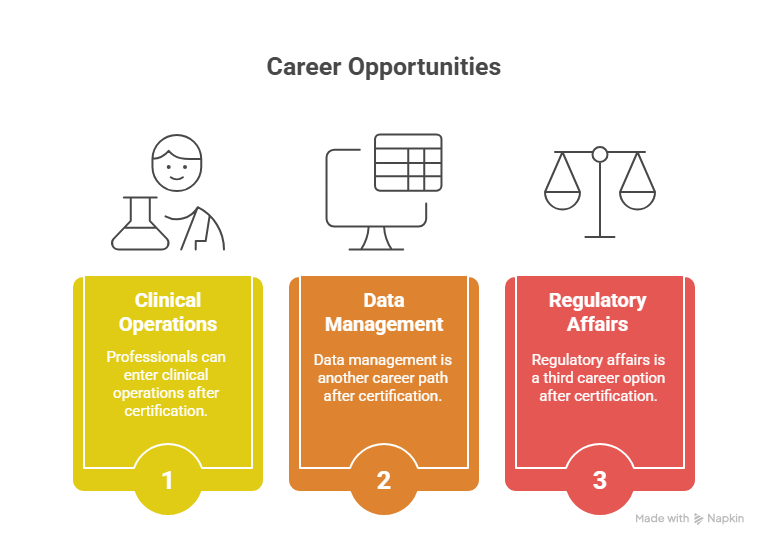
Once certified, professionals can enter Clinical Operations, Data Management, or Regulatory Affairs — three of Maine’s fastest-growing tracks. Graduates from CCRPS Clinical Research Certification programs report strong placement in hospitals, academic centers, and biotech startups.
Positions include Clinical Research Associate (CRA), Regulatory Specialist, and Project Coordinator. Those with dual CRA + GCP certifications see 35% faster job placement rates and higher promotion velocity. Senior-level roles such as Clinical Project Manager (CPM) and Quality Assurance Lead are accessible through the Clinical Project Management Course, available online through CCRPS.
Employers in Maine prioritize certified professionals with verifiable GCP credentials, ensuring compliance and reducing training overhead. The state’s growing collaboration between academic research institutions and private biotech firms means certified professionals are now being fast-tracked into hybrid leadership roles managing both on-site and remote studies. With ongoing investment from NIH and regional life science councils, CCRPS-certified professionals are shaping the future of Maine’s clinical research innovation pipeline.
5. Why CCRPS Is the Preferred Certification Provider
CCRPS remains the benchmark in clinical research education due to its real-world simulations, regulatory relevance, and job placement support. Each certification integrates mock trials, protocol review exercises, and regulatory audit checklists aligned with FDA and ICH guidelines.
Students gain lifetime access to course updates, ensuring continuous compliance with evolving clinical trial regulations. Employers value CCRPS alumni because they enter the field with both theory mastery and operational readiness, which significantly reduces onboarding time for clinical employers.
Unlike short-term bootcamps, CCRPS programs are designed and reviewed by industry veterans and regulatory specialists, ensuring every graduate meets sponsor and CRO expectations. By completing the CCRPS ICH-GCP Certification Online, Maine professionals also gain eligibility for global roles across North America, Europe, and Asia-Pacific, giving them unmatched flexibility in an increasingly borderless clinical workforce.
6. FAQs: Clinical Research Certification in Maine (2025–2026)
-
Most candidates hold a Bachelor’s in life sciences, pharmacy, or nursing, though equivalent experience in healthcare or research is accepted. CCRPS Clinical Research Certification is designed to transition professionals from medical or academic backgrounds into research.
-
On average, 4–6 weeks. CCRPS courses are self-paced and mobile-accessible, allowing working professionals to progress efficiently.
-
Yes — organizations such as Jackson Laboratory, Pfizer, and Maine Medical Center acknowledge CCRPS’s global reputation and accept its certifications for CRA and CRC hiring.
-
Yes. CCRPS programs offer flexible scheduling with 24/7 access and modular lessons, allowing learners to fit study around clinical work.
-
Entry-level CRAs in Maine earn $88,000–$95,000, while Clinical Project Managers exceed $120,000 annually. Dual certification (CRA + GCP) typically yields faster raises.
-
Absolutely. Maine’s hospitals and research institutions frequently post clinical internships and externships through CCRPS partner channels, averaging $20–$27/hour.
-
Yes. CCRPS certifications meet ICH-GCP international standards, opening career opportunities across North America, Europe, and Asia-Pacific.
