
Nurse to Clinical Research Career: Reddit Experiences Across CRC, CRA, PV & Clinical Project Management Paths
A nurse with eight years of ICU experience can manage deteriorating patients, interpret complex clinical information, and coordinate multidisciplinary care, yet still receive an automatic rejection for an entry-level clinical research position. That frustration appears repeatedly in nursing career-change discussions on Reddit. Employers often want documented research operations experience, even when candidates possess substantial clinical expertise. Whether you're considering clinical research coordinator (CRC), clinical research associate (CRA), pharmacovigilance (PV), or clinical project management, the right transition depends on your clinical background, financial expectations, and ability to demonstrate research-specific skills.
1. Why Experienced Nurses Struggle to Enter Clinical Research and Which Path Fits Best
A nurse who can recognize sepsis, coordinate critical interventions, and document complex patient care may still lack the experience required to manage clinical trial activities. Research employers evaluate skills that extend beyond bedside practice, including protocol compliance, informed consent requirements, study documentation, adverse event reporting, and regulatory oversight.
The hiring challenge is especially pronounced for nurses applying directly to sponsor-side research positions. A candidate might have excellent patient assessment skills but little familiarity with source data review and verification, site monitoring visit procedures, or risk-based monitoring strategies.
These gaps influence how employers evaluate readiness.
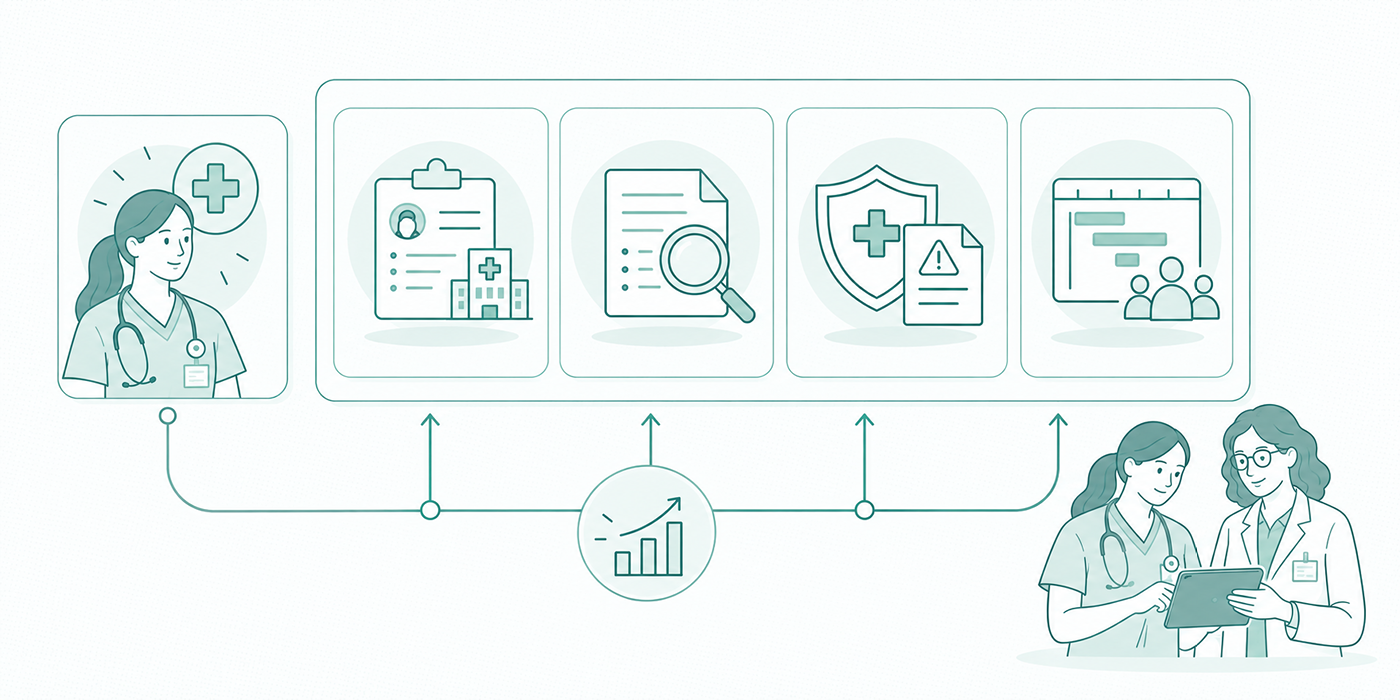
The four clinical research paths available to nurses
Clinical Research Coordinator (CRC): This pathway suits nurses who want to retain patient interaction while developing responsibility for participant recruitment, protocol execution, research documentation, and investigator-site operations.
Research nurse and CRC positions frequently offer the most practical introduction to the industry. Nurses can transfer clinical assessment skills while learning protocol deviation management, participant retention strategies, and clinical trial site oversight.
Clinical Research Associate (CRA): This pathway suits nurses interested in evaluating investigator-site compliance, reviewing trial records, monitoring research conduct, and identifying operational risks.
CRA positions demand familiarity with remote and on-site monitoring and GCP monitoring techniques. Employers often prefer candidates with previous study coordination or monitoring experience.
Pharmacovigilance (PV): This pathway is particularly relevant for nurses with strong medication safety knowledge, medical documentation skills, and experience identifying adverse reactions.
Entry-level opportunities may include drug safety associate, PV case processor, and medical information roles. Technical competencies include clinical trial safety monitoring, case narrative preparation, seriousness assessment, and global pharmacovigilance compliance.
Clinical Project Management: Nurses experienced in charge nursing, multidisciplinary coordination, or operational leadership may eventually pursue study operations and clinical project management.
This pathway requires familiarity with clinical trial timelines, research project quality management, budgets, vendors, and risk escalation.
What Reddit experiences reveal about the career-change problem
In nursing and clinical research Reddit discussions, several recurring frustrations emerge.
Experienced nurses describe being rejected for positions advertised as entry-level. Others report accepting salary reductions to obtain their first research responsibilities. Some discover that clinical research jobs involve substantial administrative workloads, while aspiring CRAs encounter hiring requirements emphasizing previous monitoring experience.
These are individual accounts rather than representative employment statistics. They provide useful warnings about how different research roles operate.
One important distinction concerns job classification. A hospital research nurse may remain within an RN salary structure, while a general CRC position may follow a different compensation scale.
Another concerns employer expectations. Academic research sites may value specialty-specific nursing experience, whereas CROs and sponsors frequently emphasize documented trial operations.
The site versus CRO versus sponsor comparison helps explain why identical candidates can encounter different hiring outcomes.
How ICH E6(R3) affects the skills nurses should develop
ICH E6(R3) reinforces quality by design, proportionate risk management, participant protection, and reliable clinical trial information.
For nurses entering research, studying ICH E6(R3) career expectations can strengthen understanding of investigator responsibilities, clinical trial data integrity, and ethical participant protection.
A candidate should be able to describe how clinical findings affect protocol-defined safety obligations, documentation requirements, and investigator oversight.
The strongest first research position is usually the one that combines existing clinical expertise with responsibilities an employer can verify.
| Career Role | Nursing Advantage | Main Hiring Barrier | Priority Skill | Best Entry Strategy |
|---|---|---|---|---|
| Clinical Research Nurse | Patient assessment | Trial protocol experience | Research visit execution | Hospital research units |
| CRC I | Patient communication | Research documentation | Eligibility and informed consent | Investigator sites |
| CRC II | Clinical coordination | Independent study management | Query and deviation handling | Specialty research sites |
| Oncology CRC | Cancer care knowledge | Oncology endpoint complexity | Visit windows and safety records | Cancer research centers |
| Cardiology Research Nurse | Cardiac monitoring | Protocol-specific assessments | Endpoints and safety follow-up | Cardiology trial departments |
| Clinical Research Assistant | Medical terminology | Research administration | Study logs and logistics | Academic research centers |
| Clinical Trial Assistant | Medical documentation | Essential records experience | eTMF and document tracking | CRO operations teams |
| Regulatory Coordinator | Compliance awareness | IRB/IEC submissions | Regulatory documentation | Site regulatory departments |
| Study Start-Up Associate | Multidisciplinary coordination | Site activation knowledge | Activation milestones | CRO start-up teams |
| In-House CRA | Clinical risk reasoning | Site oversight experience | Remote issue management | Supported monitoring positions |
| CRA I | Clinical assessment | Monitoring experience | SDR, SDV and reports | CRA bridge opportunities |
| CRA II | Therapeutic expertise | Independent monitoring history | Complex visit management | Advance from CRA I |
| Senior CRA | Risk escalation judgment | Advanced site oversight | Monitoring strategy | Multi-study monitoring |
| Central Monitoring Associate | Patient safety awareness | Trial analytics experience | Key risk indicators | Central monitoring teams |
| Drug Safety Associate | Medication assessment | ICSR processing knowledge | Safety case intake | PV service providers |
| PV Case Processor | Medical narrative writing | Safety database experience | Case validity and coding | Drug safety operations |
| Safety Reporting Specialist | Adverse-event knowledge | Reporting regulations | Expedited safety reporting | Safety reporting teams |
| PV Quality Associate | Documentation accuracy | PV quality systems | Case QC and CAPA | PV quality departments |
| PV Compliance Associate | Policy adherence | Safety governance experience | Reconciliation and metrics | PV compliance departments |
| PV Scientist | Clinical interpretation | Aggregate safety analysis | Signal evaluation | Progress through PV roles |
| Medical Information Associate | Healthcare communication | Scientific response standards | Literature-based responses | Medical information vendors |
| Clinical Data Coordinator | Medical record interpretation | EDC experience | Query resolution | Clinical data teams |
| Clinical Trial Specialist | Cross-team coordination | Study operations experience | Milestone and vendor tracking | Sponsor/CRO operations |
| Clinical Project Coordinator | Prioritization skills | Trial project systems | Timelines and action logs | Project support teams |
| Assistant Clinical Trial Manager | Operational coordination | Study delivery history | Site performance oversight | Clinical trial management support |
| Clinical Trial Manager | Clinical risk judgment | End-to-end trial experience | Vendors, budgets and risks | Study operations progression |
| Clinical Project Manager | Resource management | Project accountability | Forecasting and governance | Own defined study workstreams |
| Clinical Program Manager | Therapeutic knowledge | Multi-study leadership | Portfolio dependencies | Senior project management track |
2. CRC vs. CRA: Which Clinical Research Career Offers Nurses the Strongest Entry Point?
Clinical research coordinator and clinical research associate are frequently treated as interchangeable career options by nurses exploring research jobs. Their daily responsibilities, hiring requirements, and opportunities for advancement differ considerably.
For nurses without direct research experience, research nurse and CRC positions generally offer a more accessible first step. CRA positions frequently require prior evidence of trial conduct, site oversight, or monitoring knowledge.
The CRC pathway: Build trial experience while using clinical expertise
A CRC supports investigators with participant screening, eligibility assessments, visit scheduling, informed consent coordination, research documentation, data queries, and protocol compliance.
Nurses already understand many of the clinical components. The challenge involves learning how those activities must be performed, documented, and overseen within a clinical trial.
Consider an oncology nurse transitioning to a CRC position.
The nurse understands treatment-related adverse reactions, laboratory abnormalities, and symptom assessment. As a coordinator, the same professional must determine whether a participant meets protocol-defined eligibility criteria, whether an assessment falls within the required visit window, and whether missing data could compromise endpoint evaluation.
The nurse also becomes involved in protocol deviation documentation, site monitoring preparation, research assistant protocol adherence, and participant retention planning.
These experiences can become the basis of a future CRA application.
Best candidates for the CRC pathway: Oncology nurses, cardiology nurses, ICU nurses, outpatient nurses, and professionals who enjoy ongoing patient relationships and complex clinical coordination.
Why research nurse and CRC salaries can differ significantly
A major issue raised in nursing career discussions is the potential reduction in income when leaving bedside practice.
Some hospitals classify research nurses within professional nursing pay structures. Others classify CRC positions according to research administration or clinical operations compensation systems.
Consequently, two employees supporting similar studies may have different salary structures depending on their position titles, responsibilities, and institution.
A nurse earning substantial overtime or shift differentials may experience an especially large income reduction after moving into a fixed-salary research position.
Before accepting an offer, compare base salary, expected annual hours, overtime eligibility, employer retirement contributions, paid leave, insurance, and promotion opportunities.
A research job offering more predictable working hours may improve long-term sustainability, but the financial implications deserve careful evaluation.
The comparison of first clinical research employers can help determine whether an academic hospital, independent research site, or CRO offers the best initial opportunity.
The CRA pathway: Oversight, monitoring, and difficult entry requirements
CRAs oversee clinical trial conduct on behalf of sponsors or CROs. Responsibilities include monitoring investigator sites, evaluating protocol compliance, reviewing clinical trial records, identifying findings, and following up on unresolved issues.
Successful monitoring requires knowledge of clinical trial data verification, risk-based monitoring methodology, investigator meeting procedures, and remote monitoring practices.
A CRA must also distinguish findings requiring immediate escalation from documentation issues that can be corrected through routine follow-up.
Suppose a monitor discovers that a participant received investigational treatment before all protocol-required eligibility assessments were completed.
The monitor must establish the facts, assess applicable protocol and safety implications, follow the appropriate escalation process, and document the finding accurately.
Clinical nursing experience helps with evaluating possible patient risks. Research experience establishes how the problem should be addressed through trial oversight processes.
The practical RN-to-CRA career bridge
A realistic progression may look like:
Registered Nurse → Research Nurse or CRC → CRA I or In-House CRA → CRA II → Senior CRA
Some employers offer training programs that support direct nursing-to-CRA transitions, although availability varies and such programs should never be assumed.
Nurses pursuing monitoring careers should prioritize five kinds of experience:
Supporting monitoring visits and responding to monitor requests.
Resolving data queries and maintaining accurate source documentation.
Recognizing protocol deviations and assisting with appropriate follow-up.
Organizing essential study records and supporting inspection readiness.
Communicating operational risks to investigators, site leaders, and monitors.
A future CRA candidate who can describe these responsibilities using actual study examples offers stronger evidence than someone relying entirely on bedside nursing credentials.
Before pursuing traveling CRA positions, compare CRA travel and burnout experiences, CRO versus sponsor working conditions, and CRA salary progression.
Ask recruiters about actual days on site, overnight travel, assigned site count, reporting deadlines, and the support available for difficult investigator-site situations.
3. Pharmacovigilance and Clinical Project Management: Two Alternative Paths Nurses Should Consider
Nurses frequently overlook pharmacovigilance and clinical project management while concentrating on CRC and CRA positions.
Both paths use clinical judgment, but their work environments and specialist requirements differ significantly.
Pharmacovigilance: Build a career around medication safety
Pharmacovigilance involves identifying, assessing, understanding, and preventing adverse effects and other problems associated with medicines.
Nurses working in emergency departments, ICUs, oncology units, and medication-intensive specialties already encounter situations relevant to safety assessment.
A drug safety associate, however, must translate clinical observations into standardized safety documentation.
For example, imagine receiving a report involving a patient who developed shortness of breath after beginning a new medication and subsequently required hospitalization.
A trained PV professional must identify whether the report contains the minimum information needed for case validity, clarify the chronology, assess available seriousness criteria, determine missing clinical information, and follow applicable reporting procedures.
Seriousness, severity, and causality must be considered separately.
A hospitalization may make an event serious for regulatory purposes even when the clinical severity is moderate. A serious event may also occur without sufficient evidence to attribute it to the suspected medicine.
Relevant training includes clinical trial safety monitoring, global pharmacovigilance requirements, PV audit preparation, and adverse event reporting compliance.
Best candidates for PV: Nurses with strong medication knowledge, detailed medical writing ability, analytical judgment, and interest in safety documentation.
Which PV jobs should nurses target first?
Drug safety associate, case processing associate, safety intake specialist, and medical information associate are potential entry roles.
Case processing positions often emphasize medical terminology, case narratives, safety database familiarity, documentation accuracy, and regulatory timelines.
PV quality positions additionally require experience assessing documentation completeness, process deviations, quality controls, and corrective actions.
Nurses should explore entry-level pharmacovigilance hiring, PV certification value, and pharmacovigilance salary expectations.
Professionals considering the field should also study AI and drug safety automation.
Increasing automation may change how routine case intake and documentation tasks are performed, making complex medical interpretation, quality control, and regulatory judgment particularly important capabilities.
Clinical project management: From nursing leadership to study delivery
A nurse who has managed staffing assignments, coordinated patient transfers, resolved resource conflicts, or supervised clinical teams may possess useful leadership experience.
Clinical project management adds trial-specific responsibilities involving budgets, study timelines, vendor performance, risk management, recruitment targets, and cross-functional deliverables.
Imagine a multicenter clinical trial experiencing delayed enrollment.
A clinical project manager must investigate whether the problem originates from site activation delays, restrictive eligibility criteria, low patient availability, competing studies, or inadequate recruitment resources.
The manager then coordinates corrective actions while tracking the consequences for budgets, timelines, and study milestones.
Preparation requires familiarity with clinical trial milestone management, clinical research team leadership, project quality management, and clinical trial budget management.
Nurses should consider clinical project coordinator, clinical trial specialist, study operations associate, or assistant trial management positions as potential entry points.
Those already working in site research can investigate CRC-to-clinical-trial-manager transitions.
Nurses who subsequently become monitors may prefer the CRA-to-clinical-trial-manager route.
Which path offers the strongest long-term fit?
CRC roles fit nurses who enjoy participant-facing responsibilities and investigator-site operations.
CRA roles fit professionals who prefer independent oversight, structured problem-solving, monitoring documentation, and interactions across multiple research sites.
PV suits nurses interested in medication safety, case analysis, scientific documentation, and regulatory processes.
Project management suits those who want to coordinate trial execution, resolve operational problems, and assume responsibility for defined deliverables.
The best career choice depends on which responsibilities you want to develop into long-term expertise.
What's Your Biggest Obstacle to Switching From Nursing to Clinical Research?
Choose one. Your answer points to the most practical next step.
Target research nurse, site coordinator, or protocol-support positions matching your specialty. Build evidence involving participant screening, consent procedures, source documentation, and deviation handling before pursuing independent CRA positions.
Explore the clinical research entry guideInvestigate RN-classified research nurse positions before accepting general CRC offers. Compare annual pay, overtime, retirement benefits, working hours, and future advancement opportunities.
Compare research employer pathwaysCRC emphasizes participant-facing trial execution. CRA focuses on monitoring and site oversight. PV specializes in drug safety. Clinical project coordination focuses on study timelines, operational risks, and deliverables.
Compare clinical research career optionsBegin with current GCP principles and the technical processes required by your target job. Build practical competency evidence and verify employer requirements before investing in additional certifications.
Evaluate GCP certification valueExplore research nursing, site-based CRC, PV operations, and selected trial support positions. Ask about travel days, caseloads, after-hours responsibilities, reporting deadlines, and overtime expectations.
Understand CRA travel and work-life balance4. How to Build a Clinical Research Resume That Makes Nursing Experience Valuable to Employers
A research recruiter must be able to identify relevant competencies quickly. General statements about compassion, teamwork, and attention to detail rarely demonstrate readiness for a technical clinical research role.
Nurses should explain how their clinical responsibilities connect to participant safety, protocol-related activities, operational coordination, and documentation accuracy.
Turn bedside nursing responsibilities into research-relevant achievements
Example 1 — ICU nursing to pharmacovigilance
Ordinary resume statement:
"Administered medications and monitored patients for adverse reactions."
Research-focused version:
"Monitored critically ill patients receiving complex medication regimens, documented changes in clinical status, escalated suspected adverse reactions, and coordinated medical follow-up."
This version demonstrates competencies relevant to drug safety operations and pharmacovigilance career pathways.
Example 2 — Oncology nursing to CRC
Ordinary statement:
"Provided chemotherapy care and patient education."
Research-focused version:
"Coordinated oncology treatment schedules, assessed treatment tolerability, documented clinical findings, and communicated emerging safety concerns to multidisciplinary treatment teams."
This provides evidence relevant to clinical trial participant support. Candidates with actual trial exposure can additionally describe protocol-specific assessments, participant follow-up, or research site documentation.
Example 3 — Charge nurse to clinical project coordination
Ordinary statement:
"Managed staff scheduling and daily operations."
Research-focused version:
"Coordinated multidisciplinary clinical operations, prioritized competing resource requirements, resolved scheduling conflicts, and escalated operational risks affecting service delivery."
These responsibilities connect to clinical trial logistics, team communication, and research project leadership.
Resume claims should reflect work actually performed. Candidates must distinguish transferable clinical experience from formal research experience.
Build a four-piece portfolio proving research readiness
A practical portfolio can strengthen applications when nurses lack previous trial employment.
Use fictional or publicly available training scenarios and label all exercises as simulations.
Portfolio item 1 — Eligibility assessment checklist.
Create a hypothetical clinical trial with inclusion and exclusion criteria. Demonstrate how eligibility questions would be reviewed, which supporting records might be required, and which decisions must remain with an authorized investigator.
Portfolio item 2 — Safety event narrative.
Draft a fictional case involving hospitalization following medication administration. Include the event chronology, seriousness considerations, available causality information, missing clinical details, and appropriate follow-up questions.
Relate the exercise to adverse event reporting principles.
Portfolio item 3 — Protocol deviation assessment.
Develop a scenario in which a protocol-defined assessment occurs outside its permitted visit window. Explain the factual documentation, possible participant safety or data implications, notification requirements, and corrective or preventive measures.
Portfolio item 4 — Clinical trial milestone tracker.
Build a sample tracker containing site activation milestones, recruitment targets, outstanding essential documents, action owners, operational risks, and delivery deadlines.
This demonstrates relevant preparation for study timeline management and clinical trial project coordination.
The strongest portfolio shows that an applicant understands how study processes connect to patient safety and reliable trial results.
Choose training based on actual hiring requirements
Nurses should evaluate training against specific job responsibilities.
CRC candidates benefit from understanding research protocol adherence, investigator oversight, and essential training requirements.
CRA candidates need familiarity with monitoring procedures and clinical trial data verification.
PV candidates should study case validity, safety database workflows, narrative writing, and pharmacovigilance reporting requirements.
Clinical project coordination candidates should understand trial milestones, risk logs, functional responsibilities, and project close-out procedures.
Before purchasing a course, investigate certification versus experience in clinical research hiring and employer expectations for GCP credentials.
A credential should provide meaningful knowledge or satisfy an identifiable employer requirement. Course completion by itself cannot substitute for independent monitoring experience or documented study management responsibility.

5. A 90-Day Nurse-to-Clinical-Research Career Transition Plan With Measurable Hiring Milestones
A nursing-to-research career change becomes easier to manage when preparation follows a structured sequence.
The following 90-day strategy focuses on building technical knowledge, demonstrating transferable competence, identifying realistic employers, and improving interview performance.
It is a preparation framework rather than a guarantee of employment within 90 days.
Days 1–15: Select a primary career path and two bridge positions
Begin by evaluating your nursing specialty and the responsibilities you want in your next career.
An ICU nurse may investigate clinical research nursing, emergency medicine trials, and drug safety operations. An oncology nurse may target oncology CRC positions, cancer research nursing, or therapeutic-area monitoring careers.
A charge nurse with substantial supervisory experience may investigate clinical project support positions.
Review at least 15 relevant job descriptions and identify recurring requirements.
Separate those requirements into three categories:
Skills you already possess through nursing.
Skills you can develop through training and practical exercises.
Experience requirements that usually require actual clinical trial employment.
This distinction prevents unnecessary spending on courses that cannot resolve experience-based hiring barriers.
Use clinical research entry-level career comparisons and strategies for entering research without experience.
Day 15 milestone: Select one primary role, two alternative job titles, and a documented list of missing competencies.
Days 16–30: Develop the technical knowledge employers test
Concentrate on the procedures that appear repeatedly in your target job descriptions.
For CRC roles, focus on eligibility screening, informed consent, source documentation, visit scheduling, protocol deviations, and participant safety.
For CRA roles, study monitoring visit procedures, source data review, essential records, issue escalation, and risk-based monitoring concepts.
For pharmacovigilance, practice recognizing potentially serious adverse events, preparing case narratives, and identifying missing safety information.
For project coordination, become familiar with milestone trackers, risk registers, project action logs, and quality management principles.
Day 30 milestone: Demonstrate your understanding through three realistic research scenarios and explain which decisions require qualified investigator or supervisor involvement.
Days 31–45: Rewrite your resume and develop proof-of-skill materials
Create a targeted resume for your chosen position instead of using one generic document for every application.
An oncology CRC resume should prioritize relevant therapeutic expertise, patient coordination, documentation, and any existing protocol experience.
A PV resume should emphasize medication safety, clinical assessment, medical writing, and adverse-event recognition.
A project support resume should emphasize deliverable tracking, resource coordination, escalation, and measurable operational achievements.
Support your resume with the fictional portfolio exercises described earlier.
Review CRC hiring requirements without prior experience and clinical research certification return on investment.
Day 45 milestone: Complete a tailored resume, four simulated work samples, and two versions of your professional summary.
Days 46–60: Apply strategically and build professional connections
Target organizations conducting clinical trials in your current specialty.
For example, nurses working in oncology should investigate academic cancer centers, oncology practices participating in clinical research, and institutions with dedicated research nursing teams.
Ask your hospital's research department whether there are internal vacancies or legitimate shadowing and training opportunities.
Contact experienced CRCs, research nurses, and clinical operations professionals to understand which competencies new hires struggle with most.
A useful networking question is:
"Which responsibilities require the most training when an experienced nurse joins your research department, and how could an applicant demonstrate readiness?"
The answer may reveal practical expectations that are difficult to identify from ordinary job advertisements.
Day 60 milestone: Identify 20 relevant employers, complete targeted applications, and establish five meaningful professional connections.
Days 61–75: Prepare for technical interviews and evaluate employers
Practice explaining real nursing experiences through the lens of study conduct and operational accountability.
For example, an interviewer may ask how you would respond if a participant missed a protocol-required assessment.
A strong answer recognizes that the response depends on the protocol, possible participant safety implications, investigator responsibilities, and the need for accurate documentation.
Use participant retention techniques and protocol deviation management to prepare.
Ask employers about onboarding, protocol training, supervisor availability, workload, and how newly hired researchers are evaluated.
A workplace offering meaningful training and supervised responsibility can provide better long-term career development than a position with an attractive title and little operational support.
Day 75 milestone: Prepare six research-specific interview examples and a list of questions for assessing employer quality.
Days 76–90: Diagnose application problems and refine your strategy
Evaluate your hiring outcomes.
If few applications produce initial screening calls, investigate whether job titles, minimum experience requirements, location restrictions, or resume wording are creating problems.
If screening calls succeed but technical interviews do not, strengthen your familiarity with actual trial procedures and prepare more precise competency examples.
If offers arrive but salaries are disappointing, revisit research nurse positions, internal hospital transfers, and other roles that may preserve existing earning power.
Candidates interested in senior management should prioritize opportunities involving clinical trial leadership, study budget management, and cross-functional project delivery.
Day 90 milestone: Have a refined career target, stronger interview evidence, identified hiring barriers, and a clear plan for obtaining the experience employers repeatedly request.
6. FAQs: Nurse to Clinical Research Career
-
Yes. Some hospitals and investigator sites hire registered nurses into CRC positions when their clinical background matches the therapeutic area and they can demonstrate relevant documentation and coordination skills.
Oncology, cardiology, emergency, and critical care nursing experience may be particularly useful for matching research specialties.
Candidates should study CRC entry-level hiring requirements, research protocol adherence, and ethical clinical trial responsibilities.
-
Direct nursing-to-CRA transitions can occur through suitable employer training programs or positions designed for candidates with transferable clinical backgrounds.
However, many CRA vacancies require actual clinical trial or monitoring experience.
Nurses should investigate CRA career paths without monitoring experience while considering research nurse, CRC, or supported in-house CRA opportunities.
Actual experience handling study documentation, monitoring findings, and protocol compliance issues can improve competitiveness.
-
Pharmacovigilance, medical information, clinical data operations, and selected clinical trial support positions may offer remote or hybrid opportunities.
Some CRA positions involve substantial travel despite including remote administrative work.
Remote working arrangements depend on employer policies, experience requirements, geographic restrictions, and job responsibilities.
Review CRO versus sponsor working conditions and pharmacovigilance career opportunities before choosing a specialty.
-
A salary reduction is possible, particularly when moving from a well-compensated bedside position with shift differentials into an entry-level coordinator role.
Research nurse positions may preserve more of an existing nursing salary when classified within an RN compensation structure.
Longer-term earnings depend on location, employer, career progression, and specialization.
Compare total compensation and study CRA salary progression alongside pharmacovigilance salary expectations.
-
Certification requirements vary by employer, position, and credential.
Some entry-level CRC and research nurse positions accept candidates without professional clinical research certification, while particular employers may require specific training.
Professional certifications can also have work-experience eligibility requirements.
Evaluate whether clinical research certification is worthwhile and which GCP credentials employers recognize before investing.
-
Yes. Nursing experience involving medication safety, adverse-event recognition, clinical assessment, and medical documentation can be relevant to entry-level PV positions.
Candidates should develop technical knowledge of individual case safety reports, case validity, seriousness, causality assessment, follow-up, and reporting obligations.
Review how to obtain a PV job without experience and clinical trial safety monitoring procedures.
