
Clinical Research Certification California: Everything You Need to Know for 2025-2026
California stands at the heart of the global clinical research revolution. With over 5,800 active clinical trials, billions in biotech funding, and major employers like Amgen, Gilead Sciences, and Stanford Medicine, the state leads the nation in both research diversity and job creation. Earning your Clinical Research Certification in California through CCRPS positions you for exceptional income growth, career mobility, and leadership potential within the most competitive trial ecosystem in the U.S.

1. California’s Clinical Research Landscape (2025–2026 Overview)
California’s research economy is unrivaled. The San Francisco Bay Area, San Diego, and Los Angeles form a triple-cluster that attracts over 40% of total U.S. clinical trial funding. This dominance is supported by global CROs like Parexel, Syneos Health, and IQVIA, which continue expanding operations across the state.
The California Biomedical Industry Report (2025) projects over 22% job growth in clinical operations roles between 2024 and 2026 — a rate nearly double the national average. CCRPS-certified professionals are now among the most in-demand applicants, especially in hybrid monitoring and data integrity roles where compliance accuracy drives revenue.
Graduates from the CCRPS Clinical Research Certification programs have successfully transitioned into positions across Stanford Health, UCLA Health, and Amgen, earning promotions within their first 18 months. Explore related market trends from Clinical Research Certification Nevada and Clinical Research Certification Arizona to understand the West Coast growth ecosystem.
2. Career Growth, Salaries, and Hiring Trends
California’s clinical operations professionals command the highest salaries nationwide. The state’s talent shortage — particularly for certified CRAs and CRCs — has created a competitive hiring market where CCRPS graduates are often prioritized.
Salary trajectory by position:
Clinical Research Assistant – $58,000–$70,000
Clinical Research Coordinator – $75,000–$95,000
Clinical Research Associate (CRA I–II) – $95,000–$126,000
Clinical Project Manager – $130,000–$165,000
Top recruiters include Kaiser Permanente, Genentech, and Stanford University, which actively list CCRPS Certification as a preferred credential. Learn from Clinical Research Certification Florida and Clinical Research Certification Texas for comparable career ROI.
3. Eligibility & Certification Requirements
The CCRPS Clinical Research Certification in California accepts candidates with:
A bachelor’s degree in a healthcare or science field
Strong understanding of medical records or patient documentation
Commitment to data accuracy and regulatory compliance
CCRPS’s 6–8 week self-paced courses make it ideal for professionals balancing full-time roles. The curriculum emphasizes ICH-GCP, FDA CFR 21 Part 11, and decentralized trial frameworks, preparing graduates for both local and remote CRA positions.
Graduates often leverage CCRPS certification to move into regulatory affairs, data management, and clinical project management within months of completion. Learn more from Clinical Research Certification Indiana and Clinical Research Certification Nebraska.
What’s Holding You Back from Earning Your Clinical Research Certification in California?
4. Opportunities, Challenges, and Pain Points in California
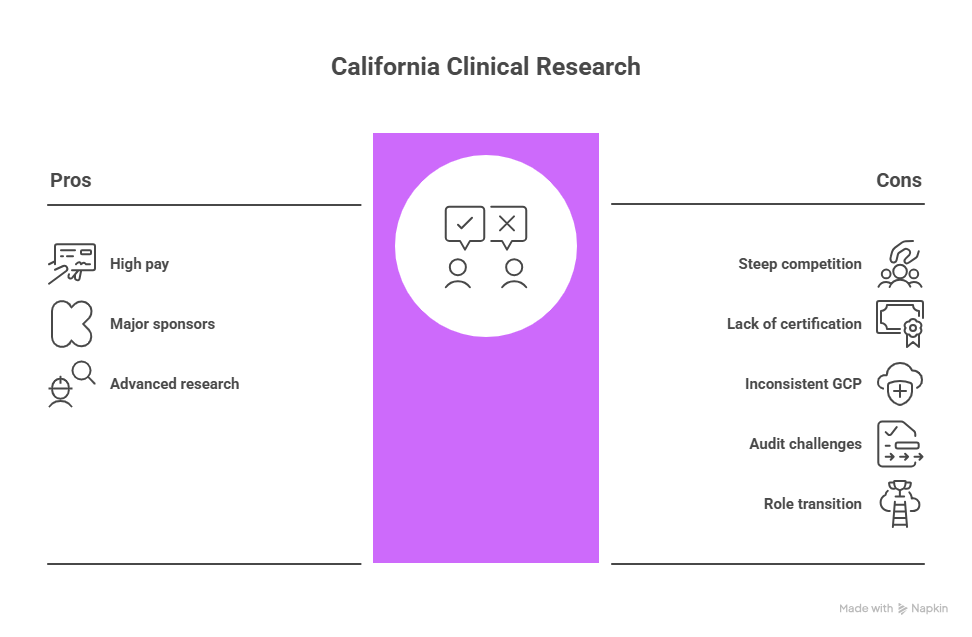
California’s advantages — high pay, major sponsors, and advanced research centers — come with steep competition. Many applicants struggle with lack of certification, inconsistent GCP knowledge, and difficulty navigating sponsor audits.
Top challenges professionals face include:
Transitioning from lab or medical assistant roles into trial coordination
Competing with biostatisticians and PhDs for CRA openings
Managing documentation in decentralized studies
Understanding FDA inspection readiness
CCRPS Certification eliminates these pain points by training professionals in risk-based monitoring, audit preparation, and protocol optimization, building real-world competence.
See also Clinical Research Certification Pennsylvania and Clinical Research Certification New Jersey.
5. Advancing Your Career with CCRPS Certification in California
CCRPS-certified professionals in California consistently report faster promotions and greater salary progression than non-certified peers. Many enter management-level roles within 18–24 months of completing their certification.
With over 400 CROs and 700 active trial sponsors, California offers unmatched career flexibility — whether you’re aiming for remote CRA, Regulatory Manager, or Project Director positions.
Employers like Genentech, Stanford, and Amgen rely on CCRPS graduates for site monitoring and quality assurance. Learn more from Clinical Research Certification Colorado and Clinical Research Certification Louisiana.
6. FAQs – California Clinical Research Certification (2025–2026)
-
You’ll need a bachelor’s degree or relevant healthcare experience. Lab technicians, nurses, and pharmacy graduates are top applicants.
-
Most students finish in 6–8 weeks through the flexible online model, ideal for working professionals.
-
San Diego and San Francisco top the list with CRA salaries exceeding $125,000 annually.
-
Yes. Companies like Amgen, Gilead, and Genentech regularly hire CCRPS graduates for regulatory and CRA positions.
-
Yes. CCRPS assists students with internships at partnered hospitals, CROs, and remote trial sites.
-
Absolutely. Over 80% of CCRPS-certified professionals in California manage hybrid or remote roles.
