Clinical Research Certification Louisiana: Everything You Need to Know for 2025–2026
Louisiana is quietly becoming one of the South’s fastest-emerging centers for clinical research. From New Orleans’ medical districts to Baton Rouge’s biotech corridor, the state is investing heavily in healthcare innovation and clinical trials. Certified professionals are now in high demand as hospitals, CROs, and academic centers expand their research capacity for 2025–2026.
This comprehensive guide explains everything you need to know about earning your Clinical Research Certification in Louisiana, from eligibility and career paths to salaries and emerging opportunities. Built on CCRPS’s globally recognized certification programs, this guide ensures you understand the skills, credentials, and insights needed to succeed in Louisiana’s growing research ecosystem.

1) Clinical Research in Louisiana: 2025–2026 Outlook
Louisiana’s clinical research network is thriving due to a unique blend of hospital-based trials, biotech startups, and university-led collaborations. Major institutions such as Ochsner Health, LSU Health Sciences Center, and Tulane University Medical School lead hundreds of active studies across oncology, neurology, and infectious diseases.
With the FDA emphasizing Good Clinical Practice (GCP) compliance, professionals completing the CCRPS Clinical Research Certification or ICH-GCP Online Certification are positioned for priority hiring.
Employers also prefer those who have trained through Clinical Project Management Courses, as they develop leadership-level understanding of protocol oversight, site audits, and data integrity. As Louisiana’s healthcare industry adopts more decentralized and AI-supported trial structures, CCRPS-certified professionals are leading this transition.
2) How to Get Certified in Louisiana
The pathway to certification in Louisiana aligns with national and international standards. Enrolling in CCRPS Clinical Research Certification ensures mastery of ICH-GCP, FDA Part 11, and ISO 14155:2020 — all vital for employment in hospitals and CROs.
Steps to get certified:
Enroll with CCRPS, the leading globally accredited training provider.
Complete 50–60 hours of interactive learning, covering trial design, site management, and compliance.
Pass the final certification exam and receive a digital badge verifiable on LinkedIn.
Advance into specialization via CRA Certification or Clinical Project Management Training.
Louisiana professionals who pursue CCRPS programs report faster job placements in both hospital-based and decentralized clinical operations.
3) Salary and Job Growth Trends (Expanded)
Certified research professionals in Louisiana earn an average of $90,000–$115,000 annually, with senior CRAs and Project Managers reaching $125,000+. According to CCRPS’s certification data, certified candidates see a 20% salary increase within the first year post-certification.
The state’s biopharma expansion has led to partnerships between CROs and institutions like Tulane Medical Center and Ochsner Health, creating strong pipelines for certified graduates. Professionals who complete GCP Certification Online are now essential hires for both on-site and remote trial operations.
Moreover, Louisiana’s growing clinical data management hubs in Baton Rouge and Shreveport are offering new hybrid roles that blend clinical oversight with data analytics. Graduates of CCRPS Clinical Project Management programs are seeing faster promotions into regional and global project leadership roles. The state’s focus on AI-driven risk-based monitoring ensures that certified professionals remain at the forefront of modern clinical research practices.
Poll: What’s Your Biggest Challenge in Getting Certified?
4) Career Opportunities After Certification
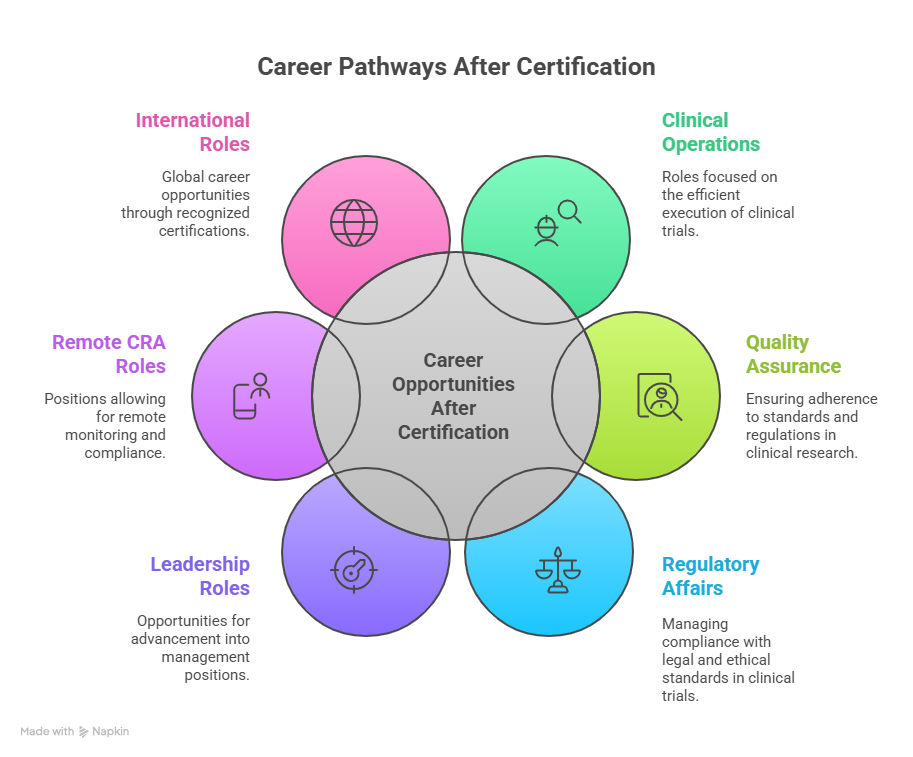
Once certified, professionals can pursue roles in Clinical Operations, Quality Assurance, and Regulatory Affairs. Louisiana’s trial network is ideal for CRAs, Regulatory Specialists, and Project Coordinators who have completed CCRPS CRA Certification.
Dual-certified candidates (CRA + GCP) see 40% faster promotions into leadership roles such as Clinical Project Manager (CPM) or Regulatory Affairs Director. With Louisiana’s ongoing NIH-funded trial expansion, certified professionals are increasingly being recruited for remote CRA and protocol compliance roles across multiple states.
Certified professionals are also eligible for international roles through CCRPS’s globally recognized certification programs, giving Louisiana-based graduates direct access to global markets.
5) Why CCRPS Is the Preferred Certification Provider
CCRPS stands out because of its regulatory-aligned curriculum, real-world trial simulations, and job placement resources. Its programs include mock site audits, protocol deviation analysis, and SAE management, equipping students for real clinical challenges.
Graduates receive lifetime content updates, ensuring compliance with FDA 21 CFR Part 11 and ICH-GCP standards. Employers across Louisiana — including Ochsner, Tulane, and CROs like ICON and Parexel — value CCRPS-certified professionals for their operational readiness and data accuracy expertise.
By enrolling in the CCRPS Clinical Research Certification Online, professionals gain global eligibility and a competitive edge in Louisiana’s expanding trial network.
6) FAQs: Clinical Research Certification in Louisiana (2025–2026)
-
A bachelor’s degree in life sciences, nursing, or pharmacy is ideal, but professionals with healthcare experience can also qualify for CCRPS Clinical Research Certification.
-
Most students finish within 4–6 weeks, studying at their own pace with lifetime course access.
-
Yes. Major employers like Ochsner Health, Pfizer, and ICON recognize CCRPS as a gold-standard provider.
-
Yes — CCRPS courses are 100% self-paced, ideal for busy professionals.
-
CRCs earn $75,000–$90,000, CRAs make $95,000–$110,000, and CPMs average $120,000+.
-
Yes. Many Louisiana hospitals and research centers host internships for CCRPS graduates, offering exposure to trial documentation and patient enrollment.
-
Yes — CCRPS credentials meet ICH-GCP standards and are accepted in the U.S., Canada, and Europe.
