
Clinical Quality Auditor Career Pathway: Clear Steps and Advancement
Clinical Quality Auditors are the shock absorbers of modern clinical research. While study teams focus on enrollment, timelines, and budgets, auditors stress-test everything against ICH-GCP, SOPs, and health authority expectations—before regulators or sponsors do. If you enjoy pattern recognition, risk thinking, and uncovering weak links in systems, this role gives you direct influence over inspection outcomes, trial credibility, and patient safety. In this guide, you’ll see a concrete step-by-step pathway, skill stack, salary dynamics, and advancement strategies to move from your first audit support tasks to leading global GCP, PV, and system audit programs.

1. Why Clinical Quality Auditors Are Non-Negotiable in Modern Trials
Today’s studies blend decentralized designs, AI tools, global sites, and complex vendors. That means more places for data to break, consent to fail, or oversight to go blind. Clinical Quality Auditors sit across this ecosystem and ask a simple but ruthless question: “If the FDA or EMA walked in tomorrow, would this hold?” They translate ICH-GCP and local laws into practical checks across investigator site management, trial documentation under GCP, protocol deviation handling, and pharmacovigilance systems.
In AI-enabled ecosystems where robots support monitoring, algorithms predict failures, or remote audits replace traditional monitors, auditors ensure models, vendors, and data pipelines still satisfy GCP and local expectations. They connect with Clinical Compliance Officers, project managers, and PV leads who run case processing and signal detection to keep risk-based quality plans honest.
Sponsors expanding into Africa, India, or China rely on Clinical Quality Auditors to validate new sites, vendors, and data flows. When audits are proactive and risk-weighted, inspection findings drop, CAPA cycles shrink, and launch timelines stabilize. That’s why advanced organizations treat Quality Auditors not as “police” but as portfolio risk architects.
2. Step-by-Step Career Pathway: From Operations to Lead Clinical Quality Auditor
The most reliable pathway into auditing starts close to the work you’ll later examine. Many Clinical Quality Auditors begin as CRCs, CRAs, CTAs, PV case processors, or research assistants. These roles teach you how protocols, CRFs, safety reporting, and TMF structures really behave under time pressure. You see where deviations originate, why documentation gaps appear, and how operational shortcuts create hidden regulatory risk under GCP.
Early-stage transition (0–3 years): you move into QA Associate or Junior Auditor roles, initially supporting TMF QC, audit logistics, and CAPA tracking. You might assist senior auditors on site, vendor, or system audits, learning how they question teams, triangulate evidence, and write defensible findings. Align yourself with Clinical Compliance Officers and project managers to understand how audits feed into risk registers and remediation plans.
Mid-career growth (3–7 years): you start owning full audits—planning scope, performing interviews, diving into eTMF/EDC, and drafting reports. You may specialize in site audits, vendor QA, or PV/GVP audits that stress-test case processing and signal management. Working with global teams across Africa, India, China, and the US/EU, you learn how cultural, infrastructural, and regulatory differences change risk profiles.
Senior progression (7+ years): you transition to Audit Lead or Head of GCP/PV QA, shaping annual audit programs, aligning them with pipeline priorities, and integrating insights with clinical trial project planning. You co-own inspection readiness with Operations, PV, and Regulatory, using audit trends to coach leadership on where to invest in training, process redesign, or system upgrades. At this level, you’re no longer just identifying risk—you’re re-architecting the system so risk is structurally lower.
3. Skill Stack and Tools That Make Clinical Quality Auditors Indispensable
High-performing Clinical Quality Auditors combine investigative instincts, systems thinking, and calm communication. Technically, you must be fluent in ICH-GCP, local guidelines, and expectations around clinical trial documentation, consent, and deviation handling. You need to understand PV workflows, including case processing, signal detection, and RMP implementation, because inspections often look at safety data and trial data together.
Tool-wise, you must be comfortable deep-diving in eTMF, EDC, QMS/audit tools, PV databases, and increasingly AI-assisted risk dashboards that echo insights from AI-prediction articles. Many organizations are shifting parts of monitoring to remote, algorithm-supported approaches described in AI-powered trials and remote audit models; auditors must evaluate whether these tools still meet GCP and privacy requirements.
Soft skills are equally central. Great auditors ask hard questions without humiliating anyone. They frame audits as learning and risk-reduction exercises, not ambushes. This means strong interviewing, coaching, and negotiation abilities—especially when convincing busy CRAs, investigators, or medical monitors to adopt CAPAs that may initially look inconvenient. The best Clinical Quality Auditors write reports that leadership actually reads: concise, trend-focused, and linked to portfolio risk and budget impacts, not just compliance citations.
What’s Your Biggest Challenge in Growing as a Clinical Quality Auditor?
4. Salary Trajectory, Remote Opportunities, and Data-Driven Negotiation
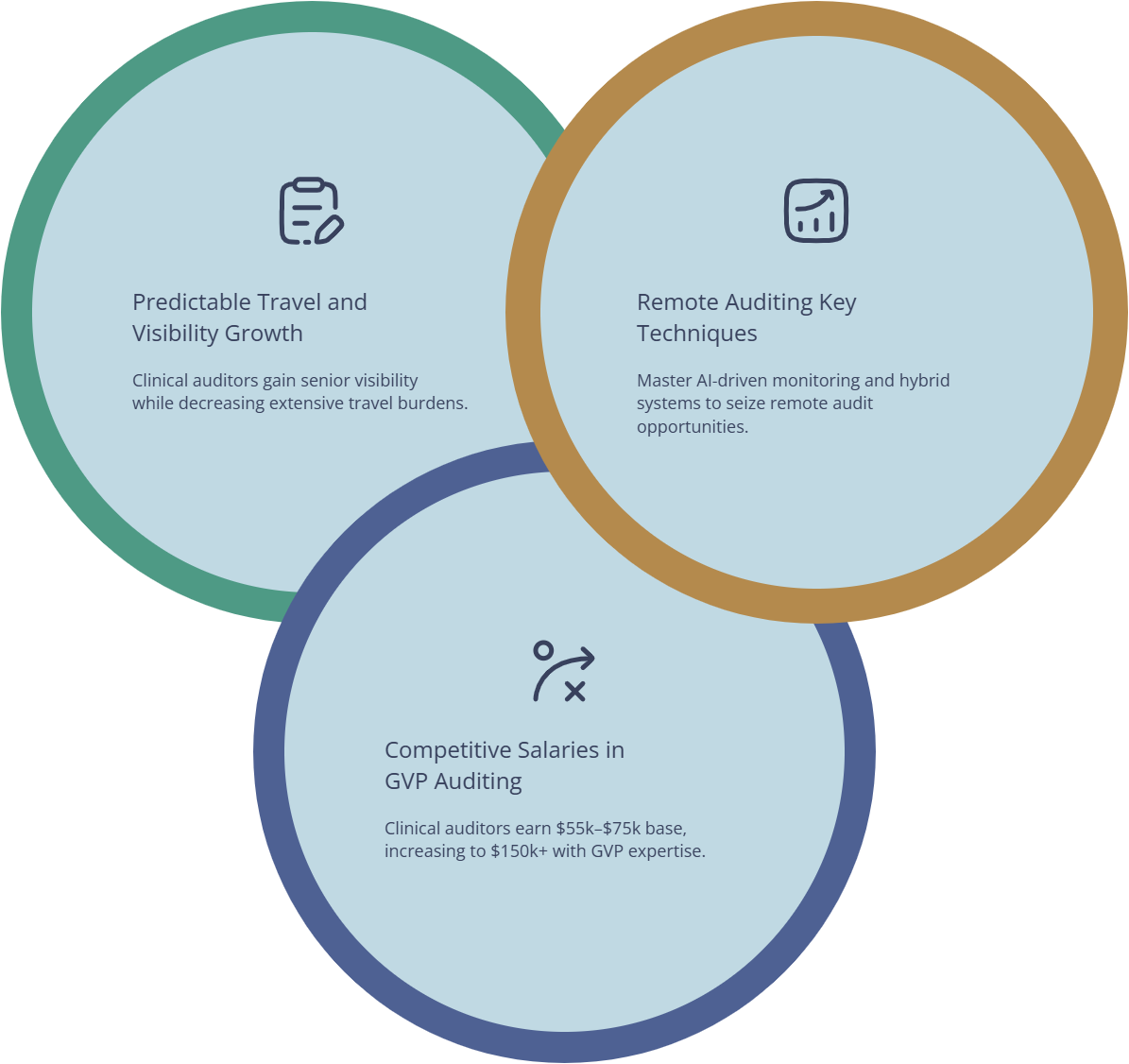
Clinical Quality Auditors often match or exceed CRA salaries—with more predictable travel and stronger visibility to senior leadership. Organizations see them as insurance against inspection disasters that could delay approvals or jeopardize acquisitions. Entry-level roles in US and Western EU markets typically fall in the ~$55k–$75k range, rising into $80k–$110k as you begin leading multi-country audits or specialized PV/system audits grounded in GVP principles. At senior levels, driving global audit programs and inspection readiness strategies can push compensation into $115k–$150k+ territories.
Remote opportunity is particularly strong when you master remote and hybrid auditing techniques aligned with trends in AI-driven monitoring and virtual trial oversight. Many sponsors and CROs now run TMF, vendor, and system audits primarily off-site, reserving travel for high-risk sites or complex vendors.
Negotiation should be evidence-based. Track how your audits reduce critical findings, accelerate CAPA closure, and improve TMF or PV metrics. Connect your work to fewer inspection observations, smoother submissions, or on-time market launches—linking directly to project budget oversight. When you can say, “Our audit program helped convert three potential major findings into minor issues before inspection,” your salary conversation moves from “cost” to “risk-adjusted ROI.”
5. Designing a 3–5 Year Advancement Plan as a Clinical Quality Auditor
To move from “capable auditor” to indispensable audit strategist, you need an intentional 3–5 year plan. Start by securing structured education in GCP guidelines, documentation mastery, and risk-based quality frameworks used by project managers. Pair this with cycle after cycle of hands-on audits—site, vendor, PV, system—across varied therapeutic areas and geographies listed in global trial outlook articles.
Next, deliberately expand your cross-functional influence. Offer to present audit trends to Operations, PV, and Regulatory; help Clinical Compliance Officers translate findings into policy updates and training. Partner with medical monitors and MSLs when findings touch medical oversight or scientific narratives. Over time, your value will be measured by how early you spot patterns—like recurring consent weaknesses in decentralized trials or safety reporting gaps in PV vendors—and how effectively you help leadership close them.
Finally, design stretch experiences that force strategic thinking: lead inspection readiness for a high-stakes program, own the QA side of a new market entry (such as China or Africa), or architect the audit strategy for a portfolio of AI- and wearable-driven studies described in emerging tech articles. These experiences build your reputation as someone who can not only highlight risk but also reshape systems to handle the next decade of clinical innovation.
6. FAQs: Clinical Quality Auditor Career Pathway & Advancement
-
Start by shadowing quality, not jumping instantly into full audits. Volunteer for TMF QC, internal readiness checks, or mini-audits of monitoring reports and protocol deviation logs. Ask to accompany QA on site or remote audits so you can observe how they question teams, compare documents, and write findings. Strengthen your foundation in GCP documentation requirements and risk-based monitoring principles from project risk guides. When applying for QA Associate or Junior Auditor roles, highlight your frontline knowledge of site operations and monitoring; QA leaders value auditors who understand real-world constraints rather than only citing regulations.
-
Experience is powerful, but unstructured experience often leaves gaps that show up in complex audits or inspections. Formal education in GCP mastery, clinical operations, and risk-based quality provides a systematic framework to interpret what you see in the field. It also signals to employers that you can operate beyond one company’s SOPs. Ideally, combine certification with hands-on exposure to audits across sites, vendors, and PV systems using resources that explain case processing, signals, and RMPs. This mix positions you strongly for mid-level Clinical Quality Auditor roles.
-
A Clinical Quality Auditor focuses heavily on structured evaluations—audits with defined scope, evidence collection, and formal reports. QA Specialists may manage broader quality systems, SOPs, training, and CAPA tracking without always performing full audits. Clinical Compliance Officers often operate at a more strategic level, shaping policy, inspection readiness frameworks, and cross-functional governance. In many organizations, auditors are the field investigators feeding insights into QA and Compliance leaders who redesign systems. Moving between these roles over time can make you a more well-rounded quality leader.
-
To move into global leadership, you need to scale from single audits to patterns across programs, geographies, and technologies. That means comfort with data aggregation, trend analysis, and risk ranking across sites, vendors, and systems described in global trial landscape pieces. You must translate findings into strategic recommendations for Operations, PV, Regulatory, and project managers. Strong communication and negotiation skills are critical; you’ll be persuading senior leaders to invest in training, process redesign, or new systems. Familiarity with emerging models—decentralized trials, AI-powered oversight, and wearable-based endpoints—helps you anticipate where risk will move next.
-
The key is to be tough on systems, gentle with people. Before audits, frame your role as risk reduction, not punishment. During interviews, ask open questions (“Walk me through how you manage deviations end-to-end”) and clarify context before jumping to conclusions. When drafting findings, focus on objective evidence, impact on GCP or patient safety, and root causes—avoiding blame-oriented language. Then work collaboratively on CAPAs that teams actually believe in, leveraging risk-based management principles. Over time, if your audits help teams avoid painful inspections, they’ll view you as an ally, not an adversary.
-
Absolutely—and your market is a strategic asset, not a handicap. Sponsors are expanding trials in India and Africa; they need auditors who understand both local operational realities and global expectations. Build a solid foundation in ICH, FDA, and EMA requirements, then layer in deep knowledge of local ethics processes, infrastructure constraints, and cultural dynamics. Work with CROs featured in the Top 100 CRO directory that serve global sponsors. Once you’ve successfully audited high-risk sites or vendors in your region, you become a go-to auditor for global portfolios that rely on those geographies.
-
Common career stallers include treating every audit as a checklist exercise instead of a risk-based investigation, writing verbose reports nobody reads, and failing to connect findings to portfolio-level impact. Another trap is staying siloed—only doing site audits in one country or one therapeutic area—without venturing into vendor, PV, or system audits. To keep advancing, deliberately broaden your scope: support PV-related audits, system audits, and cross-trial trend reviews. Frame your work in terms of inspection readiness, submission success, and budget protection, not just SOP compliance.
