The End of Clinical Trial Monitors: How Remote AI Audits Will Take Over 2025
On-site monitoring used to be the safety net; now it’s the bottleneck. In 2025, remote AI audits fuse continuous anomaly detection with explainable evidence so sponsors can validate decisions in real time, not at the next visit. High-fidelity data from wearables-powered endpoints, digital biomarkers, and AI failure prediction models shifts monitoring from episodic SDV to always-on risk control. If you can demonstrate lineage, validation, and CAPA linkage, inspectors listen. Below is the practical playbook—grounded in RBQM, inspection readiness, and workforce transition—using CCRPS-style controls throughout.

1) What “Remote AI Audits” Actually Replace—and Why 2025 Is the Inflection
Traditional monitors excel at context but struggle with scale: millions of fields, unstructured AE narratives, and asynchronous eSource feeds overwhelm manual SDV. Remote AI audits ingest EHR extracts, IRT/CTMS events, and device telemetry, surface deviations with explainable features, and compile inspector-ready packets that tie each finding to protocol risk. Programs adopting this model pair RBQM thresholds with acronym fluency, align PIs through PI terminology primers, and anticipate design shifts from VR and AR assessments that add continuous endpoints inspectors increasingly review.
Pain points solved (with direct, measurable outcomes)
Latency collapses: alerts trigger within minutes; teams quantify benefit with prevented-deviation metrics drawn from AI early-warning approaches.
Coverage expands: algorithms screen 100% of records while humans investigate the ambiguous 5–10%—a shift that mirrors operational lessons in high-data wearable trials and digital pill programs.
Evidence improves: auto-generated dossiers map source → transform → query → CAPA, echoing documentation discipline used in country-scale trend analyses and regional regulatory shifts.
Cost rebalances: travel budgets fund validation, change control, and site enablement, aligning with talent economics from global salary reports and top-paying roles.
| # | Control | What Inspectors Ask | Evidence You Produce | Owner |
|---|---|---|---|---|
| 1 | Data lineage | How eSource maps to EDC | Field-level lineage graph + transform code | Data Eng |
| 2 | Model validation | How algorithms were qualified | GxP IQ/OQ/PQ with pass/fail criteria | QA/AI |
| 3 | Explainability | Why a query was raised/closed | Decision trace + SHAP summary | AI Lead |
| 4 | RBQM thresholds | Risk rules replacing %SDV | RBQM plan with re-trigger logic | Clin Ops |
| 5 | CAPA linkage | Closed loop from alert → fix | CAPA IDs in audit trail | QA |
| 6 | Timestamp integrity | Clock drift avoided? | NTP sync reports | IT |
| 7 | Training data rights | License & consent scope | Data license + de-ID spec | Legal |
| 8 | Vendor oversight | How you govern AI suppliers | Supplier qual + SLA metrics | QA/Procure |
| 9 | Edge-case library | Challenging scenarios | Scenario set with outcomes | AI/QA |
| 10 | Bias monitoring | Site/patient bias tracked? | Fairness metrics by stratum | Biostats |
| 11 | Wearable QC | Stream reliability | Missingness & outlier rules | Data Eng |
| 12 | EHR mapping | FHIR/HL7 to CDISC | Mapping specs + unit tests | Data Eng |
| 13 | Override policy | Who can overrule AI | SOP + justification fields | Ops |
| 14 | Change control | Release governance | CCB minutes + regression | QA/IT |
| 15 | Security | PHI threat model | Pen-test + incident drills | Sec |
| 16 | Business continuity | Outage resilience | RTO/RPO with fallback | IT |
| 17 | Precision targets | Noise kept low? | Precision/recall vs. goal | AI/QA |
| 18 | Site burden | Coordinator workload | Query load & time-to-close | Site Ops |
| 19 | Inspector pack | One-click dossier | PDF bundle with lineage/CAPA | QA |
| 20 | Archival | Retain & re-compute | Storage class + containers | IT |
| 21 | Metrics contract | Quality over volume | SLA tied to risk reduction | Sponsor/CRO |
| 22 | Training | Staff competency | Role curricula & pass scores | L&D |
| 23 | Protocol drift | Amendment handling | Re-validation evidence | Clinical Sci |
| 24 | Cold-chain telemetry | Device integrity | Sensor QC & excursion logic | Supply/IRT |
| 25 | Economic proof | Value created | Cost per prevented finding | Finance |
| 26 | Cross-trial learning | Privacy-safe reuse | Meta-model with constraints | AI/QA |
| 27 | Regional readiness | Local nuance | Playbooks from **India/Africa** | Clin Ops |
| 28 | Site experience | Burden actually down? | Time-on-data entry ↓; travel ↓ | Site Ops |
2) Operating Model: From Episodic SDV to a Continuous Assurance Fabric
Build audits as a fabric, not an add-on. Data enters through FHIR/HL7 connectors, lands in a lakehouse mapped to CDISC, and is checked by deterministic rules plus anomaly ensembles. Alerts are triaged by risk and routed to investigators who resolve with suggested evidence and CAPA hooks.
Ingress discipline: unit harmonization and lineage contracts prevent “mystery transforms.” This mirrors discipline used in country-level trial forecasting, Brexit-era UK constraints, and China market scale where data heterogeneity is the core risk.
Detection mix: rules catch visit windows and consent defects; NLP parses AE narratives; graph features flag duplicate patients; time-series models watch temperature telemetry sourced from drone medication logistics.
Triage → Resolution: alerts carry explainability, proposed fixes, and audit-trail slots for justifications; this minimizes site thrash and aligns with remote CRA workflows.
Inspector view: one-click dossier exports lineage, query lifecycle, and CAPA closure—an approach you can narrate with supporting primers like acronyms and PI terms to ensure shared language.
KPIs that prove the model works
MTTD (mean time-to-detect) by risk class; MTR (time-to-resolve); query precision/recall; prevented-deviation count; and site burden (queries per participant per week). Tie incentives to quality improvement, not query volume—financial logic you can benchmark against salary/economics reports and top-paying job trends.
3) Validation, Compliance & Data Integrity: How to Stay Audit-Proof
Regulators don’t buy “magic.” They buy control. Treat models as computerized systems with GxP rigor:
IQ/OQ/PQ for algorithms: define acceptance criteria, dataset provenance, and drift monitoring; incorporate edge-case libraries where humans challenged the model and document who won (and why).
Explainability: store feature importances and decision traces so you can state, “This AE narrative triggered due to contradictory phrases and vitals drift.” This mirrors clarity you develop writing AI failure prediction plans.
PHI minimization: prove that removing non-material identifiers didn’t degrade accuracy; point to ethics language you refined for digital biomarker programs.
Vendor oversight: qualify suppliers, require exportable formats, and encode exit clauses; look to ecosystem maps like top CRO directories to evaluate capacity.
Protocol change control: every amendment retriggers validation with diff-aware test sets; document governance inspired by program-level market shifts chronicled in India’s trial boom and Africa’s frontier growth.
Common failure patterns
Opaque vendor models; unlogged algorithm updates; timestamp drift between eSource and EDC; over-alerting with precision <0.6; and weak CAPA linkage. Each is preventable with the tabled controls and weekly KPI reviews.
What’s Your Biggest Challenge in Starting Certification?
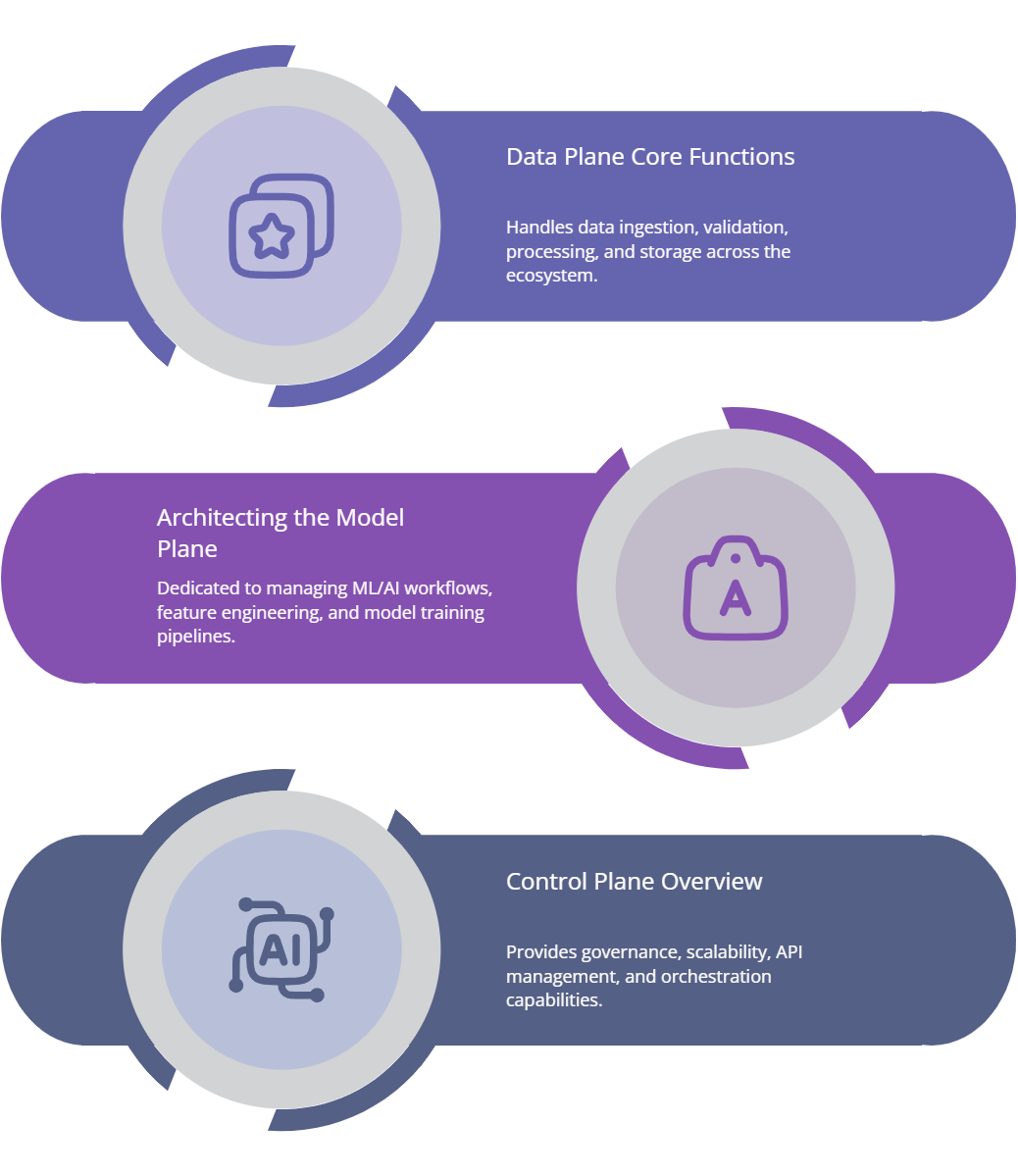
4) Tech Stack Architecture: Data Plane, Model Plane, Control Plane
Data plane
Connect site EHRs via FHIR/HL7; standardize LOINC/SNOMED; harmonize units (mIU/mL vs IU/L). Store as event streams (consent, randomization, dosing, device telemetry). This architecture anticipates drone-delivered meds, VR tasks, and AR assessments that expand signal density.
Model plane
Blend rule engines (window violations, consent defects) with multivariate outlier models over vitals/labs, NLP for AE narratives, and graph analytics to detect duplicate subjects across sites—a fraud pattern discussed in global winners vs. laggards analyses. Persist explanations so queries ship with “why” and “next best evidence.”
Control plane
An RBQM service defines severity thresholds; a deployment pipeline gates releases through a CCB with rollback and re-validation; an inspector-pack builder exports lineage graphs, queries, and CAPA closure. Tie all events to measurable KPIs and compare performance against role economics seen in CRA salary reports and CRC trend guides to plan staffing.
5) Change Management & Talent: Where Monitors Evolve Next
AI audits don’t erase monitors—they re-role them into investigative analysts who synthesize cross-system evidence, coach prevention, and validate CAPA effectiveness.
Skill stack: RBQM design, lineage tooling, basic statistics, and explainability literacy. Build curricula from CCRPS exam assets like test-taking strategies, study environments, and anxiety control to accelerate upskilling.
Career mobility: pivot into PV signal detection with benchmarks drawn from pharmacovigilance salary reports, or transition toward MSL/Medical Monitor paths using MSL study guides and MM/MSL question banks.
Operating cadence: weekly virtual touchpoints replace monthly roadshows; time is spent on root causes and CAPA verification. Remote options expand using resources like work-from-home CRA programs.
Executive scorecard: ≥40% query-volume reduction with precision >0.75; ≤5 days median time from alert to CAPA initiation; <24h inspector-pack readiness. Reinforce narrative with macro evidence from salary/economics and top jobs.
6) FAQs — Remote AI Audits, Compliance, and Workforce (2025)
-
No; they target them. Visits trigger for high-risk patterns (consent anomalies, drug accountability mismatches, fraud indicators). This risk-triggered approach increases finding density and aligns with early-warning logic from AI failure prediction and device-rich monitoring in wearable trials.
-
A GxP dossier with IQ/OQ/PQ per model/version; training-data lineage and license proofs; edge-case performance; explainability artifacts; and CCB change control. Reference the documentation discipline you adopt in digital biomarker programs and VR/AR assessments.
-
-
Consent timestamps, demographics, vitals trajectories, key labs (unit-harmonized), visit dates, dosing events, and AE/ConMed summaries. Add device telemetry for programs using drones for cold-chain or continuous endpoints from VR tasks and AR measures.
-
Build a 6–8 week pathway covering RBQM design, lineage tooling, and explainability review; finish with a challenge project using historical data. Support with CCRPS learning assets like test-taking strategies, study environments, and anxiety management; explore MSL/Medical Monitor tracks for mobility.
-
Lead with your RBQM plan, walk a real alert → resolution → CAPA chain, show lineage graphs, and hand over the inspector pack. Keep a short appendix with acronyms and PI terminology so everyone speaks the same language.
-
Track cost per prevented deviation, time to CAPA initiation, database lock speed, and inspection-pack turnaround. Reinvest travel savings into validation and site enablement. Benchmark talent strategy with global salary data and top-paying role trajectories.
-
Data access, privacy norms, and site digital maturity vary; plan pilots using insights from India’s rapid expansion, Africa’s frontier sites, and regulator sentiment tracked in country-by-country winners.
