
Clinical Research Certification Alabama: Everything You Need to Know for 2025–2026
Alabama is quietly becoming a regional powerhouse for clinical research, blending academic excellence with a fast-growing private trial sector. With new partnerships forming between UAB Medicine, Southern Research, and major CROs expanding into the Southeast, demand for certified researchers has never been higher.
Earning your Clinical Research Certification in Alabama through CCRPS gives professionals a distinct edge — providing globally recognized credentials, real-world monitoring skills, and the flexibility to work in hybrid or fully remote clinical environments.

1. Alabama’s Clinical Research Landscape (2025–2026 Overview)
Alabama’s health sector is entering a new growth phase driven by biotech expansion, university-led trials, and NIH grant inflows. According to the Birmingham Business Alliance 2025 report, clinical and biomedical research now accounts for over $4.3 billion in annual state revenue.
The University of Alabama at Birmingham (UAB), HudsonAlpha Institute for Biotechnology, and Southern Research collectively host hundreds of Phase I–III trials, from oncology to cardiovascular disease.
With strong trial oversight and increased adoption of remote monitoring, CCRPS-certified professionals are in high demand. Graduates from the CCRPS Clinical Research Certification programs have secured roles in Auburn, Huntsville, and Birmingham, helping advance decentralized and community-focused clinical studies.
To understand regional synergy, compare with Clinical Research Certification Georgia and Clinical Research Certification Florida, where similar trends are fueling job expansion.
2. Why Alabama Is a Growing Clinical Research Hub
Alabama combines academic infrastructure with a cost-efficient research ecosystem. With UAB Medicine ranked among the top NIH-funded institutions nationwide, trial operations in Birmingham and Huntsville are expanding beyond oncology into genomics and AI-assisted monitoring.
The HudsonAlpha Institute for Biotechnology drives genetic research while CROs like ICON and Parexel continue hiring certified coordinators. CCRPS-trained professionals are frequently recruited for hybrid CRA, QA Auditor, and Regulatory Affairs roles due to their ICH-GCP proficiency.
Read related insights from Clinical Research Certification Mississippi, Clinical Research Certification Georgia, and Clinical Research Certification Louisiana.
3. Salary Outlook & Career ROI
Alabama offers competitive salaries paired with low living costs, creating one of the best salary-to-expense ratios for research professionals in the U.S.
Typical annual pay ranges include:
Clinical Research Assistant: $52,000–$60,000
Clinical Research Coordinator (CRC): $65,000–$82,000
Clinical Research Associate (CRA I–II): $80,000–$115,000
Clinical Project Manager: $120,000–$145,000
Employers favor CCRPS certification for proven competency in trial documentation, eCRF validation, and regulatory readiness. Similar outcomes are reported in Clinical Research Certification Delaware and Clinical Research Certification Michigan.
What’s Holding You Back from Starting Your CCRPS Certification in Alabama?
4. CCRPS Certification Pathway & Requirements
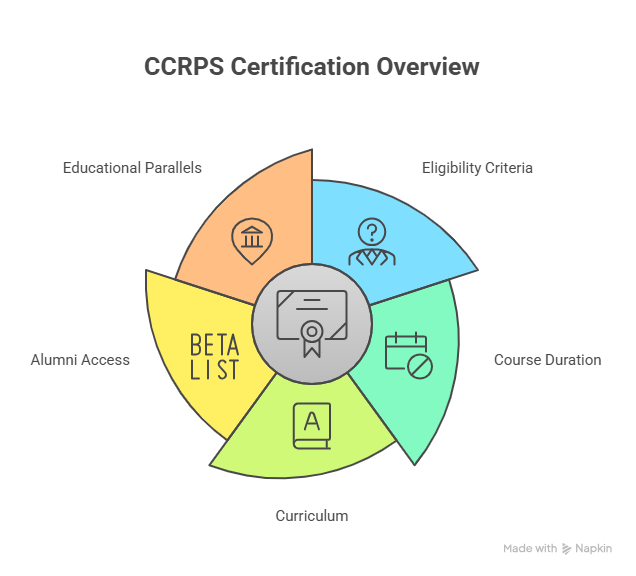
The CCRPS Clinical Research Certification program in Alabama is globally accredited, designed to help professionals transition smoothly into CRA and CRC roles.
Eligibility
Bachelor’s degree (health, science, or related field)
Clinical documentation or patient interaction experience
Internet access for online modules
The course runs 6–8 weeks, covering ICH-GCP, CFR 21 Part 11, risk-based monitoring, and decentralized trial design. Graduates receive CCRPS alumni access for job placement, networking, and mentorship.
Learn more about educational parallels in Clinical Research Certification Indiana and Clinical Research Certification Kentucky.
5. Overcoming Challenges in Alabama’s Research Market
While Alabama offers major funding opportunities, professionals face challenges such as:
Competition with larger out-of-state CRO hubs
Limited exposure to advanced Phase IV trials
Less familiarity with eSource technology
CCRPS programs tackle these with simulation-based learning, mock FDA audits, and career coaching for CRA advancement. Graduates often move into hybrid roles serving national sponsors from their Alabama base.
For comparison, see success stories from Clinical Research Certification Colorado and Clinical Research Certification Pennsylvania.
6. FAQs – Alabama Clinical Research Certification (2025–2026)
-
Bachelor’s degree or equivalent healthcare experience is required.
-
Typically 6–8 weeks, depending on study pace.
-
Yes, major employers like UAB and Southern Research list it among preferred credentials.
-
$65,000–$115,000 depending on position and experience.
-
Yes — CCRPS connects graduates with partner CROs and university research units.
-
Yes, over 60% of certified CRAs work remotely or hybrid.
-
Cardiology, diabetes, oncology, and neuroscience.
