
Mind-Control Clinical Trials: How Neuroscience Will Change Human Health by 2030
“Mind control” is a loaded phrase—and in legitimate clinical research it rarely means puppeteering thoughts. What it does capture is the rapid rise of neurotechnologies that can measure, predict, and modulate brain activity to treat disease, restore function, and personalize therapy. By 2030, the trials that win won’t be the ones with the flashiest device—they’ll be the ones with tight GCP discipline, defensible endpoints, credible safety governance, and ethical guardrails that survive scrutiny from IRBs, regulators, and the public.
This guide shows what’s realistically coming, how these trials are designed, and where compliance can break if teams don’t operationalize safety and ethics early.
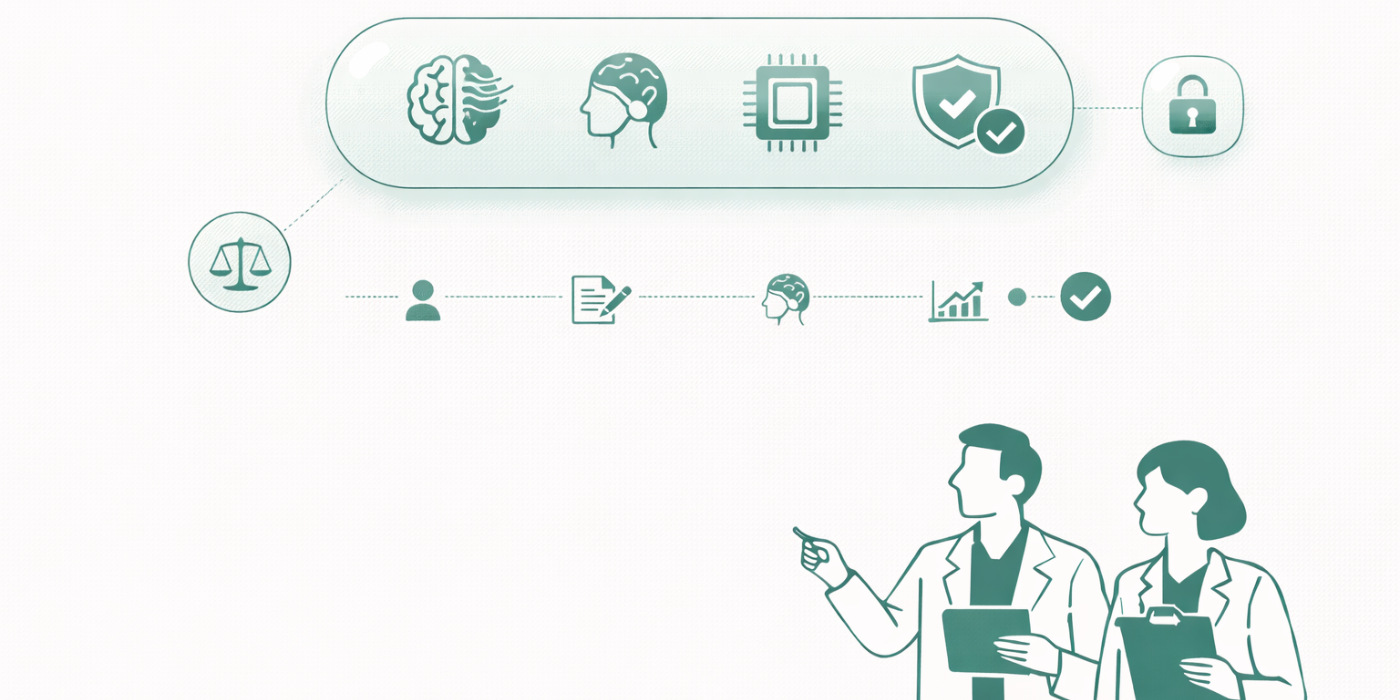
1. What “Mind Control” Really Means in Clinical Trials (and What It Does Not)
In serious neuroscience, “mind control” is shorthand for three real capabilities:
Neural sensing: capturing signals from the brain or nervous system to infer state (mood, intention, seizure risk, pain, tremor). This is “measurement,” not control.
Neural modulation: changing neural activity via stimulation (implantable DBS, closed-loop stimulation, TMS, tDCS) or neurofeedback to improve symptoms.
Closed-loop personalization: systems that adjust stimulation based on detected state—creating “adaptive therapy” that can feel like the device is “steering” symptoms in real time. Ethical analysis of closed-loop DBS highlights autonomy, privacy, and recording concerns precisely because the system can adapt based on neural data.
What it does not mean (in legitimate GCP trials) is coercion, subliminal control, or overriding consent. That’s why any neurotrial touching cognition, mood, identity, or decision-making must be built with high-friction safeguards: strong IRB oversight, strict ICH/GCP controls, clear protocol governance, pre-specified endpoints, and independent oversight like a DMC.
By 2030, the “mind-control” trials that actually change health will mostly fall into five medical buckets:
Neuropsychiatry (treatment-resistant depression, OCD, PTSD) via DBS/closed-loop neurostimulation
Neurology (Parkinson’s, epilepsy, chronic pain) via adaptive stimulation and better biomarkers
Rehabilitation (stroke, spinal cord injury) via brain–computer interfaces (BCIs) and neuroprosthetics
Cognition (MCI/Alzheimer’s risk) via safer neuromodulation and precision trials
Communication restoration (speech decoding BCIs) for severe paralysis
Those are already moving into feasibility and early-stage programs, including multiple BCI trials listed on ClinicalTrials.gov and public announcements about implantable BCI feasibility studies.
The fastest way to lose credibility in this space is to run neuroscience trials like generic device trials. Neurotrials demand tighter narrative control (patient-reported effects can be profound), stronger blinding strategy (placebo/expectancy effects are huge), and more rigorous safety review using pharmacovigilance-grade processes like AE identification and management, CRC reporting technique discipline, and timeline-driven drug safety reporting requirements.
2. The Technologies That Will Drive “Mind-Control” Trials by 2030 (and How They’ll Be Studied)
By 2030, expect neuroscience trials to shift from “one device, one setting” into adaptive, data-driven therapeutics that continuously learn. Three trends will dominate:
1) Closed-loop stimulation becomes mainstream in high-need populations
Closed-loop systems adjust stimulation based on biomarkers, which raises unique ethical issues like autonomy, privacy, and the significance of recording neural activity. Trials here will increasingly require independent oversight, including a DMC safety governance model, and protocol language that forces transparency about how “the loop” behaves in edge cases.
Operationally, the protocol has to define:
what signals trigger changes,
what bounds are allowed,
what is logged,
how clinicians override,
and what constitutes an AE versus expected stimulation effect—anchored in AE identification rules and escalation timelines in drug safety reporting.
2) BCIs move from “cool demo” to regulated, multi-site feasibility programs
BCIs are being tested across multiple clinical contexts on ClinicalTrials.gov and are publicly described as feasibility studies aimed at safety and function for severe disability populations. In this category, “mind control” is really intent decoding: translating intended movement or speech into device control.
Where compliance breaks in BCI trials:
therapeutic misconception (“this will fix me”),
post-trial obligations (support, explant decisions),
data governance (neural data isn’t just another biometric),
and identity impacts (voice cloning, communication authenticity).
That’s why your protocol needs formal ethics monitoring and ironclad consent workflows under IRB expectations, plus careful training for site teams who usually come from CRC/CRA pipelines like CRC responsibilities and CRA oversight roles.
3) Noninvasive neuromodulation expands—but ethics remains a minefield
Noninvasive stimulation (TMS/tDCS and related approaches) is widely studied, including cognitive enhancement and rehabilitation contexts, with longstanding ethical concerns about enhancement, access, and misuse. The biggest risk isn’t surgical. It’s claims inflation and expectancy bias.
To make these trials credible, you need:
strong randomization strategy,
defensible blinding/sham controls,
pre-specified endpoints,
and a rigorous analysis plan aligned with biostatistics basics.
If you’re serious about 2030 impact, you’re not just running devices—you’re building trustable evidence under ruthless scrutiny.
3. How These Trials Will Prove “Real Change” (Endpoints, Bias Control, and Evidence Standards)
Neuroscience trials face a brutal reality: subjective outcomes can move from placebo effects, expectancy, therapist influence, and measurement drift. So by 2030, the trials that shift standard of care will be the ones that combine:
A) Multi-layer endpoints: symptom + function + objective signal
A “mind control” claim lives or dies by endpoint quality. If your primary endpoint is symptom score only, you’ll get attacked on bias. Pair outcomes:
Symptom severity (validated scale)
Function (work, ADLs, independence)
Objective corroboration (device logs, biomarkers, performance tasks)
This is where clear primary vs secondary endpoint architecture matters. It prevents post-hoc narrative engineering when results are messy.
B) Bias control: sham design, assessor blinding, and expectation management
Neurostimulation and psychotherapy-adjacent trials are bias magnets. Your study credibility depends on:
robust randomization
practical blinding approaches
standardized scripts and training so staff don’t “sell” the intervention
independent outcome assessors whenever possible
And when blinding is imperfect (common in device trials), you need blinding integrity checks and transparent limitations.
C) Statistical discipline: pre-registration, multiplicity control, and realistic effect sizes
By 2030, regulators and payers will punish flimsy stats. Teams must plan like predators are hunting weak evidence:
define hypothesis hierarchy (what must succeed)
pre-register analysis plan
control multiplicity
power for realistic effect sizes (not wishful ones)
treat missing data as a design problem, not a spreadsheet fix
If you want the cleanest mental model for building this, start from the trial “skeleton” in the clinical trial protocol guide, then embed biostatistics principles from CCRPS biostatistics overview.
What worries you most about “mind-control” neurotrials by 2030?
Choose one. Each maps to a compliance + ethics control you can implement.
4. Safety in Neurotrials: AE Review, Pharmacovigilance, and the “Invisible Harm” Problem
Neuroscience trials have a safety trap: not all harms look like classic AEs. Some harms show up as changes in mood, agency, sleep, impulsivity, motivation, or identity—effects that can be underreported, minimized, or misclassified as “disease fluctuation.”
That’s why the safety system must be built like a fortress:
1) Build AE capture around real neuroscience risk, not generic templates
Use AE guidance rooted in AEs identification and reporting but add neuro-specific capture:
mood destabilization
suicidality risk screens (where applicable)
sleep disruption
cognition changes (attention, memory)
personality/impulsivity shifts
device-related sensations and tolerability
caregiver-observed behavioral changes
Then force timely escalation using operational processes from essential AE reporting for CRCs and the hard timeline discipline in drug safety reporting.
2) Medical Monitor review must treat narratives as evidence chains
In neurotrials, narrative quality isn’t “nice to have”—it determines whether the event can be interpreted. Your review should require:
a timeline spine (onset → awareness → intervention → outcome)
objective corroboration where possible
explicit causality reasoning
clear action taken (dose change, stimulation parameter change, device pause)
follow-up triggers and deadlines
This is exactly why teams need a pharmacovigilance mindset even when the intervention is a device.
3) DMC and governance become non-negotiable for high-impact interventions
Closed-loop stimulation and invasive BCIs raise autonomy and privacy issues in addition to physical risk. That’s why ethical literature emphasizes concerns like autonomy, quality of life, and neural recording. When risk is complex, independent oversight via a DMC is not decoration—it’s protection against blind spots.
4) “Neural data” governance is becoming a frontline compliance requirement
International governance work is increasingly treating neurotechnology as requiring human-rights-aligned safeguards; for example, OECD guidance stresses values-based governance and rights alignment. Public reporting also highlights global standards efforts emphasizing neural data and rights protections.
In practical site terms, that means:
data minimization (collect what you need, not what you can)
strict access controls
clear retention/deletion rules
explicit consent options for secondary use
audit trails for data movement
If your neurotrial can’t explain its data governance clearly, it will lose trust—even if the clinical effect is real.

5. Neuroethics by 2030: Consent, Autonomy, “Neurorights,” and How Trials Stay Legitimate
By 2030, the biggest limiter won’t be electrode density. It will be legitimacy. Neurotrials deal with identity and agency—topics that trigger public fear and regulator attention. Ethical and human-rights discussions are actively developing around neurotechnologies.
To stay legitimate, trials must master five ethics pillars:
1) Consent that matches the true risk profile
Standard consent language is too shallow for interventions that can shift mood or personality. High-quality neuro-consent must cover:
what changes are possible (including unwanted psychological changes)
what data is collected (neural + behavioral)
how the system adapts (closed-loop behavior)
what post-trial support exists
what happens if the participant wants removal or discontinuation
This has to be reviewed tightly under IRB oversight structures and implemented with disciplined training under ICH/GCP expectations.
2) Autonomy protection in closed-loop systems
Closed-loop stimulation is powerful precisely because it can act when symptoms emerge—but that can feel intrusive. Ethical discussions in closed-loop neurotechnology emphasize autonomy and privacy concerns. Trials should include:
participant control features (pause, override) where feasible
transparent logging of system changes
clear definitions of when clinicians can adjust settings
proactive monitoring for “felt loss of agency”
3) Privacy and security that treat neural data as high-sensitivity
Neural data can reveal patterns that participants consider deeply personal. Governance work (OECD/UNESCO and related efforts) is pushing toward stronger guardrails. Your protocol should treat neural data as sensitive by default—stronger than ordinary wearable data.
4) Justice: who benefits and who bears risk
Neurotrials often recruit vulnerable populations (severe disability, treatment-resistant illness). That means you must actively avoid coercion-by-hope: “this is their only chance.” Ethical practice demands realistic claims, post-trial support planning, and fair recruitment standards.
5) Accountability: clear responsibility lines across sponsor, CRO, site
Because neurotrials are complex, teams must define ownership across safety review, device management, data handling, and ethics monitoring—then document it. That’s how you prevent “it fell between teams” failures that destroy credibility.
6. FAQs
-
The phrase is hype, but the underlying science is real: trials increasingly measure and modulate brain activity using stimulation, BCIs, neurofeedback, and predictive biomarkers. Closed-loop neurotechnology raises special ethical concerns because it can adapt based on recorded neural activity.
-
Closed-loop stimulation for refractory conditions and BCIs for communication/restored function are strong candidates, with multiple feasibility efforts publicly described and listed in clinical trial registries.
-
Consent quality + data governance + subtle harms detection. If your trial can’t defend what participants understood, how neural data is protected, and how psychological harms are tracked, it becomes fragile.
-
Expectancy effects and subjective outcomes are powerful. Strong randomization and practical blinding strategies are essential to make effects believable.
-
Use classic AE systems from AE identification and reporting, but expand capture to neuro-specific domains (mood, sleep, agency) and apply hard timelines from drug safety reporting requirements.
-
Yes—governance initiatives are actively developing, including OECD guidance and UNESCO-focused ethics frameworks emphasizing human rights and neural data safeguards.
