
Clinical Trial Budget Management: Proven CRC Strategies
Clinical trial budgets go wrong long before anyone notices the damage. A study can look financially healthy on paper while the site is quietly losing money through missed billable items, untracked staff effort, delayed sponsor responses, poorly negotiated pass-through costs, and visit complexity that was underestimated from the start. By the time leadership feels the pressure, the budget problem is already operational.
That is why budget management is one of the most valuable skills a CRC can build. Strong coordinators do not just keep studies moving. They protect site economics, reduce preventable leakage, document what the site has truly earned, and catch financial risk before it turns into burnout, under-resourcing, or a trial that becomes impossible to run well.

1. Why Clinical Trial Budget Management Matters More Than Most CRCs Realize
Many CRCs are taught to think of budgets as someone else’s job. They are told to focus on patients, visits, documentation, queries, and sponsor communication while contracts, billing grids, and financial tracking are handled somewhere above them. That separation sounds neat, but it breaks down in real life. The coordinator is often the person closest to the actual work being done, the time being spent, the unscheduled tasks being absorbed, and the billable events being missed. That makes the CRC one of the most important financial observers in the study, even when they are not the formal budget owner.
A site loses money when the operational truth and the financial record drift apart. That drift happens when complex screening efforts are treated like simple visits, when repeat procedures are performed without clean billing logic, when protocol-required tasks are completed but not tracked for invoicing, when retention effort expands without budget recognition, and when sponsor assumptions about visit flow do not match the actual workload. A CRC who understands this becomes far more valuable than a coordinator who thinks budget is just a contract PDF sitting in a folder.
This is one reason strong coordinators benefit from deeper grounding in clinical research coordinator CRC responsibilities & certification, clinical research coordinator CRC role essential skills & responsibilities, clinical trial protocol management key CRC responsibilities, managing regulatory documents comprehensive guide for CRCs, and GCP compliance strategies for clinical research coordinators. Budget discipline lives downstream of protocol discipline, documentation discipline, and workflow discipline. Sites that run loosely almost always bill loosely too.
Budget management matters even more in trials where the hidden work explodes. Screening failures, pre-screening calls, chart reviews, washout coordination, rescheduled visits, transportation problems, translation effort, unscheduled safety follow-up, extended patient education, and extra sponsor communication all consume time. Sites that fail to account for that effort often end up with coordinators doing financially invisible labor. That invisibility has consequences. It erodes staffing, slows turnaround, increases burnout, weakens data quality, and creates resentment because the site keeps asking for more output from resources the study budget never realistically supported.
The smartest CRCs learn to see budget management as a patient safety and site sustainability issue. A study that is underfunded in practice eventually creates operational shortcuts, staffing stress, delayed follow-up, rushed documentation, weaker patient touchpoints, and lower morale. Financial leakage rarely stays financial. It becomes a quality problem.
2. How CRCs Should Read a Clinical Trial Budget Before the Study Starts
A CRC should never read a budget as a flat list of fees. The real question is whether those fees reflect the actual work the site will perform. That starts with the protocol. Every visit schedule, every assessment, every sample-processing step, every consent touchpoint, every follow-up expectation, and every likely unscheduled event has budget implications. A coordinator who understands clinical trial protocol the definitive guide with examples, case report form CRF definition types & best practices, informed consent what every clinical researcher must know, protocol deviations definition examples & corrective actions, and clinical trial amendments what they are & how to handle them is much harder to surprise with hidden workload later.
The first thing a CRC should check is whether the visit structure matches real site effort. Screening visits often look deceptively small in a budget grid, especially in trials with extensive chart review, washout management, eligibility coordination, labs, imaging, and repeat screening activity. Screen failures become particularly dangerous when they consume coordinator time and site resources without adequate compensation. Sites that fail to model screening pain properly often lose money before the first patient ever randomizes.
The second thing to examine is task clustering. Some budgets spread payment evenly across visits even when the protocol clearly does not. One visit may require minimal work while another carries extensive patient education, sample processing, questionnaire administration, safety review, sponsor communication, and same-day documentation burden. A CRC who sees that imbalance early can help the site argue for more accurate payment distribution rather than accepting a budget structure that underpays the most labor-intensive portions of the study.
The third thing is hidden departments. Pharmacy, lab, imaging, data, regulatory, finance, and investigator oversight all consume resources. A budget that only reflects coordinator-facing tasks is often incomplete. Coordinators who communicate well with these teams create much better budget visibility because they uncover work that would otherwise stay invisible until the site is already absorbing the cost.
The fourth thing is amendment risk. Some studies look manageable at start-up and then become much heavier after protocol changes, revised consent forms, additional procedures, or new sponsor systems are introduced. Coordinators who pay attention to amendment burden, retraining effort, reconsent workload, and new tracking demands are protecting the site from a classic source of silent financial damage.
3. Proven CRC Strategies to Prevent Budget Leakage During Study Conduct
Budget leakage usually happens through ordinary-looking workflow. That is what makes it so dangerous. Nobody sees one phone call, one extra patient follow-up, one rescheduled visit, one additional safety clarification, or one courier charge as a crisis. Yet when those things repeat across months, subjects, and studies, the site starts performing real work that never gets captured financially. Strong coordinators prevent this by treating operational detail as billable intelligence.
The first proven strategy is activity logging. If the site only bills from memory, it will lose money. CRCs need reliable mechanisms for capturing completed visits, repeat procedures, unscheduled contacts, sponsor-requested clarifications, missed windows requiring extra work, patient retention effort, and ancillary coordination. Clean logs do more than support invoicing. They create evidence when payments are missing or budget assumptions need to be challenged.
The second strategy is separating clinical work from administrative drift. Many coordinators unknowingly spend large chunks of time on tasks that feel small in isolation but become expensive in aggregate: repeated reminders, reimbursement questions, shipping coordination, chasing signatures, portal uploads, duplicate data entry, sponsor follow-up emails, and internal status reporting. A site that does not notice this pattern will often conclude that the study is simply “busy” when the real problem is that the budget never reflected the true admin burden. This is why strong workflow control, supported by managing study documentation essential RA skills, effective data collection & management for research assistants, research compliance & ethics mastery for research assistants, laboratory best practices essential techniques for research assistants, and top 20 terms every clinical research coordinator CRC must understand clearly supports budget protection too.
The third strategy is catching scope creep early. Sponsors may introduce extra trackers, extra portals, extra meetings, extra clarifications, extra source expectations, and extra turnaround pressure that were never meaningfully priced into the original budget. CRCs who identify these changes early and document the operational consequences give site leadership something concrete to use when requesting revised support or amendment fees.
The fourth strategy is disciplined payment reconciliation. Sites often assume that sponsor or CRO payments are correct because they arrive with official-looking backup. That assumption can be expensive. Coordinators closest to subject activity are often best positioned to notice that a completed visit was not paid, a screening event was excluded, an unscheduled task was missed, or a fee category was misapplied. A CRC who can cross-check payments against real activity is protecting revenue the site already earned.
The fifth strategy is linking budget awareness to patient retention. Every missed visit, delayed reschedule, confused participant, transport problem, and communication lapse can create both clinical and financial fallout. A high-retention CRC is not only helping study outcomes. They are protecting the economic model of the trial by preserving scheduled activity and reducing waste.
4. How CRCs Can Work Better With Finance, Contracts, and Sponsors Without Losing the Operational Reality
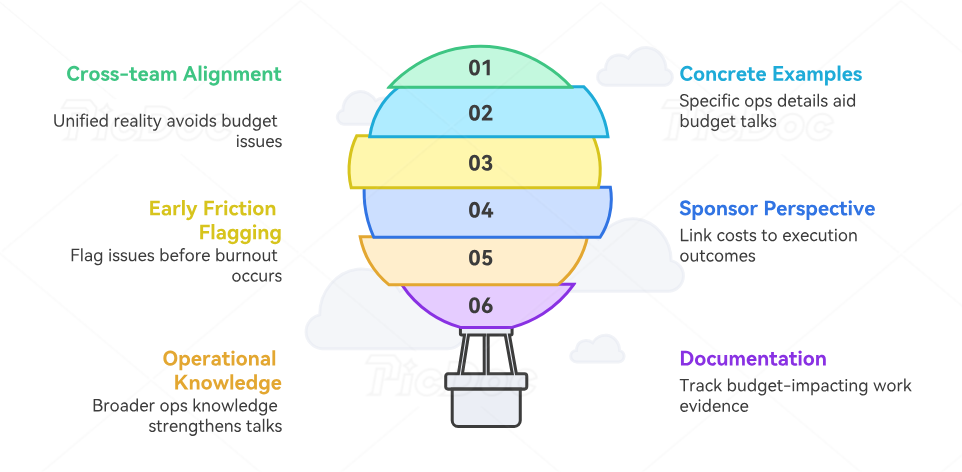
A site budget becomes much stronger when the CRC, finance team, and contract team are working from the same version of reality. Problems begin when finance sees line items, contracts sees language, and operations sees workload, but nobody fully translates for the others. The CRC is often the bridge because they understand what study conduct actually feels like at ground level.
One practical strategy is to bring operational examples into budget discussions. Saying a study is “high touch” is vague. Saying screening requires chart review, physician coordination, washout tracking, repeat labs, extended education, and multiple patient reminders gives budget stakeholders something concrete. That kind of specificity helps contracts and finance push harder for realistic pricing because they are no longer negotiating in abstractions.
Another strategy is to flag friction patterns early instead of after burnout sets in. If the sponsor portal requires duplicate entry, if the lab kits create extra reconciliation time, if retention demands unusual contact intensity, if an investigator oversight expectation is heavier than planned, or if monitoring prep consumes far more coordinator hours than anticipated, that information should travel quickly. By the time a study feels unbearable, the site has usually already donated a large amount of invisible labor.
CRCs also improve budget outcomes when they understand the sponsor perspective. Sponsors do care about cost control, but they also care about enrollment, data quality, timely execution, and low-friction delivery. A site that can explain why specific fee categories map directly to stronger execution is often in a better position than a site that simply says the budget “feels low.” This is where operational sophistication matters. If you can show how underfunded retention work harms visit adherence, how underfunded amendment activity delays reconsent, or how underfunded lab handling creates workflow instability, the request becomes more credible.
That is why financial conversations are stronger when supported by broader operational knowledge from clinical trial sponsor roles responsibilities & best practices, effective stakeholder communication clinical trial PM strategies, clinical trial resource allocation project management mastery, vendor management in clinical trials essential PM skills, and clinical research project planning essential PM techniques. Budget management gets stronger when CRCs stop seeing it as isolated finance work and start seeing it as resource strategy.
The best coordinators do one more thing well: they preserve documentation around budget-impacting work. They do not rely on memory, hallway conversations, or informal complaints. They create trackable evidence. That evidence can support invoice correction, future negotiation, staff allocation decisions, amendment fee requests, or decisions about whether a site should even accept similar protocols again.
5. Long-Term CRC Budget Skills That Make You More Valuable and More Effective
Budget management is not only about protecting the site. It is also one of the most career-enhancing skills a CRC can develop. A coordinator who understands trial economics becomes much more useful to investigators, site leadership, sponsors, and future employers. That person is not just coordinating visits. They are helping the site choose smarter studies, price work more accurately, identify waste earlier, and run trials in a way that is financially sustainable.
One important long-term skill is protocol-to-budget translation. Some professionals can read a schedule of assessments and see only procedures. Stronger coordinators can read it and immediately sense staffing load, patient burden, follow-up intensity, risk of screen failure, likely retention pain, likely amendment disruption, and likely bottlenecks in ancillary departments. That kind of foresight makes someone valuable before the first subject even comes in.
Another important skill is payment literacy. CRCs do not need to become contract attorneys or full finance specialists, but they do need to understand how payments are triggered, how invoice timing works, what counts as a billable event, how pass-through costs should be tracked, how payment schedules can distort cash flow, and how reconciliation should be checked. Coordinators who know this can catch errors earlier and prevent the site from passively absorbing avoidable losses.
The third skill is escalation judgment. Some budget problems are routine. Others signal that the study itself may be economically unsafe for the site. A protocol that creates constant unscheduled burden, repeated uncompensated work, excessive tech friction, or escalating amendment load may need higher-level intervention. Coordinators who can recognize the difference between normal operational mess and true financial danger are far more effective partners to leadership.
The fourth skill is negotiation support through evidence. Good sites negotiate better when they know their own operational numbers. That means real data on screen-fail effort, coordinator time, retention burden, monitoring prep, amendment cost, close-out effort, and ancillary department strain. Coordinators often hold the raw truth that makes this analysis possible. When that truth is captured properly, it improves future studies, not just the current one.
The fifth skill is linking budget discipline with career growth. Employers value coordinators who think commercially without compromising quality. Budget-aware CRCs are often better positioned to move into lead coordinator roles, site management, study start-up, contracts support, project management, sponsor-facing operations, or broader clinical research leadership tracks. Financial literacy makes a CRC more strategic.
6. FAQs
-
Because the CRC is often the closest person to the real workload. Finance can only bill well when the operational truth is visible. Coordinators see the extra calls, repeat procedures, retention effort, reconsent burden, missed windows, and unscheduled tasks that often decide whether a study is financially healthy or financially draining.
-
One of the biggest sources is untracked work that looks too small to matter in the moment. Extra follow-up, sponsor clarifications, shipping coordination, screening burden, reschedules, unscheduled patient support, and amendment-related effort often pile up without being properly reflected in billing or future budget negotiations.
-
Look for underpriced screening, flat visit payments that ignore complexity differences, weak amendment terms, vague unscheduled visit language, missing ancillary department support, and no real accounting for retention or administrative burden. If the protocol looks labor-heavy but the budget looks simple, something is probably wrong.
-
On high-touch or financially strained studies, yes. Time tracking can reveal hidden workload patterns that are otherwise dismissed as general busyness. It also gives leadership concrete evidence when staffing, amendment fees, or future negotiation strategy need to be revisited.
-
Sites often forget pass-through costs, screening effort, screen failures, repeated labs, translation support, unscheduled visit workload, amendment retraining, reconsent effort, close-out burden, monitoring prep, and internal department strain such as pharmacy and lab processing time.
-
An underfunded study usually creates operational stress. That stress leads to rushed follow-up, staffing overload, delayed documentation, weaker patient communication, and less resilience when problems appear. Budget weakness often becomes a quality weakness later.
-
Absolutely. A CRC who understands both study operations and study economics becomes more valuable to site leadership and more attractive for future roles in site management, start-up, project management, and broader clinical operations. Financial awareness makes a coordinator more strategic.
