
Handling Clinical Trial Audits: GCP Preparation Essentials
Clinical trial audits do not become dangerous on audit day—they become dangerous months earlier, when small documentation shortcuts, unclear delegation, inconsistent source entries, and “we’ll fix it later” habits start piling up. By the time an auditor asks for proof, many sites and study teams are not failing because they lack effort; they’re failing because their process cannot produce clean evidence on demand. This guide breaks down GCP audit preparation essentials into a practical operating system so teams can stay inspection-ready, reduce panic-driven rework, and protect patient safety, data integrity, and sponsor trust.
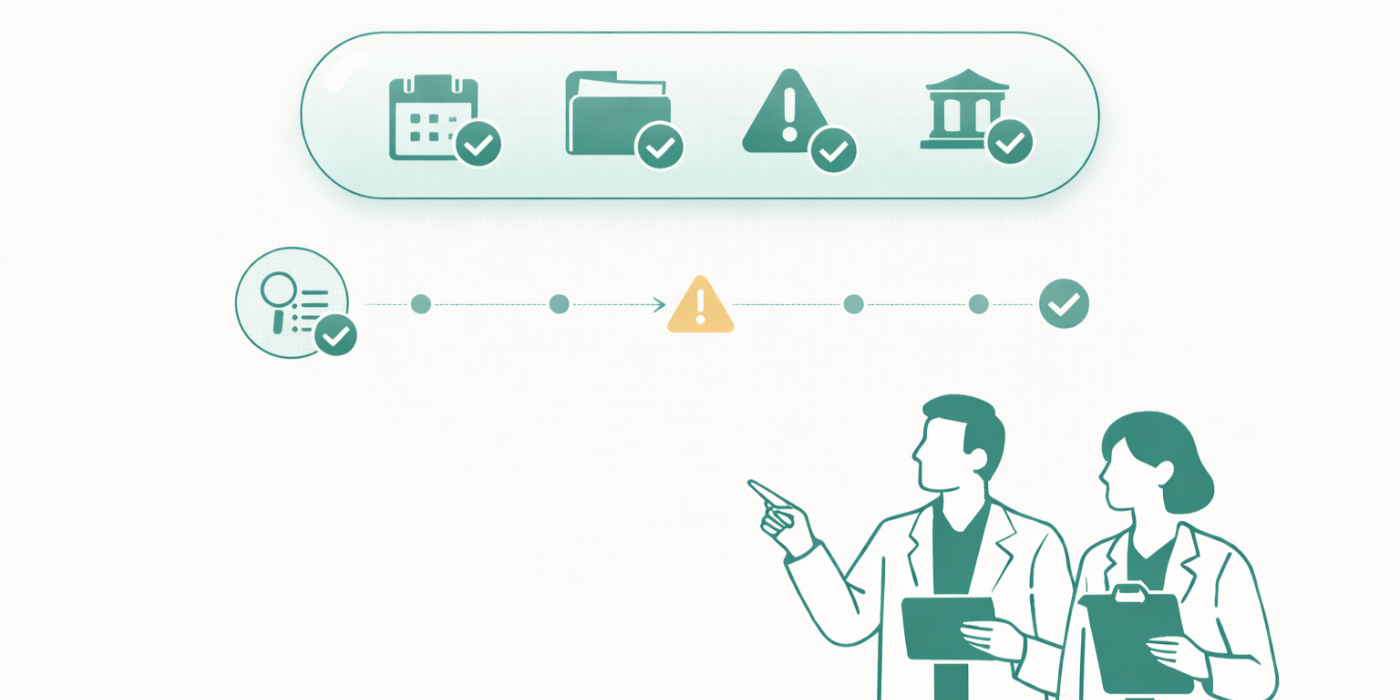
1) Why Clinical Trial Audits Go Wrong Even When Teams Are “Working Hard”
Most audit problems are not caused by one dramatic violation. They usually come from patterns: delayed documentation, inconsistent training records, unresolved deviations, missing signatures, version-control confusion, and weak follow-up tracking. In other words, the team is active, but the system is not controlled. That distinction matters because audits test evidence of control, not effort. A site coordinator may be working nonstop, a CRA may be visiting regularly, and the PI may be deeply involved clinically—but if the records do not show a consistent, compliant process, the audit outcome can still be painful.
GCP preparation starts by understanding that audit readiness is not a “final cleanup task.” It is a daily execution standard. Teams that treat audit prep as a pre-audit scramble usually create new errors while trying to fix old ones: backdated clarifications, incomplete explanations, inconsistent logs, and rushed file organization. The better strategy is to build a routine that keeps the trial continuously reviewable. That means aligning source documentation, CRFs, training evidence, delegation records, and regulatory files so that the story of the trial is coherent from enrollment through closeout. If your team needs stronger foundations on role execution and oversight pressure, it helps to revisit how monitors evaluate site performance in clinical research associate (CRA) roles, skills & career path and how site workflows break down under real study load in clinical research coordinator (CRC) responsibilities & certification.
Another reason audits go wrong is that teams confuse operational busyness with compliance maturity. A busy site can still be out of control if nobody owns reconciliation, nobody closes the loop on follow-ups, and documentation standards vary by person. Auditors quickly detect this. They look for repeat patterns that signal system weakness: recurring documentation gaps, inconsistent event handling, unclear PI oversight, and file maintenance that depends on one “hero” employee. This is why audit readiness is as much a project management problem as a regulatory one. Teams that apply structured workload control, clear handoffs, and regular review rhythms—similar to the logic used in clinical trial resource allocation and PM mastery and operational workflow planning around managing regulatory documents for CRCs—tend to perform far better during audits because their system produces evidence naturally.
Finally, audit pain intensifies when trial design complexity is high and teams fail to translate that complexity into tighter controls. Randomization, blinding, complex endpoints, and safety-heavy protocols all increase the burden of accurate documentation and consistent execution. If those controls are not operationalized early, the audit will expose the gaps. That is why audit readiness should be tied directly to study design elements like randomization techniques in clinical trials, blinding in clinical trials, and endpoint definitions in primary vs. secondary endpoints, rather than treated as a separate admin function.
2) What GCP Audit Preparation Actually Means in Day-to-Day Trial Operations
GCP audit preparation is often misunderstood as “having documents ready.” That is only part of it. Real preparation means your trial can demonstrate that rights, safety, and well-being of participants were protected; that the reported data are accurate and verifiable; and that the trial followed the approved protocol and applicable regulations. In practical terms, it means every important action in the trial leaves a traceable, timely, and consistent record. If your team cannot explain how a decision was made, who made it, when it was made, and where the supporting evidence lives, your audit risk remains high even if your binder looks organized.
This is why audit prep must be integrated with operational workflows instead of assigned to one person as “regulatory cleanup.” For example, clean audit outcomes depend on source documentation discipline, but source quality is shaped by visit workflows, staff training, and CRF design clarity. If your CRFs invite ambiguity, your data entries will be inconsistent and the audit trail will become noisy. Strengthening the data capture framework using case report form (CRF) best practices and improving study-team understanding of what matters analytically through biostatistics in clinical trials (beginner-friendly overview) can dramatically reduce the downstream audit burden because the team stops collecting and recording data in inconsistent ways.
Audit prep also means knowing where your study’s highest-risk audit questions will come from. In a safety-heavy study, auditors may go deep on event identification, seriousness classification, timelines, and follow-up consistency, which is why teams should align site practice with the logic in what is pharmacovigilance? essential guide for clinical research and site execution behaviors described in CRC responsibilities. In studies with complex assignment procedures, auditors may probe randomization and blinding protections, making it essential to operationalize safeguards from randomization techniques explained clearly and blinding types and importance. In endpoint-sensitive studies, they will test whether the evidence in source actually supports the way outcomes were reported, which is where endpoint clarity from primary vs secondary endpoints clarified with examples becomes a preparation tool, not just a design concept.
The strongest teams treat GCP prep as a repeating cadence: short file-QC checks, recurring reconciliation routines, deviation trending, training refreshers, and issue closure reviews. That cadence is much more sustainable than panic-based prep and aligns well with systems thinking used in resource allocation / project management mastery for clinical trials and in practical documentation control approaches from managing regulatory documents: comprehensive guide for CRCs. The result is not just a better audit outcome—it is a more stable trial.
3) Building an Audit-Ready GCP System: Documentation, Training, and Reconciliation That Hold Up Under Pressure
The fastest way to reduce audit risk is to stop thinking in terms of isolated tasks and start building a controlled evidence system. In that system, every major GCP obligation has an owner, a review rhythm, and a defined proof artifact. Documentation is not “kept” generically; it is produced and reconciled with intent. Training is not “completed” as a checkbox; it is linked to delegated responsibilities and verified by observed performance. Deviations are not simply logged; they are trended, investigated, and tied to corrective actions that can be shown to work. When these loops exist, audits become less about memory and more about retrieval.
Source documentation is the backbone of this system. Auditors often sample records to test whether reported data are supported, whether protocol-required procedures occurred when they should have, and whether clinical decisions were documented with enough clarity to be understood by someone outside the site. If source notes vary heavily by staff member, you already have a system weakness. The solution is not to over-script medicine; it is to standardize the minimum elements that must always be captured and align those elements with CRF requirements. Teams that study CRF definition, types & best practices alongside endpoint clarity examples produce stronger source because they understand what details are not optional.
Training and delegation are another major audit fault line. Auditors do not just ask whether someone completed GCP training. They test whether the person was appropriately trained for the tasks they performed and whether the delegation log reflects reality. If your site has role drift—staff doing tasks before formal delegation, or performing specialized activities without documented training—your file may look “complete” while still failing the audit’s core logic. That is why training records must be mapped directly to delegated functions and refreshed after protocol amendments or process changes. A practical way to structure this is to use role-based task bundles inspired by how responsibilities are separated in CRA role expectations, CRC workflows, and even broader operational pathways like the clinical trial assistant (CTA) career guide, which helps teams clarify who should own what.
Reconciliation is where audit readiness becomes visible. Most teams lose control not because a single document is missing, but because information across systems does not match. The source says one date, EDC says another, the deviation log uses a third description, and the regulatory file contains an email that suggests a different timeline. Auditors read across systems. They are not auditing your binder in isolation; they are auditing the coherence of your trial. This is why weekly or biweekly reconciliation routines are one of the highest-value GCP prep moves you can make. Reconcile consent versions to enrollment dates, source to CRF entries, AE records to safety reports, deviations to CAPA actions, and monitoring findings to closure evidence. Teams that already practice this style of cross-checking for safety and oversight readiness—similar to the discipline discussed in pharmacovigilance fundamentals and data monitoring committee roles in clinical trials—tend to perform far better when auditors start sampling.
4) How to Prepare for a Clinical Trial Audit Without Creating a Last-Minute “Compliance Theater”
The most dangerous audit-prep habit is what teams do under pressure: they start generating activity that looks like compliance instead of strengthening the actual system. Files get rearranged without QC, explanations are written after the fact without clear support, and everyone becomes too busy to fix the root causes auditors are likely to notice. This is compliance theater—high motion, low control. It feels productive, but it often increases risk because rushed cleanup introduces inconsistencies that were not there before.
Professional audit preparation starts with scope-based prioritization. You identify the processes and records most likely to be sampled and most likely to produce meaningful findings if weak. In many trials, that includes consent process control, eligibility documentation, source-to-CRF consistency, AE/SAE handling, delegation/training alignment, deviations/CAPA, and essential document filing. That prioritization should be tied to the protocol and study design, not generic templates. For example, studies with complex safety profiles should intensify controls around AE handling and PV interfaces using principles from pharmacovigilance essentials, while blinded or randomized trials should strengthen assignment and masking protections based on randomization techniques and blinding importance and types.
The next step is to run a structured internal readiness review that behaves like an audit but functions like coaching. The goal is not to “catch people” but to expose process weaknesses while there is still time to fix them properly. Reviewers should trace a participant journey across systems: screening, consent, eligibility, enrollment/randomization, visits, AEs, deviations, drug accountability, and closeout-related documentation. When gaps are found, teams should avoid superficial fixes and instead document the process cause, immediate correction, and preventive action. This is where the discipline of operational problem-solving from clinical trial resource allocation / PM mastery becomes surprisingly useful—because audit prep succeeds when teams control workflow, assign owners, and close loops with evidence, not when they merely “work harder.”
Another critical element is response architecture. Many teams prepare documents but forget to prepare how they will answer auditor questions. During an audit, confusion often comes from slow retrieval, mixed messaging, and undocumented verbal explanations. A professional team defines who owns document retrieval, who answers process questions, who records requests, and who reviews outgoing responses for consistency. Sites can model this using role clarity and documentation discipline from managing regulatory documents for CRCs, while sponsors and CRO teams can align with monitoring/oversight behaviors described in CRA role expectations. This turns audit day from a panic event into a controlled execution day.

5) GCP Preparation Essentials That Protect You Before, During, and After the Audit
High-value GCP preparation is not just about surviving auditor questions—it is about preserving trial credibility after the audit ends. That requires building habits that create durable evidence and resilient processes. The first essential is timeliness. Late documentation, late filing, late deviation review, and late follow-up closure are repeated audit magnets because lateness usually signals weak control. Timeliness is not solved by reminders alone; it is solved by workload design. Teams need realistic review cadences, protected documentation time, and clear thresholds for escalation when backlogs grow. This is where project-management discipline and resource planning directly affect compliance outcomes, and why operational frameworks like clinical trial resource allocation and PM mastery should be treated as GCP enablers, not separate topics.
The second essential is traceability. Auditors trust systems that show a clear chain from action to evidence. If a deviation occurred, they want to see identification, assessment, root cause, corrective action, preventive action, and effectiveness follow-up—not just a log entry. If an AE occurred, they want to see source, assessment, reporting, follow-up, and reconciliation, all aligned with the study record and safety process. If an endpoint was recorded, they want supporting source that matches the protocol’s intent. Teams that strengthen endpoint definitions using primary vs secondary endpoints, data capture logic through CRF best practices, and safety workflow through pharmacovigilance fundamentals create traceability almost automatically because their process language is already consistent.
The third essential is role accountability with provable oversight. Audits frequently expose teams where everyone is “helping,” but nobody clearly owns the system. Professional preparation means every critical process has an owner, and PI/sponsor oversight is visible through review records, issue discussions, and decision documentation. This does not mean bloated meetings. It means short, recurring checkpoints with evidence of review, especially for safety, deviations, file maintenance, and unresolved monitoring items. If your team is scaling, role clarity becomes even more important, and it helps to benchmark how responsibilities evolve across positions using pathways like the clinical research assistant career roadmap, clinical research administrator career pathway, and regulatory affairs specialist career roadmap, especially when building a more audit-ready study team.
The final essential is post-audit learning discipline. Even a good audit will reveal friction points. Strong teams do not file the report and move on; they convert findings and near-findings into process upgrades. They look for patterns that repeat across sites, vendors, or studies. They strengthen training where judgment was weak, simplify documentation where ambiguity caused errors, and redesign workflows where backlogs created risk. That is how audit readiness becomes a competitive advantage rather than a recurring fear.
6) FAQs: Handling Clinical Trial Audits and GCP Preparation Essentials
-
The biggest mistake is treating audit prep as a last-minute cleanup project instead of a continuous control system. That approach creates rushed fixes, inconsistent records, and “compliance theater.” A stronger method is ongoing reconciliation, routine file QC, and workflow control supported by operational systems like managing regulatory documents for CRCs and clinical trial resource allocation / PM mastery.
-
Auditors detect weak controls through patterns, not isolated mistakes. They look for recurring inconsistencies in source notes, CRFs, safety records, delegation/training alignment, and deviation handling. When the same weakness appears across participants or processes, it signals system failure. Understanding how data and documentation should align via CRF best practices and endpoint documentation logic in primary vs. secondary endpoints helps reduce those patterns.
-
Start with the highest-risk, most-sampled areas: consent/version control, eligibility support, source-to-CRF consistency, AE/SAE documentation, delegation/training records, deviation/CAPA tracking, and regulatory file retrievability. Then build a short recurring internal review cadence. For safety-heavy studies, align the process with pharmacovigilance essentials immediately.
-
Use small, scheduled readiness routines instead of large “audit prep weeks.” Weekly filing blocks, biweekly reconciliation, monthly deviation trends, and targeted training refreshers are more sustainable than panic cleanups. This works best when workload is designed realistically using the same systems mindset used in clinical trial PM/resource allocation mastery.
-
Because teams often document training generally but fail to prove that specific people were trained for the exact tasks they performed at the correct time. Auditors test the link between delegation and competency, not just the existence of certificates. Clear role design informed by CRC responsibilities, CRA expectations, and regulatory-role pathways like regulatory affairs specialist roadmap helps close this gap.
-
They increase audit risk if controls are weak because assignment errors, premature randomization, or blinding breaches can affect participant safety, bias risk, and data credibility. Audit prep should include explicit verification steps, role separation, and incident handling procedures based on randomization techniques explained clearly and blinding in clinical trials.
-
Inspection-ready means the team can retrieve records quickly, explain processes consistently, and show a coherent evidence trail for key trial activities without scrambling. It does not mean perfection. It means controlled systems, timely documentation, visible oversight, and corrective actions that actually prevent recurrence. Teams that maintain this standard usually have stronger performance across monitoring, safety, and data quality long before an audit is announced.
