
How to Become a Clinical Research Associate (CRA): Definitive Career Guide (2025)
Becoming a Clinical Research Associate is not about “loving travel” or “liking research.” It is about being the person sponsors trust to verify reality. You walk into a site, pressure is high, timelines are tight, and the data has to stand up to scrutiny. If you do not understand what drives deviations, missing source, late queries, and messy delegation, you will burn out fast. This guide gives you the exact pathway to break in, the skill stack that makes you promotable, and the fastest routes to higher pay in 2025.

1) What a CRA Really Does in 2025 (And What Sponsors Actually Pay For)
A CRA is a quality and risk operator, not a “checker.” Your real job is to protect the study by catching problems early, preventing repeat failures, and keeping sites aligned with the protocol and oversight plan. If you want to get hired, you must speak in outcomes.
The deliverables that separate average CRAs from future Leads
Sponsors reward CRAs who reduce uncertainty. That means you can:
Detect quality issues before they become findings, then drive corrective action like a mini Quality Assurance (QA) Specialist in the field.
Keep source and EDC aligned so queries do not age, using EDC fluency built from the top EDC platforms guide.
Read a protocol like an operations blueprint, then help a site execute it with fewer deviations, which mirrors the discipline in GCP certified professional expectations.
Communicate risk without drama, escalate cleanly, and document decisions like a future Clinical Trial Manager or Clinical Research Project Manager.
The biggest misconception that blocks people from breaking in
Many candidates think the CRA job is “SDV and travel.” Sponsors know SDV is only one tool. Modern monitoring is risk based, tech supported, and heavily dependent on your ability to interpret what the site is doing and why. If you want to become credible fast, learn the monitoring ecosystem from the remote monitoring tools and platforms guide and learn how CROs structure delivery using the top CRO vendors and solutions list.
What makes the CRA role hard, and why that is your advantage
The CRA role is hard because you must perform under friction:
Sites are overloaded and understaffed, so you must build trust fast, which is easier when you understand site roles like Clinical Trial Assistant (CTA) and Clinical Research Assistant.
Data quality issues are usually process issues, so you must diagnose root causes like a future Clinical Data Manager.
Investigator oversight can be weak, so you must understand delegation and accountability using the Principal Investigator roadmap and the Sub-Investigator pathway.
If you can operate inside this reality, you become rare, and rare gets paid.
2) The Fastest Path to Become a CRA (Even If You Are Starting From Zero)
There are multiple valid entry points, but only a few produce fast hiring in 2025. Your goal is to enter through a role that gives you direct exposure to documentation quality, protocol execution, and site oversight.
Path A: Site route (CRC or coordinator to CRA)
This is the most proven route because it gives you real-life protocol experience. If you are currently a coordinator, build your “monitor-ready” portfolio by mastering source quality and query closure like a data professional using the Clinical Data Coordinator pathway and the Clinical Data Manager roadmap. Then benchmark your value with the CRC salary guide and the broader clinical research salary report.
Your leverage here is simple: you can say you have already lived the site pain, and you know exactly how to prevent it.
Path B: CRO route (CTA, in-house CRA, clinical trial associate)
If you can enter a CRO, you can get structured training and faster exposure to multiple studies. Start with roles like Clinical Trial Assistant or clinical research support roles like Clinical Research Assistant, then push into in-house CRA or CRA I programs. Learn the vendor ecosystem so you can speak like someone who understands delivery models, using the CRO vendors and solutions guide.
Path C: Regulatory or QA route (documentation-first, oversight-ready)
If your strength is documentation discipline, move through regulatory. This path builds audit readiness and strong narrative control. Use the Clinical Regulatory Specialist guide and the Regulatory Affairs Associate roadmap to get into compliance-heavy environments. Then layer QA thinking using the QA Specialist roadmap. Sponsors love CRAs who can write clear, defensible documentation.
Path D: Data route (EDC strength becomes monitoring strength)
If you are unusually strong in EDC, edit checks, and data cleaning, you can break in through data and pivot into monitoring. The monitoring job becomes easier when you understand how issues show up in systems. Learn tooling from the EDC platforms guide and build a progression toward Lead Clinical Data Analyst. Then position yourself as a CRA who can reduce query chaos.
What “qualified” means for CRA hiring managers
Most hiring managers do not care about a perfect background. They want evidence you can:
Read and operationalize a protocol
Document clearly and consistently
Detect risk patterns and propose fixes
Communicate with sites without creating resistance
Work inside modern monitoring models using the remote monitoring tools guide
If you can prove those, you can get interviews even when your title is not CRA yet.
3) The CRA Skill Stack: The Exact Competencies That Make You Hireable and Promotable
If you want a definitive plan, build skills in the same order the work hits you.
Skill 1: Protocol mastery that prevents mistakes
CRAs who struggle do not understand what matters in the protocol. You must translate the schedule of events into operational reality. Practice reading protocols with a “failure prevention” mindset. This is the same discipline investigators need, so studying the PI roadmap and the Sub-Investigator pathway upgrades how you interpret oversight risk.
Skill 2: Source and data alignment, not blind SDV
SDV is not the goal. Reality verification is the goal. You must learn how source supports endpoints, how deviations are born, and how poor documentation creates “truth gaps.” Build competence by understanding how data flows through EDC and why queries exist, using the EDC platforms guide and data role roadmaps like Clinical Data Manager and Clinical Data Coordinator.
Skill 3: Issue detection and root-cause thinking
This is where careers are made. A deviation is not an event, it is a symptom. You must ask: what process failure produced it, and how do we stop it from repeating. That is why CRAs with QA mindset move faster, so learn the logic from the QA Specialist roadmap.
Skill 4: Communication that changes behavior
Your job is to influence without authority. The best CRAs do not “lecture sites.” They prioritize, clarify, and reduce workload. If you want a mental model for stakeholder leadership, look at how operational leadership scales in Clinical Research Administrator roles and execution leadership in Project Manager pathways.
Skill 5: Tech comfort that speeds your ramp
If you are clumsy in CTMS, eTMF, and remote workflows, you will always feel behind. Learn modern workflows with the remote monitoring tools guide and understand how CRO delivery is structured using the CRO vendors guide.
A brutal 90-day plan to become “CRA-ready”
Days 1 to 30: protocol reading, SDV logic, documentation standards, GCP discipline using GCP insights
Days 31 to 60: issue identification, query aging control, deviation prevention, EDC comfort with the EDC platforms guide
Days 61 to 90: lead one site improvement story, document your impact, then turn it into interview proof, supported by benchmarks from the salary report
4) How to Get Hired as a CRA: Resume Proof, Interview Strategy, and Real Differentiation
CRA hiring is not fair. Many recruiters filter by keywords. Your job is to look “ready” in 10 seconds and then prove readiness in 10 minutes.
Build a resume that signals monitoring readiness immediately
Your top section should read like a monitoring profile, not a job description. Lead with:
Protocol execution exposure
Audit readiness and documentation control
Query aging and data quality wins
Deviation prevention outcomes
Systems exposure like EDC, eTMF, CTMS, supported by learning from the EDC platforms guide and the remote monitoring tools guide
If you are coming from a site, translate coordinator achievements into monitoring language using benchmarks from the CRC salary guide and role context from Clinical Research Assistant pathways.
Your “proof portfolio” beats your degree
Build a one-page portfolio that includes:
A monitoring style issue log template
A deviation prevention checklist
A query triage workflow
A clean escalation email template
A study startup readiness list
These are the same building blocks used in compliance roles like Clinical Regulatory Specialist and quality roles like QA Specialist.
Interview answers that separate you from 95 percent of candidates
Most candidates answer with “I am detail oriented.” That is weak. You must answer with scenarios:
How you detected a risk pattern early
What the root cause was
How you corrected it
How you prevented recurrence
How you documented the fix
If you want to sound like a sponsor-ready professional, reference operational frameworks used in CRO delivery environments from the CRO vendors guide and mention your understanding of remote workflows from the remote monitoring tools guide.
Where to apply for faster conversion opportunities
Target organizations that hire and train:
Large CROs that run CRA development pipelines
Sponsors with strong monitoring infrastructure
Research networks and academic centers that move coordinators into monitoring roles
Use the academic medical centers list as a map of environments where strong research operations exist. Then align your salary expectations with the CRA salaries worldwide report and broader context from the clinical research salary report.
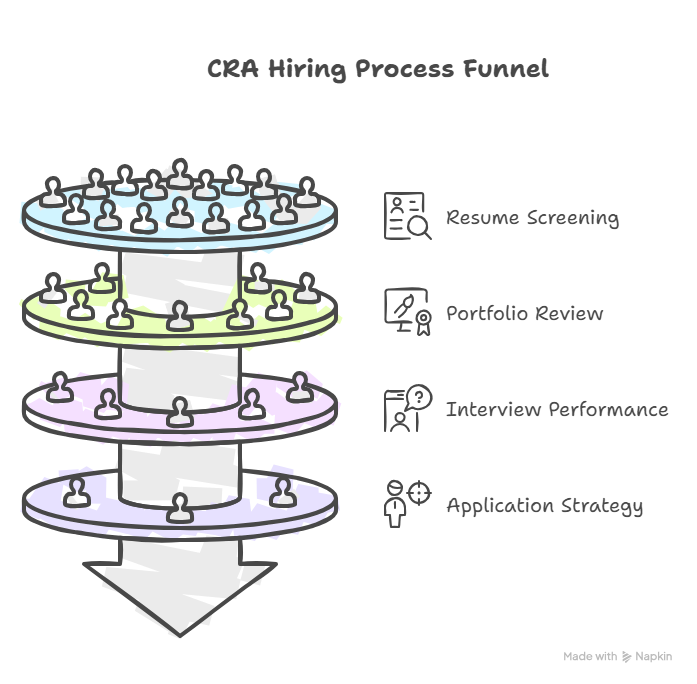
5) CRA Salaries and Advancement: How to Move From CRA I to Senior, Lead, CTM, and Beyond
If you are chasing the CRA title only, you will plateau. You should be chasing the path CRA unlocks.
The typical ladder, and what triggers each promotion
CRA I: you can execute monitoring tasks with support, you write clear trip reports, you catch basic issues
CRA II: you manage sites with fewer rescues, you prevent repeat deviations, you escalate early
Senior CRA: you stabilize difficult sites, you mentor others, you drive study-level improvements
Lead CRA: you set monitoring tone, coordinate CRAs, and become a quality leader
CTM or PM: you move from site oversight to program delivery using skills similar to Clinical Research Project Manager
To understand earning potential, ground yourself in CCRPS benchmarks from the CRA salary report and the top highest-paying clinical research jobs list.
Negotiation in 2025 is about risk ownership, not confidence
You negotiate higher pay when you can prove you reduce risk. Bring proof like:
A site turnaround story where deviations dropped
A query aging story where backlog cleared and stayed clear
A startup story where early chaos was prevented
A quality story where findings were avoided
Then anchor your ask with data from the clinical research salary report and role-specific context from the CRA salary report.
High-paid pivots CRAs often take
CRA experience is transferable into multiple high earning tracks:
Project management: use the project manager salary trends guide
Clinical data leadership: move toward Lead Clinical Data Analyst and Clinical Data Manager
Regulatory leadership: build toward Regulatory Affairs Specialist
PV and safety direction: if you like safety signals and case quality, align with Drug Safety Specialist, PV Associate, and salary context from PV specialist salaries
Medical and scientific tracks: understand compensation context in MSL and Medical Monitor salary insights and career structure in the MSL career roadmap
A CRA who learns how safety, data, and oversight connect becomes a long-term winner.
6) FAQs: How to Become a CRA (2025)
-
If you already work at a site as a coordinator or assistant, many people transition within 12 to 24 months when they deliberately build monitor-ready proof. If you start from zero, the fastest path is usually a CRO support role like Clinical Trial Assistant or Clinical Research Assistant, then move into in-house CRA and CRA I programs. Use the CRA salary report to set realistic expectations and stay motivated with a clear target.
-
Not always, but you need monitoring readiness. That means you can talk about protocol interpretation, deviation prevention, documentation discipline, and issue escalation like someone who understands oversight. Strong candidates prove they understand systems like EDC and remote workflows using references like the EDC platforms guide and the remote monitoring tools guide.
-
If you can handle patient facing and documentation heavy work, start at a site as a coordinator, assistant, or regulatory support. If you want structured training and faster exposure to many studies, start at a CRO in CTA or in-house roles. The best choice is the one that gets you measurable proof fast. Use salary context from the clinical research salary report and role ladders from the top highest-paying jobs list.
-
Protocol mastery, clean documentation, issue detection, and clear communication are the foundation. Tech comfort matters too, especially in modern monitoring models, so understanding remote workflows from the remote monitoring tools guide and data flow concepts from the EDC platforms guide speeds up your ramp and reduces mistakes.
-
Use a structured story: what happened, why it happened, what you did immediately, how you documented it, and how you prevented recurrence. Hiring managers want root cause thinking, not blame. If you want to build this mindset, learn QA thinking from the QA Specialist roadmap and oversight accountability from the PI roadmap.
-
Salaries generally increase as you move from CRA I to CRA II to Senior CRA, especially when you can manage difficult sites and drive measurable quality improvements. For realistic salary benchmarking, use the CRA salaries worldwide report plus broader context from the clinical research salary report.
-
Become reliable and preventive. Do not just complete SDV. Stabilize your sites by reducing repeat issues, escalating early, and writing trip reports that clearly drive action. Learn how high-functioning delivery environments operate by understanding CRO models in the CRO vendors guide and study how data quality becomes operational advantage through the Clinical Data Manager roadmap.
-
Yes, because monitoring builds a strong foundation in compliance, documentation, and cross-functional coordination. Many CRAs pivot into regulatory using the Regulatory Affairs Specialist roadmap or into PV using pathways like Drug Safety Specialist.
