
Clinical Research Continuing Education Providers: Global Directory
Clinical research changes faster than most teams update their skills. That gap shows up as avoidable protocol deviations, inconsistent source, repeated queries, shaky endpoint understanding, and panic when randomization or blinding questions land mid study. This global directory helps you select continuing education providers that fix real operational problems, not just collect certificates. You will also get a simple selection framework, a role based CE roadmap, and a tracking system that makes sponsors and auditors see competence instead of chaos.

1) How to vet continuing education providers without wasting budget or time
Most CE decisions fail because people evaluate “brand” instead of “impact.” A provider is only worth it if their training reduces trial risk, improves documentation quality, or accelerates execution under real constraints.
Start with your risk exposure. A CRA will get punished for weak oversight, slow escalation, and inconsistent monitoring narratives. Align CE with real expectations described in CRA roles, skills, and career path and the execution reality in the definitive CRA career guide. A CRC gets punished for messy processes at the site level, late corrections, and CRF data that does not match source. Anchor decisions in CRC responsibilities and certification and the stepwise expectations in how to become a CRC.
Then test provider quality using five filters.
Job task mapping, not topic lists. If a provider says “GCP overview” but cannot teach how to prevent visit level deviations, that is content theater. Pair their syllabus with practical execution topics like CRF definition, types, and best practices and primary vs secondary endpoints clarified with examples. If the provider does not connect learning to these tasks, skip.
Inspection readiness signals. Good CE trains documentation logic, not memorization. Look for training that improves the ability to explain why something happened and how it was controlled. That includes mastery of DMC roles in clinical trials and the operational consequences of placebo controlled trials.
Depth on trial mechanics that sites actually get wrong. Randomization, blinding, endpoints, and CRFs create recurring failure points. If a provider cannot teach how allocation concealment breaks in the field, they are not training trial execution. Use randomization techniques explained clearly and blinding types and importance as your internal standard.
Evidence of updated content and real world constraints. If content ignores decentralized workflows, remote oversight, or evolving tech adoption, it will not help you perform in modern trials. Benchmark against what is changing in the industry using the clinical research technology adoption report and the pressure points described in the patient recruitment and retention trends report.
Career leverage and network access. Some providers are valuable because they reduce time to opportunity. If your goal includes role mobility, compare provider value the same way you compare career pathways described in the clinical trial manager career roadmap and the clinical operations manager advancement guide.
2) Global directory by learning outcome: which provider category to use for your exact goal
A “global directory” is only useful if it is organized by outcomes. Otherwise it becomes a list you scroll, then abandon. Use this structure to pick the provider category based on what you are trying to fix.
If your pain is protocol deviations and inconsistent execution
Your team does not need more general education. You need targeted training that tightens visit conduct, consent workflow, and documentation discipline. Start by standardizing the site side expectations described in CRC responsibilities and certification and then reinforce compliance logic using education that drills real failure points like blinding integrity and randomization execution.
Where people get hurt is not theory. It is the moment a site staff member infers allocation, a coordinator changes a workflow mid study, or a monitor cannot justify their oversight decisions. Pair CE with practical knowledge that reduces those mistakes, like CRF best practices and primary vs secondary endpoints.
If your pain is data quality and query storms
Use EDC vendor academies plus CRF logic training. The goal is not faster entry. The goal is fewer avoidable queries and fewer late corrections. If the training does not teach how to prevent mismatch between source and CRF, it is not helping. Keep the internal standard high by grounding expectations in CRF definition, types, and best practices and the downstream impact of endpoint confusion explained in primary vs secondary endpoints with examples.
If your team keeps “passing training” but still produces inconsistent data, you have a workflow problem disguised as a knowledge problem. That is where role based education tied to real oversight helps, especially for CRAs using the standards implied in CRA roles and skills and leaders following the maturity path in the clinical trial manager roadmap.
If your pain is safety and PV coordination confusion
Many trials suffer from slow safety escalation, unclear reporting expectations, and inconsistent narratives. Pharmacovigilance education is valuable, but only if it connects to trial operations. Use CE that aligns PV thinking with clinical trial workflows described in what is pharmacovigilance, and career focused PV growth tracks like pharmacovigilance associate roadmap or how to become a pharmacovigilance manager.
If your pain is leadership escalation and governance breakdown
This is where CE for clin ops leadership matters. It improves risk decisions, not knowledge trivia. A strong program should help you set thresholds, build oversight discipline, and stabilize decision making under pressure, which connects directly with the governance logic in DMC roles in clinical trials and the role maturity described in clinical research project manager career path.
3) Role based CE roadmaps that prevent the most expensive mistakes
A CE plan fails when it is not tied to role maturity. You need education that evolves as your responsibilities evolve.
CRA roadmap: build oversight credibility, not just visit completion
Phase 1 is foundational execution: monitoring narrative quality, source review logic, and deviation prevention. Use the workflow clarity from CRA roles, skills, and career path and sharpen technical understanding where failures hit hardest, like randomization techniques and blinding types.
Phase 2 is risk based oversight: identifying patterns across sites, triaging issues, and escalating early. Your CE should train how to connect data signals to operational action. Use the execution standards implied across the CCRPS ecosystem, including how sites create errors through weak CRFs in CRF best practices and how endpoint confusion drives inconsistent decisions in primary vs secondary endpoints.
Phase 3 is leadership readiness: CTM level thinking. You need education that strengthens governance, forecasting, and vendor coordination, aligned with the trajectory in clinical trial manager career roadmap and higher level operational leadership in advancing as a clinical operations manager.
CRC roadmap: clean execution, clean source, clean CRFs
Phase 1 is operational control. Master the workflow responsibilities in CRC responsibilities and certification and convert them into daily checklists tied to visit conduct and documentation. Phase 2 is data discipline: focus on CRF mapping using CRF definition and best practices and endpoint alignment using primary vs secondary endpoints. Phase 3 is site leadership: grow into lead CRC roles using the career scaffolding in lead CRC career steps and skills.
PV roadmap: prevent safety chaos and career stagnation
If you are in PV, your CE should sharpen both compliance and judgment. Start with the conceptual base in what is pharmacovigilance, then move into role progression via drug safety specialist career guide and leadership readiness through how to become a pharmacovigilance manager.
4) Build a CE system that survives audits, turnover, and multi region trials
Taking courses is not a system. A system has tracking, role requirements, and proof that learning became better execution.
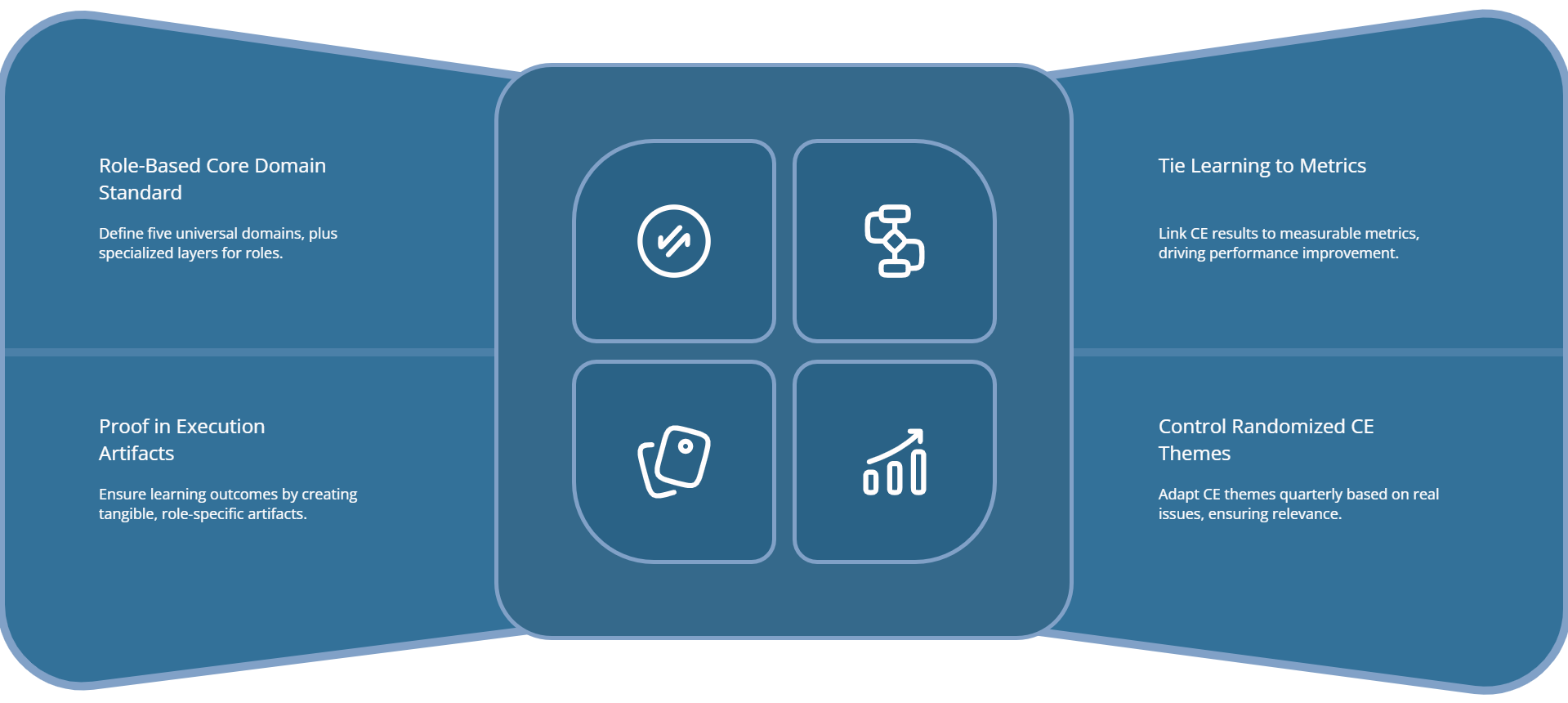
Step 1: create a role based minimum standard
Pick five core domains everyone must understand, then add role specific layers. The core domains should include trial mechanics that break most often: randomization techniques, blinding integrity, CRF best practices, endpoint clarity, and governance fundamentals like DMC roles.
Step 2: attach learning to performance metrics
If CE does not change metrics, it is entertainment. Tie CE completion to measurable outputs: query rate, deviation rate, time to resolve issues, monitoring report quality, and data correction volume. When you see spikes, diagnose the training gap using the CCRPS knowledge base as the standard, especially the practical failure points in CRF best practices and placebo controlled trial realities.
Step 3: enforce “proof of application”
Require one artifact per course: a checklist, a decision tree, a report template, or a documented process change. This is how you prove learning became execution. For CRAs, this could be a monitoring narrative improvement aligned with expectations implied in CRA roles and skills. For CRCs, it could be a CRF mapping guide aligned with CRF types and best practices.
Step 4: stop letting CE become random
Create quarterly themes tied to the actual pain you are seeing. If recruitment is failing, build CE around feasibility and retention trends using patient recruitment and retention trends. If tech adoption is breaking processes, align CE with the reality described in the technology adoption report and then harden audit trail expectations.
5) The fastest way to use this directory: three smart CE stacks for real world teams
Most teams do not need 12 providers. They need a stack that covers core risk areas without overlap.
Stack A: Site quality and data cleanliness stack
Use a site focused provider for operational consistency, add CRF training via a provider that teaches data logic, and add endpoint literacy via a short course. Validate all content against CCRPS standards on CRF best practices and endpoint clarity. This stack reduces query storms and late corrections.
Stack B: Monitoring excellence and inspection resilience stack
Use a CRO academy or CRA focused institute for real monitoring scenarios, add a quality and audit course for inspection logic, and reinforce trial mechanics using randomization techniques and blinding integrity. Anchor expectations with CRA roles and skills so the learning maps to your daily responsibilities.
Stack C: PV and safety coordination stack
Use a PV academy for safety compliance and case processing, add documentation and narrative training, and integrate trial operations context using what is pharmacovigilance. If you are building a PV career path, align the stack to role progression via drug safety specialist career guide and pharmacovigilance manager career steps.
The hidden win is that these stacks reduce friction between functions. Teams stop blaming each other and start operating from shared definitions and shared expectations. That is where quality becomes predictable.
6) FAQs: Clinical research continuing education providers
-
Credibility is proven by outcomes, not logos. A credible provider teaches job tasks, reduces common failure modes, and supports learning with scenarios and artifacts you can use at work. If a course does not improve your ability to control documentation quality, handle trial mechanics like randomization and blinding, or clean up CRF workflows described in CRF best practices, it is not credible for real execution.
-
Choose CE that proves you can perform the CRA job, not just talk about it. Start with role expectations in CRA roles, skills, and career path and the roadmap in the definitive CRA career guide. Prioritize education on monitoring narratives, deviation prevention, CRF quality logic, and trial mechanics where sites slip. Your goal is to show sponsors you understand how quality breaks in the field, and how to prevent it.
-
CRCs should prioritize execution training that hardens consistency: consent workflow discipline, visit conduct control, and clean source. Then shift into data discipline using CRF best practices and endpoint alignment via primary vs secondary endpoints. If your training does not reduce query volume or late corrections, the content is not operational enough. Anchor your CE decisions in CRC responsibilities so the learning maps to daily work.
-
Conferences are useful when your goal is exposure, network building, and trend awareness. They are weak when your goal is performance improvement unless you convert learning into action. Use conferences to identify emerging shifts like those described in the technology adoption report or evolving recruitment realities from recruitment and retention trends. Then build follow up training and SOP updates that translate those insights into execution changes.
-
Tracking should be role based, outcome based, and artifact based. Record course completion, but also attach proof of application: a checklist, decision tree, updated SOP section, or a monitoring narrative template. This makes audits smoother because you can show training translated into controlled processes. Your tracking categories should map to core risk topics like CRF best practices, endpoint clarity, and governance expectations like DMC roles.
-
They buy generic courses that feel safe but do not change performance. If your training does not reduce deviations, query volume, or confusion around trial mechanics, it is not aligned to real risk. Validate every provider against hard execution topics like randomization techniques and blinding integrity, plus the daily realities of CRF quality in CRF best practices. Your CE budget should buy measurable risk reduction, not comfort.
