
MSL Salary and Hiring Reality in 2026: Reddit Experiences, Field Expectations & What Makes Candidates Competitive
Medical Science Liaison salaries can look extraordinary from the outside, yet the harder question in 2026 is who actually gets hired into those packages. Current openings show six-figure base salaries, bonuses, and field benefits, while Reddit candidates describe months of applications, presentation rounds, therapeutic-area filtering, and repeated losses to experienced MSLs. Anyone exploring clinical research career paths, certification versus experience, CRA career progression, or medical-affairs compliance needs to understand both sides of that equation.

1. MSL Salary in 2026: What Current U.S. Compensation Actually Looks Like
The cleanest way to understand 2026 MSL compensation is to separate base salary from total compensation.
Current employer-posted ranges are much more useful than generic salary aggregators because they show what pharmaceutical companies are prepared to offer for specific territories and therapeutic areas right now. In September 2026, multiple Amgen Medical Science Liaison openings list base salary ranges of approximately $157,000 to $212,400, covering inflammation, rare disease, bone health, and other territories. Amgen's current Senior MSL openings list approximately $172,300 to $233,200 in base salary.
Johnson & Johnson's 2026 genitourinary oncology MSL posting lists an anticipated base range of $115,000 to $197,000, plus eligibility for a performance bonus and company vehicle. The position also prefers relevant MSL and therapeutic-area experience, showing why salary and hiring difficulty have to be analyzed together.
Glassdoor currently estimates median U.S. MSL total pay around $211,000, with a broad reported total-pay range of roughly $159,000 to $287,000. Individual company estimates can run higher because total compensation may include annual bonus, equity, and other forms of additional pay.
That distinction matters to candidates comparing an MSL transition with CRA salary progression, CRO versus sponsor careers, clinical research career mobility, and medical-monitor responsibilities. A $180,000 MSL base with a target bonus, company car, retirement match, equity, and strong benefits may be economically very different from a $180,000 salary with little additional compensation.
The Medical Science Liaison Society's 2026 global salary survey is still open, while its 2025 survey remains the latest completed annual report available through the organization. That means anyone quoting a finalized “2026 MSL Society average” should be treated cautiously until the 2026 survey has actually closed and results have been published.
Current salary ranges also should not be interpreted as entry-level guarantees. An aspiring MSL coming from clinical research without industry experience, site-level clinical operations, research-assistant work, or clinical safety work may enter lower within an employer's band than someone with several years of field medical experience.
Therapeutic area can also change the bargaining equation. Oncology, hematology, rare disease, neurology, rheumatology, immunology, cardiometabolic disease, and increasingly obesity can require highly specific scientific credibility. Someone with years of direct oncology research may present far less hiring risk for an oncology MSL team than an equally accomplished scientist from an unrelated field. This is why clinical research experience, protocol expertise, investigator-facing communication, and clinical-trial safety knowledge can become compensation-relevant even when the job itself sits in Medical Affairs.
A May 2026 Reddit salary discussion captured another useful point: experienced MSLs were discussing base-salary ceilings around the $200,000 level while other contributors stressed that total compensation is the more meaningful number, because bonuses, RSUs, stock plans, retirement matching, and other benefits can materially change annual earnings.
So when comparing offers, calculate:
Base salary + target bonus + realistic bonus attainment + equity + retirement contribution + vehicle benefit + insurance value + travel reimbursement + long-term promotion value.
That framework is much more useful than asking for one national “MSL salary.”
| Career Factor | 2026 Hiring Reality | What Employers Infer | Strong Candidate Proof | Best Career Move |
|---|---|---|---|---|
| Advanced scientific degree | Commonly requested or strongly preferred | Scientific depth | Can discuss evidence beyond memorized slides | Pair credentials with medical-affairs compliance knowledge. |
| PharmD | Highly relevant for many teams | Drug and clinical knowledge | Therapeutic expertise plus HCP communication | Translate patient-care experience into scientific exchange. |
| PhD | Strong pathway when TA matches | Research expertise and scientific credibility | Can explain clinical relevance of research | Build broader clinical evidence literacy. |
| MD or DO | Strong scientific credential | Clinical authority | Can communicate evidence without sounding promotional | Develop medical-safety and trial knowledge. |
| Therapeutic-area alignment | One of the strongest first-MSL advantages | Faster ramp-up with KOLs | Research or clinical work directly overlaps portfolio | Prioritize roles matching your deepest expertise. |
| Prior MSL experience | Powerful screening advantage | Lower onboarding risk | Existing KOL and territory experience | First-time applicants need stronger transferable evidence. |
| Clinical experience | Valuable when relevant to TA | Understands care pathways and HCP priorities | Patient-care or specialty evidence | Connect experience with patient-safety knowledge. |
| Clinical research experience | Useful bridge | Understands evidence generation | Protocol, investigator and study exposure | Strengthen protocol expertise. |
| KOL interaction | Core field-medical skill | Relationship maturity | Credible scientific conversations with specialists | Show examples of high-level clinical communication. |
| Scientific presentation | Frequently tested during interviews | Can represent Medical Affairs credibly | Clear, evidence-based presentation under questioning | Practice explaining complex data to different audiences. |
| Presentation Q&A | Often separates finalists | Scientific agility | Handles uncertainty and challenge calmly | Practice data interpretation rather than slide memorization. |
| Networking | Highly influential for first MSL roles | Candidate understands field culture | Warm introductions and informed conversations | Use networking to learn, then earn referrals naturally. |
| Cold applications | Can work but conversion is inconsistent | Candidate competes in a crowded pool | High TA match plus optimized CV | Apply lessons from the experience catch-22. |
| ATS alignment | Still matters before humans review the CV | Relevance to job description | Readable formatting and truthful keywords | Match terminology without keyword stuffing. |
| Field travel readiness | Essential for many MSL roles | Territory can actually be covered | Realistic understanding of travel | Compare lifestyle with field-based travel realities. |
| Territory size | Can vary dramatically | Workload and relationship density | Candidate understands geography and account mix | Ask for realistic travel-frequency expectations. |
| Scientific acumen | Baseline requirement | Can engage experts as a peer | Interprets trials, limitations and competing evidence | Deepen clinical-data interpretation. |
| Clinical-trial literacy | Increasingly valuable | Can discuss evidence generation intelligently | Understands endpoints, design, bias and safety | Learn how trials are monitored. |
| Medical-affairs compliance | Non-negotiable | Can operate safely outside Commercial | Understands compliant scientific exchange | Master MSL regulatory compliance. |
| Insight generation | High-value expectation | Field interactions improve strategy | Captures actionable scientific insights | Learn to separate insight from meeting summary. |
| Cross-functional work | Central to mature MSL teams | Can work with Medical, Clinical and other functions | Examples of collaborative execution | Build cross-functional leadership skills. |
| Research support | Relevant on many teams | Understands evidence development | Study or investigator-support experience | Understand investigator-initiated trials. |
| Publication literacy | Useful in Medical Affairs | Can evaluate scientific evidence | Comfort interpreting primary literature | Practice critical appraisal. |
| Competitive landscape knowledge | Expected after onboarding | Can contextualize product evidence | Understands current treatment landscape | Prepare by TA rather than company alone. |
| Business awareness | Useful without crossing compliance lines | Understands strategic context | Can explain Medical Affairs impact | Learn where Medical, Clinical and Commercial responsibilities differ. |
| Executive presence | Increasingly important at senior levels | Can engage senior experts credibly | Calm, concise, adaptive communication | Practice challenging scientific conversations. |
| Base salary | Frequently well into six figures in U.S. pharma | Reflects expertise and territory value | Offer fits experience level | Benchmark role level, TA and geography together. |
| Annual bonus | Common component of compensation | Total pay exceeds base | Know target percentage and mechanics | Compare total compensation, not headline salary. |
| Equity / RSUs | Company and level dependent | Can materially change long-term earnings | Understands vesting and grant value | Include equity in offer comparisons. |
| Company vehicle | Common on field teams | Territory travel is integral | Candidate accepts field realities | Treat vehicle benefit as part of total package. |
| Long-term earning potential | Strong with Senior MSL, Principal or leadership progression | Field expertise compounds | Increasing strategic ownership | Build skills beyond territory execution. |
| Biggest first-MSL mistake | Applying everywhere indiscriminately | Weak fit becomes obvious quickly | Focused TA narrative | Target fewer, better-matched roles. |
2. The 2026 MSL Hiring Reality Is Tougher Than the Salary Makes It Look
High compensation attracts highly qualified applicants.
The first-MSL market can include PharmDs, PhDs, physicians, advanced-practice clinicians, postdoctoral researchers, clinical specialists, Medical Affairs professionals, and experienced MSLs all competing for the same opening. That is why candidates familiar with entry-level clinical research hiring, certification versus practical experience, clinical research career transitions, and medical-affairs compliance should avoid assuming an advanced degree automatically creates an interview.
Reddit's 2026 experiences show just how uneven the market can be.
One July 2026 poster moved directly from a cancer-research PhD into a big-pharma MSL position after applying to only three roles. The candidate identified two major advantages: the company's portfolio closely matched the PhD research area, and experienced contacts had provided extensive mentoring through the process.
That is a highly instructive case because it shows what fit can do.
A therapeutic-area match allows a hiring manager to imagine the candidate discussing difficult questions with specialists sooner. It also makes knowledge of clinical trial evidence, trial safety, investigator responsibilities, and regulatory context easier to translate into field-medical credibility.
Another May 2026 Reddit poster successfully transitioned from clinical pharmacy into an MSL role and emphasized ATS-friendly CV formatting, role-specific keywords, networking, interview preparation, and taking every interview stage seriously. The poster's final interview included a scientific presentation using material supplied by the company.
At the opposite extreme, a June 2026 applicant in Australia described two years of trying to break in despite a PhD, four-year oncology/hematology postdoc, clinical research experience, and established KOL relationships. The candidate reported that cold applications rarely converted, prior MSL experience repeatedly beat them, and even therapeutic-area alignment did not guarantee success.
That is the first-MSL paradox in one example.
Employers want someone scientifically senior enough to face specialists, commercially mature enough to represent a company, compliant enough to navigate medical-affairs regulations, clinically literate enough to discuss trial evidence, articulate enough for high-level scientific communication, and ideally already experienced in the field role.
That is why generic advice such as “get a PhD” or “network more” has limited value.
Candidates need to reduce specific hiring risks.
For a PhD, the risk may be insufficient clinical context or little evidence of external stakeholder engagement. For a PharmD, the risk may be strong clinical knowledge with limited research or field-strategy exposure. For a clinician, it may be limited pharmaceutical-industry awareness. For a researcher, it may be difficulty translating complex science into a concise exchange. Someone coming from clinical operations may need stronger medical-affairs positioning, while someone with CRA experience may need to show that they can evolve from oversight into peer-level scientific engagement.
Current September 2026 Reddit discussions reinforce the role of interview connection and therapeutic-area fit. Candidates report searching across multiple field-medical titles because companies use labels such as MSL, Field Medical, Regional Medical Scientific Director, and other variations. Contributors also stress that scientific credentials may earn access to the interview while communication and team connection determine whether the candidate progresses.
3. What MSLs Actually Do in the Field—and Why Employers Test More Than Scientific Knowledge
An MSL is a field-based scientific professional whose value depends heavily on credible external relationships.
Current AbbVie postings describe MSLs as trusted scientific partners who engage experts, lead scientific discussions, support research, communicate clinical evidence, gather field insights, participate in advisory boards and congresses, and collaborate across Medical Affairs and Clinical Operations. Some current territories require travel up to 75%.
That is far more demanding than being “good at science.”
An effective MSL needs enough clinical-trial literacy to discuss study design, enough data-integrity understanding to interpret evidence carefully, enough safety knowledge to recognize medically meaningful issues, and enough regulatory discipline to maintain a compliant scientific exchange.
Consider a KOL who challenges the applicability of a pivotal trial because the enrolled population differs from patients in their practice.
A weak candidate repeats the publication.
A strong MSL understands inclusion and exclusion criteria, subgroup limitations, external validity, endpoint design, safety observations, competing evidence, and where uncertainty remains. That level of conversation builds on protocol knowledge, trial data integrity, ethical clinical research, and investigator-facing experience.
Field insight generation also matters.
An MSL should return from external interactions with information the organization can use: unmet educational needs, treatment-pattern changes, evidence gaps, investigator interest, barriers to trial participation, emerging scientific questions, competitor activity, or misconceptions requiring further medical education.
A meeting recap says:
“Dr. X asked about long-term safety.”
A real insight explains:
“Several high-volume specialists are hesitating to use the therapy in a particular population because long-term evidence remains limited, suggesting an evidence-generation or education gap.”
That distinction can separate someone who merely visits HCPs from someone who contributes meaningfully to Medical Affairs strategy.
Travel is another underestimated part of the job. A January 2026 Reddit candidate described a first-MSL opportunity covering the entire continental United States, with approximately 60% travel and a salary around $50,000 below their current clinical role. The candidate correctly recognized that “breaking in” can involve a real lifestyle and compensation trade-off.
Anyone comparing MSL work with CRA travel, CRO versus sponsor employment, clinical project management, or medical-monitor work should therefore evaluate territory design as carefully as salary.
A good MSL territory lets you create meaningful expert relationships.
A poorly structured one can turn an attractive six-figure salary into constant airports, rescheduling, administrative catch-up, congress weekends, and evenings spent preparing for the next scientific discussion.
4. What Makes a First-Time MSL Candidate Competitive in 2026
The strongest first-time candidate presents a low-risk explanation for why they can perform MSL work despite never holding the title.
That starts with therapeutic-area credibility.
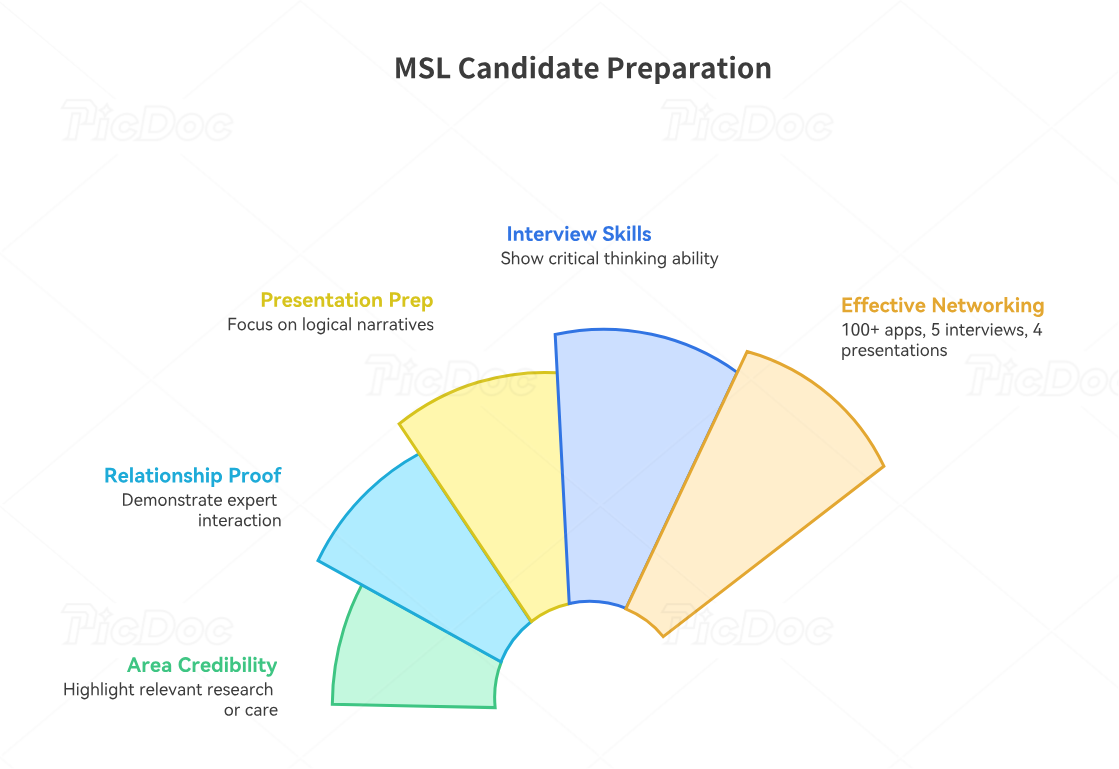
If the role is in oncology and your PhD investigated the same tumor type, highlight the overlap between your research, relevant pathways, trial landscape, current standards of care, scientific publications, and specialist interactions. If you are a PharmD working in that disease area, translate your patient-care exposure into treatment-selection knowledge, adverse-event management, real-world barriers, and HCP communication. Pair those experiences with clinical-trial safety, adverse-event knowledge, protocol literacy, and Medical Affairs compliance.
Next comes external relationship evidence.
An MSL hiring manager wants evidence that you can walk into a room with a nationally recognized specialist and hold a useful conversation. Relevant examples may come from investigator collaboration, clinical practice, conference activity, academic partnerships, advisory work, research networks, or clinical research communication. Candidates from site research, CRA careers, or investigator-led studies should make those interactions visible.
Scientific presentations deserve separate preparation.
A good presentation needs a logical clinical narrative, accurate interpretation, appropriate caveats, audience awareness, confident delivery, and calm handling of questions. If someone challenges your conclusion, the goal is to engage with the evidence rather than defend your slides emotionally.
Interviewers may be assessing:
Can this person think while being challenged?
Will an external expert trust their interpretation?
Can this candidate say “I don't know” appropriately and follow up?
Can this person remain compliant when a conversation becomes commercially sensitive?
Will this candidate represent our Medical organization intelligently without sounding scripted?
Those capabilities draw on data-integrity knowledge, clinical-research ethics, regulatory awareness, and trial evidence interpretation.
Networking also needs to be understood correctly.
The goal is to build enough understanding of Medical Affairs that experienced MSLs can see you have done the work. Ask how territories are managed, what differentiates excellent first-year MSLs, how insights are used, how scientific presentations are evaluated, how hiring panels distinguish candidates, and what makes newcomers fail after hiring.
A 2025 Reddit career story from a clinical pharmacist who eventually landed an MSL role after more than 100 applications described five interview opportunities and four final presentations over approximately nine months. The candidate emphasized intentional networking and learning how previous experience had already contained MSL-like responsibilities.
That is a more useful networking model than collecting LinkedIn contacts.
It also helps candidates avoid wasting time on poorly matched jobs. Someone trying to break into clinical research, move beyond CRC work, leverage CRA experience, or transition from clinical safety should target the medical role that most clearly rewards their existing expertise.
5. How to Decide Whether an MSL Offer Is Actually a Career Upgrade
The MSL title can make candidates overlook weak offer economics.
A first offer deserves analysis across compensation, territory, therapeutic area, manager, portfolio, onboarding quality, field expectations, future mobility, and lifestyle.
Start with compensation. Current 2026 U.S. postings establish that six-figure MSL base salaries are common in major pharma, with Amgen ranges around $157,000–$212,400 and senior positions reaching approximately $172,300–$233,200. J&J currently advertises an oncology MSL range of $115,000–$197,000 plus bonus and vehicle eligibility.
Then investigate the territory.
Ask how many states you cover, how many priority experts sit within it, how often overnight travel occurs, whether major airports are accessible, how congress travel is handled, and what percentage of your week is expected in the field. These questions matter just as much as when evaluating CRA travel burden, CRO versus sponsor work, clinical project leadership, or trial-management careers.
Next, evaluate portfolio strength.
An established product may provide extensive expert interaction and clearer systems. A launch-stage asset can generate intense activity and valuable strategic exposure. An early-stage biotech can offer broader responsibility and equity, alongside greater corporate risk. A weak or uncertain pipeline may reduce long-term stability even if today's salary looks attractive.
Then assess your manager.
For a first MSL, a strong field director can be worth more than a modest salary difference because the manager determines coaching quality, expectations, feedback, territory strategy, development opportunities, and protection from poorly designed metrics.
Finally, ask what successful MSLs become.
Possible pathways can include Senior MSL, Principal or Executive MSL, Field Medical leadership, Medical Director tracks, Medical Strategy, Medical Excellence, Medical Operations, launch strategy, training, evidence generation, and other Medical Affairs roles. Knowledge of clinical-trial leadership, regulatory submissions, clinical safety oversight, and trial quality management can increase those future options.
The strongest first offer therefore maximizes more than salary.
It should buy you scientific credibility, field experience, KOL relationships, strategic exposure, a strong manager, a valuable therapeutic area, and a credible next move.
6. FAQs About MSL Salary, Hiring, Interviews, and Career Competitiveness in 2026
-
Current employer-posted ranges show many U.S. MSL positions well into six figures. Amgen currently lists several MSL positions around $157,000–$212,400 in base salary, while current Senior MSL roles reach approximately $172,300–$233,200. J&J's 2026 oncology MSL posting lists $115,000–$197,000, plus performance-bonus and fleet eligibility.
Actual offers depend on geography, seniority, TA expertise, prior field experience, and internal compensation structures. Compare base pay with bonus, equity, vehicle benefits, retirement benefits, and career growth just as you would when evaluating CRA salary, CRO versus sponsor compensation, clinical project careers, and medical-affairs responsibilities.
-
Yes. Multiple 2026 Reddit candidates have reported breaking directly into MSL work from PhD/postdoctoral research and clinical pharmacy backgrounds. Their success stories repeatedly emphasize TA alignment, strong interview preparation, networking, presentation performance, and the ability to translate previous responsibilities into field-medical value.
Candidates should strengthen clinical-trial literacy, Medical Affairs compliance, scientific communication, and clinical safety understanding so the hiring team can see how existing experience transfers.
-
Each can be highly competitive. The more important question is how the degree connects with the therapeutic area and field role.
A PharmD may bring deep medication and clinical knowledge. A PhD may bring exceptional scientific and research expertise. An MD can bring significant clinical credibility. Employers then evaluate clinical evidence understanding, research experience, patient-safety knowledge, and communication ability.
-
It can be extremely important because TA alignment reduces the employer's scientific onboarding burden.
A PhD specializing in a relevant oncology pathway, a pharmacist working in a specialty clinic, or a clinician treating the target disease may immediately sound more credible than a candidate whose experience sits several therapeutic areas away. A current Reddit discussion also reflects the difficulty of pursuing oncology roles without direct oncology exposure.
Candidates should therefore align protocol expertise, clinical safety knowledge, data interpretation, and medical-affairs compliance with the exact disease area whenever possible.
-
Travel varies by territory, company, TA, congress schedule, and field strategy. Current AbbVie postings include examples requiring travel around 75%, while a 2026 Reddit candidate reported interviewing for a role estimated at approximately 60% travel across an unusually large U.S. territory.
Before accepting an offer, compare the territory with CRA travel realities, your preferred clinical research career path, study-management ambitions, and the lifestyle you actually want.
-
For many candidates, the scientific presentation and subsequent questioning are the highest-pressure stages.
Hiring teams can evaluate scientific accuracy, organization, confidence, interpretation, adaptability, executive presence, audience engagement, and the way a candidate handles uncertainty simultaneously. Candidates should practice with people who can challenge assumptions rather than simply listen politely.
Preparation should combine trial data interpretation, clinical research ethics, medical-affairs compliance, and scientific communication.
