
Why Entry-Level Clinical Research Jobs Ask for Experience: Reddit’s Catch-22 Explained + the Fastest Ways to Build Credible Proof
Entry-level clinical research hiring creates a brutal loop: employers want evidence that you can protect participants, follow protocols, manage regulated documentation, and preserve clinical trial data integrity, yet beginners need a job to build that evidence. In 2026, the winning strategy is to shrink the employer’s perceived training risk through GCP knowledge, protocol discipline, transferable experience, targeted work samples, and entry roles that generate credible proof quickly.

1. Why “Entry Level” Still Means “Show Me You Can Handle the Risk”
The phrase entry level is frequently misunderstood in clinical research. Employers may use it to describe organizational seniority, compensation band, or the lowest position in a particular department. It does not necessarily mean the organization expects to teach the employee every underlying behavior from zero.
That distinction matters because even junior employees can influence participant safety, protocol compliance, documentation quality, timelines, and inspection readiness. Someone supporting clinical trial safety monitoring, maintaining research protocol adherence, assisting with site monitoring preparation, or entering data that later undergoes clinical trial verification participates in a regulated chain where careless work creates downstream consequences.
FDA's final ICH E6(R3) guidance, issued in September 2025, places strong emphasis on participant protection, reliable trial results, quality by design, proportionality, risk-based quality management, and appropriately qualified people performing trial activities. Those principles explain much of the hiring behavior candidates experience. A research site needs people who understand ethical patient protection, can recognize potential adverse-event reporting issues, respect investigator responsibilities under GCP, and maintain reliable research documentation.
This produces the apparent contradiction. Employers advertise junior roles because they do not expect senior-level independent judgment. They still prefer candidates who have already demonstrated some combination of regulated work, healthcare exposure, research procedures, patient interaction, laboratory discipline, data quality, document control, scheduling, or compliance.
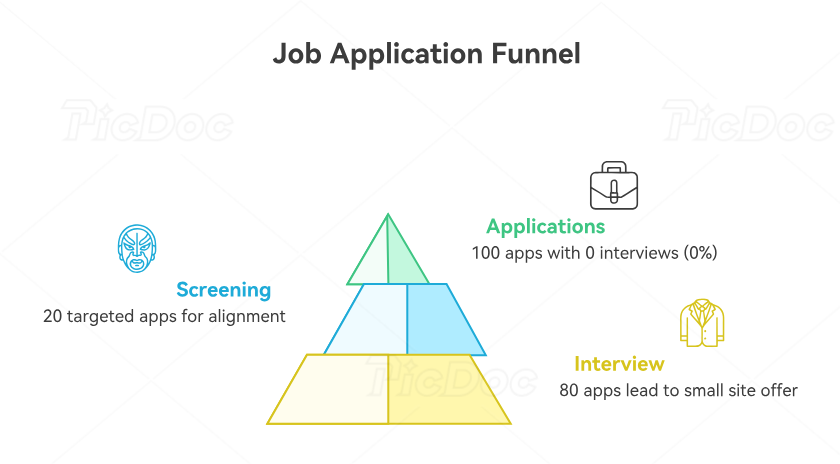
The 2026 Reddit job market captures that frustration vividly. One biotechnology candidate described applying almost daily for approximately a year to CTA, junior CRA, and data-management positions while tailoring applications and contacting recruiters. The recurring rejection reason was lack of prior CRO experience, including for positions perceived as junior. Another January 2026 applicant reported 100+ applications across entry-level clinical research and adjacent roles with zero interviews, raising the possibility that the profile was being filtered before meaningful human review.
A psychology graduate reported a similar April experience: repeated applications, tailored résumés, directly transferable academic work, and rejection because employers preferred candidates with more experience. The pain is legitimate because candidates are competing for positions supposedly designed to begin careers.
The most useful interpretation is strategic: “experience required” usually means “give us evidence that employing you will create manageable risk.”
That evidence can come from multiple places.
A medical assistant who has spent two years scheduling patients, maintaining protected records, escalating symptoms, reconciling medications, and documenting encounters may already possess behaviors relevant to patient retention, trial logistics, clinical safety oversight, and site operations.
A laboratory technician may already understand controlled procedures, specimen integrity, deviations, traceable records, and quality review. Those behaviors map toward protocol adherence, data verification, clinical research quality management, and research assistant responsibilities.
An administrative candidate who coordinates multiple calendars, confidential documents, approval chains, vendors, deadlines, and financial records can build a compelling case for clinical trial timeline management, research-team communication, trial budget management, and study-startup support.
The real challenge is making those connections visible.
Candidates often write résumés around job titles while clinical research employers evaluate behaviors. “Pharmacy technician” may look unrelated until the bullets demonstrate medication reconciliation, investigational-product exposure, controlled documentation, provider communication, and safety escalation. “Administrative assistant” can look generic until it shows deadline ownership, records control, multi-stakeholder coordination, and audit-ready documentation.
This is where the catch-22 begins to break. You cannot immediately manufacture years of clinical research employment. You can increase the amount of credible research-relevant evidence visible to the employer.
| Entry-Level Clinical Research Proof Matrix: 30 Ways to Replace “No Experience” With Evidence | ||||
|---|---|---|---|---|
| Starting Point | What Employers Worry About | Credible Proof to Build | Evidence You Can Show | Best Entry Targets |
| Biology graduate | Academic knowledge without operational proof | Protocol adherence and controlled documentation | Lab procedures, deviation examples, project records | Research assistant, CRC assistant |
| Chemistry graduate | Limited patient exposure | Quality-management discipline | Controlled procedures, reconciliation, QC records | Lab research, specimen operations |
| Psychology graduate | Little regulated-industry exposure | Participant communication and consent literacy | Human-subject coursework, interviews, data collection | Recruitment, research assistant |
| Nurse | Research workflow unfamiliarity | Adverse-event awareness | Patient assessment, escalation, clinical documentation | Research nurse, CRC |
| Medical assistant | Limited formal research exposure | Patient coordination | Visit scheduling, vitals, records, follow-up | CRC assistant, recruitment |
| Pharmacy technician | Little protocol ownership | Safety and medication workflow knowledge | Drug accountability, reconciliation, regulated records | CRC, IDS support, PV support |
| Pharmacist | No trial-system exposure | Clinical safety reasoning | Medication review and safety escalation | Research pharmacy, PV |
| Phlebotomist | Narrow procedural scope | Protocol-timed logistics | Patient ID, sample handling, timing accuracy | Research technician |
| Lab technician | No clinical-site experience | Data integrity | Traceability, specimen logs, QC | Research technician, data support |
| Medical scribe | No study-document experience | Source-document accuracy | Medical terminology and precise documentation | CRC assistant |
| Patient scheduler | No protocol knowledge | Timeline control | Complex calendars and deadline adherence | Research scheduler |
| Administrative assistant | Generic résumé presentation | Cross-functional coordination | Meeting logs, document control, deadlines | Site CTA, research admin |
| Project coordinator | No trial vocabulary | Milestone management | Dependencies, risks, action trackers | Clinical project assistant |
| Quality-assurance worker | Different regulatory framework | Clinical quality thinking | CAPA, SOPs, audits, deviation handling | Research quality assistant |
| Manufacturing GMP worker | No GCP experience | Regulated-process discipline | SOP adherence, documentation, investigations | Quality or site support |
| Data-entry worker | Accuracy claimed but unproved | Data-review discipline | Volume, error rate, reconciliation examples | Clinical data assistant |
| Health-information worker | No EDC exposure | Traceable clinical data handling | Chart abstraction, confidentiality, reconciliation | Data coordinator |
| Regulatory admin | No clinical submission history | Essential-document literacy | Controlled submissions and approval tracking | Regulatory assistant |
| Finance assistant | No trial operations knowledge | Trial budget literacy | Invoices, reconciliation, cost tracking | Research finance assistant |
| Recruiter | Limited patient-process experience | Recruitment and retention thinking | Outreach funnels, screening, follow-up | Patient recruitment |
| Customer-service worker | Experience appears unrelated | High-stakes communication | Escalations, difficult conversations, follow-up | Recruitment or site assistant |
| University research volunteer | Limited paid experience | Protocol-execution examples | Recruitment, data collection, study logs | Research assistant |
| Academic research assistant | No sponsor/CRO exposure | Human-subject protection | Consent, records, ethics procedures | CRC assistant |
| Hospital employee | Works outside research | Site-operations familiarity | EHR, patient flow, institutional processes | Internal research transfer |
| Clinical laboratory employee | No trial coordination | Research logistics | Samples, timelines, documentation | Trial lab support |
| Public-health graduate | Broad knowledge, little execution | Participant and population research skills | Survey work, recruitment, data analysis | Research assistant |
| Medical writer | Limited site exposure | Protocol and safety-document literacy | Scientific documentation and review | Regulatory or clinical operations support |
| Supply-chain worker | No clinical context | Trial logistics control | Shipments, inventory, excursions, deadlines | Clinical supply assistant |
| Fresh graduate with no work history | Almost no behavioral evidence | Research foundations plus work samples | Mock trackers, academic projects, structured portfolio | RA, research admin, recruitment |
| Career changer from regulated industry | Transferability unclear | Risk and quality control | SOPs, audits, CAPA, records | Quality, regulatory, operations |
2. The Fastest Way to Get Experience Is to Stop Treating “Experience” as One Thing
Clinical research experience has layers. Employers care about different layers depending on the role.
A CRC hiring manager may value patient communication, visit scheduling, source documentation, consent support, regulatory records, and protocol deviation management. A data manager may care more about reconciliation, queries, traceability, and clinical trial data verification. A regulatory team may prioritize essential documents, submission workflows, investigator responsibilities, and document control.
That means the candidate needs to identify the specific proof deficit blocking the target role.
If Your Problem Is Zero Patient Exposure
Target work that produces participant-facing evidence: hospital research assistant, patient recruitment, clinical research assistant, study scheduler, medical assistant, research technician, or CRC assistant.
Learn how patient retention interacts with visit windows, why ethical conduct and patient safety affect recruitment conversations, how adverse-event reporting changes escalation responsibilities, and where protocol adherence limits improvisation.
A receptionist inside an oncology research site may gain more useful clinical-research context than someone collecting another generic online certificate.
If Your Problem Is Zero Regulated Documentation Experience
Look for regulatory assistant, document-control, quality assistant, IRB office, site CTA, study-startup, health-information, or research administrative positions.
Your value comes from proving that you can maintain controlled records, distinguish current from superseded documents, track approvals, escalate missing information, and support inspection readiness. Those behaviors connect to quality management in clinical research, GCP investigator responsibilities, site monitoring readiness, and eventually regulatory affairs submissions.
If Your Problem Is Zero Data Experience
Clinical data assistant, EDC support, chart abstraction, health-information, registry, laboratory-data, or quality-control positions can close the gap faster than waiting for a perfect CTA opening.
Develop evidence around discrepancy identification, source traceability, query resolution, review accuracy, missing-data detection, and controlled correction. Those experiences speak directly to clinical trial data review, data integrity responsibilities, GCP monitoring techniques, and risk-based monitoring.
If Your Problem Is Zero Site Exposure
Prioritize independent sites, hospitals, academic medical centers, specialty practices conducting trials, and site networks.
Site experience gives beginners a view of how recruitment, scheduling, consent, source documentation, EDC, safety, regulatory files, sponsor communication, and monitoring visits intersect. It also produces tangible examples involving protocol deviations, patient retention, site operations, and trial logistics.
The Reddit evidence is useful here. A biology graduate who had been working retail and possessed little clinical experience reported securing a CRC/CRC-assistant opportunity at an expanding smaller research site after roughly 80 applications. Another 2026 poster entered an entry-level hospital CRC position after previously working in pharmacy, showing how adjacent clinical experience can bridge into study coordination.
The underlying pattern is important: the first employer does not always need you to arrive with a polished research career. It needs enough evidence that you can learn the organization's workflows without becoming an uncontrolled quality risk.
3. Build Proof Employers Can Evaluate Before They Hire You
Certificates, coursework, and knowledge help most when they produce something observable.
A candidate who says “I understand clinical trials” leaves the interviewer to guess. A candidate who can discuss how a missed visit window could become a protocol deviation, how source data should support EDC entries during data verification, why safety information requires rapid escalation under adverse-event reporting principles, and how a coordinator prepares for a site monitoring visit gives the employer far more information.
Build a fictional trial-operations portfolio using fabricated data and clearly label every file as a training exercise.
Useful artifacts include a participant visit-window tracker, screening log, recruitment funnel, mock delegation tracker, regulatory document index, adverse-event escalation flowchart, query-resolution exercise, protocol-deviation worksheet, monitoring-visit preparation checklist, study-startup tracker, and closeout checklist.
Each artifact should demonstrate a specific competency. A visit tracker proves you understand clinical trial timelines. A deviation exercise demonstrates protocol compliance. A fictional query workflow demonstrates data-review thinking. A monitoring checklist demonstrates familiarity with on-site and remote monitoring.
Do not put confidential employer materials, real patient information, copied proprietary protocols, sponsor documents, or invented job experience in the portfolio. Judgment around confidentiality itself signals understanding of ethical clinical-trial conduct, data integrity, quality management, and regulated documentation.
Then create an evidence inventory from your real history.
For every previous job, internship, laboratory project, volunteer role, and university project, extract five things: the procedure you followed, the records you maintained, the people you coordinated, the risks you managed, and the measurable volume or outcome.
A generic résumé bullet such as “helped patients schedule appointments” wastes valuable evidence. A stronger version explains that you coordinated dozens of weekly appointments across multiple providers, reconciled conflicting schedules, protected confidential information, and escalated time-sensitive clinical concerns.
That maps toward participant retention, trial logistics coordination, research-team communication, and clinical trial timeline management.
GCP knowledge also needs to be current. FDA's E6(R3) framework emphasizes critical thinking, risk proportionality, participant protection, reliable results, clear responsibilities, modern data sources, and quality by design. Study those principles alongside GCP monitoring, investigator responsibilities, patient safety, and clinical trial quality management deeply enough to explain how they affect daily work.
Which “experience gap” is actually killing your applications?
4. Fix the Application Funnel Before Blaming the Experience Requirement
Repeated rejection contains information.
If you submit 100 applications and receive almost no recruiter conversations, your problem may involve targeting, résumé translation, geography, sponsorship requirements, ATS compatibility, or the competitiveness of the roles rather than interview performance.
That is why the January 2026 Reddit example involving more than 100 applications and zero interviews is useful. A July 2026 candidate who had spent six months pursuing an entry-level research position also received community feedback that the résumé visually overemphasized education and buried actual work experience. These anecdotes do not establish universal hiring rules, yet they show why candidates should diagnose the funnel rather than responding to silence with another 100 identical submissions.
Run a 20-application experiment.
Choose jobs where your transferable experience aligns closely with the daily work. Focus on research assistant, CRC assistant, research technician, participant recruitment, research scheduling, regulatory assistant, site CTA, clinical data assistant, research billing, or project-support positions.
Before applying, identify five core tasks in the posting and match each one to evidence from your history. If the role stresses scheduling, documentation, participants, data entry, and cross-functional communication, your résumé should demonstrate clinical-style timeline control, transferable documentation discipline, patient communication, data quality, and team collaboration.
Track the result of every application by employer type, job family, required experience, location, application source, referral status, screening outcome, interview stage, and rejection point.
A low screening rate requires changes near the top of the funnel. A healthy screening rate followed by hiring-manager rejection indicates a proof or interview problem. Repeated final-round rejection means your résumé is already doing substantial work; differentiation, examples, compensation, availability, or competition may now determine the outcome.
Role selection also matters enormously.
The September 2026 Reddit discussion about CRA hiring included experienced professionals stressing EDC, source documents, regulatory files, IRB familiarity, and monitoring competence, while several commenters described direct CRA entry as exceptionally difficult in the current market. A 2025 discussion similarly described reduced availability of entry-level CRA pathways compared with the unusually aggressive hiring environment around 2020–2021.
Someone without site experience can therefore spend months applying to the wrong rung of the ladder.
CRA-oriented candidates gain more leverage from first mastering site monitoring preparation, GCP monitoring techniques, clinical data verification, risk-based monitoring, and investigator meeting workflows through adjacent operational roles.
Search employer categories systematically. Include independent trial sites, universities, academic medical centers, hospital research offices, oncology practices, CNS research centers, dermatology sites, vaccine centers, research networks, site-management organizations, laboratories, and institutional regulatory offices.
Smaller organizations can sometimes be especially valuable because junior employees touch more pieces of the study. The April 2026 biology graduate who found an opportunity after roughly 80 applications was hired by a smaller expanding site. That type of environment may accelerate exposure to trial logistics, monitoring preparation, protocol deviations, and patient retention.
5. Your First Clinical Research Job Should Manufacture the Evidence for Your Second
The first role becomes far more valuable when you treat it as an evidence-building platform.
Someone who spends a year with the title “Clinical Research Assistant” while performing only repetitive administrative tasks may emerge with weaker career leverage than a site employee who has touched screening, visit scheduling, source documentation, EDC entry, queries, regulatory documents, safety reporting, sponsor communication, and monitoring preparation.
Your development plan should therefore depend on the second job you want.
If You Want to Become a CRA
Seek source-document exposure, EDC use, query resolution, monitoring visits, investigator-site-file familiarity, IRB workflows, protocol-deviation handling, and sponsor communication.
Ask to support site monitoring visits, understand remote and on-site monitoring, study risk-based monitoring, sharpen clinical data verification, and learn how monitors evaluate GCP compliance.
After a year, your résumé should say considerably more than “assisted with clinical studies.”
It should document study phases, therapeutic areas, systems used, monitoring exposure, query volume, regulatory responsibilities, participants supported, and problems resolved.
If You Want Regulatory Affairs or Study Startup
Pursue IRB submissions, amendments, continuing reviews, essential documents, investigator records, activation trackers, regulatory binders, document reconciliation, and startup milestones.
Build depth in investigator GCP responsibilities, IND and NDA submission concepts, ethical patient protection, and clinical trial milestone management.
If You Want Clinical Data Management
Track the volume and complexity of records you process. Learn source-to-EDC traceability, discrepancy management, query workflows, reconciliation, missing-data detection, correction procedures, and database-lock preparation.
Those responsibilities build a foundation in clinical data review, clinical trial data integrity, research quality management, and protocol adherence.
If You Want Pharmacovigilance
Gain experience with safety intake, adverse-event documentation, follow-up, case chronology, seriousness concepts, reconciliation, medical terminology, safety systems, and inspection readiness.
Study pharmacovigilance safety monitoring, global PV compliance, pharmacovigilance audits and inspections, adverse-event compliance, and medical-monitor safety responsibilities.
If You Want Clinical Project Management
Collect evidence around deadlines, budgets, risks, vendors, study activation, stakeholder coordination, milestones, escalation, quality, and closeout.
Exposure to clinical trial timeline management, budget management, quality management, clinical trial team leadership, and project closeout turns an administrative beginning into a credible operations trajectory.
Keep a private achievement log from your first week. Record the systems you learn, study phases, therapeutic areas, responsibilities acquired, volume handled, monitoring visits supported, deadlines met, quality problems prevented, and processes improved. Keep patient-identifying and sponsor-confidential information out of it.
That log prevents a common career failure: doing valuable work for eighteen months and then discovering you cannot reconstruct enough detail to prove it during an interview.
6. FAQs About Entry-Level Clinical Research Experience Requirements
-
Employers use experience as a proxy for lower training risk. Entry-level employees may still handle participant communication, regulated records, time-sensitive procedures, source documentation, and trial data. Previous exposure to protocol adherence, patient safety, clinical data integrity, or trial logistics reduces uncertainty for the hiring team.
The requirement can also reflect market conditions. When employers receive experienced applicants for junior openings, they can raise their preferred threshold without changing the title.
-
Apply selectively when you can demonstrate substantial transferable evidence and the posting does not describe responsibilities that clearly require independent prior trial execution.
A healthcare candidate with patient communication, controlled documentation, safety escalation, scheduling, and medication experience may align strongly with a CRC-assistant position requiring a year of preferred experience. Connect those behaviors to patient retention, adverse-event reporting, site operations, and protocol compliance.
A CRA posting demanding independent monitoring experience presents a much larger gap.
-
Healthcare, laboratory, pharmacy, academic research, regulated manufacturing, QA, data management, medical records, project coordination, administration, patient recruitment, and regulatory work can all become relevant when the underlying tasks overlap with research.
The strongest examples demonstrate accurate documentation, controlled procedures, confidentiality, deadline management, participant communication, escalation, reconciliation, traceability, or quality control. Those behaviors align with research assistant responsibilities, research-team communication, data verification, and quality management.
-
GCP knowledge improves your credibility and interview readiness, particularly when it reflects current E6(R3) principles. FDA's final E6(R3) guidance emphasizes participant protection, reliable results, risk-based approaches, quality by design, and clearly understood responsibilities.
Employers gain more confidence when you can apply that knowledge to patient safety, protocol deviations, clinical data integrity, and monitoring workflows.
-
Professional certifications frequently require experience themselves. ACRP's 2026 entry-level career guidance explains that its CCRC credential requires 3,000 hours of verifiable paid clinical research experience, illustrating why professional certification generally sits later in the journey rather than serving as the first bridge into employment.
Early candidates usually gain more leverage by building competence in research assistant fundamentals, trial logistics, protocol adherence, and research communication, then converting that preparation into actual paid research exposure.
-
Site-side CRC, CRC assistant, research assistant, research technician, and certain CTA positions can create useful foundations because they expose candidates to source documentation, EDC, protocol execution, regulatory files, queries, IRB workflows, sponsor communication, and monitoring.
The strongest CRA preparation includes site monitoring visits, clinical trial data verification, risk-based monitoring, remote and on-site monitoring, and GCP monitoring.
