
Collaboration & Communication: Key Strategies for Research Assistants
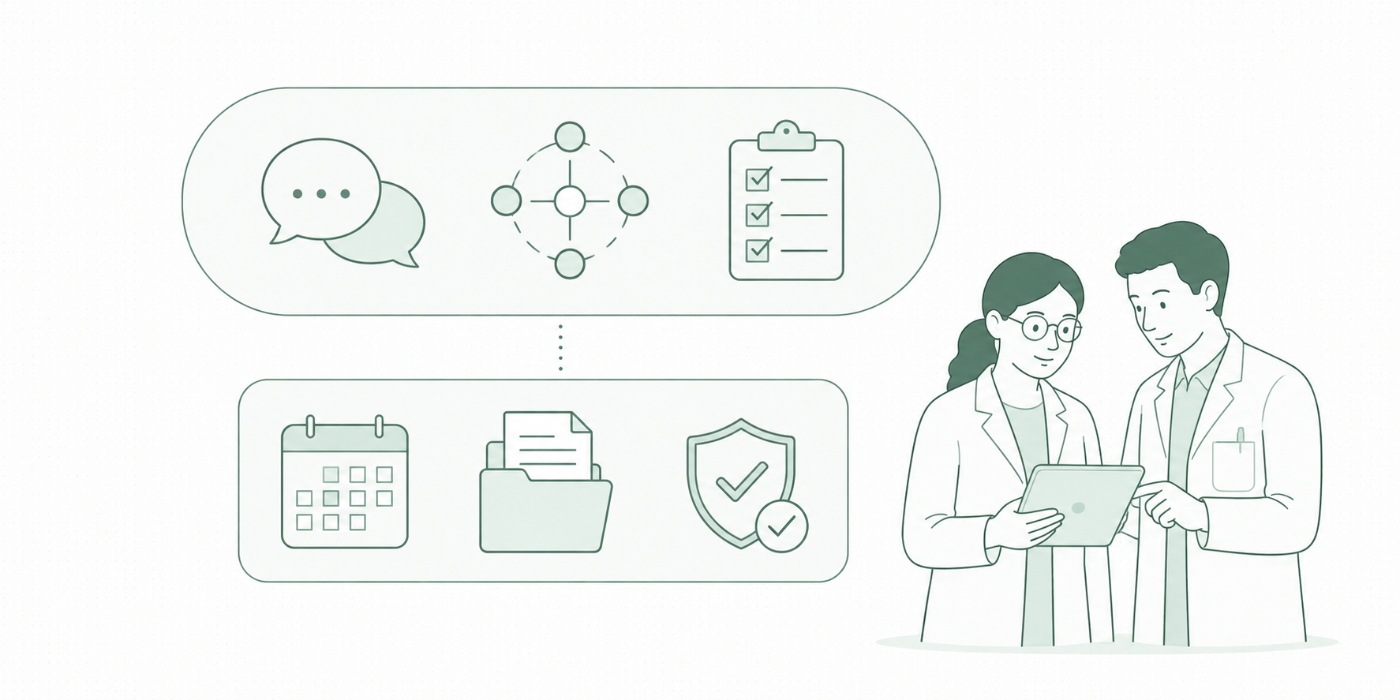
Research assistants sit close to the daily friction of clinical trials: visit reminders, source notes, lab coordination, participant questions, document updates, monitor requests, and fast-moving team messages. When communication breaks, small gaps become missed visits, delayed safety follow-up, duplicate work, unclear delegation, messy files, and avoidable protocol deviations. Strong collaboration helps research assistants support CRC responsibilities, protect GCP compliance, strengthen study documentation, and keep patient-facing work aligned with clinical trial protocol management.
1. Why Collaboration and Communication Matter for Research Assistants
Clinical research assistants often become the connection point between participants, coordinators, investigators, laboratories, monitors, vendors, and regulatory files. Their work may look supportive from the outside, yet poor communication at this level can slow recruitment, create visit confusion, weaken source documentation, delay AE follow-up, or leave essential documents incomplete. A research assistant who communicates clearly protects the workflow of the clinical research coordinator, supports site monitoring visits, improves patient retention, and reduces avoidable rework during clinical trial audits.
The most damaging communication problems usually begin as tiny assumptions. A participant says they might reschedule, and no one updates the visit tracker. A lab kit is low, yet the warning stays verbal. A monitor asks for source clarification, and the response sits in someone’s inbox. A PI asks whether an AE was reviewed, and the team cannot quickly show the trail. These gaps create stress because clinical trials depend on timing, traceability, and accountability. Research assistants need habits that support adverse event reporting, regulatory document management, CRF accuracy, and data review.
Strong communication also protects role boundaries. Research assistants should know what they can do independently, what requires CRC review, what requires PI or sub-investigator input, what must be escalated immediately, and what should be documented in source or tracking logs. This clarity prevents guessing, overstepping, delayed reporting, and silent quality drift. The best research assistants become reliable because they communicate status, risk, and next steps before others have to chase them. That discipline supports GCP training requirements, research compliance, clinical trial documentation, and principal investigator oversight.
| Communication Moment | What the Research Assistant Should Clarify | Common Breakdown | Better Communication Habit |
|---|---|---|---|
| Participant scheduling | Visit date, window, required fasting, transport needs, reminders, and reschedule risk. | Participant confusion creates missed visits or rushed rescheduling. | Confirm details using a tracker aligned with patient retention. |
| Visit preparation | Required procedures, forms, lab kits, source templates, and staff assignments. | The team discovers missing materials during the visit. | Send a pre-visit checklist tied to protocol management. |
| Informed consent support | Correct version, current approval, participant questions, and staff authorized to consent. | Consent version control depends on memory. | Check documents against informed consent procedures. |
| Source document handoff | Who completed the assessment, when it happened, what still needs review, and what is pending. | Incomplete source reaches data entry. | Use source handoff notes from study documentation. |
| Lab coordination | Collection timing, kit availability, processing steps, shipment deadline, and abnormal result routing. | Samples are collected correctly but shipped late. | Confirm timing using laboratory best practices. |
| AE awareness | Symptoms, dates, participant report, urgency, and who needs medical review. | Participant complaints are treated like general notes. | Escalate quickly through AE handling. |
| SAE escalation | Seriousness clues, hospitalization, life-threatening events, urgent timelines, and PI notification. | Urgent safety information gets delayed inside routine updates. | Use escalation steps from SAE reporting. |
| Protocol deviation warning | Missed procedure, out-of-window visit, wrong form, eligibility concern, or dosing issue. | The issue is mentioned casually and documented late. | Route concerns through deviation handling. |
| Query response support | What data point is questioned, what source supports it, and who must clarify. | Queries reopen because the root source issue remains. | Support data cleanup using data review. |
| Monitor request handling | Request type, deadline, document location, responsible owner, and response evidence. | CRA requests sit between email, portal, and binder. | Track requests from site monitoring visits. |
| Regulatory binder updates | Approvals, logs, safety letters, correspondence, training, and signatures needing filing. | Documents exist but retrieval is slow. | File using regulatory document management. |
| Training communication | Who needs training, what changed, due date, and whether training happened before task performance. | Staff complete tasks before training evidence is filed. | Follow GCP training requirements. |
| Delegation updates | New staff, changed tasks, role limits, end dates, and PI authorization. | Delegation log trails behind real site activity. | Escalate changes to support PI oversight. |
| Participant reimbursement | Amount, timing, documentation needed, travel issues, and unresolved payment concerns. | Slow reimbursement damages trust and retention. | Track participant support through trial budget management. |
| Recruitment handoff | Pre-screen status, contact attempts, eligibility concerns, consent readiness, and next step. | Potential participants disappear after unclear handoff. | Use structured follow-up from recruitment trends. |
| Vendor issue reporting | System outage, lab delay, shipping problem, device issue, or portal access failure. | Vendor problems create site delays with weak evidence. | Log issues using vendor management. |
| IP-related communication | Dispensing time, storage concern, return status, temperature issue, or accountability question. | Pharmacy and visit records drift apart. | Escalate to CRC/PI for GCP-controlled review. |
| Team huddles | Upcoming visits, pending documents, open safety items, query aging, and participant risk. | Meetings become status talk with no owners. | Use owner-date-action format from stakeholder communication. |
| Amendment adoption | What changed, who needs training, which forms changed, and which participants need re-consent. | Old workflow continues after amendment approval. | Track updates from clinical trial amendments. |
| Endpoint support | Correct timing, trained assessor, required tool, source support, and data entry status. | Endpoint-critical work is treated like routine admin. | Protect accuracy through endpoint clarity. |
| Randomization readiness | Eligibility review, consent completion, required labs, system access, and PI sign-off. | Randomization pressure outruns final readiness checks. | Coordinate around randomization controls. |
| Blinding protection | Who can see what, what language to avoid, and how to report accidental exposure. | Team members discuss clues without recognizing unblinding risk. | Follow blinding controls. |
| Close-out support | Missing documents, final logs, unresolved queries, participant status, and archive needs. | Close-out reveals months of incomplete handoffs. | Prepare through inspection readiness. |
| Audit preparation | Record locations, staff roles, issue history, corrective actions, and retrieval process. | Site knows the answer but cannot prove it quickly. | Practice with audit readiness. |
| Participant questions | Question type, urgency, scope, correct responder, and follow-up documentation. | Research assistants answer beyond their role to be helpful. | Route clinical questions to CRC/PI. |
| Source correction communication | What needs correction, who made the correction, why, and whether the audit trail is clear. | Corrections happen without enough explanation. | Apply CRF best practices. |
| Staff turnover handoff | Active participants, pending visits, open queries, unresolved documents, and safety follow-up. | New staff inherit tasks without context. | Use role clarity from RA career skills. |
| Sponsor communication support | Question, background, requested evidence, deadline, and site owner. | Responses become scattered across multiple channels. | Summarize clearly using communication strategy. |
| Medical monitor routing | What clinical question exists, what source supports it, and what the PI has reviewed. | Medical questions arrive without enough context. | Package evidence for medical monitor review. |
| Daily priority setting | Which tasks are safety-critical, time-sensitive, document-critical, or routine. | Urgent-looking admin distracts from patient safety tasks. | Rank work by risk and protocol impact. |
2. How Research Assistants Build Trust With Coordinators, PIs, and Site Teams
Trust in clinical research comes from predictable follow-through. A research assistant earns trust when the CRC knows that visit reminders were sent, lab kits were checked, source packets were prepared, participant questions were routed correctly, and pending documents were not left floating in email. The PI earns confidence when updates are concise and risk-based: safety concerns first, protocol-impacting issues second, routine status after that. This communication style supports clinical research coordinator responsibilities, principal investigator responsibilities, patient safety oversight, and GCP compliance essentials.
The best research assistant updates answer five questions quickly: what happened, why it matters, what is due, who owns the next action, and what evidence exists. “Participant called” is weak. “Participant 104 called to report dizziness beginning yesterday evening; CRC notified at 10:14 AM; AE review pending; source note started; next visit remains scheduled for Friday” is useful. That format prevents safety drift and strengthens adverse event handling, source documentation, clinical trial safety monitoring, and drug safety timelines.
Research assistants should also protect the team from communication clutter. Long messages with buried actions create delays. A better update uses short sections: issue, urgency, owner, deadline, attached evidence, and requested decision. This matters during monitoring, because CRA requests often involve multiple documents, deadlines, and source clarifications. A research assistant who can package information cleanly saves CRC time and reduces repeated follow-up. This skill supports CRA monitoring, remote and on-site monitoring, clinical trial data verification, and clinical trial documentation techniques.
Role boundaries must be communicated with confidence. Research assistants can gather information, prepare materials, track tasks, support scheduling, file documents, and escalate concerns. Clinical interpretation, safety assessment, consent discussion authority, eligibility decisions, protocol deviation assessment, and PI medical judgment need qualified staff. A strong RA does not guess to appear helpful; they route the issue quickly and document the handoff. This habit protects informed consent compliance, protocol deviation management, sub-investigator responsibilities, and research ethics.
3. Communication Strategies for Participants, Monitors, Labs, Vendors, and Sponsors
Participant communication should be clear, respectful, and protocol-aware. Research assistants often remind participants about visit timing, fasting, medication instructions already approved by the team, documents to bring, reimbursement steps, and whom to contact for clinical concerns. The key is consistency: every reminder should match the protocol, site script, and CRC instructions. A confusing reminder can lead to missed labs, invalid assessments, or anxious participants. Strong participant communication supports patient retention strategies, clinical trial volunteer registries, informed consent mastery, and ethical clinical research.
Monitor communication requires preparation. CRAs need clean access to source, regulatory documents, logs, query status, deviation records, and action item responses. Research assistants can support by organizing documents before visits, tracking requests during visits, confirming owners for follow-up, and making sure responses are filed after closure. Monitoring becomes painful when small requests scatter across email threads and no one knows which version is final. Strong RA support improves site monitoring visit readiness, GCP monitoring techniques, clinical trial auditing, and managing clinical trial documentation.
Lab and vendor communication should focus on timing, evidence, and escalation. A central lab delay, kit shortage, courier problem, eCOA device issue, IRT access error, or imaging upload failure can affect protocol compliance and data quality. Research assistants should record what happened, when it happened, who was contacted, what was advised, and whether the CRC or PI needs to assess protocol impact. This creates a traceable trail that supports laboratory best practices, vendor management, clinical trial technology adoption, and clinical trial protocol management.
Sponsor and project team communication should be structured around decisions, deadlines, and evidence. Research assistants may help gather documents, answer operational questions through the CRC, prepare trackers, or confirm action item status. The goal is to avoid vague updates that create more questions. A good sponsor-facing support note states the request, the attached evidence, the remaining gap, and the named site owner. This improves stakeholder communication, clinical trial project management, sponsor responsibilities, and clinical trial resource allocation.
Where does communication break down most often in your research assistant workflow?
Choose the pressure point that creates the most rework, stress, or quality risk.
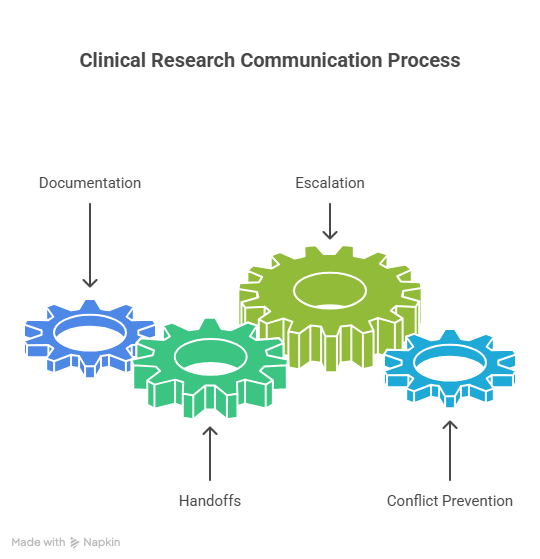
4. Documentation, Handoffs, Escalation, and Conflict Prevention
Clinical research communication has to become documentation at the right moments. A verbal update may be enough for a quick logistical reminder, yet safety concerns, protocol-impacting issues, participant complaints, monitor findings, source corrections, delegation changes, and vendor failures need durable evidence. Research assistants should know where information belongs: source note, contact log, regulatory binder, action tracker, deviation log, query response, email confirmation, or escalation record. This protects study documentation, regulatory document management, CRF best practices, and audit preparation.
Handoffs should be written as if the next person has no context. A good handoff includes participant ID, study visit, issue, current status, urgency, deadline, required decision, owner, and evidence location. This is especially important during staff turnover, shift changes, pre-visit preparation, monitoring follow-up, and close-out. Weak handoffs create duplicate work, missed deadlines, and staff frustration. Strong handoffs support clinical research assistant career skills, clinical trial assistant advancement, lead CRC career development, and clinical operations management.
Escalation is a communication skill, not a personality problem. Research assistants should escalate when participant safety may be involved, a visit window may be missed, a consent concern appears, an abnormal result needs review, a protocol-required task is at risk, a vendor issue threatens data, or a monitor request is aging. Escalation should be calm and specific. The strongest escalation message states the issue, the risk, the deadline, the attempted action, and the decision needed. This supports patient safety oversight, protocol deviation prevention, risk-based monitoring, and GCP compliance.
Conflict prevention begins with clarity. Many site conflicts come from unclear ownership, rushed deadlines, missing evidence, repeated reminders, and hidden workload. Research assistants can reduce tension by confirming responsibilities early, documenting decisions, avoiding vague “just following up” messages, and turning repeated friction into a workflow fix. For example, if monitors repeatedly ask for the same files, the issue may be filing structure. If participants often arrive unprepared, the reminder script may need improvement. This type of practical communication strengthens quality management, clinical compliance skills, clinical trial auditing, and stakeholder communication.
5. Advanced Communication Habits That Make Research Assistants Job-Ready
A job-ready research assistant communicates with prioritization. Every task should be mentally sorted into safety-critical, protocol-critical, data-critical, document-critical, participant-experience-critical, or routine. This ranking helps the RA avoid spending an hour beautifying a tracker while an abnormal lab result waits for routing. It also helps the team trust that the RA understands clinical research risk. This skill grows through clinical research assistant certification strategy, GCP training, CRC exam topics, and research compliance mastery.
Another advanced habit is anticipating the next question. If a CRC asks whether a participant can attend Thursday, the stronger RA response includes visit window status, participant availability, fasting reminder need, lab kit status, and whether PI review is needed before the visit. If a CRA requests a document, the stronger response includes the current version, filing location, missing signature status, and expected completion date. Anticipation reduces back-and-forth and supports site monitoring, remote monitoring visits, clinical data coordination, and clinical trial documentation.
Research assistants should learn how to communicate uncertainty safely. In clinical trials, guessing creates risk. A professional answer can be: “I do not have confirmation yet; I have checked the binder and EDC, asked the CRC, and will update the tracker by 2 PM.” This protects accuracy while still showing ownership. It matters during participant questions, safety routing, document retrieval, and monitor requests. This communication habit reinforces GCP compliance essentials, informed consent procedures, data integrity, and audit readiness.
The final advanced habit is closing the loop. Many research assistants send updates; stronger research assistants confirm resolution. If a lab issue was escalated, they record the outcome. If a participant rescheduled, they update the tracker. If a monitor request was answered, they file the evidence. If a document was signed, they confirm where it lives. Close-the-loop communication prevents invisible open items from aging into compliance problems. This improves regulatory document control, clinical quality assurance, clinical trial close-out readiness, and clinical research career advancement.
6. FAQs: Collaboration and Communication for Research Assistants
-
Communication skills help research assistants prevent missed visits, delayed safety escalation, incomplete source, repeated monitor requests, document gaps, and participant confusion. RAs often support the connection between participants, CRCs, PIs, CRAs, labs, vendors, and sponsors, so clear updates directly affect quality. Strong communication supports CRC responsibilities, clinical trial documentation, patient retention, and GCP compliance.
-
A strong handoff should include participant ID, study visit, issue, current status, urgency, owner, due date, evidence location, and the decision needed. This format prevents tasks from getting lost between staff members and helps the CRC or PI act quickly. Handoffs should support study documentation, protocol management, site monitoring readiness, and clinical trial audit preparation.
-
Research assistants should listen carefully, record the concern accurately, avoid clinical interpretation outside their role, and escalate to the CRC, PI, or qualified team member based on urgency. Symptoms, hospitalization, medication changes, pregnancy, missed visits, and safety concerns need quick routing. This communication pathway protects adverse event handling, SAE reporting, patient safety oversight, and research ethics.
-
Research assistants should track CRA requests, confirm document locations, assign site owners, record deadlines, and file evidence after responses are complete. They should avoid informal replies that never reach the official file. Organized communication makes monitoring faster and reduces repeated findings. This supports site monitoring visits, CRA role expectations, remote and on-site monitoring, and clinical trial documentation.
-
Research assistants can avoid overstepping by knowing which tasks require CRC, PI, sub-investigator, pharmacist, or medical monitor review. They can gather information, document accurately, prepare materials, and escalate quickly, while clinical interpretation and medical judgment stay with qualified staff. This protects principal investigator oversight, sub-investigator responsibilities, informed consent compliance, and GCP training standards.
-
The strongest habits are concise updates, fast escalation, clear handoffs, tracker discipline, evidence-based responses, safe uncertainty, role-boundary awareness, and closing the loop after each action. These habits make an RA easier to trust during busy visits, monitoring, recruitment, safety follow-up, and close-out. They support clinical research assistant career growth, clinical trial assistant advancement, CRC responsibilities, and clinical research certification.
