
Pharmacovigilance Salary in 2026: Reddit Pay Reports Across Drug Safety Associate, PV Scientist, CRO & Sponsor Roles
Pharmacovigilance pay becomes confusing fast because identical-looking titles can hide radically different work. A Drug Safety Associate processing ICSRs, a PV Scientist performing signal evaluation, and a sponsor-side safety professional owning benefit-risk decisions can sit in completely different compensation bands. Candidates trying to break into clinical research, build expertise in adverse-event reporting, understand global pharmacovigilance compliance, or develop clinical-trial safety oversight need to compare scope, employer type, and responsibility, rather than job title alone.
1. Pharmacovigilance Salary in 2026: What the Current Numbers Actually Show
For an apples-to-apples starting point, the salary figures below focus primarily on the U.S. market. Global pharmacovigilance compensation varies enormously by country, outsourcing model, local labor market, and whether work sits inside a pharmaceutical sponsor, CRO, consulting company, or lower-cost delivery center. Someone developing pharmacovigilance compliance expertise, learning adverse-event reporting requirements, preparing for PV audits and inspections, and understanding clinical-trial safety oversight should therefore treat national salary averages as benchmarks rather than promises.
Glassdoor's current 2026 U.S. estimates put Drug Safety Associate total compensation around $103,000 median, with a broad estimated total-pay range of roughly $77,000 to $144,000. Its Pharmacovigilance Safety Associate page shows approximately $98,000 median total pay, while its broader Pharmacovigilance Associate category reports roughly $129,000 median total pay. Those differences illustrate the first salary trap: title databases can combine employees with very different seniority, bonuses, company structures, and responsibilities.
Live employer postings are often more useful. IQVIA recently advertised a U.S. Safety Associate position at $44,900 to $112,100 base salary, with responsibilities including safety-data processing, adverse-event intake, coding, narrative writing, literature activities, and regulatory reporting. That is the operational end of PV, where mastery of case-reporting compliance, reliable research protocol adherence, disciplined clinical research communication, and strong trial logistics execution creates the foundation for moving beyond transactional case work.
The compensation curve becomes more attractive once the role shifts toward safety science. Glassdoor currently estimates Pharmacovigilance Drug Safety Scientist total pay at approximately $135,000 median, with an estimated $101,000 to $189,000 total-pay range. Employer-level estimates vary sharply: its current data show roughly $105,000 median at Bayer, $124,000 at GSK, $143,000 at Akebia Therapeutics, and $172,000 at Genentech for that title family. These figures reinforce why candidates should compare responsibilities tied to safety surveillance, clinical data integrity, regulatory compliance, and quality-management strategy, rather than comparing titles in isolation.
Current sponsor postings show where the upper curve can go. Amgen posted a remote Global Pharmacovigilance Scientist, Senior Manager role at approximately $140,799 to $190,493 base in September 2026. AstraZeneca advertised an Associate Director, Safety Scientist position at $126,000 to $190,000 base, while its Director Safety Scientist opening listed $187,000 to $281,000 base, with incentives and potential equity on top. Regeneron has also advertised a Senior Manager PV operations role at $134,400 to $219,200.
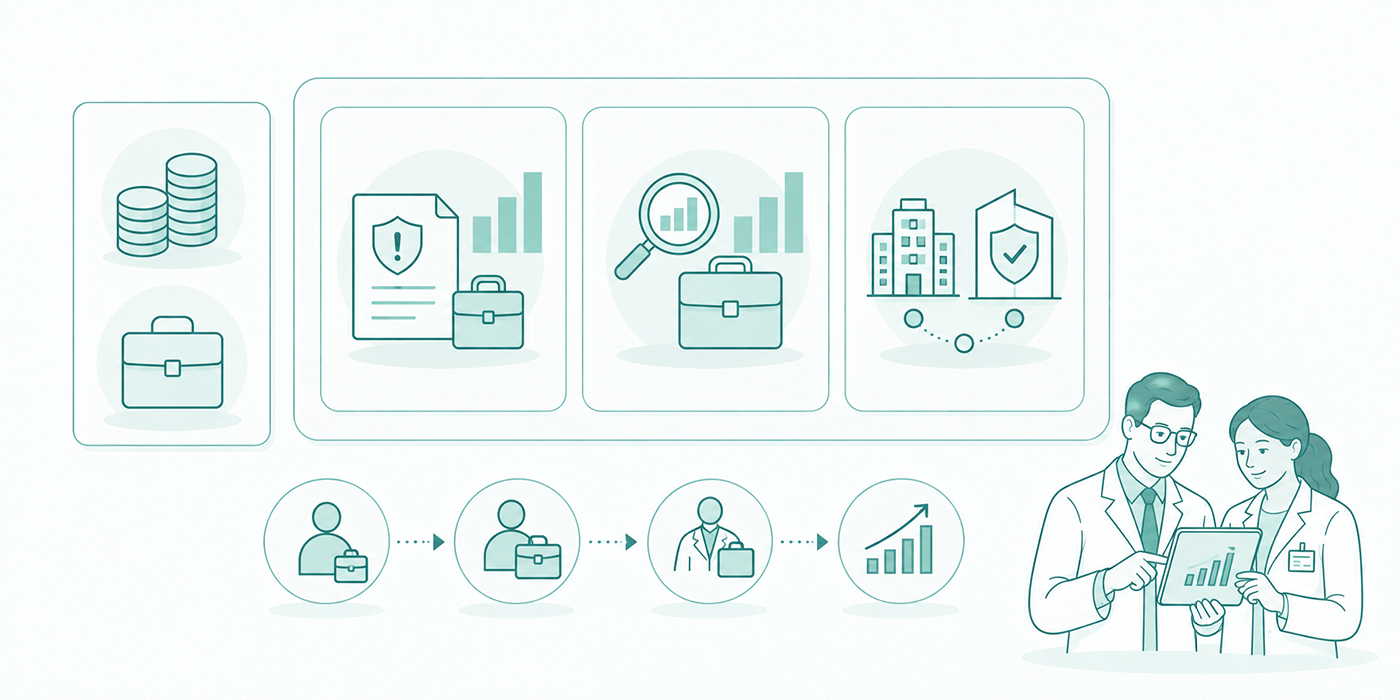
Those ranges reveal the underlying career logic. Compensation rises when a professional moves from processing safety information toward interpreting it, defending decisions, managing risk, directing systems, and owning outcomes. That progression makes knowledge of global PV compliance, inspection readiness, patient-safety principles, clinical-trial quality management, and medical safety oversight economically valuable because these capabilities become harder to outsource or automate.
| Role / Career Position | Indicative U.S. Pay Position | Main Work | Salary Ceiling Driver | Best Next Skill |
|---|---|---|---|---|
| Entry Drug Safety Associate | Lower PV band | ICSR intake and processing | Case complexity and independence | Adverse-event reporting |
| Safety Associate | Broadly $45K-$112K base in current postings | Intake, coding, narratives | Quality and productivity | Protocol adherence |
| Drug Safety Coordinator | Entry to lower-middle band | Tracking and case workflow | Ownership beyond administration | Trial logistics |
| PV Operations Associate | Lower-middle PV band | Case operations and compliance | Process ownership | Global PV compliance |
| Senior Drug Safety Associate | Middle PV band | Complex case review | Medical judgment and oversight | Safety oversight |
| Case Quality Reviewer | Middle band | QC and compliance | Root-cause expertise | Quality management |
| Literature Safety Specialist | Lower-middle band | Literature surveillance | Scientific assessment depth | Data integrity |
| PV Compliance Specialist | Middle to upper-middle band | Compliance metrics and CAPAs | Audit responsibility | PV audit readiness |
| PV Vendor Oversight Specialist | Middle to upper-middle band | Provider quality and SLAs | Governance responsibility | Quality systems |
| Aggregate Reporting Specialist | Middle band | Periodic safety reports | Scientific writing ability | Regulatory interpretation |
| Signal Detection Analyst | Middle to upper-middle band | Safety-signal surveillance | Analytical independence | Safety-data interpretation |
| PV Scientist | Often six figures in U.S. | Signal evaluation and benefit-risk | Scientific ownership | Medical safety assessment |
| Drug Safety Scientist | Approx. $135K median total-pay estimate | Safety surveillance | Signal and risk ownership | Patient-safety judgment |
| Senior PV Scientist | Upper six-figure trajectory | Program-level safety work | Cross-functional influence | Team leadership |
| Safety Scientist, CRO | Often below comparable sponsor role | Client-directed safety work | Access to higher-value science | Global safety strategy |
| Safety Scientist, Sponsor | Typically stronger compensation potential | Product-level safety ownership | Benefit-risk accountability | Safety oversight |
| PV Operations Manager | Upper-middle band | People, process and vendors | Operational ownership | Clinical-team leadership |
| Safety Manager | Upper-middle to senior band | Portfolio and team oversight | Decision authority | Risk-based quality |
| Senior Manager PV Scientist | Approx. $141K-$190K in current Amgen posting | Global safety science | Strategic ownership | Regulatory strategy |
| Associate Director Safety Scientist | Approx. $126K-$190K in current AZ posting | Program safety leadership | Risk-benefit leadership | Safety governance |
| Director Safety Scientist | Approx. $187K-$281K in current AZ posting | Safety strategy | Portfolio decision-making | Strategic leadership |
| PV Medical Reviewer | Varies heavily by qualification | Medical case assessment | Clinical credentials | Medical monitoring |
| Safety Physician | Senior compensation tier | Medical benefit-risk decisions | Physician accountability | Medical-regulatory compliance |
| Risk Management Specialist | Upper-middle band | Risk minimization | Regulatory impact | Global compliance strategy |
| PV Quality Lead | Upper-middle to senior band | Quality systems and CAPAs | Inspection exposure | Audit leadership |
| Local Safety Lead | Market-dependent | Affiliate PV ownership | Local regulatory accountability | PV compliance |
| Global Safety Lead | Senior compensation tier | Global product safety strategy | Portfolio accountability | Global safety oversight |
| PV Director | Often $180K+ territory depending on employer | Function leadership | Budget, people and strategy | Leadership capability |
| Executive PV Leadership | $250K+ possible at major sponsors | Enterprise PV strategy | Organizational scope | Enterprise quality systems |
| Case Processor Staying Case-Only | Highest plateau risk | Transactional processing | Limited differentiated scope | Build credible experience |
| Case Processor Moving Into Safety Science | Stronger long-term ceiling | Cases plus scientific interpretation | Signal and aggregate exposure | Advanced data interpretation |
2. Drug Safety Associate vs PV Scientist: Where the Salary Jump Actually Comes From
The biggest early-career mistake is assuming that years in pharmacovigilance automatically convert into higher pay. Someone can spend five years processing ICSRs while another professional spends three years moving from case processing into aggregate reports, signal management, risk assessment, and product-level safety work. Their tenure may look similar, while their market value differs sharply.
A Drug Safety Associate commonly develops expertise in case intake, seriousness assessment workflows, expectedness, coding, narratives, follow-up, reconciliation, literature cases, expedited timelines, and database quality. Those responsibilities create useful grounding in adverse-event reporting compliance, patient-safety principles, clinical-trial data integrity, global PV compliance, and inspection readiness. The salary problem appears when the work remains high-volume but low-ownership.
Case processing is also one of the areas most exposed to standardization, global delivery models, automation, and outsourcing. A professional who becomes exceptionally fast at a workflow that employers can distribute across vendors may become operationally valuable without becoming strategically scarce. That is why someone evaluating clinical research certification versus experience, overcoming the entry-level experience catch-22, improving research communication skills, and learning quality-management principles should deliberately pursue work that increases decision authority.
The PV Scientist path changes the economic equation. Safety scientists may review cumulative data across trials and postmarketing sources, evaluate emerging signals, draft or review aggregate reports, prepare safety analyses, contribute to labeling discussions, support risk-management plans, examine benefit-risk implications, and communicate findings to cross-functional teams. Those responsibilities intersect with medical-monitor safety oversight, regulatory compliance, data-integrity responsibilities, clinical quality management, and ethical patient-safety decision-making.
That distinction appears in current hiring discussions. In a September 2026 pharmacovigilance Reddit thread, an industry respondent described a Drug Safety Specialist role as a common stepping stone toward Safety Scientist work and highlighted signal management, medical writing, periodic reporting, risk management, and broader portfolio safety exposure as important bridge capabilities. This is anecdotal career advice rather than a formal hiring standard, but it tracks closely with what current sponsor safety-scientist vacancies request.
The practical salary lesson is simple: do not ask only, “How do I get promoted?” Ask, “Which responsibilities at the next level are currently absent from my evidence?” Someone already competent in PV case compliance should fight for exposure to global regulatory decision-making, safety oversight, quality investigations, and cross-functional leadership. Those responsibilities build the evidence that supports a different salary band.
3. CRO vs Sponsor Pharmacovigilance Pay: Why Reddit Keeps Reporting a Gap
The CRO-versus-sponsor comparison needs more nuance than “sponsors pay more.” CRO employment can provide enormous breadth. A CRO professional may work across clients, therapeutic areas, databases, reporting conventions, safety systems, regulatory environments, and operating models. That exposure can accelerate development of global PV compliance knowledge, audit readiness, adverse-event management, clinical quality systems, and trial-team communication.
Compensation can diverge because the sponsor retains more product ownership. Sponsor teams may control signal strategy, labeling consequences, safety governance, regulatory responses, risk-management decisions, portfolio priorities, and executive-facing benefit-risk recommendations. These are closer to the decisions with the greatest scientific, regulatory, financial, and reputational consequences. That increases the value of expertise in medical safety oversight, regulatory interpretation, data integrity, patient safety, and quality governance.
A July 2026 Reddit post provides a useful real-world example. A PV Scientist reported roughly six years in drug safety, earning a little above $90,000 at a CRO, while a former colleague who had moved sponsor-side reportedly earned about $30,000 more at a comparable level. Responses repeatedly suggested that prolonged tenure at one CRO can create salary compression and that meaningful increases often require either changing employers or increasing scope. This remains one person's report and should not be treated as market-wide salary data, but it illustrates a pattern worth testing against real job postings.
Current postings make that comparison credible. Sponsor roles requiring genuine safety-science ownership are advertising six-figure ranges extending well beyond the case-processing market. Amgen's current Senior Manager PV Scientist range reaches approximately $190,000 base, AstraZeneca's Associate Director Safety Scientist range reaches $190,000, and its Director range reaches $281,000 before potential incentives.
The smart CRO strategy, therefore, is to use breadth deliberately. If your current work already gives you strong adverse-event processing, pursue aggregate reporting. If you have aggregate reporting, pursue signal management. If you have signal exposure, pursue product-level analysis, risk management, inspection participation, vendor oversight, or sponsor-facing governance. Each additional responsibility moves your resume from “performed tasks” toward “influenced safety decisions.”
There is another painful reality: geography matters enormously. A September 2026 Reddit post described a candidate in India with four years of experience being offered approximately ₹6 lakh annually for a PV Specialist position. The comparison should never be converted mechanically into U.S. dollars and treated as equivalent purchasing power, but it demonstrates how global delivery models can create radically different compensation for similar-sounding titles.
That makes employer type, geography, and work ownership inseparable. Someone studying PV regulatory compliance, clinical safety oversight, inspection techniques, quality management, and regulatory affairs principles should compare what decisions the role lets them own, because ownership often determines future negotiating power.
4. The Pharmacovigilance Skills That Increase Salary Fastest
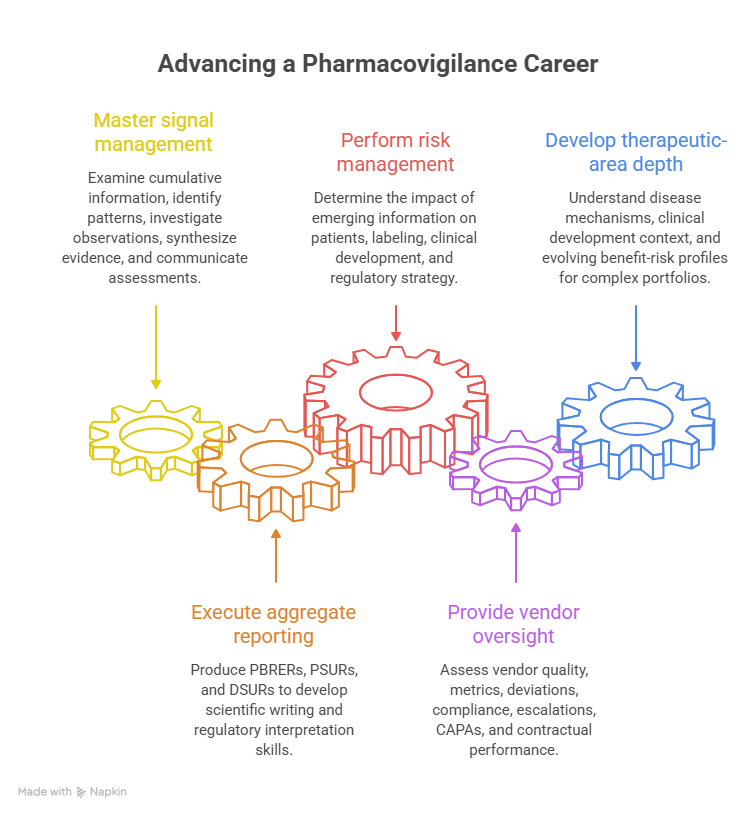
Signal management is one of the most valuable transitions out of case-processing work. Processing tells an employer that you can handle an individual report correctly. Signal work demonstrates that you can examine cumulative information, identify patterns, investigate whether an observation warrants escalation, synthesize evidence, and communicate a defensible assessment. That requires stronger command of safety-data integrity, patient-safety principles, medical-monitor responsibilities, global regulatory compliance, and clinical research quality management.
Aggregate reporting is another powerful bridge. PBRERs, PSURs, DSURs, and related deliverables force professionals to think longitudinally rather than case by case. The work develops scientific writing, data synthesis, regulatory interpretation, cross-functional coordination, and deadline management. Those capabilities overlap with regulatory affairs knowledge, clinical-trial timeline management, PV compliance, safety oversight, and clinical data integrity.
Risk management and benefit-risk assessment move the career further upstream. Employers pay more for professionals who can help determine what emerging information means for patients, labeling, clinical development, postmarketing obligations, and regulatory strategy. AstraZeneca's current Director Safety Scientist posting explicitly emphasizes aggregate reports, signal surveillance, risk/benefit analysis, safety assessment, risk-management programs, and strategic cross-functional leadership.
That is precisely why developing expertise in clinical-trial safety oversight, regulatory compliance, investigator GCP responsibilities, ethical patient protection, and quality-management systems has more leverage than collecting another generic training badge.
Vendor oversight is increasingly valuable as transactional PV work is externalized. When companies outsource intake and processing, internal employees still need people capable of assessing vendor quality, metrics, deviations, compliance, escalations, CAPAs, and contractual performance. AbbVie has described PV vendor-management roles involving oversight of external providers and responsibility for quality, compliance, and productivity.
For someone already comfortable with case-processing compliance, adding PV audit expertise, quality-management capability, team leadership, and global compliance knowledge can create a career path that benefits from outsourcing rather than competing directly against it.
Therapeutic-area depth also matters. A safety professional who understands the disease, product mechanism, clinical development context, expected adverse-event landscape, competing therapies, and evolving benefit-risk profile can contribute more effectively than someone who knows only PV workflow mechanics. The value becomes particularly visible in oncology, immunology, rare disease, and other complex portfolios where medical safety oversight, investigator responsibilities, trial data integrity, and regulatory decision-making become deeply interconnected.
5. How to Raise Your PV Salary Without Wasting the Next Three Years
Start by auditing your work against the next role, rather than your current job description. Pull 15 to 20 vacancies for the position you want and mark every responsibility repeatedly requested. Someone targeting Safety Scientist positions may discover that their real gap is signal management. Another candidate may already have signal experience but lack aggregate reporting, risk-management plans, inspection exposure, or product-level ownership.
This approach is stronger than blindly adding credentials. Professionals deciding whether clinical research certification is worth it should compare any training against their actual evidence gap. A certificate cannot replace missing adverse-event experience, global PV compliance exposure, clinical safety judgment, or quality-system experience.
Next, quantify your current scope. “Processed safety cases” is weak negotiating evidence. “Reviewed complex cases, maintained compliance with expedited timelines, reduced repeat QC findings, supported reconciliation, trained new processors, and escalated medically significant discrepancies” communicates a different level of responsibility. Apply the same principle to research protocol adherence, data integrity, PV inspection readiness, and clinical-team leadership.
Then compare market compensation before negotiating internally. Use current employer-posted salary ranges where possible because they tell you what organizations are prepared to budget today. Supplement them with aggregated salary sites and Reddit reports, while recognizing that self-reported figures can mix base salary, bonuses, geography, seniority, and different role definitions.
If your market value has moved far beyond your internal pay band, an external move may create more leverage than waiting for annual merit increases. The July 2026 Reddit PV discussion repeatedly raised this point, with commenters describing company changes as the route to substantial salary corrections. Again, this is community experience rather than controlled labor-market data, but it should prompt anyone with stagnant pay to benchmark themselves.
A CRO-to-sponsor transition can be especially powerful when the move also increases responsibility. Moving merely for the sponsor logo provides less durable value than moving into product ownership, signal work, aggregate safety, vendor governance, regulatory interaction, or risk management. Professionals already building global pharmacovigilance expertise, clinical safety knowledge, inspection capability, regulatory understanding, and quality-management expertise should seek roles where those capabilities affect actual decisions.
Finally, protect yourself from title inflation. A “Senior PV Specialist” doing essentially the same case-processing work as an Associate may have less external value than a lower-titled employee who owns aggregate reporting, signal evaluation, audits, CAPAs, and sponsor-facing deliverables. Scope compounds faster than title.
6. FAQs About Pharmacovigilance Salaries in 2026
-
Glassdoor currently estimates Drug Safety Associate total compensation at roughly $103,000 median, with a broad $77,000 to $144,000 estimated total-pay range. A recent IQVIA U.S. Safety Associate vacancy advertised approximately $44,900 to $112,100 base, showing how wide real-world ranges can be.
The candidate's scope matters enormously. Someone handling basic intake may price differently from someone performing complex review, narratives, literature surveillance, compliance escalation, and quality activities. Developing adverse-event reporting expertise, PV regulatory knowledge, data-integrity skills, and quality-management experience is more useful than relying on tenure alone.
-
Glassdoor currently estimates U.S. Pharmacovigilance Drug Safety Scientist compensation at approximately $135,000 median total pay, with an estimated range around $101,000 to $189,000. Employer estimates within that dataset vary substantially, which is why professionals should examine role scope alongside salary.
Higher-value scientist roles often require safety surveillance knowledge, regulatory compliance expertise, clinical data interpretation, global PV understanding, and increasingly signal, aggregate-reporting, and benefit-risk experience.
-
Sponsor-side compensation frequently has stronger upside, particularly when the position owns product safety strategy, signal evaluation, benefit-risk decisions, risk management, regulatory interactions, or portfolio governance. Current sponsor postings reaching roughly $190,000 for senior-manager or associate-director safety roles support that potential, while recent Reddit reports also describe CRO-to-sponsor salary gaps.
CRO experience can still be exceptionally valuable when it produces broad exposure to global PV systems, safety reporting, audit processes, and quality management. The strongest career move increases both compensation and decision ownership.
-
Signal management is one of the strongest targets, followed closely by aggregate safety reporting, medical/scientific writing, risk management, benefit-risk assessment, and product-level safety analysis. A current 2026 PV community discussion specifically highlighted signal management, periodic reporting, medical writing, and risk management as common bridge skills toward Safety Scientist work.
Build those capabilities on top of adverse-event reporting, patient-safety principles, data integrity, and regulatory compliance. The objective is to demonstrate that you can interpret safety information and support decisions, rather than only process it correctly.
-
Yes. Senior sponsor roles can exceed $200,000 in base salary. AstraZeneca's September 2026 Director Safety Scientist posting listed approximately $187,000 to $281,000 base, while Regeneron has advertised senior PV leadership roles with ranges extending materially beyond $200,000.
Those jobs require far more than years served. Candidates typically need substantial depth in safety strategy, global regulatory compliance, clinical quality systems, inspection readiness, and cross-functional leadership.
-
The strongest long-term opportunities are shifting toward work that requires judgment, oversight, science, governance, and accountability. Outsourcing can pressure purely transactional roles while simultaneously increasing demand for people capable of vendor oversight, signal interpretation, quality control, CAPA leadership, risk management, and sponsor governance.
A professional worried about commoditization should move from routine processing toward PV audit expertise, global compliance, clinical safety oversight, data integrity, and risk-based quality management. Those skills become more important as companies externalize execution.
