
Trial Logistics Coordination: Practical RA Responsibilities
Trial logistics looks simple until one missing kit, unsigned form, late shipment, outdated binder page, or unclear handoff slows the entire visit. A Research Assistant who understands study documentation, research compliance, GCP basics, site communication, and protocol deviations protects the site before problems become visible. Good logistics turns busy clinical trial activity into traceable, inspection-ready execution.
1. What Trial Logistics Coordination Means for Research Assistants
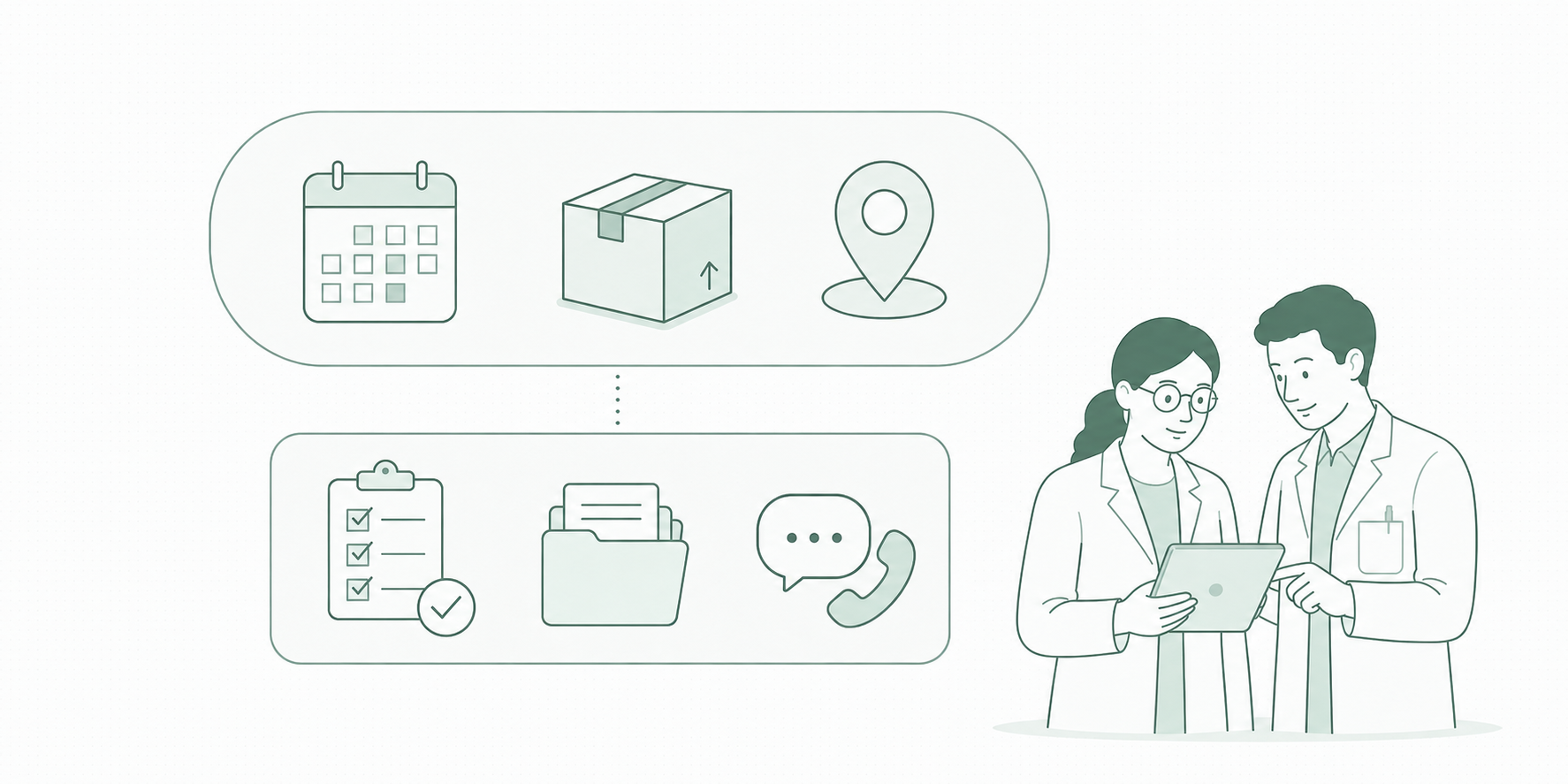
Trial logistics coordination is the practical work that keeps a study moving safely, accurately, and on schedule. For a Research Assistant, that means preparing visit materials, confirming supplies, supporting participant flow, tracking documents, helping with lab handling, keeping communication clean, and making sure every task connects back to the approved protocol. This work sits between clinical trial protocol management, site operations oversight, GCP compliance strategies, research ethics, and patient safety oversight.
The hard part is that logistics errors rarely look dramatic at the beginning. A lab kit expires quietly. A participant arrives before the consent packet is ready. A coordinator assumes a courier pickup was booked. A source worksheet gets printed from an old folder. A shipment arrives without being reconciled. These small failures create the same downstream risk patterns covered in handling protocol deviations, clinical trial documentation, clinical trial data integrity, site monitoring visits, and inspection readiness.
A strong RA treats logistics as risk control. Before a visit, the RA checks whether the participant is expected, the visit window is correct, the study supplies match the visit schedule, the lab kit is valid, the forms are current, the team knows the handoffs, and the documentation path is clear. This is where interactive start-up checklists, clinical trial templates, GCP self-assessment, monitoring visit preparation, and quality management strategies become practical daily habits.
The best RAs also understand boundaries. They support coordination, documentation, participant flow, lab readiness, supply tracking, and team communication while staying inside delegated duties. Delegation matters because a helpful RA can still create compliance risk by performing an activity outside the delegation log, explaining medical issues beyond training, or documenting something without source support. That is why investigator responsibilities, informed consent procedures, ethical conduct in GCP, adverse event reporting, and essential RA skills should guide every logistics task.
| RA Logistics Area | What the RA Checks | Common Failure Mode | Proof the Site Should Keep | Best Internal Resource |
|---|---|---|---|---|
| Visit window tracking | Correct scheduled date, allowable window, visit sequence, and rescheduling risk. | Participant arrives outside window and the team discovers it after procedures begin. | Visit tracker, scheduling note, coordinator confirmation, protocol window reference. | protocol management |
| Participant reminder workflow | Call, text, email, transportation notes, fasting instructions, and arrival details. | Participant misses key prep instructions and visit data becomes unusable. | Contact log, reminder script version, date/time of outreach, unresolved questions. | patient retention strategies |
| Consent packet readiness | Current IRB-approved version, correct language, required addenda, signature workflow. | Old consent form is used because someone printed from a stale folder. | Consent version log, IRB approval date, blank form control, training proof. | informed consent procedures |
| Lab kit preparation | Kit type, expiration date, visit match, tube requirements, shipping materials. | Blood draw occurs before the team notices the correct kit is missing. | Kit inventory log, expiration check, visit prep checklist, shipment record. | laboratory best practices |
| Specimen shipment coordination | Courier booking, pickup cutoff, temperature needs, labels, chain-of-custody notes. | Specimen is collected correctly and lost through poor shipment timing. | Airbill, pickup confirmation, tracking number, shipment reconciliation note. | safety monitoring practices |
| Study supply inventory | Available stock, expiry, reorder triggers, storage conditions, accountability rules. | Site realizes supplies are low on the morning of a participant visit. | Inventory log, reorder email, temperature log, receipt documentation. | resource allocation |
| Source worksheet control | Correct visit version, current protocol alignment, required fields, completion path. | Data is collected on an outdated worksheet that misses amended procedures. | Controlled template folder, version date, worksheet checklist, amendment mapping. | trial templates |
| Equipment readiness | Calibration status, access, battery, backup equipment, user instructions. | Procedure delay occurs because equipment is available but out of calibration. | Calibration certificate, maintenance log, pre-visit equipment check. | site monitoring readiness |
| Delegation check | Whether the assigned person is trained and delegated for the task. | Task is completed by a staff member who lacks documented delegation. | Delegation log, training log, role checklist, PI approval documentation. | investigator responsibilities |
| Training record tracking | Protocol training, GCP training, lab manual training, system access training. | Monitor finds activity performed before training evidence was filed. | Training log, certificates, sign-in sheet, version-specific training proof. | GCP training requirements |
| EDC access support | Login status, role permissions, password resets, access requests, user deactivation. | Visit data entry waits because a user account was never activated. | Access request, sponsor confirmation, activation date, issue ticket. | data review skills |
| Regulatory binder updates | IRB approvals, correspondence, logs, licenses, CVs, training records. | Binder looks current until the monitor asks for one missing approval letter. | Binder index, filing log, version control, missing document tracker. | regulatory documents |
| Participant education materials | Approved brochures, visit instructions, diary instructions, device guidance. | Participant receives unofficial instructions that conflict with the protocol. | Approved material version, distribution log, participant instruction checklist. | patient education resources |
| Recruitment handoff support | Screening lead status, pre-screen notes, callback timing, referral source. | Good candidate is lost because follow-up ownership was unclear. | Pre-screen tracker, referral log, call outcome, next-step owner. | volunteer registries |
| Deviation prevention checks | What must happen before, during, and after each visit to stay protocol-aligned. | Team documents a deviation that could have been prevented with a checklist. | Pre-visit checklist, deviation assessment, CAPA note, retraining proof. | deviation corrective actions |
| Safety communication support | Where symptom notes, AE prompts, and escalation reminders belong. | Participant mentions a symptom casually and no one routes it for review. | Communication log, coordinator notification, AE assessment trail. | AE reporting techniques |
| PI review logistics | Documents needing PI signature, data needing review, safety items needing oversight. | PI review is delayed because documents were batched without priority labels. | PI review tracker, signature log, escalation note, review date. | PI safety oversight |
| Monitor visit preparation | Open queries, missing documents, source availability, staff availability. | Monitor spends the first hour chasing documents the site already had. | Monitor prep list, document pull log, issue tracker, follow-up log. | monitoring visit mastery |
| Query follow-up support | Open query owner, source location, response deadline, evidence needed. | Queries age because no one knows who owns the supporting source check. | Query tracker, owner assignment, response evidence, closure date. | data verification |
| Vendor coordination | Lab vendor, courier, imaging vendor, ePRO vendor, equipment vendor contacts. | Vendor issue sits unresolved because the escalation route is unknown. | Vendor contact sheet, ticket numbers, escalation notes, resolution dates. | vendor management |
| Budget-impact awareness | Rescheduled visits, missed procedures, repeat shipments, avoidable overtime. | Operational waste grows because no one tracks small repeated logistics failures. | Reschedule log, invoice notes, supply waste log, visit delay tracker. | trial budget management |
| Document naming discipline | File name, date, version, participant ID rules, secure folder placement. | Staff cannot find evidence during a monitor request because naming is inconsistent. | File naming guide, controlled folder map, upload log, audit trail. | documentation techniques |
| Start-up task support | Feasibility documents, training, supplies, binder setup, system access. | Study opens with unresolved tasks that become enrollment blockers. | Start-up tracker, readiness checklist, sponsor correspondence, activation proof. | start-up checklist |
| Amendment logistics | New forms, changed visit schedule, staff retraining, supply changes. | Team follows the previous process after an amendment changes visit requirements. | Amendment tracker, training proof, revised worksheets, implementation date. | clinical trial amendments |
| Retention risk tracking | Missed visits, repeated reschedules, travel barriers, participant confusion. | Participant drops out after several small unresolved access problems. | Retention tracker, barrier notes, follow-up plan, coordinator review. | retention strategies |
| Ethics and privacy control | Protected information handling, private conversations, document visibility. | Participant information is exposed through careless printing or informal messaging. | Privacy training, secure communication log, document handling SOP. | ethical conduct |
| Close-out support | Return supplies, archive records, resolve queries, confirm final logs. | Study ends with scattered evidence, unresolved access, and missing reconciliation. | Close-out checklist, archive index, supply return proof, query closure report. | project close-out |
| Team communication rhythm | Daily priorities, blockers, visit timing, owner assignments, escalation points. | Everyone is busy, yet no one owns the next critical logistics action. | Huddle notes, action tracker, escalation log, completion timestamps. | RA communication |
| Audit readiness housekeeping | Whether every action has a record, owner, date, and retrievable evidence. | Work was done correctly, yet the site cannot prove it under review. | Audit checklist, evidence map, corrective log, document control trail. | audit preparation |
2. The RA Logistics Map: From Pre-Visit Setup to Close-Out Evidence
A practical RA workflow starts before the participant walks in. The RA should know the study calendar, visit windows, required forms, lab requirements, room needs, provider availability, equipment status, and shipment timing. The goal is to remove friction before it reaches the participant or coordinator. This connects directly to clinical trial protocol responsibilities, site monitoring visit preparation, lab best practices, trial documentation, and GCP compliance essentials.
The pre-visit checklist should answer five operational questions: Who is coming? What visit is being performed? What procedures are required? What materials must be ready? What could block completion? A high-performing RA checks the participant schedule against the protocol, confirms whether the visit falls inside the allowable window, prints or prepares the correct source documents, verifies supplies, checks lab kit expiration, confirms special instructions, and identifies open issues for the coordinator. This is the same discipline that supports risk-based monitoring, data integrity, quality management, GCP self-assessment, and trial resource allocation.
During the visit, logistics coordination becomes handoff management. The RA may greet the participant, verify appointment details, support check-in, prepare rooms, provide approved instructions, route questions to qualified staff, track timing, support sample handling, and make sure documents move to the right person. A weak handoff creates gaps that later appear as missing source data, unresolved safety notes, late entries, or unclear accountability. Strong handoffs rely on stakeholder communication, research assistant collaboration, informed consent compliance, adverse event handling, and patient safety oversight.
After the visit, the RA’s job shifts toward evidence control. Materials must be filed, shipments confirmed, source documents routed, tracking logs updated, leftover supplies reconciled, participant follow-up items recorded, and unresolved issues escalated. A visit that felt smooth can still fail inspection if the proof is scattered. The most valuable RA habit is finishing each visit with a clean record trail that supports clinical trial audits, remote and on-site monitoring, data review, regulatory document management, and project close-out.
Close-out thinking should start early. Every kit receipt, temperature record, training log, communication note, courier receipt, visit checklist, and document version can become important later. Sites get into trouble when they treat close-out as an end-of-study cleanup rather than a daily documentation standard. RAs who maintain records in real time reduce final scramble, protect the coordinator, support the PI, and make monitoring smoother. This mindset aligns with handling trial audits, site operations oversight, documentation techniques, clinical research ethics resources, and global regulatory guidelines.
3. Daily RA Responsibilities That Prevent Delays, Deviations, and Rework
The RA’s daily responsibilities should be organized around prevention. A good day starts with reviewing scheduled visits, checking whether any visit risks exist, confirming what needs to be ready, and identifying which tasks need coordinator or PI attention. The RA should know which participants are due, which supplies are low, which documents are pending, which queries need source support, and which communications require follow-up. This practical rhythm strengthens time management for coordinators, CRC responsibilities, research assistant documentation, site monitoring preparation, and trial timeline management.
Supply tracking is one of the easiest places for an RA to add serious value. The RA should track lab kits, shipping materials, participant materials, diaries, devices, room supplies, PPE when applicable, temperature-sensitive items, and any sponsor-provided tools. The key is using reorder thresholds instead of waiting for shortages. When a kit runs out, the problem reaches the participant. When an RA spots a two-week supply risk, the problem stays operational. This supports resource allocation, vendor management, trial budget management, laboratory best practices, and quality management.
Document control is another daily responsibility that separates careful RAs from task-only assistants. The RA should use controlled folders, check version dates, file documents promptly, label documents consistently, and avoid unofficial copies floating around the site. One old form can create a consent issue, an outdated source worksheet can create missing data, and a misplaced training record can create an audit finding. Good document habits rely on managing regulatory documents, trial documentation techniques, clinical trial templates, GCP compliance, and audit preparation.
Participant-facing logistics require calm, accurate, approved communication. An RA can help participants understand where to go, what to bring, what time to arrive, how long the visit may take, and who will answer medical or study-specific questions. The RA should avoid improvising clinical explanations, guessing eligibility answers, or interpreting symptoms. Participant trust grows when logistics feel organized and boundaries are clear. This is where patient education resources, patient retention strategies, ethical conduct, informed consent mastery, and participant safety oversight matter.
RAs should also help create visibility around blockers. A blocker can be a missing signature, unresolved vendor ticket, delayed shipment, participant transportation issue, monitor request, open query, pending PI review, expired credential, or incomplete training record. The RA should document the blocker, assign the owner, record the next step, and follow up before the deadline. This protects the team from silent failure. Strong blocker management reflects stakeholder communication, leadership and team management, project management milestones, vendor coordination, and inspection readiness.
What is your biggest trial logistics coordination blocker right now?
Choose one. Your answer points to the RA skill that needs the fastest upgrade.
4. How RAs Coordinate People, Supplies, Documents, and Data Without Dropping Details
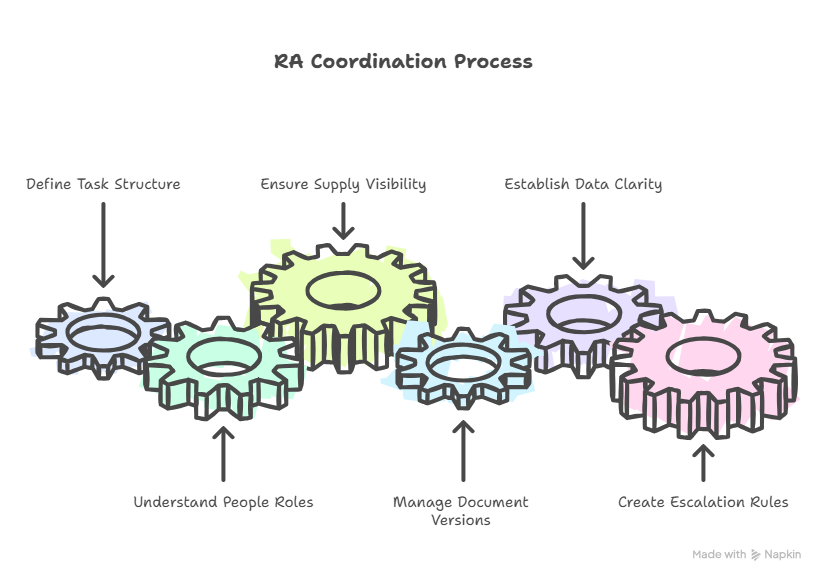
The RA’s coordination role becomes easier when every task has an owner, deadline, evidence requirement, and escalation path. “Check supplies” is weak because it leaves too much judgment open. “Confirm lab kit type, expiration, visit match, courier materials, and reorder status by 3 PM the day before the visit” is usable. The same precision should guide laboratory procedures, document management, GCP compliance, trial timelines, and clinical trial quality.
People coordination starts with knowing who can do what. The RA should understand the delegation log, PI oversight expectations, coordinator responsibilities, vendor contacts, lab contacts, monitor requests, and participant communication boundaries. When a participant asks a medical question, the RA routes it. When a monitor asks for source support, the RA helps locate it. When a shipment fails, the RA escalates through the vendor path. This structure supports investigator responsibilities, clinical trial sponsor roles, effective stakeholder communication, vendor management, and CRA monitoring techniques.
Supply coordination should be visible and boring. That means logs are current, thresholds are defined, receipts are filed, expirations are reviewed, and storage conditions are documented. The RA should flag trends: repeated last-minute reorder requests, recurring shipment delays, kits expiring before use, temperature excursions, or equipment access delays. These trends can expose workflow weaknesses before they become compliance problems. Strong supply systems connect to clinical trial budget management, resource allocation mastery, clinical trial cost planning, site operations oversight, and project management quality.
Document coordination requires version discipline. After an amendment, the RA should help identify which documents changed, which staff need retraining, which source worksheets need replacement, which participant materials need removal, and which logs need updates. Many sites fail during amendment implementation because the old process remains physically available. A strong RA helps remove old versions from workflow and creates an evidence trail showing when the new process began. This fits clinical trial amendments, regulatory documents, GCP training requirements, audit preparation, and trial templates.
Data coordination begins with source clarity. The RA should know where data originates, where it gets recorded, who reviews it, and how missing information is resolved. Data problems often come from logistics problems: the wrong worksheet, delayed lab shipment, unclear visit flow, missed diary instruction, device issue, or late follow-up call. RAs who protect source quality help prevent queries before the data team sees them. This directly supports clinical trial data review, data integrity responsibilities, EDC and data management groups, remote monitoring readiness, and risk-based monitoring strategies.
The RA should also create escalation rules for repeated problems. One missed courier pickup needs correction. Three missed pickups need a vendor escalation pattern. One outdated worksheet needs replacement. Repeated outdated worksheets need a document-control fix. One participant confusion issue needs clarification. Repeated confusion needs approved education material review. This is how logistics becomes quality improvement, supported by CAPA thinking around deviations, CRC deviation handling, patient education directories, clinical research ethics resources, and quality management strategies.
5. Practical Checklists, Escalation Rules, and Proof Artifacts for RA Job Readiness
The most job-ready RAs think in checklists, trackers, and evidence trails. A checklist keeps the task consistent. A tracker keeps ownership visible. An evidence trail proves completion later. These three tools help RAs contribute beyond basic assistance because they reduce cognitive load for coordinators and protect the site during monitoring. This practical skillset matches RA documentation mastery, collaboration skills, clinical trial start-up checklists, inspection readiness, and GCP compliance self-assessment.
A strong pre-visit checklist should include participant ID, visit number, visit window, consent status if relevant, required procedures, source worksheet version, lab kit type, kit expiration, equipment needs, room needs, staff involved, participant instructions, open queries affecting the visit, and shipment needs. The checklist should leave room for unresolved risks and owner assignment. This keeps the visit anchored in protocol requirements, informed consent compliance, lab best practices, site monitoring readiness, and patient safety oversight.
A supply tracker should include item name, study, storage location, current count, reorder threshold, expiration date, lot number if applicable, receipt date, owner, and last reconciliation date. The RA should flag supplies that are low, expired, near expiration, poorly labeled, difficult to locate, or linked to repeated visit delays. This prevents operational issues that quietly inflate costs and stress. It also supports clinical trial budget strategy, resource allocation, vendor management, quality management, and trial close-out.
An escalation tracker should record the issue, date found, risk level, owner, due date, next action, communication sent, evidence needed, and closure date. The RA should avoid vague entries such as “waiting on sponsor” because they do not help the team act. Better entries name the sponsor contact, request date, ticket number, response deadline, and contingency plan. This is the practical side of stakeholder communication, leadership in clinical trial teams, vendor issue management, timeline milestone control, and global regulatory compliance.
Proof artifacts should be treated as part of the task, not an afterthought. If the RA books a courier, the proof is the booking confirmation and tracking number. If the RA files training, the proof is the certificate or signed log. If the RA distributes approved participant materials, the proof is the version-controlled document and distribution note. If the RA escalates a missing lab kit, the proof is the email trail and resolution. This evidence mindset is central to audit readiness, clinical trial documentation, regulatory binder control, GCP monitoring, and clinical research guidelines.
For career growth, RAs should build a small portfolio of logistics artifacts they can discuss in interviews: a de-identified visit prep checklist, a supply tracker template, a deviation-prevention checklist, a document version-control process, and a blocker escalation log. These artifacts show that the RA understands the real work behind safe execution. They also prepare the RA for CRC, CTA, regulatory, data, or project support roles. Career-focused RAs can deepen this path through free clinical research training resources, clinical research certificate programs, clinical research career opportunities, professional associations, and clinical research continuing education.
The main performance rule is simple: every logistics task should reduce uncertainty for someone else. The coordinator should know what is ready. The participant should know where to go. The PI should know what needs review. The monitor should find evidence quickly. The sponsor should receive clear escalation. The data team should see fewer preventable queries. That is the RA value chain across clinical trial data verification, monitoring visits, CRC compliance strategies, PI oversight, and research assistant collaboration.
6. FAQs: Trial Logistics Coordination for Research Assistants
-
The most important responsibilities are visit preparation, supply tracking, lab kit readiness, document control, participant reminders, room and equipment coordination, courier support, regulatory filing, communication tracking, and escalation of blockers. These responsibilities matter because they protect the team from preventable delays, missed procedures, missing evidence, and avoidable deviations. A new RA should study RA documentation skills, laboratory best practices, GCP training requirements, protocol deviation prevention, and research assistant communication.
-
An RA prevents deviations by checking visit windows, confirming protocol-required procedures, using current source worksheets, verifying supplies before visit day, escalating missing materials early, and documenting unresolved risks. Many deviations begin as logistics warnings that nobody acts on. The RA’s checklist should connect directly to clinical trial protocol management, handling protocol deviations, clinical trial amendments, GCP compliance essentials, and site monitoring preparation.
-
Before a participant visit, the RA should check the visit window, participant reminder status, visit schedule, source document version, consent status if relevant, lab kit type, kit expiration, equipment readiness, staff availability, room needs, participant instructions, open issues, and shipment timing. The RA should also know who owns each unresolved item. This workflow supports patient retention, informed consent procedures, lab best practices, trial documentation, and patient safety oversight.
-
RAs may help organize training logs, delegation logs, site correspondence, IRB approvals, blank source worksheets, visit checklists, lab manuals, shipment receipts, temperature logs, equipment records, participant material versions, and monitor follow-up trackers. The key is filing under controlled processes and avoiding unofficial copies. Strong document control supports regulatory document management, trial templates, audit preparation, GCP monitoring, and clinical research ethics resources.
-
The RA should document the issue, notify the coordinator, check immediate impact on scheduled visits, contact the vendor through the approved route, record ticket numbers or email confirmations, and track the issue until closure. The RA should also flag repeated delays so the team can change thresholds or escalation timing. This is where vendor management, resource allocation, budget management, quality management, and trial timeline management become practical RA tools.
-
An RA should avoid using outdated forms, guessing protocol requirements, giving medical explanations outside role, performing tasks beyond delegation, informal messaging with participant details, undocumented handoffs, and filing documents without version checks. Helpful behavior becomes risky when it bypasses role boundaries. Safe RA work should follow investigator responsibilities, ethical conduct in GCP, informed consent requirements, adverse event reporting compliance, and research compliance mastery.
