
ICH E6(R3) Career Impact: What Reddit Clinical Research Professionals Are Asking + Skills Employers Now Expect
ICH E6(R3) is changing the career value of clinical research skills because employers increasingly need professionals who can judge risk, protect critical data, document decisions, and oversee modern trial systems, rather than simply recite GCP rules. For candidates trying to break into clinical research without experience, understand what employers actually value, develop stronger protocol-adherence skills, or prepare for GCP monitoring responsibilities, R3 knowledge has become increasingly difficult to treat as optional background.
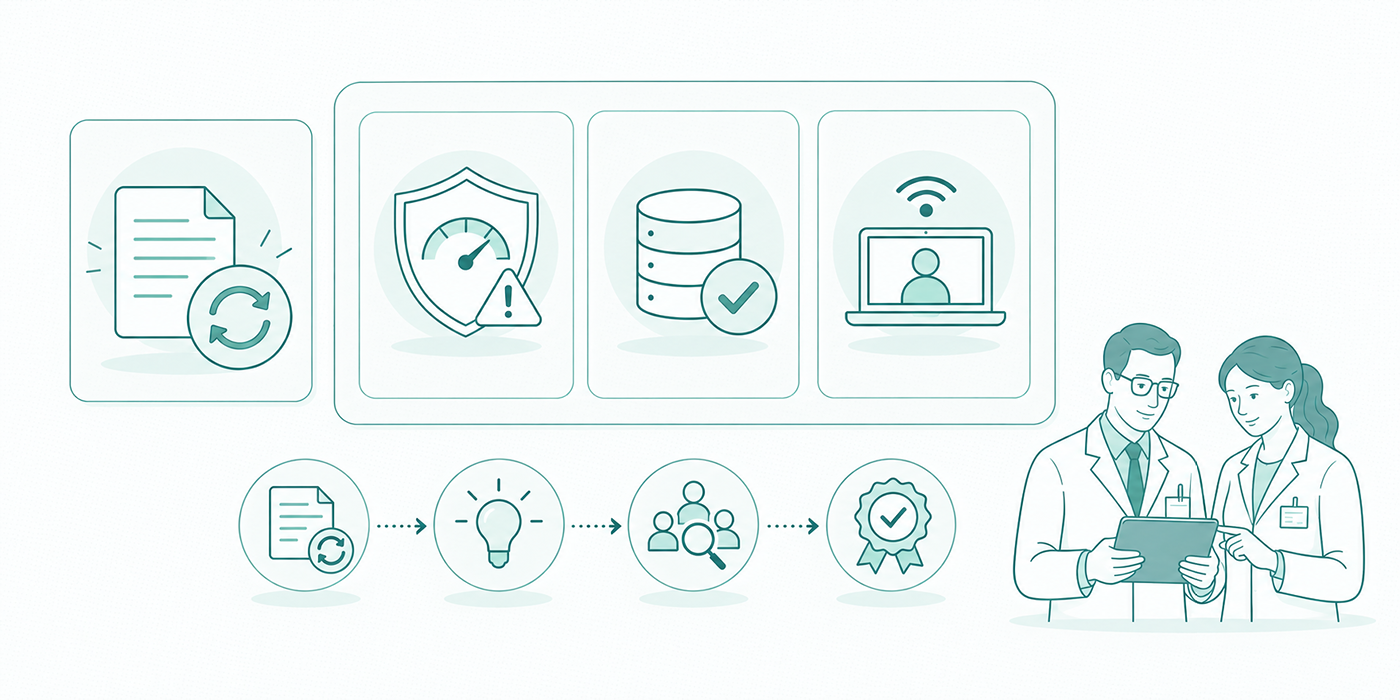
1. ICH E6(R3) Changes the Skills That Make Clinical Research Professionals Valuable
The career impact of ICH E6(R3) starts with a fundamental change in emphasis. Clinical research professionals still need disciplined compliance, but the framework places greater weight on quality by design, proportionate risk management, critical-to-quality factors, participant protection, reliable results, and fit-for-purpose systems and processes. The FDA issued its final E6(R3) guidance in September 2025, describing greater flexibility for modern trial designs, technologies, and data sources. In the EU, the Principles and Annex 1 have applied since July 23, 2025. Annex 2, covering areas including decentralized and pragmatic trials and real-world data, reached ICH Step 4 in June 2026 and is scheduled to become effective in the EU on January 15, 2027.
Career-wise, that means memorizing definitions will take a candidate only so far. A coordinator who understands research protocol adherence should also be able to identify which protocol failures could meaningfully affect participant safety or endpoint reliability. A CRA who understands on-site and remote GCP monitoring should be able to prioritize meaningful risks instead of treating every discrepancy as equally important. A PI or study manager applying clinical-trial data-integrity principles increasingly needs to understand how systems, people, data flows, and oversight interact.
That shift raises the value of clinical judgment.
Consider a missed visit window. Under a weak compliance mindset, the professional records the deviation and moves on. Under stronger R3 thinking, the professional asks whether the deviation affects participant safety, endpoint timing, investigational-product use, eligibility, missing data, or a recurring site process. That requires knowledge of ethical conduct and patient safety, investigator GCP responsibilities, trial logistics coordination, and adverse-event reporting compliance.
The same distinction appears in data management. Knowing that data must be accurate is elementary. Understanding which data are critical, where their reliability can fail, how computerized systems affect traceability, and when an issue requires escalation creates greater professional value. Those concepts connect directly with clinical-trial quality management, site-operations oversight, clinical-trial safety oversight, and the broader responsibilities of investigators under GCP.
For entry-level candidates, this creates a surprisingly useful opportunity. Someone without five years of experience cannot manufacture experience, but they can learn to discuss research using the current quality framework instead of outdated checkbox language. That strengthens preparation for CRC jobs with no previous experience, helps candidates navigate the entry-level experience catch-22, and makes clinical research certification more useful when the underlying concepts can actually be applied.
| R3 Skill / Concept | Where It Matters Most | Evidence Employers Can Actually See | Weak Candidate Signal | Career-Building Move |
|---|---|---|---|---|
| Quality by design | CRA, CTM, sponsor operations, quality | Can identify risks before execution begins | Only reacts after deviations occur | Study clinical-trial quality management. |
| Critical-to-quality thinking | All trial roles | Separates material risks from administrative noise | Treats every error identically | Connect risks with participant safety and ethical conduct. |
| Proportionate risk management | CRA, CTM, quality, sponsor | Explains why monitoring effort follows risk | Assumes more checking always means more quality | Learn risk-based monitoring techniques. |
| Participant-rights protection | CRC, investigator, CRA | Understands consent, eligibility and safety implications | Sees consent as a signature task | Build knowledge of investigator responsibilities under GCP. |
| Data governance | CRA, data, sponsor, PI | Can trace data creation, correction and oversight | Talks only about entering data correctly | Understand clinical-trial data integrity. |
| Fit-for-purpose systems | Sponsor, CRO, data, quality | Evaluates whether systems support intended trial use | Assumes validated software eliminates operational risk | Connect systems with quality-management strategy. |
| Remote oversight | CRA, in-house CRA, CTM | Can detect patterns without relying solely on site visits | Equates monitoring with physical SDV | Develop stronger remote monitoring skills. |
| Issue escalation | CRC, CRA, CTM, quality | Knows what to escalate, when, and to whom | Either escalates everything or hides problems | Strengthen clinical-team communication. |
| Protocol-risk interpretation | CRC, CRA, investigator | Explains consequences of missed protocol requirements | Memorizes procedures without understanding impact | Master protocol-adherence fundamentals. |
| Safety-event judgment | CRC, CRA, investigator, medical monitor | Recognizes reporting and escalation obligations | Treats safety as someone else's department | Study adverse-event reporting requirements. |
| Sponsor oversight | Sponsor operations, quality, CTM | Can describe oversight of CROs and vendors | Assumes delegation transfers accountability | Build broader trial leadership capability. |
| Investigator oversight | PI, CRC, site management | Understands delegation plus active supervision | Treats delegation logs as proof of oversight | Review site-operations oversight. |
| Essential-record judgment | CTA, CRA, TMF, site staff | Understands why evidence must reconstruct trial conduct | Files documents without understanding purpose | Connect records with trial-data integrity. |
| Technology awareness | All modern clinical roles | Understands system limitations and data flow | Assumes automation guarantees accuracy | Pair systems literacy with risk-based quality thinking. |
| Deviation assessment | CRC, CRA, PI | Can assess impact, recurrence and corrective action | Counts deviations without analyzing causes | Build stronger protocol-compliance judgment. |
| Root-cause thinking | Quality, CRA, CTM, site leadership | Distinguishes symptoms from process failures | Retrains staff after every recurring problem | Study clinical quality strategy. |
| Cross-functional communication | All roles | Translates operational problems into actionable risks | Sends information without clarifying ownership | Strengthen research-team communication. |
| Trial timeline awareness | CTA, CRA, CTM, sponsor | Connects site delays with downstream milestones | Manages tasks without seeing timeline consequences | Learn clinical-trial milestone management. |
| Vendor oversight | Sponsor, CTM, project management | Tracks performance, risk and corrective action | Confuses outsourcing with transfer of responsibility | Develop clinical-project leadership skills. |
| Inspection readiness | Site, sponsor, CRO, quality | Maintains defensible evidence continuously | Cleans files only when an inspection approaches | Study audit and inspection techniques. |
| Safety oversight | PV, medical monitor, sponsor | Sees safety signals as part of trial governance | Treats cases as isolated transactions | Understand medical-monitor safety oversight. |
| Regulatory context | Regulatory affairs, sponsor, CTM | Connects trial evidence with development decisions | Treats submissions as administrative output | Review IND/NDA submission fundamentals. |
| Global compliance awareness | Sponsor, PV, global trial teams | Recognizes regional implementation differences | Assumes one implementation date applies globally | Study global regulatory compliance. |
| Patient-centered thinking | Site, sponsor, decentralized trials | Identifies avoidable participant burden | Optimizes operations without considering participants | Anchor decisions in patient safety and ethics. |
| Delegation awareness | Site, investigator, sponsor | Can distinguish delegation from oversight | Assumes assigned work no longer requires supervision | Review GCP investigator oversight. |
| Risk communication | CRA, CTM, sponsor, quality | Communicates impact, urgency and proposed action | Reports problems without decision-ready context | Strengthen clinical communication skills. |
| Operational prioritization | CRC, CRA, CTM | Prioritizes work according to risk and deadlines | Treats inbox order as priority order | Learn trial logistics coordination. |
| Monitoring judgment | CRA and monitoring leadership | Adjusts attention according to meaningful trial risk | Measures productivity only by documents reviewed | Develop modern monitoring competence. |
| End-to-end study awareness | CTM, sponsor, senior CRA | Sees how local issues affect broader delivery | Understands only assigned task fragments | Build milestone-management knowledge. |
| Close-out quality | CRA, CTM, site, sponsor | Leaves a reconstructable and inspection-ready study record | Views close-out as document collection | Understand clinical-trial close-out procedures. |
| Continuous quality improvement | Every clinical research role | Uses recurring issues to improve process design | Repeats corrective actions without learning | Combine quality management with measurable operational outcomes. |
2. The ICH E6(R3) Skills Employers Increasingly Expect You to Demonstrate
The strongest R3-related career skill is risk-based thinking. A candidate should be able to look at a study problem and ask three questions: what could affect participant protection, what could affect reliability of the study's important results, and what action is proportionate to that risk? That reasoning strengthens GCP monitoring, improves clinical-trial quality management, supports stronger investigator oversight, and makes protocol-adherence knowledge operational rather than theoretical.
Next comes critical-to-quality thinking. Employers increasingly benefit from people who can distinguish a missing administrative item from a problem capable of compromising consent, eligibility, primary endpoint data, treatment allocation, safety reporting, or trial credibility. That distinction is central to stronger clinical-trial data integrity, better site-operations oversight, effective patient-safety decisions, and defensible adverse-event reporting.
A third skill is data-flow awareness. Modern trials generate information through EDC platforms, ePRO or eCOA systems, wearables, central laboratories, imaging vendors, eConsent platforms, randomization technologies, safety databases, and site records. A CRA or coordinator does not need to become a software engineer, but they do need to understand where data originate, how they move, who controls changes, and which failures threaten reliability. Professionals who connect that knowledge with data-integrity responsibilities, trial-logistics coordination, quality-management systems, and regulatory compliance become far more valuable than professionals who merely know how to click through each system.
Oversight is another career separator. Sponsors may delegate work to CROs and vendors, investigators may delegate activities to qualified site personnel, and project leaders may distribute operational ownership. Accountability still requires appropriate oversight. The employee who can identify weak oversight signals, document escalation, verify corrective action, and maintain clear ownership brings value to clinical-trial leadership, PI site oversight, medical-monitor safety responsibilities, and project close-out readiness.
Finally, R3 increases the value of documented judgment. Saying “I escalated the issue” is weaker than explaining why the issue mattered, which evidence was reviewed, who received the escalation, what corrective action was agreed, and how recurrence was checked. Those are the examples that strengthen interviews for candidates moving from CRC to CRA pathways, comparing RA, CTA, and CRC careers, pursuing entry-level CRC opportunities, or building the evidence needed to overcome the clinical-research experience barrier.
Current hiring evidence also shows the terminology moving into job descriptions. An August 2026 Clinical Quality & Process posting from Sun Pharma explicitly connects sponsor oversight and risk-based quality management with ICH E6(R3), while a current CRC posting from Lightship specifies trial execution under ICH E6(R3).
3. What Reddit Clinical Research Professionals Are Actually Asking About R3
The Reddit discussion around ICH E6(R3) reveals a useful divide between training compliance and career competence.
One recurring question is whether professionals need fresh R3 training when they already hold R2-era GCP training. Site and CRO discussions have included sponsors requesting updated R3 training, teams asking how to document implementation, and uncertainty about whether older certificates remain sufficient in jurisdictions or organizations transitioning at different speeds.
That matters because the industry does not implement every guideline everywhere on exactly the same date. Professionals working across global trials need enough global regulatory awareness to distinguish an ICH adoption milestone from local implementation, enough GCP knowledge to understand sponsor expectations, enough quality-management literacy to support implementation, and enough trial communication skill to avoid giving sites oversimplified answers.
Another Reddit debate asks whether adding GCP or E6(R3) training to a resume actually improves hiring odds. The strongest practical answer is that training can signal baseline awareness, while experience proves capability. Several 2026 discussions explicitly push back on the idea that completing a short GCP course suddenly makes someone job-ready. At the same time, recent resume discussions encourage applicants to use current GCP terminology rather than presenting stale training as a major credential.
That distinction matches the broader difference between clinical research certification and experience, the actual ROI of clinical research certification, the requirements for breaking into clinical research, and the proof employers seek from first-time CRC candidates.
A third Reddit theme is what to study beyond GCP. Professionals entering data, biomarker, CRA, CTA, and clinical-operations roles are increasingly asking how R3 connects with protocols, consent, deviations, vendors, TMF work, systems, data integrity, RBQM, and decentralized trial components.
That is the right question. Employers gain little from a candidate who can define GCP but cannot apply it to trial logistics, adverse-event escalation, monitoring decisions, or clinical-trial data integrity.
The strongest interpretation of the Reddit discussion is therefore straightforward: R3 knowledge becomes valuable when you can turn it into better decisions.
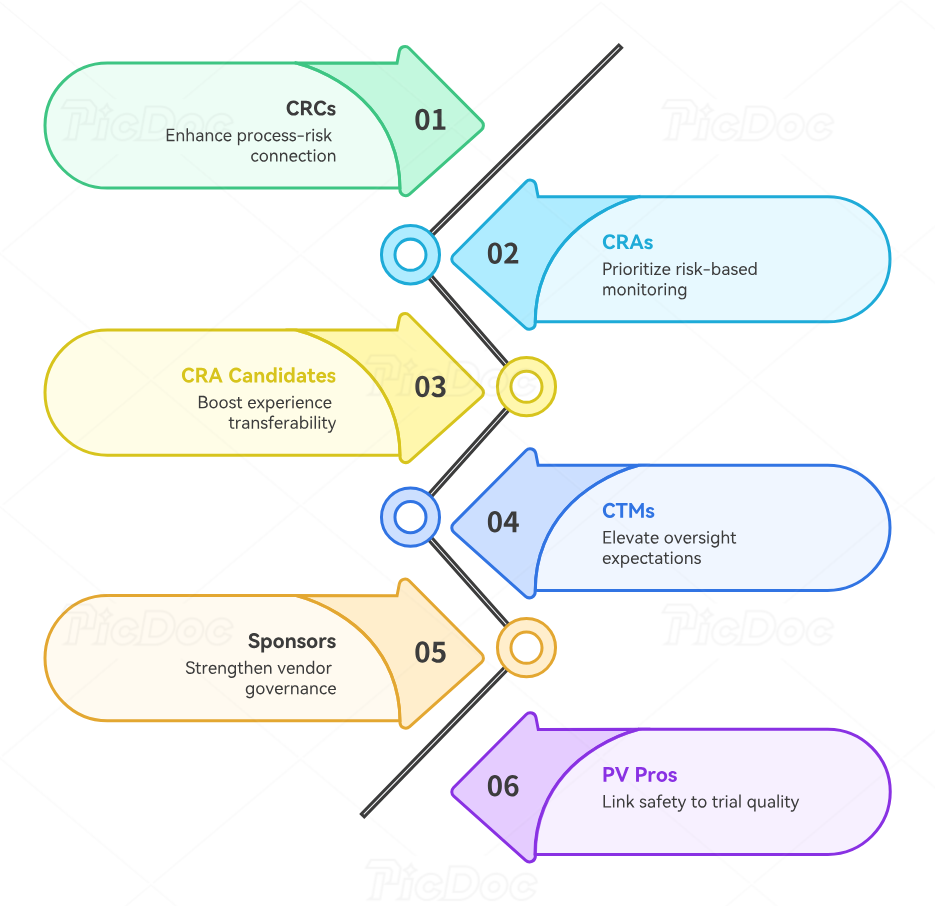
4. How ICH E6(R3) Changes Expectations for CRCs, CRAs, CTMs, Sponsors, and Safety Roles
For a Clinical Research Coordinator, R3 increases the value of understanding why site processes exist. Strong CRCs should connect consent, eligibility, visit windows, source documentation, investigational-product handling, deviations, safety reporting, and data entry with the trial's critical risks. That means combining CRC hiring skills, protocol-adherence knowledge, trial logistics, and ethical patient-safety principles.
A CRC interview answer should therefore move beyond “I would document the deviation.” A stronger response explains how the candidate would determine immediate participant impact, notify appropriate personnel, preserve accurate records, follow reporting requirements, identify recurrence, and support preventive action. That answer demonstrates investigator oversight awareness, data-integrity thinking, adverse-event compliance, and effective clinical-team communication.
For a CRA, the impact is even more direct. The role increasingly rewards people who can prioritize monitoring around meaningful risk, evaluate recurring site patterns, distinguish isolated errors from systemic failures, and use centralized or remote information intelligently. The career ceiling rises when a CRA combines modern GCP monitoring, strong site-operations oversight, deeper data-integrity knowledge, and defensible quality-management judgment.
This also affects people trying to become a CRA without monitoring experience. A candidate cannot replace monitoring experience with vocabulary, but understanding risk-based oversight can make site experience more transferable. It also helps candidates assess whether CRA compensation, CRA travel and burnout, and CRO versus sponsor CRA work fit their long-term goals.
For CTMs and clinical project managers, R3 raises expectations around oversight. A capable manager should understand how vendor performance, site risk, protocol complexity, enrollment pressure, data cleaning, monitoring findings, safety issues, and timelines affect one another. Those skills align with clinical-trial milestone management, clinical-trial leadership, quality-management strategy, and project close-out procedures.
For sponsor-side professionals, R3 makes vendor oversight especially important. Outsourcing monitoring, laboratories, eCOA systems, imaging, recruitment, or data management does not make weak governance disappear. Sponsor professionals who can define expectations, monitor performance, detect trends, escalate risk, and document oversight create defensible control. Those abilities connect with clinical-project leadership, trial quality management, regulatory development, and global compliance management.
For pharmacovigilance and medical-monitoring professionals, R3 strengthens the connection between safety systems and overall trial quality. A serious safety professional should understand how adverse events move from the site into sponsor systems, how follow-up quality affects assessment, where reconciliation can fail, and how safety evidence interacts with clinical operations. That makes adverse-event reporting expertise, clinical-trial safety oversight, pharmacovigilance inspection readiness, and global PV compliance career-relevant beyond the safety department itself.
5. How to Turn ICH E6(R3) Knowledge Into Resume Proof and Better Interview Answers
The biggest career mistake is writing “Knowledge of ICH E6(R3)” on a resume and assuming the phrase proves capability.
A stronger resume shows where that knowledge changed behavior. Someone working at a site could write that they identified recurring visit-window deviations, supported root-cause review, implemented a scheduling control, and reduced recurrence. That evidence combines protocol adherence, trial-logistics skills, clinical quality management, and site-operations oversight.
A CRA could describe identifying a trend across several data points, escalating the underlying risk, focusing monitoring activity on the affected process, and verifying corrective action. That communicates more value than “performed monitoring visits.” It demonstrates GCP monitoring capability, data-integrity judgment, clinical communication, and quality-risk thinking.
Candidates without clinical research experience need a different strategy. Start by learning current GCP concepts, then map previous work to regulated behaviors such as confidentiality, escalation, documentation, SOP adherence, chain of custody, safety, quality control, or auditability. Next, target roles where those transferable skills matter. The practical pathways described in breaking into clinical research, the RA-versus-CTA-versus-CRC comparison, the CRC no-experience guide, and the certification-versus-experience analysis can help determine what evidence is missing.
For interviews, prepare scenarios around consent, deviations, safety, data quality, oversight, and prioritization.
If asked about a protocol deviation, describe immediate risk assessment, documentation, notification, reporting, root-cause evaluation, and prevention. If asked about conflicting priorities, explain how participant protection and critical study risks outrank administrative convenience. If asked about a delayed vendor, explain the downstream impact on milestones and escalation. Those answers draw on ethical GCP principles, adverse-event compliance, trial timeline management, and clinical-trial leadership.
Then audit your own experience for R3-compatible evidence. Search for examples where you prevented a problem, detected a trend, prioritized risk, improved a process, strengthened documentation, protected a participant, escalated an issue, supported an audit, coordinated multiple stakeholders, or improved data reliability. Those examples make clinical research certification more credible, strengthen entry-level hiring evidence, improve preparation for a CRA transition, and create stronger proof for CRC hiring.
The goal is to reach the point where an interviewer asks about ICH E6(R3) and you can discuss how it changes decisions, rather than merely confirming that you completed a course.
6. FAQs About ICH E6(R3) Careers, Training, and Employer Expectations
-
Increasingly, professionals should be familiar with R3 because it is the current ICH revision and has already been implemented in major jurisdictions including the EU, while the FDA finalized its E6(R3) guidance in September 2025. Implementation details still depend on jurisdiction, sponsor, institution, and study.
For career preparation, learning current GCP monitoring requirements, investigator responsibilities, quality-management principles, and clinical-trial data integrity is more useful than presenting an old revision as your current knowledge base.
-
It can strengthen your baseline credibility, especially when you currently have no GCP exposure. It does not substitute for practical proof. Reddit hiring discussions in 2026 repeatedly make that distinction: current GCP familiarity can help, while employers still care heavily about experience, transferable evidence, and operational competence.
Someone trying to enter clinical research without experience should therefore combine training with credible hiring evidence, realistic first-role selection, and skills relevant to entry-level CRC hiring.
-
Risk-based judgment.
A CRA should be able to determine which issues threaten participant protection or reliable trial results, prioritize monitoring accordingly, recognize systemic patterns, and escalate proportionately. That requires more than reviewing source records. Strong CRAs integrate risk-based GCP monitoring, site-operations knowledge, protocol-adherence expertise, and data-integrity awareness.
-
R3's broader emphasis on risk-proportionate processes, technology, data governance, and modern trial approaches reinforces the need for professionals who can oversee trials through more than traditional on-site review. That increases the value of interpreting remote information intelligently.
Professionals preparing for monitoring careers should therefore understand remote and on-site monitoring, the realities of CRA travel and workload, the pathway to CRA work without prior monitoring, and differences between CRO and sponsor CRA environments.
-
Yes, because sponsor and study-management roles increasingly require sophisticated oversight rather than task execution alone. Professionals must understand how CROs, sites, vendors, systems, timelines, safety, quality signals, and study risks fit together.
That requires strong clinical-trial leadership, milestone-management skills, quality-management knowledge, and disciplined study close-out procedures.
-
List the training accurately, then use the experience section to demonstrate the behaviors the framework values. Examples include risk assessment, protocol compliance, safety escalation, data review, process improvement, vendor coordination, inspection readiness, monitoring preparation, or quality control.
Candidates get stronger results when they combine GCP training with experience, demonstrate protocol-adherence competence, show clinical communication ability, and quantify practical trial-logistics responsibilities.
