
Handling Protocol Deviations: CRC’s Comprehensive Guide
Protocol deviations are where trial quality stops being theoretical and becomes painfully visible. A coordinator can run clean visits, maintain a tidy binder, and still lose sponsor confidence fast if deviations are identified late, documented weakly, escalated inconsistently, or repeated without correction. For CRCs, deviation handling is not a side task. It sits at the center of GCP compliance, protocol management, patient safety oversight, and clinical trial documentation. Sites that handle deviations well protect subjects, preserve data credibility, and show sponsors they can be trusted when the study gets messy.
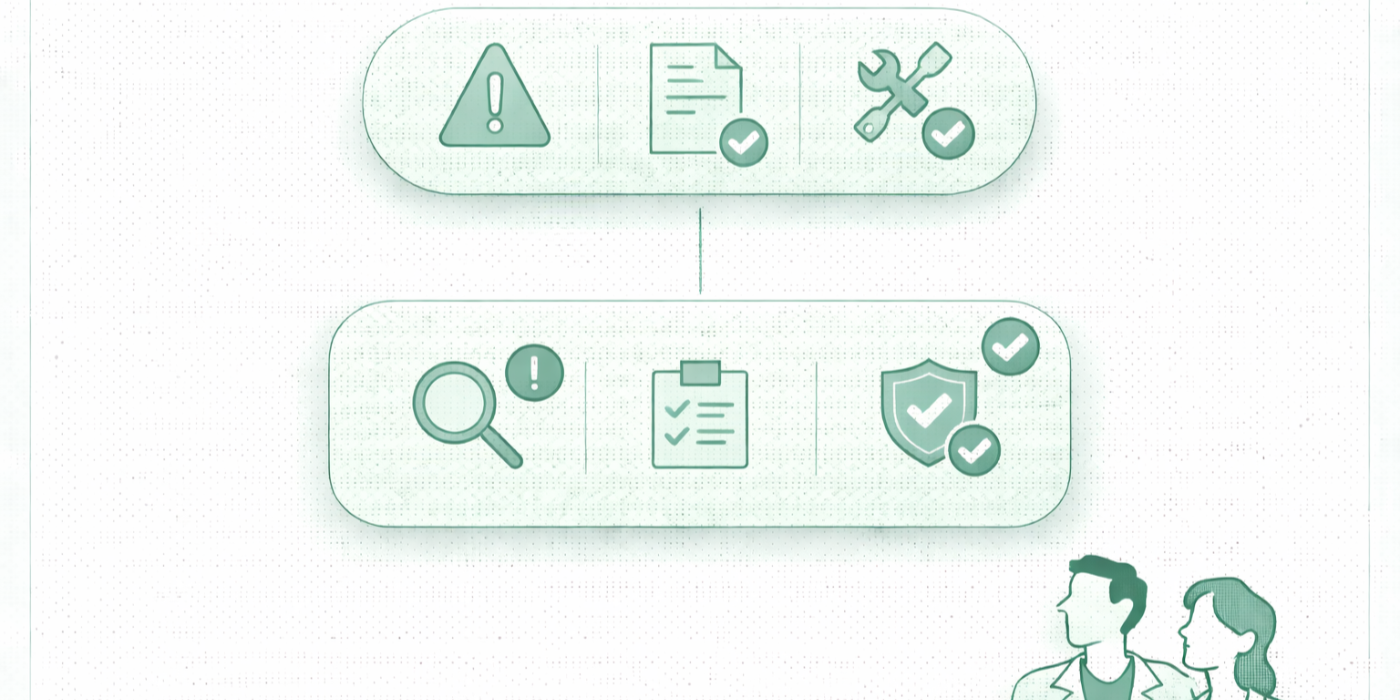
1. What Protocol Deviations Really Mean and Why CRCs Get Burned by Them
A protocol deviation is any departure from the approved study protocol, related procedures, sponsor instructions, or regulatory expectations that govern trial conduct. That sounds simple until real site pressure enters the picture. Missed windows, late labs, eligibility gaps, wrong consent versions, skipped assessments, dosing errors, delayed safety reporting, incomplete source, missed PI sign-off, and visit procedures performed out of sequence often begin as “small” operational problems. By the time they surface in a monitoring visit, audit preparation review, or GCP self-assessment, they expose the site’s real control level.
Many CRCs get burned because they treat deviations as paperwork instead of risk signals. A deviation is not just a log entry. It tells you that a protocol requirement was misunderstood, not operationally feasible, missed under pressure, or not escalated fast enough. That matters because deviations affect participant protection, endpoint reliability, sponsor confidence, and inspection exposure. The deeper your understanding of the clinical trial protocol, ICH guidelines, IRB responsibilities, and CRC role essentials, the easier it becomes to see a deviation as a control failure with downstream consequences.
Some sites make the situation worse by confusing “deviation,” “violation,” “exception,” and “noncompliance” without clear internal rules. Sponsors may use different terminology, but the coordinator still needs a working framework: what happened, what requirement was missed, when it was discovered, whether subject safety was affected, whether data integrity was affected, whether sponsor or IRB reporting is required, and what corrective action is now necessary. Without that framework, teams argue about labels while risk sits unresolved. Good coordinators anchor themselves in protocol deviations definitions and corrective actions, informed consent procedures, adverse event handling, and strong regulatory document management.
CRCs also get trapped by delay. A missed procedure on Monday becomes a “we will figure it out tomorrow” problem. Then the sponsor is not notified, the PI review is late, the note-to-file is vague, the deviation log lags behind, and the next monitoring visit reveals a pattern the site could have contained early. Delay makes every deviation more expensive. It weakens evidence, blurs facts, and makes the site look reactive. Operationally mature sites identify quickly, assess impact immediately, document clearly, escalate correctly, and close with preventive action.
There is another reason deviations spiral: protocol complexity. Modern trials involve tight windows, layered procedures, central vendor dependencies, eligibility nuance, ePRO requirements, IP accountability, remote contact expectations, and amendments that change the ground under active subjects. A CRC who does not live inside the protocol can easily drift into preventable noncompliance. That is why deviation control is tied to broader mastery of clinical research terms, CRC must-know terms, case report form best practices, and careful study documentation management.
Protocol Deviation Decision Matrix for CRCs (30 High-Risk Situations)
Use this table to classify, respond, and document deviations before they turn into repeat findings or sponsor escalations.
| # | Deviation Scenario | Typical Root Cause | Immediate CRC Action | Main Risk |
|---|---|---|---|---|
| 1 | Wrong consent version used | Outdated binder or staff version confusion | Stop further procedures, notify PI and sponsor, assess reconsent need | Subject rights and ethical noncompliance |
| 2 | Consent signed after screening procedures | Workflow failure at visit intake | Document chronology, notify PI, determine sponsor and IRB reporting need | Invalid participation process |
| 3 | Missing subject date on consent | Incomplete consent review | Assess whether correction is allowed and document properly | Consent validity challenge |
| 4 | Eligibility criterion unsupported | Source gap or rushed enrollment | Pause randomization or dosing if possible, escalate immediately | Ineligible subject enrolled |
| 5 | Visit out of protocol window | Scheduling failure or subject availability issue | Document actual date, allowed window, reason, and impact | Data timing integrity |
| 6 | Required lab not collected | Missed schedule item or vendor delay | Notify PI, assess safety and data impact, document sponsor guidance | Safety or endpoint loss |
| 7 | Lab collected but not processed correctly | Site-vendor handoff failure | Document chain failure, notify sponsor, retrain relevant staff | Invalid data sample |
| 8 | Missed ECG or imaging | Order failure or scheduling lapse | Assess whether procedure can still be done and log deviation | Safety surveillance gap |
| 9 | Dose given outside allowed timing | Visit delay or pharmacy timing issue | Record exact timing, PI assessment, sponsor notification if required | Treatment exposure inconsistency |
| 10 | Wrong dose administered | Dispensing or transcription error | Escalate urgently, assess subject safety, document corrective steps | Direct participant risk |
| 11 | Investigational product count mismatch | Poor accountability reconciliation | Perform recount, review dispense history, notify pharmacy and sponsor | Drug control failure |
| 12 | Temperature excursion not addressed | Storage monitoring gap | Quarantine IP if needed, contact sponsor for disposition | Product integrity risk |
| 13 | AE discovered late in source | Weak chart reconciliation or poor interview capture | Back-review records, enter AE, assess reportability immediately | Delayed safety reporting |
| 14 | SAE reported late | Escalation delay or role confusion | Document awareness date, report immediately, launch CAPA | Major regulatory exposure |
| 15 | Concomitant medication omitted | Incomplete subject interview or source review | Reconcile med history and update EDC/source as allowed | Safety interpretation gap |
| 16 | Unscheduled visit undocumented | No standard source template for follow-up contacts | Create contemporaneous late entry if allowed and log impact | Source incompleteness |
| 17 | PI review missing | Oversight workflow failure | Escalate to PI, document review and assess downstream effect | Weak investigator oversight |
| 18 | Procedure done by non-delegated staff | Delegation log not current | Assess qualification, update records, escalate per sponsor rules | Unauthorized task performance |
| 19 | Protocol amendment not implemented timely | Training lag or document control issue | Stop impacted activity, retrain staff, assess affected subjects | Ongoing noncompliance |
| 20 | Reconsent missed after amendment | Tracking failure | Identify all affected subjects and coordinate immediate correction | Rights communication failure |
| 21 | Randomization before all criteria verified | Operational rush | Escalate immediately and preserve evidence of decision chain | Protocol integrity breach |
| 22 | EDC entry inconsistent with source | Transcription or query response error | Reconcile evidence and correct with audit trail | Data credibility loss |
| 23 | Missed subject follow-up call | Tracking failure or staff overload | Contact subject promptly, assess missed safety information | Safety and retention risk |
| 24 | Pregnancy test timing off protocol | Visit sequencing error | Document exact timing and notify PI for risk assessment | Eligibility and safety concern |
| 25 | Central vendor data unavailable at visit | External dependency failure | Document vendor issue and preserve site follow-up proof | Unverifiable required assessment |
| 26 | Source note written days later without clarity | Contemporaneous documentation failure | Use compliant late entry process and retrain staff | Record defensibility weakness |
| 27 | Deviation not logged when discovered | No clear owner or tracker delay | Enter promptly with discovery date and true occurrence date | Pattern blindness |
| 28 | IRB notification missed when required | Reporting pathway confusion | Submit immediately and document reason for delay | Regulatory noncompliance |
| 29 | Repeat deviation of same type | Weak CAPA or no workflow redesign | Launch root cause analysis and verify correction effectiveness | Sponsor distrust and escalation |
| 30 | Deviation narrative too vague | Superficial documentation habit | Rewrite with facts, dates, impact, and prevention steps | Poor inspection readability |
2. How CRCs Should Identify, Classify, and Escalate Deviations Correctly
The first skill in deviation handling is recognition. Sites miss deviations constantly because staff are looking only for dramatic errors. Real deviation control requires noticing smaller operational misses before they harden into a pattern. That means checking the actual protocol schedule against what happened, comparing eligibility requirements to source support, reconciling consent dates against IRB approval periods, reviewing procedure timing, confirming delegated staff performance, and checking whether sponsor-specific instructions were followed. This habit grows out of disciplined protocol management, CRC informed consent practice, regulatory submissions awareness, and precise study documentation control.
Once a possible deviation is identified, the CRC needs to classify it in a way that supports action. Forget inflated language. Ask five questions. What exact requirement was not followed? When did it occur? When was it discovered? Did it affect participant safety? Did it affect data integrity or protocol compliance in a meaningful way? These questions help distinguish minor operational drift from high-risk events that require immediate PI review, sponsor notification, or IRB reporting. The logic overlaps with GCP compliance essentials, regulatory and ethical responsibilities for PIs, and stronger research compliance and ethics mastery.
CRCs need a site-level triage rule. Some deviations can be documented and trended internally while awaiting routine monitor review. Others need same-day escalation. Consent-before-procedure failures, ineligible subject enrollment, wrong dosing, delayed SAE reporting, critical missed safety assessments, repeated temperature excursions affecting IP, and major eligibility uncertainty should move immediately to PI and sponsor review. This is where many coordinators hesitate and lose time. They worry about sounding alarmist. That hesitation creates worse exposure than early escalation. Strong sites would rather send one careful early alert than explain three weeks later why no one acted when the issue was obvious.
Documentation has to follow identification immediately. A good deviation record states what happened, not a polished defensive version of what the site wishes had happened. It should include the subject identifier if applicable, protocol section or requirement missed, date of occurrence, date of discovery, concise factual description, impact assessment, people notified, immediate action taken, reporting status, and preventive action plan if needed. Weak deviation narratives are filled with fog: “subject came late,” “procedure missed due to oversight,” “team reminded.” That language hides more than it reveals. Good narratives are factual, readable, and specific enough that a CRA, auditor, or inspector can understand the operational chain without guessing.
CRCs also need to respect sponsor and IRB pathways. Not every deviation is reportable to every party, but every site should know who decides that and on what basis. If the study has sponsor-specific deviation forms, use them correctly. If the IRB requires prompt reporting for events affecting rights, safety, or welfare, know that threshold before you need it. This depends on familiarity with IRB roles, clinical research regulatory guidelines worldwide, and solid regulatory documents management.
Finally, classify deviations in a way that allows trending. If your site lumps missed windows, consent problems, data-entry delays, pharmacy errors, and vendor failures into one undifferentiated bucket, you lose the ability to see patterns. Trending is where real prevention begins. A site that sees seven deviations in one month tied to visit scheduling and none tied to eligibility has a different problem than a site with repeated consent version errors. Strong CRCs use deviation logs as intelligence tools, not burial grounds.
3. The Step-by-Step Workflow CRCs Should Use the Moment a Deviation Happens
The cleanest deviation workflow starts with detection and containment. The moment a CRC realizes something departed from protocol, the first job is to stop further drift. If the wrong consent version is in play, halt study procedures. If an eligibility requirement is unsupported, stop progression until PI and sponsor guidance are clear. If investigational product storage is compromised, quarantine as instructed. If an SAE was discovered late, escalate immediately and complete reporting without waiting for perfect narrative polish. Containment protects subjects first and prevents one deviation from multiplying into several. That thinking reflects the operational seriousness in patient safety oversight, SAE reporting procedures, and drug safety reporting timelines.
Step two is fact capture. Pull the source, email trail, sponsor instructions, schedule of assessments, accountability records, or vendor documentation relevant to the event. Time destroys clarity fast. If you wait, memories soften, details drift, and the site starts telling itself a convenient story. Gather exact dates, actual times, staff involved, subject status, procedural sequence, and what was known when. This fact-first discipline matters just as much in CRA documentation technique, site management mastery, and reliable source documentation practice.
Step three is impact assessment. CRCs should work with the PI to assess three dimensions: subject safety, data integrity, and compliance significance. Did the event expose the subject to added risk? Did it compromise endpoint data or required evaluations? Did it violate a requirement that changes how the subject’s participation should be interpreted? This is where shallow sites fail. They document occurrence but never assess consequence. Sponsors care deeply about consequence. A missed noncritical questionnaire and a missed pre-dose safety lab are operationally different universes.
Step four is notification. Follow the protocol, sponsor manual, IRB policy, and site SOP. Notify the PI promptly. Notify the sponsor or CRA according to required timelines. Notify the IRB if the event meets reporting criteria. Log who was notified, when, and by what method. This step sounds basic until teams are under pressure and assume someone else already sent the email. Role ambiguity is a classic CRC trap. The site should know who owns external reporting, who owns the deviation log, who drafts the narrative, who obtains PI review, and who tracks closure.
Step five is documentation. Write the deviation entry with enough precision that it can survive later scrutiny. Include occurrence date, discovery date, exact requirement missed, factual description, impact analysis, notification path, corrective action, preventive action, and whether related records were updated. Link it to source notes, subject trackers, EDC notes if appropriate, and any IRB or sponsor forms. A deviation file should never force a reviewer to reconstruct the story from scattered scraps.
Step six is prevention. This is the step sites love to perform theatrically and weakly. “Staff re-educated” is not a serious prevention plan unless it is paired with a workflow change, clear ownership, a tracking method, and verification. Real prevention might mean a consent version control checklist, automated visit window alerts, pre-randomization eligibility review, weekly AE reconciliation, dual review for accountability counts, or a standing amendment implementation tracker. If the process does not change, the site has not corrected anything.
What is your biggest protocol deviation problem right now?
Choose one. The answer usually points to the weak process hurting your site most.
4. The Deviations That Damage CRCs Most: Consent, Eligibility, Safety, Data, and Oversight Failures
Consent failures sit at the top of the list for a reason. They strike the ethical core of trial participation. Using an expired consent version, missing required signatures, allowing procedures before consent is complete, or missing reconsent after an amendment creates exposure that cannot be brushed aside as clerical. CRCs who want to stay out of crisis mode need airtight consent version control, staff checks at visit intake, and amendment implementation tracking. This connects directly with informed consent what every clinical researcher must know, informed consent procedures mastering GCP compliance, and broader ethics and compliance resources.
Eligibility deviations are just as dangerous. Many sites assume that if a subject was clinically close enough, the issue is survivable. Sponsors and auditors rarely share that comfort. If inclusion and exclusion criteria are not fully supported before enrollment or randomization, the site may have enrolled someone the protocol never allowed. That affects population integrity, safety interpretation, and trust in site judgment. CRCs need criterion-by-criterion documentation discipline tied to clinical trial protocol fundamentals, phase-specific study conduct, and stronger PI protocol oversight.
Safety-related deviations often become ugly because they involve time. Late AE capture, late SAE reporting, missed follow-up, undocumented medical review, and poor reconciliation between clinic notes and AE logs create the impression that the site sees safety only when asked. That is fatal to sponsor confidence. CRCs should be running active reconciliation between progress notes, subject calls, hospital records, medication changes, and EDC status. The operational backbone comes from essential adverse event reporting techniques for CRCs, adverse events identification and management, pharmacovigilance case processing, and signal management in pharmacovigilance.
Data and timing deviations quietly poison studies when sites normalize them. Visit windows missed by habit, delayed EDC entry, undocumented unscheduled visits, skipped subject contacts, unreviewed labs, or inconsistent source entries can start to look routine inside a busy site. Sponsors read them differently. They see process drift. CRCs need clean trackers, pre-visit review habits, and time-based alerts. This is where tools and habits from clinical trial start-up checklists, clinical trial sample size and endpoint awareness, biostatistics basics, and data management systems stop being abstract and start protecting trial quality.
Oversight failures are the category that makes everything else worse. Missing PI review, stale delegation logs, untrained staff performing procedures, amendment rollouts not implemented, and sponsor instructions living only in someone’s inbox all point to a site where process ownership is too loose. CRCs are not solely responsible for every oversight failure, but they often become the first line that either catches it or lets it continue. Strong deviation control depends on a site culture where PI involvement is visible, delegation is current, communication is logged, and protocol changes are operationalized fast.

5. How CRCs Should Build a Deviation Prevention System That Actually Works
Prevention starts long before the next deviation log entry. The strongest CRCs build study workflows that assume failure points will occur unless actively controlled. Begin with protocol translation. Do not leave the protocol as a dense sponsor document sitting in the binder. Break it into site-facing tools: visit checklists, window trackers, eligibility grids, consent version controls, amendment implementation sheets, lab processing guides, and AE reconciliation prompts. That is the operational bridge between protocol theory and daily execution.
Second, build deviation-prone steps into preemptive review points. Before screening, verify the current consent version. Before enrollment or randomization, perform eligibility confirmation against every criterion. Before each visit, review required assessments, timing windows, special instructions, and vendor dependencies. After each visit, reconcile what was planned against what actually happened. This discipline belongs beside strong patient recruitment management, clinical trial documentation practice, and high-quality monitoring readiness.
Third, trend aggressively. Review your deviation log monthly by category, subject phase, staff member, protocol section, and root cause. Are most deviations tied to scheduling, vendor handoff, consent control, PI review, or data lag? Do they spike after amendments? Do they cluster around backup coverage or high-enrollment periods? Trending is where you stop treating events as isolated bad luck and start seeing operational design flaws. That mindset aligns with clinical trial project management, resource allocation mastery, and better stakeholder communication.
Fourth, strengthen CAPA quality. A real corrective and preventive action plan identifies the true process failure, not the easiest sentence to write. “Coordinator forgot” is usually a lazy endpoint, not a root cause. Why was forgetting so easy? No tracker? Weak coverage? Protocol burden too high? Training incomplete? Accountability unclear? Once you name the real cause, the fix becomes more intelligent. It may involve redesigning calendars, adding dual review, changing templates, building trigger emails, or tightening delegation. Good CAPAs make recurrence harder.
Fifth, rehearse inspection readability. Deviation files should make sense to someone who has never met your site. If an auditor opened the file in six months, would they understand what happened, when it happened, why it mattered, who was told, and what changed? If the answer is no, your documentation is still too thin. Strong CRCs write for future scrutiny, not present convenience.
Finally, create a site culture where deviations are surfaced early instead of hidden until the monitor finds them. Staff should know that quick reporting of a mistake is a strength. Concealment is what turns a manageable event into a credibility crisis. Sites improve when CRCs normalize fast escalation, clear documentation, and prevention-focused review instead of blame-heavy silence.
6. FAQs About Handling Protocol Deviations for CRCs
-
Terminology varies by sponsor and institution, which is exactly why CRCs should never rely on casual assumptions. In practice, many teams use “protocol deviation” for any departure from the protocol and reserve “protocol violation” for more serious departures affecting safety, rights, or data integrity. Some sponsors use only one term. The CRC’s real job is to identify the exact departure, assess impact, and follow the required reporting pathway using the study’s rules, the protocol deviation guidance, and applicable regulatory expectations.
-
Notify immediately when the deviation could affect subject safety, eligibility, investigational product integrity, dosing accuracy, informed consent validity, required reporting timelines, or meaningful data integrity. Waiting for the next routine visit is risky when the event has current operational consequences. Strong CRC judgment comes from knowing the study rules and acting fast in areas tied to SAE procedures, patient safety oversight, and GCP compliance.
-
A strong narrative includes the exact requirement missed, the date of occurrence, the date of discovery, what happened factually, why it happened, whether safety or data were affected, who was notified, and what corrective and preventive actions were implemented. It should be concrete enough that a CRA, auditor, or inspector can follow the event without guessing. This standard matches the discipline behind clinical trial documentation, regulatory document control, and strong CRC operational practice.
-
No. IRB reporting depends on the institution’s policy, the study requirements, and whether the deviation affects rights, safety, welfare, or compliance in a reportable way. CRCs should know the site’s thresholds before a serious event occurs. Guessing late under pressure is how reporting errors multiply. This depends on a clear grasp of IRB responsibilities, research ethics, and the site’s own regulatory workflow.
-
The biggest mistake is delay. Delay in identification, delay in escalation, delay in documentation, and delay in prevention. Delay weakens evidence, increases the chance of repeat errors, and tells sponsors the site notices problems only after outside review. CRCs who move fast with factual documentation and clear impact assessment protect both subjects and site credibility.
-
Reduce repeat deviations by trending them, identifying the real root cause, redesigning the workflow, assigning ownership, retraining targeted staff, and checking whether the fix actually changed behavior. Repeat deviations usually mean the site closed the paperwork but left the system untouched. Strong prevention grows out of habits tied to GCP self-assessment, essential training under GCP, and disciplined study team management.
