
Clinical Research Ethics & Compliance Resources: Comprehensive Directory
Clinical research does not usually fail because teams have never heard of ethics, consent, safety, or GCP. It fails because people under pressure misapply them, document them late, escalate them inconsistently, or treat compliance as a filing exercise instead of a patient-protection system. That is where the right resource stack matters.
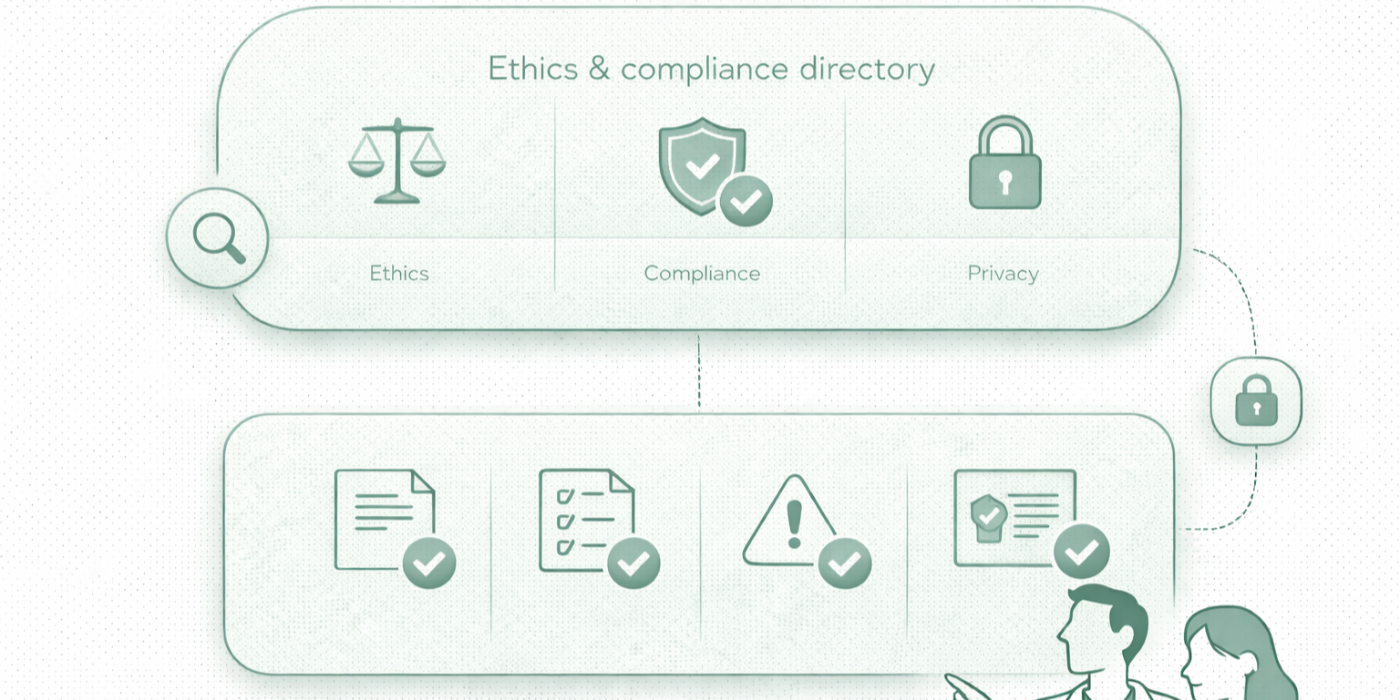
This directory brings together the most useful CCRPS resources for GCP mastery, informed consent, regulatory documents, protocol deviations, SAE reporting, and audit readiness so teams can solve the exact errors that create findings, delays, and avoidable patient risk.
1. Why Ethics and Compliance Resources Matter More Than Most Teams Admit
Ethics and compliance are often discussed like abstract standards, but frontline clinical research experiences them as operational pressure. A coordinator is trying to keep enrollment moving while protecting informed consent quality, a CRA is reviewing whether site behavior actually matches GCP compliance essentials for CRAs, a PI is balancing treatment urgency with regulatory and ethical responsibilities, and safety staff are racing to meet drug safety reporting timelines without creating weak documentation.
That is why weak resource access creates such expensive damage. When teams do not have fast answers on protocol management, adverse event reporting, clinical trial documentation under GCP, clinical trial amendments, and protocol deviation management, small mistakes stop being small. A late note becomes a credibility issue. A missing signature becomes an inspection risk. A misunderstood eligibility rule becomes a deviation. A delayed safety escalation becomes a patient-protection problem.
The best ethics and compliance resource library does three jobs at once. It teaches the rule, shows the operational trigger that makes the rule matter, and explains the exact failure mode that appears when the rule is ignored. That is why strong teams do not just read broad GCP guidelines. They pair them with resources on training requirements under GCP, clinical trial audits, regulatory submissions, sponsor responsibilities, and patient safety oversight. That combination turns theory into execution.
| Resource | Best For | Why It Matters | Main Failure If Ignored | Who Should Use It First |
|---|---|---|---|---|
| GCP Guidelines Mastery | Core ethical and operational baseline | Creates the foundation for compliant conduct across the full study lifecycle | Teams act with fragments of GCP instead of a system-level understanding | All trial roles |
| Essential Training Requirements Under GCP | Training assignment and refresher control | Prevents the common trap where staff are active but not current | Repeat errors caused by outdated training status | Site managers, QA, coordinators |
| Informed Consent Procedures | Consent workflows, documentation, timing | Protects autonomy and trial validity at the same time | Invalid consent or weak traceability | CRCs, PIs, sub-Is |
| Informed Consent Essentials for CRCs | Coordinator-level consent execution | Translates consent rules into site reality under workload pressure | Consent conversations become rushed or incomplete | CRCs, research nurses |
| Managing Regulatory Documents | Essential document control | Keeps the study inspection-ready instead of scramble-ready | Missing, stale, or inconsistent regulatory files | CRCs, regulatory staff |
| GCP Compliance Strategies for CRCs | Daily compliant execution | Connects GCP to coordinator decisions in live site operations | “I knew the rule, but not how to apply it” failures | CRCs |
| Adverse Event Reporting Techniques for CRCs | AE identification and documentation | Improves speed, clarity, and escalation discipline | Incomplete event narratives and delayed reporting | CRCs, site staff |
| Protocol Management for CRCs | Visit execution and rule adherence | Reduces deviations caused by workflow confusion | Study conduct drifts from protocol under real-world pressure | CRCs, leads |
| GCP Compliance Essentials for CRAs | Monitoring against GCP expectations | Helps monitors distinguish signal from site noise | Weak issue escalation and superficial monitoring | CRAs |
| Clinical Trial Auditing & Inspection Readiness | Audit preparation and inspection defense | Builds proactive readiness rather than reactive cleanup | Teams discover gaps only when auditors do | CRAs, QA, sponsors |
| Clinical Trial Documentation for CRAs | Monitoring documentation and source review | Strengthens credibility of monitoring actions and site follow-up | Poorly documented oversight trails | CRAs |
| Drug Safety Reporting Timelines | Safety timing and regulatory expectations | Prevents late reporting that creates serious exposure | Timelines missed because teams confuse intake with reportability | PV staff, CRAs, CRCs |
| SAE Reporting Procedures | Serious event classification and escalation | Improves accuracy when urgency is highest | Misclassification or under-escalation of serious risk | CRCs, investigators, safety teams |
| Aggregate Reports in Pharmacovigilance | Periodic safety reporting | Shows how individual cases connect to broader safety assessment | Case handling stays tactical with no pattern-level discipline | PV associates, managers |
| Regulatory Submissions in Pharmacovigilance | Submission planning and compliance flow | Protects against deadline failures and incomplete packages | Submission bottlenecks and weak review chains | PV, regulatory staff |
| Regulatory & Ethical Responsibilities for PIs | PI oversight obligations | Clarifies where ultimate accountability truly sits | Delegation without meaningful oversight | PIs, sub-Is |
| Adverse Event Handling for PIs | Investigator safety judgment | Strengthens PI role in timely medical review and escalation | Medical review becomes passive or delayed | PIs, sub-Is |
| Patient Safety Oversight for PIs | Ongoing subject protection | Keeps safety oversight active rather than symbolic | Site focuses on operations while safety leadership fades | PIs, medical leads |
| Laboratory Best Practices | Specimen handling and lab-facing quality | Reduces preventable data integrity and chain issues | Errors that look technical but become compliance events | RAs, lab staff |
| Research Compliance & Ethics for RAs | Entry-level ethics discipline | Gives support staff a compliance mindset early | Critical tasks handled by staff who do not see the risk chain | Research assistants |
| Study Documentation for RAs | Source support and record quality | Improves the reliability of downstream review and monitoring | Documentation gaps hidden in “small” support tasks | RAs, coordinators |
| Protocol Deviations | Deviation recognition and corrective action | Teaches teams how to think before minor drift becomes systemic drift | Same deviations repeat with no meaningful correction | All site and oversight roles |
| Clinical Trial Amendments | Change control and retraining | Prevents old habits from surviving new protocol requirements | Teams apply outdated rules after amendment approval | CRCs, CRAs, PMs |
| Sponsor Roles & Responsibilities | Sponsor-side accountability | Clarifies oversight, vendor responsibility, and study governance | Blame shifting across sponsor, CRO, and site lines | Sponsors, PMs, leads |
| DMC Roles in Clinical Trials | Independent safety oversight structure | Shows how formal review protects participants and decisions | Safety governance becomes vague in high-risk studies | Sponsors, medical monitors |
| Randomization Techniques | Allocation integrity | Protects fairness and internal validity | Operational shortcuts threaten study credibility | CRAs, PMs, investigators |
| Blinding in Clinical Trials | Bias prevention | Links compliance to scientific trustworthiness | Behavior unintentionally reveals treatment allocation | Investigators, CRAs, site staff |
| Primary vs Secondary Endpoints | Endpoint handling discipline | Keeps teams aligned on what must be protected most tightly | Operational focus drifts away from the most critical measurements | CRCs, PMs, data teams |
| Placebo-Controlled Trials | Ethical design interpretation | Helps teams understand why design choices create special ethical pressure | Simplistic thinking about fairness and control arms | Investigators, PMs, ethics-focused learners |
| IND Application Guide | Regulatory pathway literacy | Shows how early regulatory structure affects later compliance execution | Teams understand site rules but not the larger submission logic | Regulatory staff, sponsors |
| Regulatory Compliance Software Directory | Compliance workflow support | Helps evaluate systems that track CAPAs, documents, and control workflows | Teams rely on email and memory for compliance execution | QA, sponsors, operations |
| Medical Writing & Document Management Tools | Controlled documentation systems | Improves review discipline and version control | Critical documents live in scattered, weakly governed channels | Regulatory, QA, sponsor teams |
2. The Best Ethics and Compliance Resources by Problem, Not by Job Title
Most professionals search for resources based on title. That is useful, but not enough. The sharper approach is to search by failure point. If the real issue is weak consent execution, the most valuable starting pair is informed consent procedures plus informed consent essentials for CRCs, then layer in GCP training requirements and PI ethical responsibilities. That combination answers not just what the consent rule is, but who must act, when retraining is needed, and where site oversight can quietly fail.
If the problem is documentation weakness, do not stop at one article on filing. Pair managing regulatory documents with clinical trial documentation under GCP, then add CRA documentation techniques and study documentation skills for research assistants. That stack matters because documentation failures rarely originate in one role. They usually start with unclear ownership, continue through inconsistent execution, and get discovered only when monitoring or audit pressure exposes them.
If the pain point is safety, the right reading path should move from site recognition to regulatory consequence. Start with adverse event reporting techniques for CRCs, then move to SAE definitions and reporting procedures, then study drug safety reporting timelines, and finally expand into aggregate reports in pharmacovigilance and regulatory submissions in pharmacovigilance. That sequence prevents the classic site mistake of treating safety as only a form-completion task instead of a risk-assessment chain.
If the issue is inspection fear, the strongest route is to combine GCP guidelines mastery, audit preparation essentials, clinical trial auditing and inspection readiness, protocol deviation handling, and clinical trial amendments. Teams that study these together stop preparing for audits as if auditors only check whether documents exist. Strong inspection posture is about whether the story of conduct is coherent, timely, and defensible.
3. How Different Clinical Research Roles Should Use This Directory
A coordinator should not read this directory the same way a sponsor-side manager or pharmacovigilance professional would. For CRCs, the highest-value chain starts with clinical research coordinator role essentials, then moves into GCP compliance strategies for CRCs, protocol management responsibilities, regulatory documents, and adverse event reporting techniques. That stack protects the exact places where coordinators get overwhelmed: fast visits, documentation pressure, shifting protocol detail, and fear of missing something consequential.
For CRAs, the right path is different. Start with clinical research associate roles and skills, then focus on clinical research associate monitoring techniques, GCP essentials for CRAs, site selection and qualification visits, investigator site management mastery, and inspection readiness for CRAs. This path trains a CRA to identify not just what is wrong, but what kind of site behavior predicts repeat noncompliance later.
For investigators, ethics and compliance resources should be anchored in oversight, not delegation. That means beginning with principal investigator responsibilities, then adding regulatory and ethical responsibilities for PIs, adverse event handling for PIs, patient safety oversight for PIs, and clinical trial protocol development for PIs. That reading path corrects one of the most expensive site-level myths: that delegation removes PI accountability.
For research assistants and newer staff, the fastest-confidence path is research assistant role essentials, research compliance and ethics mastery, effective data collection and management, laboratory best practices, and study documentation skills. That combination is powerful because junior staff often create or touch critical records before they fully appreciate how much inspection risk can sit inside “small” actions.
What is your biggest clinical research ethics and compliance blocker right now?
Choose one. Your answer points to the fastest fix.
4. The Most Dangerous Ethics and Compliance Blind Spots in Modern Trials
The first blind spot is thinking that ethics lives only inside the consent form. Ethics also lives in whether eligibility is applied consistently, whether participants are pressured by timing, whether protocol deviations are minimized instead of understood, whether primary endpoints are protected operationally, and whether blinding procedures are respected under stress. Teams that isolate ethics from operations usually create perfectly worded policies and messy real-world conduct.
The second blind spot is treating compliance as a site problem only. Sponsors influence compliance through sponsor roles and responsibilities, vendor management, resource allocation, and effective stakeholder communication. If the sponsor sets timelines that squeeze training, rushes amendments, fragments systems, or tolerates vague responsibility across CRO and site lines, noncompliance becomes structurally more likely long before a site makes a visible mistake.
The third blind spot is misunderstanding safety as only a pharmacovigilance function. Site staff, investigators, monitors, and project teams all shape safety outcomes. The right resource set therefore spans adverse event handling for PIs, patient safety oversight, AE reporting for CRCs, drug safety reporting timelines, and signal management in pharmacovigilance. A study becomes safer when the handoff between observation, documentation, medical review, and regulatory action is tight.
The fourth blind spot is confusing training completion with competence. A site can show training logs and still repeat the same mistakes across consent, deviations, documentation, and escalation. That is why strong leaders pair essential training requirements with audit readiness resources, GCP compliance strategies, clinical trial monitoring techniques, and research compliance mastery for assistants. The point is not to prove that learning happened. The point is to see whether error patterns changed.

5. How to Build a Personal Ethics and Compliance Learning System That Actually Improves Performance
Start by choosing one recurring failure category, not ten. If your site struggles most with consent inconsistency, build your first study sprint around informed consent procedures, CRC consent best practices, PI ethical responsibilities, and GCP mastery. If the issue is repeated document cleanup, start with regulatory documents, study documentation skills, CRA documentation techniques, and document management tools. This keeps learning tied to operational pain rather than generic professional development.
Next, build a three-layer review habit. Layer one is rule knowledge using GCP guidelines, IND application basics, and sponsor responsibilities. Layer two is role application using resources for CRCs, CRAs, research assistants, or PIs. Layer three is failure prevention using protocol deviations, clinical trial amendments, audit readiness, and regulatory compliance software. This layered system turns reading into prevention.
Finally, use each resource to create one operating artifact. After reading protocol management for CRCs, create a protocol-risk checklist. After reading SAE procedures, build an event escalation map. After reading patient safety oversight for PIs, define PI review triggers. After reading audit preparation essentials, create a recurring readiness review. The highest-value resource is the one that changes tomorrow’s conduct, not the one that was easiest to read today.
6. FAQs
-
Start with GCP guidelines mastery, then move into your role-specific guide such as CRC role essentials, CRA roles and skills, or research assistant essentials. Starting with GCP alone can feel abstract. Pairing it with a role resource helps you see where ethics and compliance live inside actual daily decisions.
-
The strongest inspection-prevention stack is managing regulatory documents, clinical trial documentation under GCP, clinical trial auditing and inspection readiness, handling clinical trial audits, and protocol deviations. These resources matter because inspections usually expose patterns, not isolated paperwork defects.
-
Start with informed consent procedures and CRC consent best practices. Then add essential training requirements under GCP and PI ethical responsibilities. That combination addresses rule clarity, frontline execution, training reinforcement, and investigator accountability.
-
Use adverse event reporting techniques for CRCs, SAE definition and reporting procedures, drug safety reporting timelines, aggregate reports in pharmacovigilance, and regulatory submissions in pharmacovigilance. Together they show how safety moves from site recognition to formal reporting and broader safety interpretation.
-
Sponsors should focus more heavily on sponsor roles and responsibilities, DMC roles, vendor management, resource allocation, and regulatory compliance software. Site staff should focus more on consent, protocol management, AE reporting, and regulatory documents. The difference is where each group exerts control.
-
They study topics in isolation. Reading only about GCP without consent, only about safety without timelines, or only about audits without documentation creates partial competence. Compliance failures happen in the gaps between topics, roles, and handoffs. That is why a directory-based learning approach is so much stronger than one-off reading.
