
Serious Adverse Events (SAEs): Definition & Reporting Procedures
Serious adverse events are where clinical research stops being theoretical and becomes operationally unforgiving. When an SAE is missed, misclassified, or reported late, the damage is never limited to one form or one deadline. Patient safety can be compromised, sponsors lose confidence, sites get flagged, monitoring intensifies, and inspection risk rises fast. That is why professionals who understand SAE workflows deeply are far more valuable than people who merely know the definition.
This guide breaks SAEs down the way real teams need them explained: what qualifies, what does not, who does what, what timelines matter, where sites fail, and how to build a reporting process that protects subjects, satisfies sponsors, and strengthens your performance in roles like Clinical Research Coordinator, Clinical Research Associate, Principal Investigator, Pharmacovigilance Associate, and Medical Monitor.
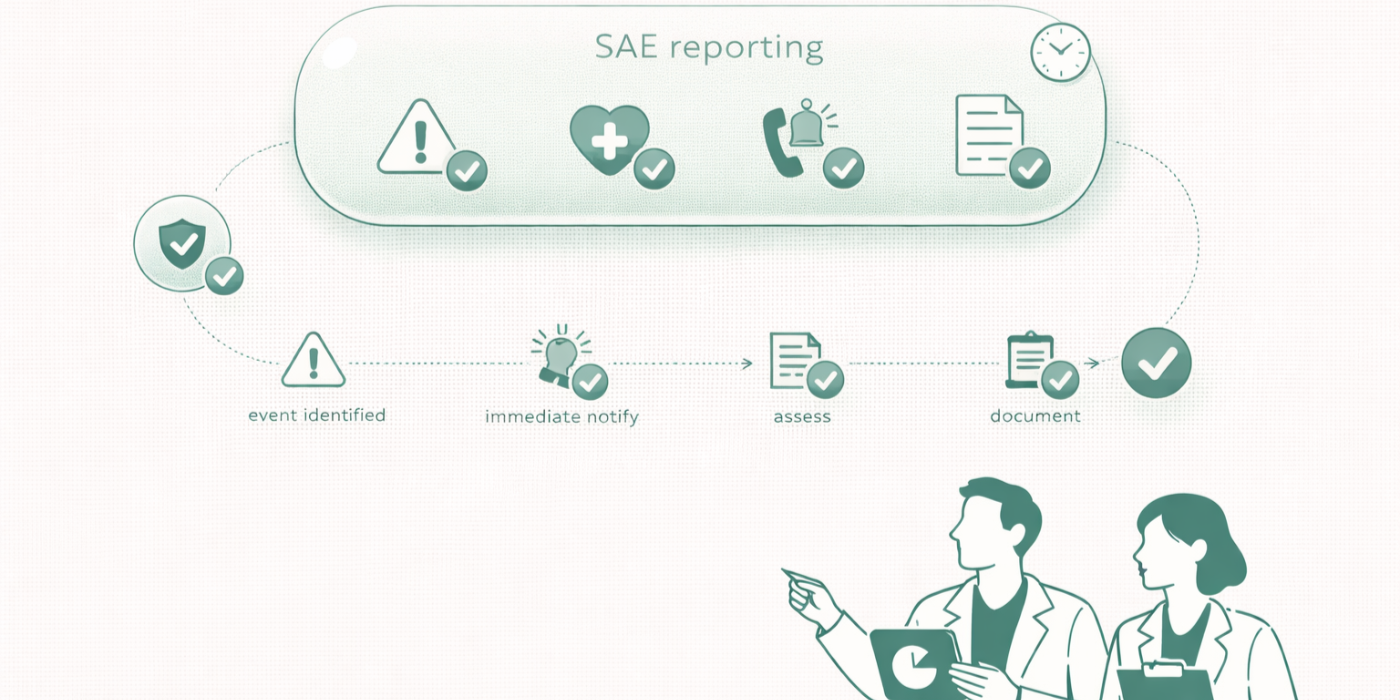
1. Serious Adverse Events (SAEs): definition, regulatory logic, and why they trigger immediate action
An SAE is not simply “a bad side effect.” In clinical research, seriousness is a regulatory classification tied to outcome or immediate risk, not a casual description of intensity. That distinction matters because teams often confuse serious with severe, and that confusion is one of the fastest ways to create delays, inconsistent documentation, and preventable sponsor escalations. Professionals who already understand adverse event reporting techniques for CRCs, drug safety reporting timelines, pharmacovigilance case processing, and signal detection in pharmacovigilance usually make fewer SAE mistakes because they think in terms of reportability, causality, expectedness, and follow-up completeness.
A serious adverse event is generally any untoward medical occurrence that results in death, is life-threatening, requires inpatient hospitalization or prolongation of existing hospitalization, results in persistent or significant disability or incapacity, creates a congenital anomaly or birth defect, or is otherwise an important medical event that may require intervention to prevent one of those outcomes. That last category is where weak teams get exposed. They know the obvious triggers, but they mishandle “important medical events” because those require judgment, protocol awareness, and close communication with the Principal Investigator’s ethical responsibilities, the sponsor, and sometimes the medical monitor’s oversight function.
The operational reason SAEs trigger immediate action is simple: they are not only safety data points, they are decision points. One SAE can alter dosing decisions, monitoring frequency, informed consent language, enrollment pace, protocol risk assessments, and even whether a Data Monitoring Committee needs additional review. If your site treats SAE reporting like mere paperwork, it reveals a deeper weakness in GCP compliance, clinical trial documentation, audit readiness, and protocol management.
Another point professionals miss is that SAE reporting is not isolated from the rest of study operations. A late SAE often starts upstream with poor visit prep, incomplete source notes, weak subject follow-up, unclear delegation, poor study documentation practices, inconsistent regulatory document management, or weak communication between site staff and monitors using strong stakeholder communication strategies. In other words, SAE quality is often a visible symptom of hidden process problems.
| # | Scenario / Event Type | Usually Serious? | Why It May Qualify as an SAE | Common Reporting Trap | Best Operational Response |
|---|---|---|---|---|---|
| 1 | Death after study dosing | Yes | Death automatically meets seriousness | Waiting for full causality before initial report | Submit initial SAE immediately, follow with updates |
| 2 | Anaphylaxis treated in ER | Yes | Life-threatening and requires urgent intervention | Calling it non-serious because subject stabilized | Document onset, treatment, outcome, causality review |
| 3 | Hospital admission for chest pain | Yes | Inpatient hospitalization criterion met | Reporting only after discharge summary arrives | Report with available facts, update later |
| 4 | Planned elective surgery | Usually No | Hospitalization alone may not count if planned and not due to AE | Auto-reporting every admission as SAE | Review protocol and underlying medical event |
| 5 | Seizure without admission | Often Yes | Important medical event may qualify even without admission | Thinking hospitalization is mandatory | Escalate for PI and sponsor review immediately |
| 6 | Overdose with observation only | Potentially Yes | Medically important even if no lasting harm | Focusing only on final outcome | Capture intervention, timing, risk, and medical assessment |
| 7 | Severe headache at home | Not necessarily | Severity alone does not equal seriousness | Confusing severe with serious | Assess outcome criteria and medical impact |
| 8 | Pregnancy exposure with congenital anomaly | Yes | Birth defect criterion met | Missing pregnancy follow-up workflow | Use protocol-specific pregnancy and outcome forms |
| 9 | New cancer diagnosis during study | Often Yes | May represent significant medical event and hospitalization risk | Waiting for pathology confirmation before notifying | Report preliminary facts, update with confirmed diagnosis |
| 10 | Suicidal ideation requiring urgent intervention | Often Yes | May be life-threatening or medically important | Under-documenting risk assessment details | Record exact statements, action taken, and clinician evaluation |
| 11 | ER visit without admission | Maybe | Depends on medical importance, not just location of care | Assuming ER means automatic SAE | Review seriousness criteria case by case |
| 12 | Syncope causing injury | Often Yes | Could be medically important or lead to hospitalization | Reporting injury but ignoring precipitating event | Describe event sequence clearly in source and SAE form |
| 13 | Protocol-required admission for procedure | Usually No | Planned per protocol, not due to AE | Mistaking scheduled care for SAE | Document context and check sponsor guidance |
| 14 | Liver enzyme elevation requiring hospitalization | Yes | Hospitalization criterion met, may signal serious toxicity | Focusing only on lab value grade | Tie lab abnormality to clinical action and outcome |
| 15 | Stroke with residual deficit | Yes | Life-threatening, hospitalized, disability risk | Incomplete follow-up on long-term outcome | Track sequelae until stable outcome is known |
| 16 | Transient rash treated outpatient | Usually No | No seriousness criterion if uncomplicated | Over-escalation due to anxiety | Document as AE and monitor progression |
| 17 | Deep vein thrombosis | Often Yes | Medically significant and may require hospitalization | Delayed reporting until imaging finalized | Report suspected serious event promptly |
| 18 | Pulmonary embolism | Yes | Potentially life-threatening | Missing time of onset and intervention details | Capture chronology precisely |
| 19 | Hypoglycemia corrected at clinic | Maybe | Could qualify if intervention prevented life-threatening outcome | Ignoring “important medical event” logic | Escalate if severe risk or urgent intervention occurred |
| 20 | Fetal loss after exposure | Often Yes | Pregnancy outcome may trigger serious safety reporting | Using routine AE pathway instead of pregnancy workflow | Follow sponsor pregnancy and safety procedures |
| 21 | Worsening heart failure admission | Yes | Hospitalization or prolongation met | Attributing to baseline disease and not reporting | Report event and let causality be assessed formally |
| 22 | Device malfunction causing urgent intervention | Often Yes | Medical event requiring action to prevent serious harm | Separating device issue from subject event incorrectly | Coordinate safety and device reporting paths |
| 23 | ICU stay extension | Yes | Prolongation of existing hospitalization | Only reporting the initial admission | Update seriousness details as status evolves |
| 24 | Psychosis needing emergency sedation | Often Yes | Important medical event with immediate safety risk | Weak narrative around intervention urgency | Describe exact clinical risk and actions taken |
| 25 | Medication error with no harm | Maybe | Could be serious if intervention prevented serious outcome | Assuming “no harm” means “not reportable” | Assess risk, intervention, and protocol safety rules |
| 26 | Fracture after syncopal fall | Often Yes | May involve hospitalization and significant injury | Documenting fracture but not causative event chain | Record precipitating symptoms and injury together |
| 27 | Uncontrolled bleeding requiring transfusion | Yes | Life-threatening or medically important | Missing blood loss timeline and treatment specifics | Collect objective data quickly |
| 28 | Progressive neurologic deficit | Often Yes | Significant disability/incapacity possible | Waiting for specialist note before action | Escalate early and update once evaluated |
2. Serious versus severe, expected versus unexpected, related versus unrelated: the distinctions that prevent costly reporting errors
The biggest training gap in SAE handling is not that staff have never heard the rules. It is that under pressure they mix up categories that serve completely different purposes. A team may know how to complete a case report form, understand the basics of GCP compliance strategies, and track clinical trial documentation, but still fail at SAE handling because they blur seriousness, severity, expectedness, and causality into one vague safety judgment.
Severity describes intensity. Seriousness describes regulatory consequence. A severe headache may be miserable but not serious if it does not cause hospitalization, disability, life-threatening risk, or another seriousness criterion. A mild overdose can still become serious if urgent medical action was needed to prevent major harm. This is why teams that rely on emotion instead of definitions create noise, under-report risk, and frustrate both CRAs performing oversight and auditors reviewing site quality.
Expectedness is different again. An SAE can be expected or unexpected depending on whether it aligns with the reference safety information, investigator brochure, package insert, protocol, or sponsor-defined safety reference. This matters because expected serious events may still require rapid reporting to the sponsor even if they do not trigger the same expedited regulatory submission pathway as unexpected suspected adverse reactions. Teams that skip this distinction often become unreliable in regulatory submissions, aggregate safety analysis, and risk management planning.
Relatedness is another trap. Site staff sometimes hesitate to report because they are unsure whether the investigational product caused the event. That hesitation is dangerous. The first job is prompt reporting per protocol and sponsor timelines, not winning a causality debate in the hallway. Causality assessment can evolve as more information arrives. Initial reports should move quickly, and follow-up can clarify alternative etiologies, baseline disease contribution, concomitant medications, and temporal relationships. The professionals who grasp this are usually stronger at protocol development logic, patient safety oversight, medical oversight workflows, and research compliance.
A smart site trains staff to ask four separate questions every time a major event occurs. Is it an adverse event? Is it serious? Is it related or at least reasonably possibly related? Is it expected? Once those questions are separated, reporting becomes cleaner, narratives become more credible, and back-and-forth with sponsors drops dramatically. That is how you move from reactive reporting to disciplined safety operations.
3. SAE reporting procedures step by step: what sites, investigators, sponsors, and safety teams must do
When an SAE occurs, speed matters, but speed without structure creates rework. The best reporting workflows are fast because they are disciplined. They rely on early escalation, precise chronology, good source notes, role clarity, and strong handoffs between site staff, the Principal Investigator, the Clinical Research Coordinator, the CRA monitoring the site, the sponsor’s pharmacovigilance team, and sometimes the medical monitor.
The first step is detection. An SAE may be identified during a subject visit, a phone call, an emergency department update, a hospitalization notice, laboratory review, or even through a family member. Weak sites wait for perfect records. Strong sites capture the signal immediately. They document what is known, notify the PI, verify protocol-specific reporting windows, and initiate sponsor notification based on available facts. This approach aligns with strong time management strategies for clinical research professionals and disciplined study documentation habits.
The second step is medical assessment. The PI, sub-investigator, or delegated qualified clinician should assess seriousness, possible causality, and the subject’s current clinical status. That review should not delay the initial report beyond required timelines, but it should shape the narrative and ongoing management plan. Teams that are weak here often reveal poor delegation, unclear escalation rules, or insufficient essential training under GCP.
The third step is initial reporting to the sponsor. Most protocols require SAEs to be reported within 24 hours of site awareness, though the exact timeline must always be confirmed in the protocol and sponsor safety instructions. The initial submission should include the subject identifier, event term, seriousness basis, onset date, current status, action taken with investigational product, relevant medical history, and whatever treatment or hospitalization details are available. Do not let “we are still gathering records” become an excuse for silence. Professionals who understand regulatory document workflows, informed consent compliance, protocol deviation management, and clinical trial project planning know that delay compounds risk.
The fourth step is follow-up. This is where many sites collapse. The initial report goes out on time, but the follow-up is fragmented, late, vague, or inconsistent with the source. Missing discharge summaries, absent diagnostic results, weak outcome tracking, and unclear causality updates are classic pain points. Sponsors remember those sites. Monitors flag them. Auditors notice patterns. Good follow-up means pursuing medical records aggressively, updating the SAE form when new information arrives, reconciling discrepancies with source and EDC, and documenting final outcome or ongoing status with precision.
The fifth step is reconciliation and oversight. SAE data must align across source documents, SAE forms, EDC, monitoring findings, and sometimes central safety databases. Any mismatch can create inspection exposure. That is why professionals who want to advance into Clinical Trial Manager, Clinical Research Project Manager, Quality Assurance Specialist, or Clinical Compliance Officer roles must learn SAE reconciliation early.
4. The most common SAE reporting failures at sites and how high-performing teams prevent them
The most dangerous SAE failures are not dramatic. They are ordinary. A coordinator hears that a subject went to the hospital but waits until the next morning to confirm details. A source note says “admitted overnight,” while the SAE form says “ER only.” A discharge diagnosis changes, but the follow-up never gets sent. A PI signs late because the site treated the process like admin instead of safety oversight. These are the types of mistakes that damage trust, trigger monitor scrutiny, and expose weak clinical trial auditing readiness, weak CRC operational discipline, and weak CRA inspection awareness.
One common failure is late awareness. Sites assume that if a subject did not call the study team directly, the clock has not started. In reality, once site personnel become aware, the reporting obligation usually begins. That means front-desk staff, on-call clinicians, coordinators, and investigators all need clear escalation rules. High-performing teams solve this with training, call trees, after-hours instructions, and reinforcement during GCP compliance essentials and clinical protocol management.
Another failure is incomplete chronology. A credible SAE narrative answers when symptoms began, when the subject sought help, when the site learned about it, what treatment occurred, whether the investigational product changed, and what the current outcome is. Weak narratives sound like this: “Subject hospitalized for chest pain, now stable.” That tells safety reviewers almost nothing. Strong narratives are chronological, medically coherent, and operationally useful. This skill overlaps directly with strong scientific communication practices, medical science liaison communication standards, data collection discipline, and documentation mastery under GCP.
A third failure is weak follow-up ownership. Everyone assumes someone else is chasing records. The coordinator thinks the PI has asked. The PI assumes regulatory is tracking it. Regulatory assumes the coordinator handled it. The CRA flags the missing update at the next visit, and suddenly the site is scrambling. High-performing teams assign a named owner for each SAE until closure. They set reminders, track missing documents, and reconcile every update against source, EDC, and sponsor queries. This is the same execution mindset seen in strong resource allocation management, vendor coordination, research team leadership, and clinical quality auditing.
A fourth failure is overconfidence around causality. Sites sometimes downplay events because the subject had a strong pre-existing condition. But baseline disease does not cancel reporting obligations. It may explain them, but the event still needs proper review, especially if seriousness criteria are met. Sites that understand this nuance perform better in pharmacovigilance careers, regulatory careers, clinical data management roles, and quality-focused clinical operations roles.

5. Best practices for writing strong SAE narratives, maintaining compliance, and protecting inspection readiness
The quality of an SAE report is not judged only by whether it was sent on time. It is judged by whether a reviewer can understand the case, assess the risk, follow the timeline, and trust the site’s control over the process. That means strong SAE reporting depends heavily on writing quality, document quality, and follow-up discipline. If your narrative is vague, inconsistent, or padded with filler, it tells reviewers your site may also be weak in study documentation, regulatory submissions, biostatistical interpretation, and endpoint understanding.
A strong SAE narrative begins with the essential identity of the event: subject number, event term, onset date, seriousness category, and current status. It then moves chronologically. What symptoms occurred first? When did the subject seek care? Where was the subject treated? What objective findings were documented? What interventions were taken? Was the investigational product interrupted, reduced, discontinued, or unchanged? What did the investigator assess regarding relatedness? What is the current outcome? That structure sounds basic, but under deadline many teams skip half of it and create unnecessary sponsor queries.
The next best practice is objective language. Do not write dramatic stories. Write medically useful summaries. “Subject felt terrible” is weak. “Subject developed acute shortness of breath and pleuritic chest pain, presented to emergency department, CT angiography confirmed pulmonary embolism, anticoagulation initiated, admitted for inpatient monitoring” is useful. High performers in CRA practice exams, CRC exam preparation, and certification study guides often improve quickly when they learn to write this way because it sharpens both thinking and compliance.
Another best practice is document triangulation. Before sending follow-up, compare the source notes, SAE form, EDC entry, discharge summary, lab results, and any sponsor queries. If dates, diagnoses, or hospitalization status do not match, resolve them before the inconsistency becomes a formal finding. This habit supports audit preparation, compliance officer workflows, clinical regulatory specialist standards, and broader quality systems thinking.
Finally, protect inspection readiness by making SAE management visible and traceable. Keep training current. Clarify delegation. Maintain protocol-specific safety instructions. Log follow-up requests. File sponsor acknowledgments. Document PI review. Make sure the narrative in the chart matches the story in the safety submission. Inspectors and auditors do not only look for whether an SAE happened. They look for whether your system behaved like a controlled system when it happened. That is the difference between a team that survives oversight and a team that earns confidence.
6. FAQs about Serious Adverse Events (SAEs): definition and reporting procedures
-
An adverse event is any untoward medical occurrence in a study participant, whether or not it is caused by the investigational product. A serious adverse event is a subset of adverse events that meets seriousness criteria such as death, life-threatening risk, hospitalization, disability, congenital anomaly, or another important medical event. Teams that understand this distinction usually perform better in GCP guideline mastery, CRC responsibilities, CRA responsibilities, and medical oversight workflows.
-
No. Severe describes intensity, while serious describes regulatory consequence. A severe symptom may not be serious if it does not meet seriousness criteria. A mild event can still be serious if it required urgent intervention to prevent major harm. Confusing these terms causes bad reporting, poor documentation practice, weak adverse event handling, inconsistent case processing, and flawed signal management.
-
Yes. Uncertainty about causality should not delay protocol-required reporting. Initial reports are often based on available information, and follow-up can clarify relatedness as more records arrive. Waiting for certainty is a common site failure that weakens patient safety oversight, regulatory responsibility, site communication quality, and audit defensibility.
-
At minimum, include the subject identifier, event term, seriousness basis, onset date, date site became aware, current clinical status, action taken with investigational product, relevant medical context, and any treatment or hospitalization details currently available. A complete initial report does not mean a perfect report. It means a timely report with enough substance for safety review. This is the same disciplined thinking needed in clinical trial protocol management, regulatory document management, clinical data coordination, and quality auditing.
-
Most studies require reporting to the sponsor within 24 hours of site awareness, but the exact requirement always depends on the protocol, sponsor safety plan, and applicable regulations. Teams that assume instead of verifying timelines create preventable deviations. Strong sites confirm expectations during startup, reinforce them in training, and align them with essential training requirements under GCP, protocol management practices, CRC exam preparation, and CRA time management strategies.
-
The most common weakness is not usually the form itself. It is the process around the form: slow escalation, incomplete chronology, unclear ownership, late follow-up, and inconsistent source-to-safety reconciliation. Sites that fix those process issues become stronger across the board, including clinical research career growth, lead coordinator development, operations management advancement, and clinical quality leadership.
