Informed Consent Procedures: Mastering GCP Compliance
Informed consent is where clinical research ethics becomes operational reality. It is not a signature event; it is a controlled communication process that must prove comprehension, voluntariness, timing, and documentation integrity under GCP. Weak consent procedures create audit findings, protocol deviations, enrollment delays, and participant distrust. This guide breaks down how to design, conduct, document, and defend informed consent procedures so CRCs, CRAs, PIs, and study teams can stay inspection-ready while protecting participants and study validity.
1) Informed Consent Under GCP: What “Compliance” Actually Means in Practice
In many sites, consent failure happens despite good intentions because teams treat the informed consent form (ICF) like paperwork instead of a risk-controlled workflow. Under GCP, compliant informed consent means the participant (or legally authorized representative, where applicable) receives enough understandable information, adequate time, freedom from coercion, and documented opportunity to ask questions before any study-specific procedures begin. If your team is strong on GCP compliance strategies for CRCs, GCP compliance essentials for CRAs, and regulatory & ethical responsibilities for principal investigators, your consent process becomes far easier to standardize and defend.
The critical mistake is assuming “IRB-approved form + participant signature = compliance.” That only proves a document was signed. It does not prove the person understood study purpose, risks, alternatives, visit burden, confidentiality limits, compensation structure, withdrawal rights, or what happens to already collected data after withdrawal. Teams that understand ICH guidelines simplified, understanding institutional review boards (IRBs), clinical trial protocol fundamentals, and adverse events (AEs) identification/reporting/management know consent language and consent process must align with protocol risk profile, not just template text.
From an operational standpoint, informed consent compliance has five pillars:
Right version (current IRB/EC approved form, correct language, correct population)
Right timing (before any protocol-specific procedures)
Right person (qualified delegate obtaining consent, PI oversight where required)
Right conversation (understandable explanation + opportunity for questions)
Right documentation trail (source notes, signatures/dates/times where applicable, re-consent records)
Break any one pillar and you can trigger deviations, monitoring findings, or inspection exposure. This is why teams that also train on clinical trial protocol management key CRC responsibilities, managing regulatory documents for CRCs, managing clinical trial documentation for CRAs, and clinical trial auditing & inspection readiness for CRAs usually outperform sites that focus only on enrollment speed.
Another high-value point: consent quality directly affects downstream data quality. Participants who do not understand visit schedules, prohibited medications, diary expectations, contraception requirements, or reporting obligations generate more missed visits, protocol deviations, and unreliable endpoint data. That connects consent to primary vs secondary endpoints, case report form (CRF) best practices, randomization techniques, blinding in clinical trials, and even data monitoring committee roles when participant safety and trial conduct signals emerge.
If you want inspection-proof thinking, stop asking “Did we get the form signed?” and start asking: Can we prove the participant made an informed, voluntary decision at the correct time using the correct approved materials, and that our documentation demonstrates it?
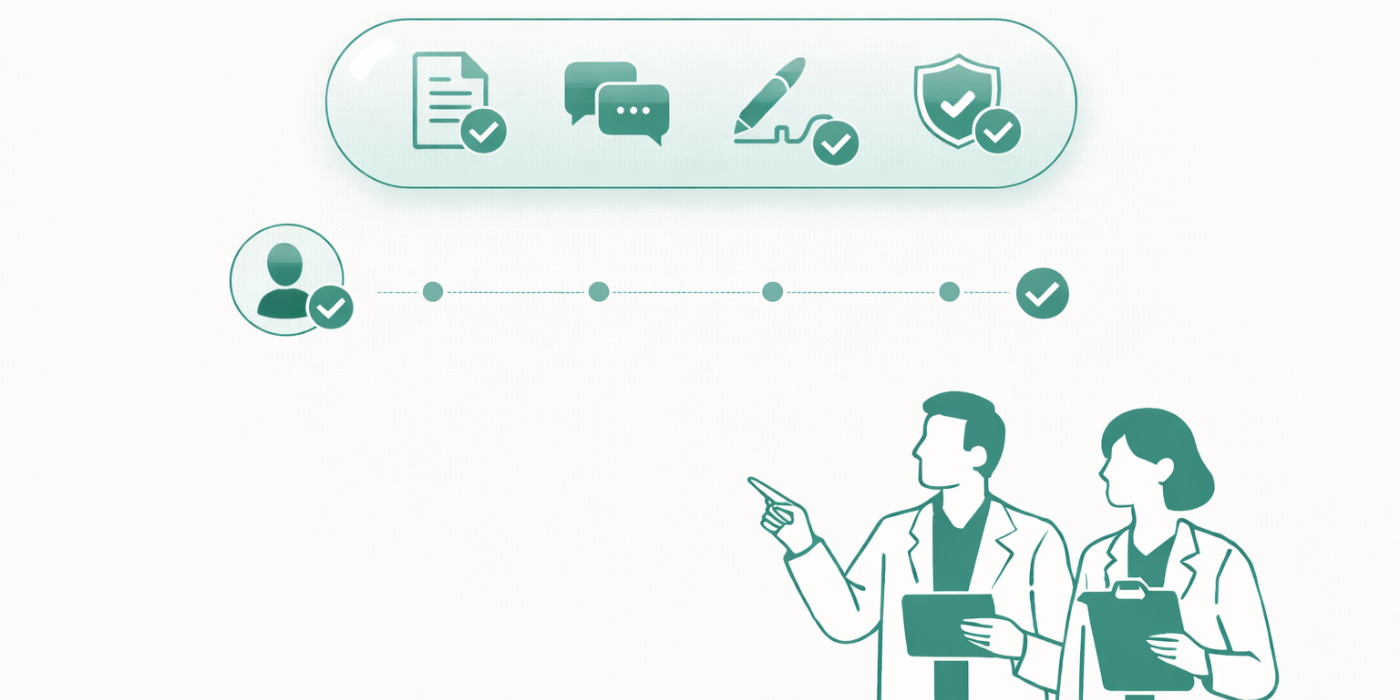
2) Step-by-Step Informed Consent Workflow That Survives Monitoring and Audits
A compliant consent process is easiest to maintain when it is built as a repeatable workflow rather than a “conversation style.” Sites with fewer findings often hardwire consent into scheduling, pre-visit prep, room setup, delegation checks, and source documentation templates—exactly the same mindset used in clinical trial resource allocation project management mastery, effective stakeholder communication in trial PM, vendor management in clinical trials, and clinical trial documentation techniques for CRAs.
A. Pre-Consent Preparation (Where Most Preventable Errors Are Won or Lost)
Before the participant arrives, confirm:
Current approved ICF version and date stamp
Correct language form availability
Required ancillary forms (HIPAA/privacy authorization, optional sub-study forms, pregnancy registry, genetic testing optional consent, etc.)
Delegated and trained consenting staff available
Private setting for discussion
Adequate time blocked (not squeezed between procedures)
Interpreter/witness arrangements if needed
This stage is where many “we were busy” deviations begin. If your team is already trained in managing regulatory documents, clinical trial protocol management, top 100 acronyms in clinical research, and 100 most important clinical research terms, use that knowledge to build a pre-consent checklist staff can complete in under two minutes.
B. Conducting the Consent Discussion (Communication Quality = Compliance Quality)
A high-quality consent conversation should cover, in participant-friendly language:
Why the study is being done
What will happen (visits, procedures, duration)
What is standard care vs research-only activity
Risks/discomforts and uncertainty
Potential benefits (without overstatement)
Alternatives to participation
Confidentiality and who may review records
Costs, compensation, reimbursements
Voluntary nature and withdrawal rights
Whom to contact for questions/injury concerns
Teams that perform well in consent often cross-train staff using adverse event reporting techniques for CRCs, drug safety reporting timelines and requirements, patient safety oversight for PIs, and adverse event handling essential PI guidelines because participants often judge trustworthiness by how clearly the site explains safety and escalation.
C. Verify Understanding (Not Just “Any Questions?”)
The phrase “Any questions?” is too weak to prove comprehension. Use teach-back:
“In your own words, what is the main purpose of this study?”
“What would you do if you feel unwell after a study visit?”
“Can you tell me what visits or procedures you expect?”
“What are your options if you decide not to participate?”
Teach-back protects against a hidden failure mode: participants who nod politely but misunderstand randomization, placebo possibility, visit burden, or withdrawal consequences. This is especially important in studies involving placebo-controlled trials, phase I trials, phase II trials, phase III trials, and phase IV trials.
D. Signature Execution and Real-Time QC
Once the participant agrees, do an immediate line-by-line completion check (signatures, dates, initials where required, optional selections). Do not rely on later review. A same-day correction may still become a finding if it reveals the process was uncontrolled. Teams that think like auditors—supported by CRA auditing/inspection readiness, DMC oversight concepts, IRB roles and responsibilities, and ICH/GCP expectations—catch most errors before the participant leaves.
E. Source Documentation and Filing
Your source note should document process, not just “ICF signed.” Include:
Version/date of ICF used
Who conducted discussion
Participant/LAR had opportunity to ask questions
Key topics reviewed (risks/benefits/alternatives/voluntary nature)
Comprehension assessed (teach-back used)
Consent obtained before any study-specific procedures
Copy provided to participant/LAR
Interpreter/witness details if applicable
This level of documentation aligns with the same quality mindset used in CRF best practices, biostatistics basics in clinical trials (garbage in, garbage out), protocol management, and regulatory submissions mastery in pharmacovigilance where traceability and completeness are non-negotiable.
3) Advanced GCP Risk Areas in Informed Consent That Trigger Findings
Most teams can handle routine consent. Findings usually arise in edge cases, amendments, time pressure, or assumptions. These are the high-risk zones where experienced professionals differentiate themselves—especially those building careers through CRA role/career path training, CRC responsibilities and certification, principal investigator responsibility training, and clinical research continuing education providers.
1) Re-Consent Failures After ICF Amendments
A revised ICF can introduce new risks, procedures, compensation changes, or clarified language. Common failures include:
Participant continues visits under old version when re-consent was due
Staff doesn’t know which active participants require re-consent
Re-consent occurs but source note lacks context
Optional update not clearly separated from mandatory revised information
Fix this with a re-consent trigger tracker tied to participant status, upcoming visits, and amendment effective dates. Strong teams manage this like regulatory docs management, resource allocation, stakeholder communication, and vendor coordination: tracked, visible, owned.
2) Consent Before Screening vs “Pre-Screening” Confusion
Sites sometimes blur operational pre-screening (scheduling, basic eligibility discussion) with study-specific screening activities. If a procedure is protocol-defined and done to determine eligibility, consent may be required beforehand. The risk is highest in busy clinics where staff “just gets an ECG/lab done quickly.” Cross-training with clinical trial protocol guide, protocol management for CRCs, CRC GCP compliance, and CRA GCP compliance helps teams define a “hard stop before procedure” rule.
3) Vulnerable Participants and Undue Influence
Even when not legally “vulnerable” in a formal category, participants may feel pressure due to illness severity, financial need, physician authority, or caregiver dynamics. GCP-compliant consent requires staff to avoid benefit overstatement and emotional steering. Teams that study patient safety oversight, IRB responsibilities, ICH guidelines, and AE handling for PIs tend to communicate more neutrally and document more defensibly.
4) Translation, Interpreter, and Witness Errors
This is a frequent inspection pain point because teams improvise under time pressure. Risk escalates when:
No approved translated ICF is available
Unqualified interpreter used without documentation
Witness is used incorrectly or signs wrong section
Staff cannot explain the local process
Create a site-specific matrix: when translated ICF is required, when short form/witness pathways apply (if allowed by local rules/IRB), who can interpret, and what documentation is required. This operational detail is just as important as understanding top terms for CRCs, top terms for CRAs, top terms for PIs, and top acronyms guide.
5) eConsent Without Process Discipline
eConsent does not automatically improve compliance. It improves standardization only if your workflow addresses identity verification, platform access controls, training, documentation of Q&A, and archival traceability. Sponsors and sites exploring digital workflows should align eConsent operations with the same rigor used in clinical data management/EDC platform selection, remote monitoring tools, clinical trial auditing readiness, and documentation management for CRAs.
What is your biggest informed consent compliance blocker right now?
Choose one. Your answer points to the fastest process fix.
4) How to Build a High-Performance Consent Process at Site Level (SOP + Training + QA)
If your site is serious about mastering GCP compliance, you need more than “retrain staff.” You need a consent system with standard work, role clarity, audit trails, and quality checks. This is where top-performing sites pull ahead of competitors hiring for CRCs, CRAs, pharmacovigilance professionals, and remote trial operations roles.
Build a Consent SOP That Is Operational, Not Generic
Weak SOPs restate regulations. Strong SOPs answer real workflow questions:
Where are current ICF versions stored physically and electronically?
Who confirms version before each consent?
What is the pre-procedure stop point?
How is teach-back expected and documented?
What is the process for interpreter/witness use?
How are re-consents tracked and escalated?
How are corrections made and documented?
What is the deviation pathway if consent error is discovered?
Use your SOP to remove ambiguity that causes “everyone assumed someone else checked.” This complements training in regulatory document management, protocol management, GCP strategy for CRCs, and PI ethical responsibility.
Train for Scenarios, Not Slides
Most consent errors persist because training is passive. Replace lecture-only training with scenario drills:
Participant asks, “Will this cure me?”
Participant wants family member to decide
Participant has limited literacy
Screening nurse starts procedure before consent check
Amendment arrives and two active participants are due this week
Interpreter unavailable and staff tries to improvise
Scenario-based drills align with the practical mindset seen in essential AE reporting techniques, drug safety reporting timelines, aggregate reports in pharmacovigilance, and mastering regulatory submissions in pharmacovigilance: teams get better when they practice decisions, not just definitions.
Use Lightweight QA Checks That Catch Drift Early
High-value QA controls do not need to be heavy:
Weekly spot-check of 3 recent consent packets
Re-consent tracker review against amendment log
Room sweep for obsolete printed ICFs
Delegation log vs scheduled consent staff cross-check
Monitor finding trend review by root cause (version, timing, documentation, signatures)
This is the same continuous-improvement discipline used in clinical trial PM communication, resource allocation, vendor management, and inspection readiness.
The Pain Point Most Sites Ignore: Consent Is a Throughput Bottleneck
When consent is poorly designed, it delays enrollment, burns coordinator time, increases query load, and creates sponsor distrust. When consent is well-designed, it improves participant retention and lowers downstream deviation burden. That is why consent mastery is not just “ethics compliance”—it is an operational advantage, especially in competitive environments tracked across CRO directories, sponsor directories, site directories, and academic center trial hubs.

5) Role-Specific Best Practices for CRCs, CRAs, and PIs in Informed Consent Compliance
Consent compliance improves dramatically when each role stops assuming another role “owns” everything. GCP expects collaboration with clear accountability.
For CRCs: Own Process Control and Documentation Discipline
CRCs are often the operational backbone of the consent process. Your leverage is enormous. Focus on:
Version control and packet readiness
Pre-consent workflow checks
Consent discussion support (within delegation and site policy)
Real-time signature/date QC
Source note completeness
Re-consent tracking
Filing traceability for monitoring
To strengthen execution, pair consent skills with CRC responsibilities & certification, GCP compliance strategies for CRCs, regulatory document management for CRCs, and protocol management key CRC responsibilities. If you feel like “monitoring always finds something,” that usually means the process is not standardized enough—not that you are incapable.
For CRAs: Audit the Process, Not Only the Signature Pages
CRAs add the most value when they assess whether the site’s consent process is controlled, not just whether pages are present. In addition to document checks, examine:
Evidence consent occurred before procedures
Re-consent tracking logic
Delegation/training alignment
Source documentation quality
Repeat finding patterns and root causes
Whether the site understands why findings matter
This approach matches the higher-skill CRA mindset from CRA roles/skills/career path, GCP essentials for CRAs, documentation techniques for CRAs, and CRA inspection readiness. Great CRAs prevent recurrence; average CRAs just list findings.
For PIs: Your Oversight Standard Shapes Site Culture
PIs do not need to personally conduct every consent discussion in every study context (depending on delegation and local requirements), but they do own the ethical tone and oversight quality. PI behaviors that reduce consent risk:
Review high-risk consent scenarios with staff (vulnerable participants, urgent scheduling, amendments)
Confirm staff can explain key study risks in plain language
Ensure no coercive recruitment/consent practices
Escalate and investigate consent deviations immediately
Participate in CAPA for repeated errors
This is directly aligned with regulatory & ethical responsibilities for PIs, adverse event handling PI guidelines, patient safety oversight PI role, and IRB responsibilities. A PI who treats consent as “coordinator paperwork” creates risk long before an inspector arrives.
For Study Teams Overall: Make Consent a Measured Quality Metric
Track consent-related metrics monthly:
Number of consent deviations
Re-consent timeliness rate
Signature/date error rate
% of consent notes meeting template completeness
Repeat findings by staff/process step
Time from participant arrival to consent completion (to identify rushed windows)
Teams that measure improve faster. That same performance mindset drives success in clinical research organizations hiring trends, staffing agencies for research roles, job portals for clinical research careers, and networking groups for clinical research professionals, because employers value professionals who can prevent errors systematically.
6) FAQs: Informed Consent Procedures and GCP Compliance (CCRPS High-Value Q&A)
-
The most common mistake is not “missing a signature”—it is process breakdown before documentation breakdown: wrong ICF version, consent after a study-specific procedure, or incomplete explanation of key study elements. Signature errors are often just the visible symptom. Strengthen your workflow using CRC GCP strategies, CRA GCP essentials, protocol management, and documentation techniques to fix the root cause.
-
It is an ongoing process. Initial consent starts participation, but continued informed participation requires updates when new risk information, amendments, or relevant study changes arise. This is why re-consent tracking is critical and why teams should align consent management with regulatory document control, PI oversight responsibilities, IRB responsibilities, and ICH guideline principles.
-
Use and document teach-back, not just “participant verbalized understanding” as a generic statement. Record that the participant was able to explain study purpose, major risks, visit expectations, and voluntariness in their own words. This becomes especially important in complex designs involving randomization, blinding, placebo-controlled trials, and phase-specific trial differences.
-
At minimum, document the ICF version used, who conducted the discussion, that questions were invited/answered, key elements reviewed, confirmation consent occurred before study-specific procedures, and that a copy was provided to the participant/LAR. Add interpreter/witness details when applicable. This supports monitoring and inspections just like strong records support CRF quality, AE reporting workflows, drug safety reporting timelines, and audit readiness.
-
Do not improvise. Follow the IRB/EC-approved and site SOP-defined pathway for translated forms, interpreters, and witnesses (where required). The key is proving accurate communication and correct documentation, not just “someone translated.” Build this into site workflow alongside IRB role understanding, PI ethical oversight, CRC regulatory document management, and GCP compliance training.
-
Act immediately: protect the participant, notify the PI/sponsor per requirements, assess impact (including whether study procedures occurred without valid consent), document the deviation, and implement CAPA. Delayed escalation makes a manageable error look like a systemic integrity problem. Teams trained in AE handling for PIs, patient safety oversight, CRA inspection readiness, and stakeholder communication in trial PM usually recover faster and more credibly.
