
Best Online Communities for Clinical Researchers: Definitive Interactive Directory
Clinical research is full of people who feel isolated while working in a field that depends on coordination. A CRC may be drowning in startup binders, a CRA may be handling site friction alone from hotel rooms, a pharmacovigilance associate may be second-guessing case narratives after hours, and a project manager may be trying to solve enrollment, vendor, and timeline problems without a trustworthy peer circle. That is why the right online community is not a nice extra. It is infrastructure.
This directory is built to help clinical researchers find the communities that actually move careers and improve execution. It connects networking choices to the real demands of clinical research careers, clinical research networking groups and forums, LinkedIn groups for clinical researchers, clinical research continuing education providers, and clinical research certification providers so readers can stop joining random groups and start building a smarter professional ecosystem.
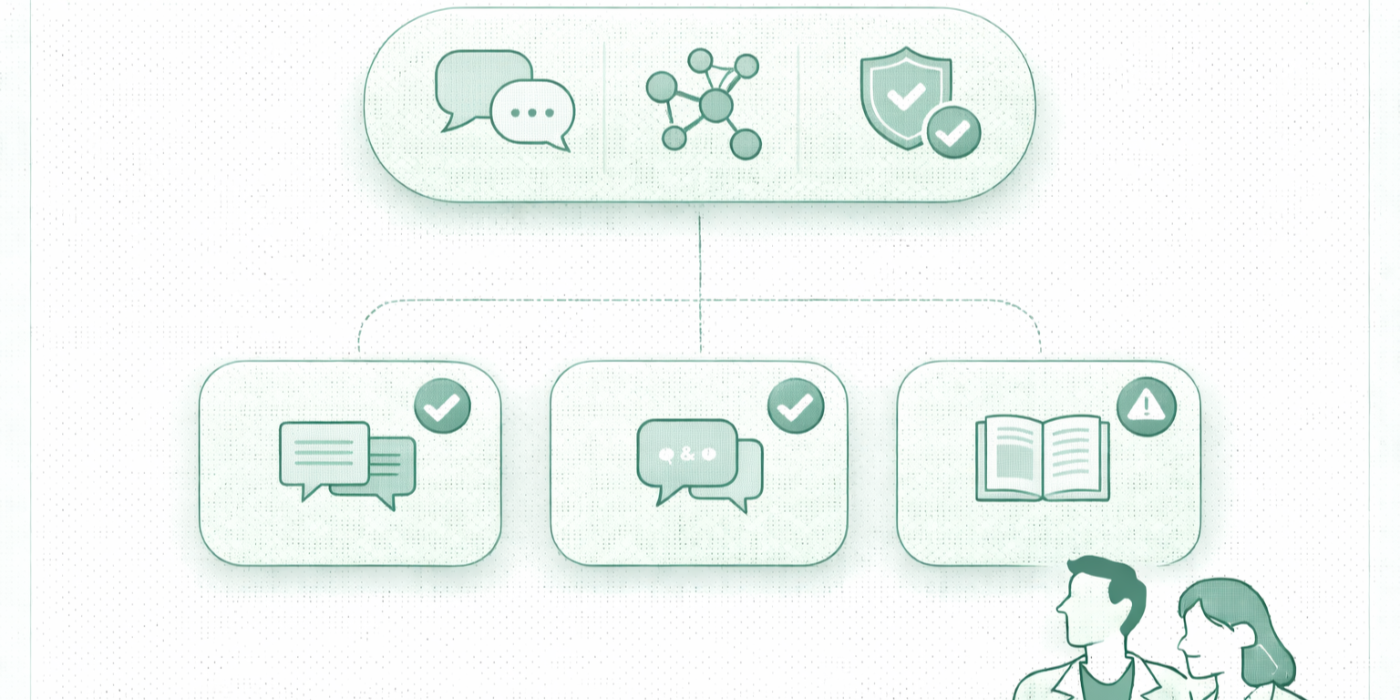
1. Why Most Clinical Researchers Join The Wrong Communities
Most people join online communities the same way they choose bad training resources: they pick the largest group, the loudest group, or the easiest group to enter. That usually produces shallow value. Big communities often look active but deliver almost nothing beyond recycled job posts, vague motivational chatter, vendor noise, and low-level questions that never lead to deeper professional growth. A useful community does something harder. It helps members solve real problems, expand judgment, see how other teams work, and build relationships that make them better operators.
That matters because clinical research is too operationally demanding for people to learn in isolation. A CRA who wants to sharpen site qualification judgment, monitoring technique, GCP compliance for CRAs, documentation control, and audit readiness needs peers who talk about real workflows, not just titles and salary dreams. A CRC trying to strengthen patient recruitment, protocol management, regulatory document control, GCP compliance strategies, and adverse event reporting needs a community where those topics are normal discussion, not specialist exceptions.
The right community also changes career velocity. People usually advance faster when they can see how adjacent roles think. A project manager gets sharper by hearing how CRAs describe site pain, how pharmacovigilance teams frame safety issues, how regulatory professionals think about submission pressure, and how data teams talk about query discipline. That is why the best communities tend to create crossover value for professionals following the CRA career path, the CRC career path, the clinical trial manager roadmap, the clinical research project manager path, and the clinical compliance officer career guide. A good group does not just help you meet people. It helps you think at a higher level.
That is the purpose of this directory. It is not simply a list of places to hang out online. It is a practical map for finding the kind of professional community that will help you solve problems, spot opportunities earlier, build a stronger reputation, and avoid the painful stagnation that happens when all your professional input comes from your own company, your own role, and your own current level.
| Community Type | Best For | Main Strengths | Common Weaknesses | How To Use It Well |
|---|---|---|---|---|
| Role-specific LinkedIn group | CRAs, CRCs, CTAs, regulatory associates | Accessible networking, visible career discussions, easy discovery | Shallow threads, recruiter clutter, repetitive beginner questions | Use for visibility and job discovery, not as your only learning source |
| Specialized Slack / Discord professional circle | Operators who want faster peer exchange | Real-time discussion, stronger relationships, more candid workflow talk | Quality varies sharply by moderator strength | Join smaller serious groups where members actually work in the field |
| Association-run member forum | People seeking structured professionalism and steady standards | Higher signal, lower chaos, more credible discussions | Can feel slower and less candid | Best for long-term network quality and professional reputation |
| Certification-prep community | CRC, CRA, GCP, PV exam candidates | Motivation, accountability, shared study resources | Can become exam-only and career-thin | Use for focused prep, then graduate into broader professional groups |
| Job-seeker clinical research community | Career changers and early entrants | Resume guidance, interview tips, hiring visibility | Often overloaded with anxiety and generic advice | Use as an entry bridge, not your long-term professional home |
| Therapeutic-area niche group | Oncology, infectious disease, neurology, rare disease professionals | Sharper conversations, better domain-specific insights | Narrower opportunities outside the niche | Excellent secondary community after joining one broad core network |
| Regulatory and compliance forum | Regulatory, QA, QA-adjacent operations roles | Policy depth, submission insight, audit thinking | Can feel dry for purely site-facing professionals | Use to strengthen judgment even if regulation is not your main role |
| Pharmacovigilance network | Drug safety, case processing, aggregate reporting professionals | Strong safety insight, reporting nuance, role-specific mentorship | Less useful for broad site-ops questions | Best for PV-focused growth and cross-functional safety fluency |
| Clinical operations leadership community | PMs, CTMs, COMs, sponsor-side leads | High-level thinking, execution frameworks, stakeholder insight | Less accessible to beginners | Join early and observe even before you feel senior enough to post |
| Medical writing / document management group | Writers, regulatory support, documentation-heavy roles | Precision, review habits, document-quality thinking | May not cover field execution deeply | Strong complement for people who want cleaner documentation judgment |
| Freelancer / consultant clinical research circle | Independent CRAs, writers, trainers, consultants | Opportunity flow, client realities, service pricing insight | Can skew transactional | Use after developing a real professional identity and skill base |
| Research assistant and coordinator peer group | Entry-level and site-based staff | Grounded workflow discussion, practical survival tips | Can remain too local in perspective | Great for operational realism early in your career |
| Global conference attendee community | People who want longer-tail value from events | Warmer connections, shared context, easier follow-up | Activity can fade after events end | Use to turn conference contact into actual relationship |
| Academic clinical research network | University-linked researchers and fellows | Study design depth, publication awareness, research rigor | May underrepresent sponsor-side realities | Best for methodology and research-thinking expansion |
| Industry news and trends community | Professionals tracking market shifts and hiring movement | Awareness of CROs, sponsors, tools, trends | High noise if members only repost headlines | Use to scan the market, then discuss implications elsewhere |
| Remote CRA / travel-role community | Monitors and field staff | Travel survival tips, workload reality, sponsor/CRO insights | Can become complaint-heavy | Best when paired with a more constructive skill-based group |
| Clinical data management community | CDMs, data coordinators, EDC-heavy roles | Data-cleaning logic, query strategy, system thinking | Less site-level relevance for some members | Use to sharpen operational decisions through data consequences |
| Vendor and technology user group | Users of CTMS, EDC, eTMF, PV, or recruitment platforms | Tool-specific shortcuts, implementation lessons, troubleshooting | Can become platform-centric and narrow | Strong support layer, but never your only community |
| Mentorship-driven invite-only circle | People wanting serious professional development | Higher trust, stronger feedback, more accountability | Harder to enter and less scalable | Often the highest-value group once your basics are in place |
| Women in clinical research network | Women seeking mentorship and career progression support | Supportive environment, leadership insight, career encouragement | Quality depends on moderation and senior participation | Best when members actively exchange real strategies, not just inspiration |
| Regional country-specific professional group | Researchers navigating local hiring and regulations | Regional realism, market-specific advice, hiring visibility | Can become geographically narrow | Excellent anchor group for local market intelligence |
| Rare disease or advanced therapy niche network | Professionals in specialized protocols | High signal, specialist insight, unique opportunity exposure | Limited breadth outside the specialty | Powerful for experts, less useful as a first community |
| Principal investigator and site leadership group | PIs, sub-Is, site directors, research leaders | Decision-maker perspective, budget and staffing insight | Less beginner-friendly | Use to understand how senior site leaders actually think |
| Cross-functional sponsor community | Ops, PV, regulatory, data, med affairs professionals | Broader systems thinking, sponsor-side visibility | Can feel abstract for junior site staff | Great for learning how decisions are made beyond the site |
| Clinical research educator / trainer circle | Instructors, coaches, curriculum builders | Teaching insight, skill-gap awareness, content quality ideas | Smaller pool of directly relevant members | Best for professionals building teaching authority in the field |
| General healthcare professional network with clinical research subset | People bridging care delivery and research | Broader visibility, interdisciplinary perspective | Research discussion may be diluted | Use as an outer ring, not a substitute for specialized communities |
2. How To Judge Whether An Online Community Is Actually Worth Your Time
The fastest way to waste months is to confuse activity with value. A busy group is not necessarily a useful group. High-value communities usually have a visible professional center of gravity. The discussions revolve around execution, judgment, growth, and opportunity rather than empty hype. Members answer questions with actual examples, not vague slogans. Senior professionals participate without dominating. Moderation removes spam before it becomes the group’s identity. And the group has enough trust that people can talk honestly about problems without turning every thread into a complaint swamp.
That matters because community choice should match career stage. Early entrants often need help with job portals for clinical research careers, clinical research staffing agencies, remote CRA roles and programs, clinical trial sites and SMOs recruiting coordinators, and top CROs hiring CRAs and CRCs. Mid-career professionals often need communities that expose them to better process, stronger peers, and adjacent roles. Senior operators usually need groups where conversations revolve around resource allocation, site quality, inspection readiness, vendor strategy, and leadership judgment.
Another useful test is whether the community helps you think better after you log off. Good communities create second-order value. You read a thread about clinical trial resource allocation, then apply that thinking to your own study. You see someone explain a problem with vendor management, and suddenly your own escalation logic improves. You follow a discussion on stakeholder communication, and your next cross-functional call goes better. You watch a debate about clinical trial sponsor responsibilities or principal investigator responsibilities, and you start interpreting problems with more nuance. That is what real professional communities do. They raise your ceiling quietly.
The final test is whether the community opens doors beyond chatter. A useful group leads to mentors, study partners, speaking invitations, interview referrals, peer learning, project ideas, better tools, sharper resources, and more credible professional identity. If you spend months in a group and none of that begins to happen, the group may be entertaining, but it is not really advancing your career.
3. Which Types Of Communities Work Best For Different Clinical Research Roles
CRCs and site-based staff usually benefit most from communities that stay close to real workflow. Groups built around coordinators, research assistants, site activation, informed consent, recruitment, deviations, and patient-facing operations tend to create immediate value because the discussions map directly to daily pressure. That is especially true for people trying to improve informed consent best practices for CRCs, protocol management responsibilities, patient recruitment as a coordinator skill, regulatory document handling, and GCP compliance strategies for CRCs. These people do not need more abstract career content. They need grounded communities that help them survive and improve at the actual work.
CRAs and field-based professionals need a different mix. They benefit from communities that discuss monitoring visits, documentation quality, site escalation, travel reality, sponsor expectations, and relationship management without turning everything into venting. The most useful groups for them often combine tactical skill with bigger-picture visibility into how sponsors and CRO leadership think. That helps with CRA roles and career progression, site management strategy, qualification visit judgment, monitoring technique, and inspection readiness for CRAs. Good CRA communities make people less reactive and more strategic.
Regulatory, QA, and PV professionals usually get the most value from higher-signal groups that attract detail-oriented people. These roles are often underserved in broad communities because their pain points can feel too technical for general discussion. But they are exactly the roles that benefit most from serious peer exchange. A strong regulatory or PV community can sharpen thinking around regulatory affairs specialist career steps, clinical regulatory specialist pathways, clinical quality auditor pathways, pharmacovigilance fundamentals, and pharmacovigilance case processing. These communities often create the strongest mentorship because their members recognize precision and seriousness quickly.
Project managers, CTMs, sponsor-side operators, and aspiring leaders need communities that widen perspective. Their role is not just to execute tasks. It is to connect functions, prioritize risk, communicate clearly, and maintain forward motion under constraint. They should prioritize groups where people discuss project planning, budget oversight, risk management in trials, clinical operations management, and clinical trial management career growth. The best leadership communities do not just teach people to sound senior. They teach them to think in systems.
What is your biggest problem with online clinical research communities?
Choose one. Your answer points to the kind of group you actually need.
4. How To Build A Community Stack Instead Of Relying On One Group
The smartest professionals do not rely on one community. They build a stack. Usually that means one broad market-facing group, one role-specific group, one higher-signal specialist group, and one aspirational leadership or niche group. The broad group keeps you visible and aware of hiring movement. The role-specific group keeps your daily judgment sharp. The specialist group gives you depth. The aspirational group shows you how people above your current level think and communicate.
This layered approach works because each community solves a different problem. Broad groups help with surface-level opportunity and industry awareness. Role-specific groups help with practical execution. Niche groups help with therapeutic-area or functional specialization. Leadership groups help people grow beyond task-thinking into systems-thinking. Someone following the clinical research assistant roadmap will need a different mix from someone targeting the clinical data coordinator path, the medical science liaison path, the clinical medical advisor path, or the principal investigator roadmap. The point is not to join everything. The point is to choose intentionally.
A strong stack also reduces a common career trap: confusing peer comfort with growth. Many people stay in communities where everyone is at the same level and everyone has the same frustrations. That can feel validating, but it rarely pulls anyone upward. You need at least one community where the conversations stretch you. That could be a sponsor-side operations group, a high-signal regulatory forum, a quality network, or a niche therapeutic-area circle where people speak with more precision than your current peers. Exposure to stronger thinking accelerates development in a way that generic encouragement never will.
This is also where community choice supports education. The right groups make it easier to identify which skills are actually worth building next. They point you toward better continuing education providers, smarter certification providers, more relevant clinical research conferences and events, stronger top clinical research journals and publications, and more useful freelance clinical research directories if you ever decide to work independently or build a side identity. Communities should make your next move clearer, not noisier.

5. How The Best Communities Create Real Career Momentum
The best communities do not just help people find information. They help people become recognizable. That matters because clinical research careers move partly through competence and partly through trust. People need to know you as someone thoughtful, useful, reliable, curious, and professional. Online communities are one of the few places where people can demonstrate those traits before they ever meet a hiring manager, mentor, collaborator, or client. A few good comments, thoughtful answers, or useful shared resources can quietly build more career leverage than months of passive lurking.
That leverage is strongest when your participation is strategic. Ask better questions. Share grounded answers. Post patterns you noticed in your work. Summarize what you learned from a conference or course. Help newer people without sounding performative. Engage with senior people in a way that shows thinking, not desperation. This is particularly valuable for professionals building identity around clinical research networking groups and forums, LinkedIn groups for clinical research professionals, best job portals, clinical research conferences, and clinical research continuing education. Communities turn static resources into relationship engines when members use them well.
They also improve decision quality. People who stay inside one employer bubble often misread the industry. They do not know which frustrations are normal, which are signs of a weak company, which skill gaps matter in the market, or which titles are actually respected. Communities expose those patterns. They help members understand where the industry is moving, which roles are expanding, which skills are becoming more valuable, and which environments are likely to stall growth. That makes communities valuable far beyond job hunting. They become decision-support systems for your whole career.
For CCRPS readers, that is the central point. The best online communities are not distractions from career growth. They are part of career growth. Used well, they reduce isolation, improve judgment, expose opportunities, build credibility, and help you move through the field with more speed and less guesswork. The wrong group drains time. The right group compounds value for years.
6. FAQs About The Best Online Communities For Clinical Researchers
-
The biggest mistake is joining based on size instead of signal. Large communities often look useful but deliver mostly noise, repetition, and recruiter clutter. A smaller, well-moderated group with serious professionals usually creates more value.
-
They should join one beginner-friendly group, but not only that. Growth accelerates when you also join at least one group slightly above your current level so you can absorb stronger thinking and more advanced professional norms.
-
They are useful for visibility and discovery, but they are rarely enough by themselves. Most professionals need a broader stack that includes one deeper role-specific or specialist community where real execution questions get discussed.
-
Look at the ratio of useful answers to generic posts, the presence of working professionals, the quality of moderation, the tone of discussion, and whether conversations lead to actionable insight rather than empty chatter.
-
Career changers usually benefit from a layered mix: one hiring-focused community, one coordinator or assistant-level workflow group, and one broader professional network that exposes them to the language and structure of the field.
-
Yes, when used strategically. Communities can lead to mentors, referrals, practical knowledge, stronger professional identity, better role targeting, and much sharper judgment about where the industry is actually rewarding people.
