Principal Investigator PI Compensation Report How Much Do Clinical Trial PIs Earn
Clinical trial Principal Investigators sit at the center of risk, data integrity, and patient safety—yet many still have no clear benchmark for what their work is actually worth. Sponsors quietly adjust budgets, sites accept underpriced per-patient fees, and PIs discover too late that their effective hourly rate is lower than that of their own Study Coordinators. This report breaks down how PI compensation is really structured, how much high-performing PIs earn in different settings, and the specific levers you can pull to move from “grateful to be on the trial” to negotiating from real market power.

1. What Sponsors Are Actually Paying PIs For
Most PIs think they are paid “per patient,” but sponsors are really buying three things: regulatory accountability, decision-grade medical oversight, and predictable delivery against milestones. When you sign Form FDA 1572, you become the person regulators will question first—something sponsors price into budgets far more carefully than many sites realize. You can see this clearly when you compare PI compensation against trends in the clinical research salary report, highest paying clinical research jobs, and CRA global salary data—PI pay needs to cover not only patient visits but regulatory risk that would otherwise sit with sponsors or CROs.
Sponsors also pay for your ability to unblock the protocol in real time. If your site is recruiting from high-acuity populations, every protocol deviation you prevent protects the entire program. The same logic that drives strong pay for pharmacovigilance specialist careers and QA specialists applies here: you’re being paid to foresee failures before they become inspection findings. In decentralized and AI-enabled trials, where responsibilities shift toward remote decision-making, that oversight premium only grows—especially in portfolios making heavy use of wearables, digital biomarkers, and drone-delivered medications.
Finally, sponsors are buying your network and reputation. A PI known to deliver clean data on time is worth more than a PI with a bigger title but a history of slow start-up and high protocol deviation rates. That is why the best-paid PIs are often embedded in institutions already featured in directories like the top clinical trial hospitals, academic medical centers running fellowships, and large trial site networks.
| Study / Site Scenario | Typical PI Per-Patient Fee (USD) | Startup / Regulatory Oversight Fee | Annual PI Income from Study* |
|---|---|---|---|
| Phase III cardiology – academic hospital | $1,200–$1,800 | $18,000–$30,000 | $160k–$260k |
| Phase II oncology – high-enrolling community site | $2,000–$3,000 | $25,000–$40,000 | $220k–$380k |
| Phase IV post-marketing – outpatient network | $600–$1,000 | $8,000–$15,000 | $70k–$130k |
| Rare disease trial – global academic consortium | $3,000–$5,500 | $35,000–$60,000 | $260k–$450k |
| Medical device – interventional cardiology lab | $1,800–$3,200 | $20,000–$35,000 | $190k–$320k |
| Pediatric vaccine – public hospital | $900–$1,400 | $10,000–$18,000 | $90k–$150k |
| Psychiatry – outpatient SMO | $1,000–$1,600 | $12,000–$22,000 | $110k–$190k |
| NASH / metabolic – private research site | $1,500–$2,400 | $15,000–$28,000 | $150k–$260k |
| Decentralized hybrid trial – telemedicine PI | $700–$1,200 | $18,000–$30,000 | $120k–$210k |
| Oncology basket trial – key opinion leader site | $3,500–$6,000 | $40,000–$70,000 | $320k–$550k |
| First-in-human phase I – specialized unit | $2,500–$4,000 | $35,000–$55,000 | $260k–$420k |
| Device post-market registry – community hospitals | $500–$900 | $8,000–$14,000 | $60k–$110k |
| Global COVID-sequelae study – academic center | $1,500–$2,200 | $20,000–$32,000 | $170k–$260k |
| Dermatology biologic – private practice | $1,200–$1,900 | $12,000–$20,000 | $110k–$180k |
| Respiratory study – integrated health system | $900–$1,400 | $10,000–$18,000 | $90k–$150k |
| Neurology trial – epilepsy center of excellence | $1,800–$2,800 | $22,000–$36,000 | $190k–$310k |
| Global oncology DCT with home nursing | $2,000–$3,200 | $30,000–$50,000 | $230k–$380k |
| Behavioral health app trial – digital endpoint | $600–$1,000 | $9,000–$16,000 | $70k–$120k |
| Africa-based infectious disease study – NGO partner | $800–$1,300 | $12,000–$22,000 | $80k–$140k |
| China-focused oncology trial – Tier 1 city site | $1,600–$2,600 | $20,000–$34,000 | $170k–$280k |
| UK-based device trial – post-Brexit regulatory burden | $1,400–$2,200 | $18,000–$30,000 | $140k–$230k |
| Remote monitoring-heavy oncology – AI audit tools | $1,900–$3,100 | $24,000–$38,000 | $200k–$340k |
| High-volume diabetes study – primary-care network | $700–$1,100 | $9,000–$15,000 | $80k–$130k |
| Sleep medicine device trial – outpatient lab | $1,000–$1,700 | $10,000–$18,000 | $90k–$160k |
| VR-based rehab trial – academic innovation center | $1,300–$2,100 | $14,000–$24,000 | $120k–$200k |
| Blockchain-tracked data study – innovation pilot site | $1,400–$2,300 | $18,000–$28,000 | $130k–$220k |
| Large vaccine registry – multi-site SMO | $500–$800 | $7,000–$12,000 | $60k–$100k |
2. Baseline PI Income Ranges: From Side-Gig to Multi-Study Portfolio
Across North America and Western Europe, full-time PIs running multiple trials often earn between $250,000 and $600,000 annually from research alone, on top of clinical income. The lower end tends to be hospital-employed physicians with salary-based contracts where research income flows back to the institution—mirroring trends in the CRC salary guides and CRA salary reports, where institutional control dampens upside. At the higher end, privately owned sites and SMOs let PIs participate in profit after expenses, much like high-earning regulatory affairs specialists and clinical compliance officers who capture value from complex portfolios.
In emerging markets—especially regions flagged in Africa clinical trial frontier analyses, China growth predictions, and post-Brexit UK scenarios—absolute PI pay can be lower, but relative to local physician salaries the uplift is often dramatic. In some African and Asian hubs, research portfolios can double or triple a consultant’s usual income, especially when they leverage directories of pharma and biotech companies hiring PV specialists and remote case-processing roles to stack multiple sponsor relationships. The key is understanding that each additional trial adds incremental oversight work but not linear increases in fixed cost, allowing sophisticated PIs to scale earnings without burning out.
3. How Study Design, Risk, and Complexity Move PI Compensation
PI compensation tracks study risk and operational friction more than simple disease area prestige. First-in-human oncology, gene therapy, or invasive device studies carry a higher risk of serious adverse events, complex DSMB interactions, and intense scrutiny from regulators. Sponsors price that into budgets and are often willing to pay materially more for PIs with deep safety and pharmacovigilance training, especially at institutions already known to run such programs. These are the same dynamics that elevate compensation for PV specialists, clinical quality auditors, and regulatory specialists.
Protocol complexity also drives pay. Trials using advanced imaging, algorithm-driven eligibility, or novel digital endpoints require more physician-level interpretation and increase your meeting load with statisticians and data monitoring committees. Studies integrating AI-powered trial tools, remote AI audits, or AI-based failure prediction models promise efficiency but also shift accountability to PIs who must defend algorithm-driven decisions to regulators. Savvy PIs insist on compensation that reflects this new category of cognitive risk.
Finally, studies with aggressive recruitment targets or fragile retention profiles justify higher PI fees if you can prove strong performance history. Sponsors read the same analyses on patient dropout prediction, patient recruitment companies, and remote monitoring platforms that you do; they know under-performing PIs can collapse timelines. When you bring recruitment plans grounded in these tools—as well as experience with decentralized trial models and wearable-heavy designs—you have a defensible case for elevated compensation.
What’s Your Biggest Frustration With PI Compensation?
4. Site Type, Geography, and Sponsor Model: Where PI Income Spikes
Your organizational setting shapes your earning ceiling as much as your specialty. PIs embedded in large academic medical centers listed in the top hospital trial directories often access higher-budget, early-phase industry trials or complex investigator-initiated studies. However, revenue usually flows through institutional overhead structures that also fund regulatory teams, QA and auditor functions, and compliance offices. Negotiating personal compensation in these settings often means trading raw research income for academic titles, promotion pathways, and leadership roles.
By contrast, PIs working with dedicated SMOs or private research sites—frequently represented in the top clinical trial site networks, CRO buyers’ guides, and EDC platform directories—may take on more business risk but capture a larger share of the upside. In these organizations, PI compensation often includes a combination of per-study fees, ownership equity, or profit-sharing based on site performance. This model particularly rewards PIs who understand recruitment analytics, leverage patient recruitment partners, and actively shape protocol feasibility discussions.
Geographic dynamics also matter. Sponsors chasing patients in regions highlighted in Africa, China, and post-Brexit UK sometimes overpay early-mover PIs who can open compliant sites quickly. Similarly, investigators plugged into innovation-heavy ecosystems—running VR-based trials, AR-enabled protocols, or blockchain-tracked studies—command higher compensation because few peers can credibly deliver in those categories.
5. Advanced PI Compensation Models: Equity, Royalties, and Strategic Upside
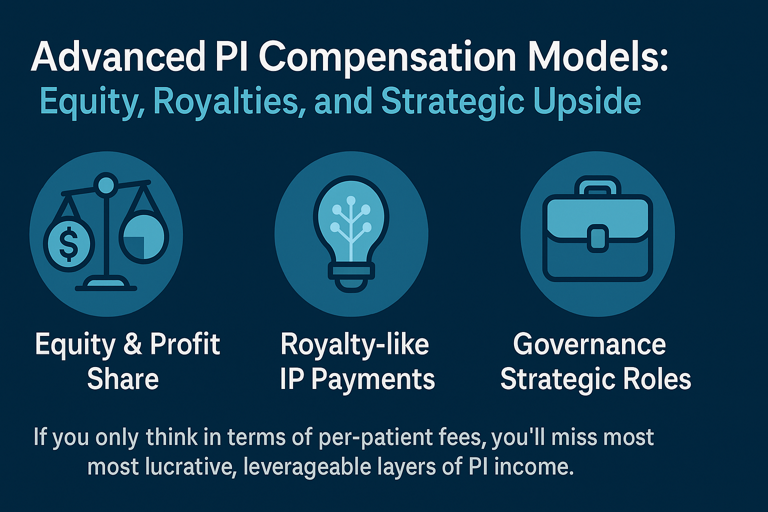
Most PIs only see line items labeled “per-patient fee” and “start-up,” but the real long-term money often sits in structures that look more like ownership than salary. At large site networks and SMOs listed in guides like the top clinical trial site and SMO directory, senior PIs may receive equity stakes or profit-share rights in the site entity itself. That means every time the organization adds new studies—from high-paying oncology roles to fast-recruiting vaccine trials—the PI’s upside scales without renegotiating each protocol.
Another emerging model is royalty-like payments tied to intellectual contribution. When PIs help shape novel endpoints, digital biomarker strategies, or platform-trial architectures using tools covered in AI-powered trial forecasts, wearable-tech roadmaps, or blockchain-enabled data integrity, sponsors sometimes structure milestone bonuses or downstream consulting retainers. This looks less like a flat fee and more like compensation for co-creating the trial’s IP.
Finally, PIs who step into governance roles—helping pharma or big-tech entrants described in Amazon/Google clinical trial predictions redesign their global portfolios—often negotiate board seats, advisory retainers, or part-time Chief Medical Officer arrangements. These packages can eclipse traditional site-level earnings and reposition you alongside senior regulatory and compliance leaders in total compensation. The takeaway: if you only think in terms of per-patient fees, you’ll miss the most lucrative, leverageable layers of PI income.
6. Principal Investigator Compensation FAQs
-
For physicians splitting time between clinical practice and trials, a realistic research income target is often $150,000–$250,000 per year, layered on top of clinical earnings. That usually requires two to four active industry-sponsored studies with solid enrollment and clean closeout. Reviewing benchmarks in the clinical research salary report alongside high-paying role analyses helps you position PI work as one pillar in a broader, diversified career that might also include advisory work, teaching, or leadership in regulatory or quality domains.
-
Fair market value (FMV) is not a single number; it’s a range influenced by specialty, geography, and study risk. Start by mapping your time: pre-screen review, eligibility confirmation, visit oversight, SAE adjudication, and meetings. Compare your calculated hourly rate to what similarly skilled roles earn in CRA salary reports, CRC guides, and specialized roles like PV specialists. If your PI rate falls below those benchmarks—especially in high-risk or tech-heavy trials—you have a strong FMV argument to increase fees, add oversight retainers, or re-scope responsibilities.
-
They can do either, depending on how you position yourself. Sponsors may initially assume DCT and AI tools reduce the need for intensive PI oversight, driving down budgets. Yet the reality is that PIs must now understand AI-driven trial operations, remote monitoring ecosystems, and complex data flows documented in future-of-trials forecasts. PIs who can explain these systems to regulators and ethics committees, while safeguarding patient safety, can justify higher compensation because they sit at the intersection of medicine, data science, and governance.
-
University and hospital systems often route sponsor payments through central research offices, applying overhead rates that may exceed 30–40% before funds reach the department. Remaining money then covers coordinators, regulatory staff, and infrastructure, leaving PIs with effort-based salary support rather than pure per-patient income. This model is similar to how teams supporting regulatory affairs, compliance, and quality auditing are funded. To protect earning power, PIs should negotiate explicit research FTE allocations, transparent budget summaries, and recognition of PI oversight as a specific budget line rather than a residual category.
-
Sponsors quietly track which PIs consistently hit or exceed enrollment targets and maintain low dropout rates. Those metrics directly influence whether your site is invited into high-value studies listed across trial site directories, hospital networks, and academic research lists. Using tools summarized in patient recruitment mega-lists and dropout prediction guides, you can present a data-driven case that your site de-risks enrollment. That performance history justifies higher per-patient fees and more favorable allocation of high-budget protocols.
-
Before chasing large PI fees, early-career physicians should prioritize building a credible research profile. That includes collaborating on studies led by senior investigators in institutions featured in academic medical center lists, completing structured training in regulatory and PV roles, and mastering operational realities often learned by CRCs. Pair this with exam-ready habits from resources on overcoming certification anxiety and test-taking strategy. When you eventually negotiate PI fees, you can point to a concrete track record of protocol execution, regulatory fluency, and patient-centric trial conduct.
-
AI will almost certainly replace some repetitive tasks—but not the physician-level accountability regulators demand. Articles on AI-driven job displacement, robot-run clinical trials, and sponsor adoption of big-tech platforms all highlight the same reality: algorithms cannot sign off on patient safety decisions or shoulder legal responsibility under ICH-GCP. Instead, AI shifts PI work toward higher-order tasks—interpreting complex data, validating algorithmic recommendations, and communicating risk to regulators and ethics boards. PIs who embrace that shift, rather than resist it, are likely to see their compensation evolve upward as their role becomes even more central to governance.
