
Clinical Trial Patient Education Resources Directory (Brochures, Guides)
A patient education resource can quietly decide whether a study recruits on pace, whether participants complete key procedures correctly, and whether avoidable confusion turns into missed visits, withdrawals, or underreported symptoms. Weak materials create friction at the exact moments when trust matters most. Strong materials reduce cognitive load, clarify expectations, and protect protocol quality.
This directory is built for teams that want patient education assets to do real operational work. It connects resource design to informed consent procedures, patient recruitment, protocol management, GCP compliance, and better patient safety oversight from first contact through study closeout.
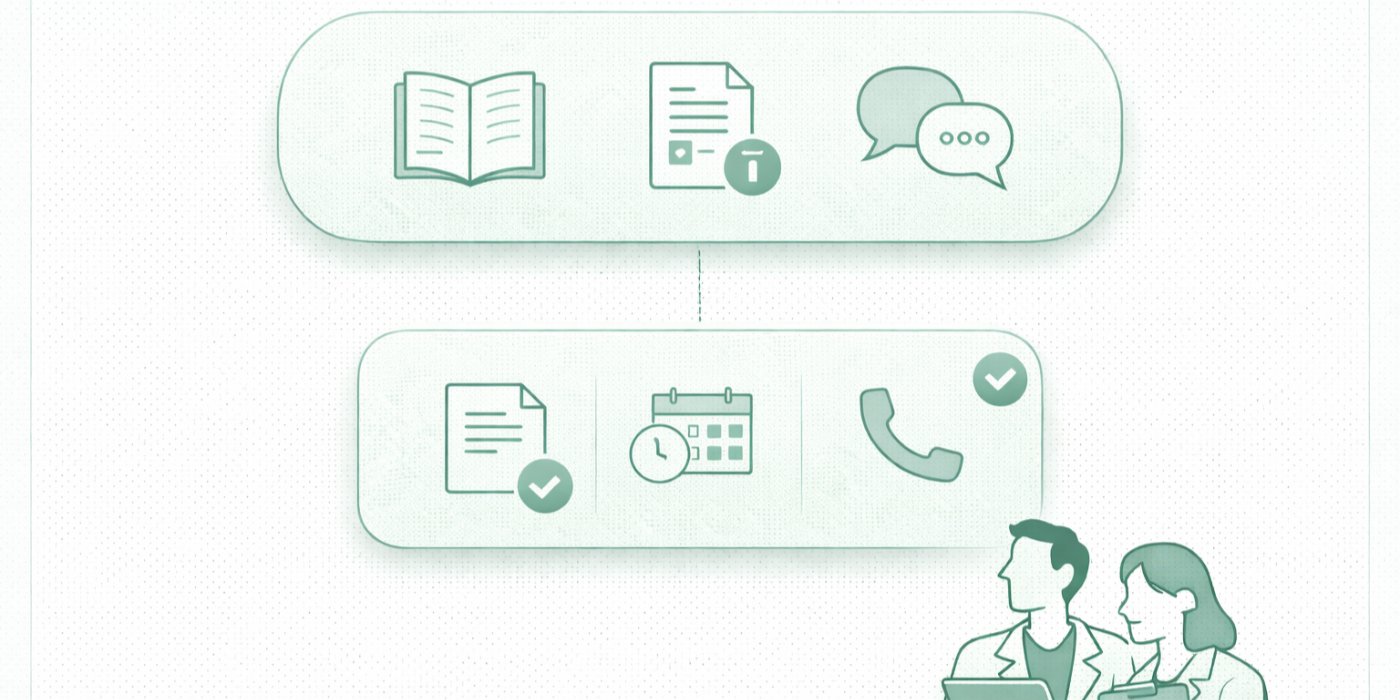
1. Why Patient Education Resources Deserve Executive-Level Attention
Most teams treat patient education as a support function. High-performing teams treat it as trial infrastructure. A brochure, quick-start guide, caregiver handout, dosing explainer, or symptom escalation card shapes what patients remember after the site conversation ends. That matters because a participant’s real behavior between visits affects adherence, data quality, retention, and the reliability of what reaches the source record, the case report form, and downstream review by the clinical research coordinator, clinical research associate, and sponsor teams managing clinical trial documentation.
Patient education resources also influence whether consent is genuinely informed or merely signed. A participant may nod during the visit and still leave confused about visit burden, washout expectations, placebo risk, reimbursement timing, home diary completion, or what qualifies as a reportable symptom. Those misunderstandings later show up as protocol deviations, delayed serious adverse event reporting, avoidable screen failures, or frustrated withdrawals that damage both enrollment momentum and site morale. Teams that already invest in GCP training requirements, audit readiness, and regulatory document management gain more value when patient-facing education is held to the same standard.
A useful directory must therefore do more than list formats. It should tell you which asset solves which patient problem, where that asset belongs in the trial journey, what failure mode it prevents, and what quality markers separate a generic handout from one that improves retention and execution. That same logic supports stronger site management, cleaner monitoring, safer adverse event handling, and smarter planning by teams responsible for clinical trial sponsor roles and resource allocation.
2. The Highest-Value Patient Education Resources by Stage of the Trial Journey
The most effective directory organizes resources around patient moments, not file names. During early outreach, the priority is expectation management. Prospective participants need a study overview brochure, myth-busting FAQ, eligibility explainer, and practical burden summary that help them judge fit before they lose trust. These assets work best when they borrow clarity from strong patient recruitment strategies, reflect the operational realism seen in clinical trial site environments, and avoid the vague promotional language that turns interested candidates into skeptical nonresponders.
At consent and screening, education must shift from attraction to precision. This is where consent companion guides, screening prep sheets, visit calendars, placebo explainers, and procedure-specific walkthroughs do the heavy lifting. They translate technical protocol language into action. They also reduce the gap between what the principal investigator, sub-investigator, and site staff say in the visit and what the participant later remembers at home. Strong materials here support cleaner informed consent, fewer rescheduled procedures, better protocol compliance, and more reliable source documentation for teams focused on monitoring and audits.
Once a participant is active in the study, education assets should protect execution between visits. Dosing handouts, side-effect reporting cards, diary instructions, wearable setup guides, travel and reimbursement documents, missed-visit recovery sheets, and caregiver guides prevent silent drift. They matter because most protocol damage occurs outside the controlled environment of the site. A patient who misunderstands fasting rules can compromise a specimen. A patient who downplays symptoms can weaken drug safety reporting. A patient who cannot navigate a virtual check-in can become a preventable retention loss in studies increasingly shaped by remote monitoring tools, virtual trial design, and digital endpoints tied to sample size planning.
Finally, the closeout stage needs its own patient education set. End-of-study transition guides, long-term follow-up instructions, medication disposition sheets, and post-trial contact summaries protect the final patient impression and reduce loose ends that later become safety, compliance, or communication problems. Teams that handle closeout carefully tend to perform better across the full study lifecycle because they think beyond transaction-level tasks and build systems that can withstand regulatory review, improve cross-functional stakeholder communication, and strengthen the reputation of both site and sponsor in future recruitment cycles.
3. How to Judge Whether a Patient Brochure or Guide Is Actually Good
A patient education asset earns its place by changing behavior in the right direction. That means readability alone is not enough. The best guides answer three operational questions fast: what does the patient need to do, when do they need to do it, and what should they do if something goes wrong. Anything less creates ambiguity. Ambiguity later turns into inconsistent diary entries, missed restrictions, medication errors, and weak symptom narratives that complicate adverse event review, pharmacovigilance case processing, and even downstream signal detection.
Plain language should be paired with concrete structure. Patients do better with timelines, examples, icons, and scenario-based instructions than with dense narrative paragraphs. A visit prep sheet that says “Do not eat after midnight” performs better when it also states which beverages are allowed, what to do about morning medications, who to call if the instruction was missed, and whether the visit must be rescheduled. The same principle strengthens materials explaining randomization, blinding, placebo controls, and endpoint expectations. Patients do not need textbook detail. They need action-ready understanding.
The strongest resources are also version-controlled, role-owned, and protocol-linked. Teams should know exactly who updates the material after an amendment, who confirms translated alignment, who validates digital links, and who retires obsolete versions. That discipline protects the study when protocol amendments change visit timing or procedures, when regulatory submissions require evidence of controlled messaging, and when monitors review whether site behavior matches the approved patient-facing workflow documented in CRA documentation practices and regulatory document management.
Accessibility and audience fit separate serious education programs from cosmetic ones. A strong resource set accounts for low health literacy, older eyes, caregiver involvement, language needs, digital hesitancy, and fear under stress. It anticipates the emotional state of the patient reading it. It respects that a newly diagnosed participant may absorb less in one sitting than a sponsor team assumes. That is why excellent resources are often layered: one short handout for immediate action, one deeper guide for later review, and one direct contact pathway for unresolved questions. This layered model fits both traditional and decentralized trial environments, improves operational consistency, and supports cleaner GCP-compliant study conduct.
4. How to Build a Patient Education Library That Sites Can Actually Use
A working library starts with categorization by patient moment, then adds control. Build folders or CMS sections for outreach, consent support, screening prep, active treatment, symptom reporting, virtual visit support, reimbursement, caregiver support, protocol updates, and closeout. Inside each section, every asset should carry a version number, protocol identifier, owner, last review date, and trigger for revision. This seems administrative until a protocol amendment changes fasting requirements or visit cadence and a site accidentally gives a participant an old sheet. Controlled libraries prevent the exact kind of inconsistency that later appears in audits, inspection readiness reviews, and monitor follow-up notes linked to weak site qualification.
Ownership should sit close to operations, not float in abstraction. The person best positioned to govern patient-facing materials is usually the function already managing site reality: a senior CRC, trial manager, patient engagement lead, or operations owner who understands both workflow and protocol demands. That owner should coordinate with medical, regulatory, safety, translation, and digital teams. This cross-functional model mirrors strong clinical research project planning, stronger vendor management, and practical budget oversight because patient education usually touches print, digital delivery, localization, telehealth support, and site training all at once.
Distribution matters as much as design. Education resources should reach patients through the channels they already use during the study: onboarding packets, portal links, text reminders, email summaries, caregiver copies, site handouts, and wallet cards for urgent contacts. A beautiful PDF hidden in a portal folder solves nothing. Teams should also decide which resources need verbal reinforcement, which require teach-back confirmation, and which should be reissued automatically after key visits. These decisions improve reliability in studies involving remote monitoring, wearables, digital biomarkers, and home-based logistics supported by clinical trial supply chain management software.
The final layer is measurement. Track screen failure reasons linked to misunderstanding, repeat calls about the same instruction, missed visit patterns, diary completion issues, symptom reporting delays, portal engagement, and dropout reasons tied to burden or confusion. Those signals tell you which patient education asset deserves redesign first. Teams that treat materials as measurable intervention tools improve faster than teams that treat them as static compliance documents. That same measurement mindset supports stronger clinical data management, more useful documentation review, and smarter risk reduction in trial operations management.

5. Common Failure Modes That Turn Patient Education Into a Hidden Trial Risk
One common failure mode is educational overload disguised as thoroughness. Teams hand patients 20 pages and feel protected because every detail exists somewhere. The patient leaves overwhelmed, remembers little, and then improvises at home. A shorter layered package performs better: one fast-start guide, one deeper reference, one escalation contact. This structure protects comprehension while still supporting the documentation expectations tied to GCP compliance, study documentation, and quality review by clinical quality auditors.
Another failure mode is technical accuracy without emotional accuracy. A sheet may correctly explain that symptoms should be reported, yet still fail because the patient does not know which symptoms “count,” worries about bothering the site, or assumes mild symptoms are irrelevant. That gap later harms AE reporting, complicates medical monitor review, and weakens the completeness of safety narratives used in aggregate pharmacovigilance reports. Strong patient education solves this with examples, severity cues, and exact contact instructions.
A third failure mode is treating translation as substitution. Literal language conversion without cultural adaptation creates materials that are grammatically correct and practically unusable. Patients sense when wording feels alien, legalistic, or disconnected from how real people speak about illness, family help, body changes, or medication routines. That is why top-performing teams review translated materials with community input, not translation memory alone. They know that trust affects recruitment just as much as discoverability through job and community directories and public-facing outreach channels such as clinical trial volunteer registries.
The fourth failure mode is broken update control. Protocol changes happen, but patient-facing instructions often lag behind site training, source templates, or internal trackers. That creates one of the most dangerous forms of inconsistency because the staff may believe the change is implemented while participants continue following outdated guidance. The fix is simple in concept and demanding in practice: map every protocol amendment to every patient-facing asset, assign a revision owner, retire old copies aggressively, and audit distribution. Teams already disciplined in regulatory affairs workflows, clinical compliance oversight, and quality assurance practice usually handle this better because they respect document control as a patient-facing safety issue, not just an internal process issue.
6. FAQs
-
Every study should have a study overview brochure, consent companion, visit schedule guide, screening prep sheet, symptom reporting card, dosing or procedure instructions where relevant, reimbursement guide where applicable, and an end-of-study transition sheet. Those materials cover the moments where misunderstanding most often causes recruitment friction, missed protocol steps, delayed reporting, and avoidable withdrawals.
-
Place it in the protocol workflow when it changes patient behavior tied to study conduct, safety, timing, dosing, reporting, or required procedures. Keep it in outreach when it helps potential participants understand the study at a high level without directing protocol-specific action. The dividing line is operational consequence.
-
Review them at study startup, after every protocol amendment that touches patient behavior, after repeated patient questions reveal confusion, after translation updates, and during periodic quality checks tied to site performance. Waiting for annual review cycles misses too many real-world changes.
-
One operational owner should control the library, usually a senior site operations or trial management function, but the content should be reviewed by medical, regulatory, safety, and localization stakeholders. Single ownership creates speed and accountability. Cross-functional review protects quality.
-
A consent form documents disclosure and agreement. A patient guide supports memory, action, and behavior after the visit. Patients rarely retain every operational detail from a single conversation, especially when the information is emotionally heavy or technically unfamiliar. Guides convert disclosure into usable execution.
-
Watch for repeated clarification calls about the same issue, screen failures caused by misunderstood instructions, high rates of missed prep steps, diary completion problems, delayed symptom reporting, avoidable no-shows, and withdrawal comments that mention burden or confusion. Those signals almost always point to a resource gap.
-
Yes. Those concepts directly shape participant expectations, trust, and retention. When they remain vague, patients may later feel misled even when the consent form was technically complete. Simple explanations reduce confusion without oversimplifying the science.
