
Directory of Clinical Trial Templates (CRF, Protocols, SOPs, etc.)
Templates save time only when they save the right time. In clinical trials, a weak template does not just create messy paperwork. It creates protocol drift, inconsistent site behavior, missing oversight evidence, query volume, amendment confusion, and audit pain that lands on already stretched clinical research coordinators, clinical research associates, principal investigators, project managers, and quality teams.
This guide is a working directory of the templates that actually matter. It shows what each template is for, where teams misuse it, and how to structure a template library that supports cleaner GCP compliance, stronger clinical trial documentation, tighter protocol management, better adverse event reporting, and faster inspection readiness.
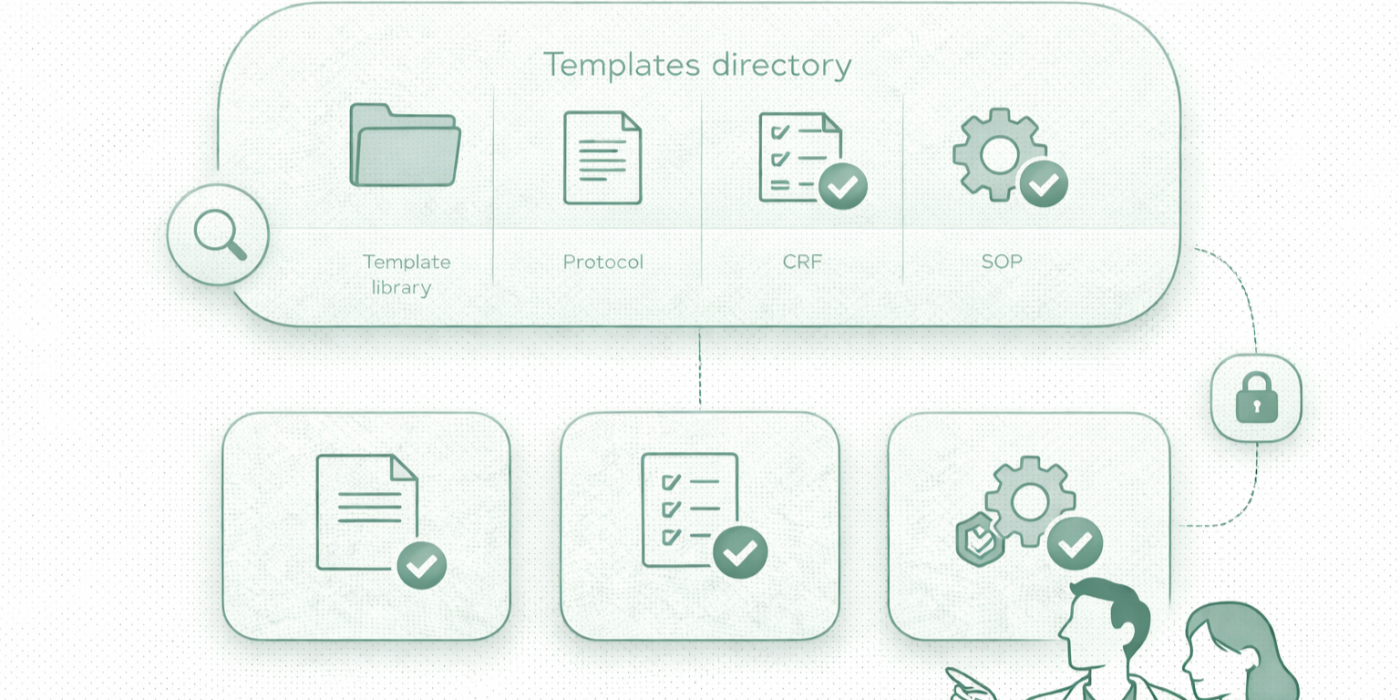
1. What A Serious Clinical Trial Template Library Should Actually Include
Most teams think they need “a protocol template, a CRF template, and some SOPs.” That is how weak study systems get built. A real clinical trial template library is an execution system. It must support study startup, site activation, participant flow, safety review, data handling, vendor coordination, oversight evidence, deviation response, and closeout. If your library cannot support daily behavior across informed consent procedures, case report form design, protocol deviation control, site qualification visits, and sponsor responsibilities, it is not a library. It is a false comfort.
The best template libraries are built around failure prevention, not document accumulation. They anticipate where sites forget details, where monitors see repeat findings, where investigators overdelegate, where versions drift, where queries multiply, and where safety language becomes inconsistent. That is why strong libraries are tied directly to CRA monitoring techniques, CRC role execution, PI oversight, regulatory document management, and clinical quality auditing. A template should tell a user what good looks like before a finding, not after one.
Another mistake is treating templates as static artifacts instead of controlled tools. A protocol template must align with how the study will handle randomization, blinding, endpoints, placebo control logic, and data monitoring committee oversight. A CRF template must align with source workflows, not just database fields. An SOP template must align with actual staffing, not idealized staffing. If the template ignores the way work is really done, the template becomes the first deviation.
2. The Most Important Template Categories And What Good Looks Like Inside Them
The protocol family sits at the center of the library because every other document either interprets it, operationalizes it, or proves compliance with it. That means your protocol template, amendment handling structure, endpoint definition logic, sample size assumptions, and randomization framework must align. A protocol template is weak when it looks polished but leaves coordinators guessing about visit windows, safety triggers, unscheduled visits, reconsent triggers, or source expectations. It is strong when a site can open it and know exactly what must happen, when, by whom, and what evidence must remain behind.
The CRF and data-capture family should be built to reduce avoidable queries, not impress a data team with exhaustive field collection. A strong CRF template aligns with biostatistics planning, supports clinical data manager workflows, fits real EDC and data management systems, and reflects how sites actually document care. A weak one creates fields no coordinator can complete from source, or worse, forces sites to reverse-engineer clinical reality into database logic. That is how “template efficiency” turns into missing data and endless clean-up.
The safety family must be painfully clear because vagueness here is expensive. Your AE form, SAE process template, drug safety reporting workflow, medical monitor review logic, and pharmacovigilance escalation structure should leave no doubt about timing, minimum data, causality language, follow-up expectations, and handoff points. Safety templates fail when they assume people know the workflow. Strong safety templates show the workflow on the face of the form.
The operations and oversight family includes logs, trackers, checklists, monitoring reports, delegation tools, and CAPA forms. This is where preventable operational pain either gets contained or multiplied. A strong oversight set connects monitoring visit documentation, investigator site management, risk management, vendor management, and resource allocation. If these templates do not assign owners, due dates, and evidence expectations, they are not control tools. They are meeting decorations.
3. How To Adapt CRF, Protocol, And SOP Templates Without Creating Compliance Risk
The worst way to customize a template is to let every study rewrite everything from scratch. That creates beautiful inconsistency. The second-worst way is to refuse customization at all. That creates templated nonsense. The right move is controlled adaptation. Start with a master library, identify sections that must stay fixed for GCP essentials, training requirements, audit preparedness, research compliance, and regulatory affairs support, then clearly mark the sections that must be study-specific.
For a protocol template, that means protecting the architecture while customizing the science and the operational details. The architecture covers the standard sections, the required approvals, the core definitions, the amendment controls, and the relationship to other study documents. The customization covers population, procedures, windows, endpoints, safety logic, and study-specific monitoring assumptions. If your protocol template does not force discussion of protocol deviations, informed consent best practices, patient safety oversight, sponsor roles, and PI responsibilities, it is too generic to be safe.
For a CRF template, begin with the protocol objectives and the analysis plan, then work backward into data fields. This sounds obvious, but teams constantly do the reverse. They inherit a legacy CRF, bolt on new fields, and create a data burden no site can sustain. Strong CRF adaptation uses data management logic, clinical data analysis needs, source documentation expectations, laboratory best practices, and the realities of medical writing and document tools. Every field should earn its existence.
For an SOP template, the key is operational honesty. If the SOP says the site, sponsor, or vendor will do something, the workflow must exist, the owner must exist, and the evidence trail must be visible. Good SOPs connect directly to clinical trial project planning, stakeholder communication, budget oversight, compliance officer functions, and regulatory compliance software strategy. If the SOP cannot survive a walk-through with actual users, it is not ready.
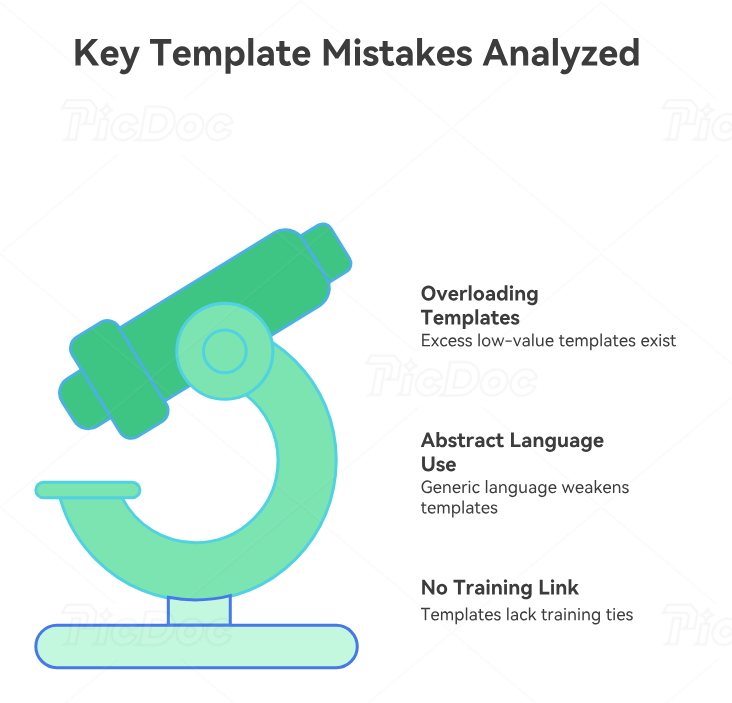
4. The Template Mistakes That Cause Delays, Findings, And Endless Rework
The first major mistake is confusing completeness with usefulness. Teams build giant template packs filled with forms nobody needs, while the truly high-risk documents remain weak. A library overloaded with low-value templates usually underinvests in consent control, AE reporting technique, deviation management, regulatory document structure, and monitoring follow-up discipline. High-value libraries are selective. They protect the moments most likely to fail.
The second mistake is writing templates in abstract language. Clinical trial templates should not sound like policy theater. They should sound like work. A deviation log should make categorization easy. A CAPA form should force root-cause thinking. A follow-up letter template should make actions impossible to misread. If the language is generic, the output will be generic too. That weakness spills into clinical research project manager workflows, clinical trial manager oversight, medical monitor review, MSL communication standards, and clinical operations leadership.
The third mistake is failing to connect templates to training and review cadence. A template is only as strong as the user who applies it under pressure. If staff do not know which version to use, when to escalate, or what the completed form should look like, your library is functionally broken. That is why strong teams tie their template system to continuing education resources, certification pathways, networking groups, LinkedIn groups for professionals, and even conference-based operational learning. A template library is a training asset whether you acknowledge it or not.
5. How To Build A Template Directory That Makes Studies Faster And Careers Stronger
If you are building a clinical trial template directory for an organization, begin by mapping templates to the study lifecycle: startup, activation, enrollment, treatment, safety management, monitoring, file reconciliation, amendment control, and closeout. Then identify which templates are global, which are study-specific, which are site-facing, and which require formal approval. This makes the library easier to govern and easier to teach. It also creates a stronger backbone for TMF control, regulatory specialization, quality assurance functions, vendor oversight programs, and project planning discipline.
Then score each template against five standards: clarity, relevance, control, evidence value, and user burden. A strong template should be easy to understand, directly tied to protocol or compliance needs, version-controlled, useful in an audit or review, and efficient enough that staff will actually complete it well. If it fails one of those tests, revise or retire it. Teams can support this work with the right ecosystem of document tools, EDC platforms, remote monitoring tools, compliance software, and clinical trial supply-chain systems. The tool stack should support the library, not replace the thinking behind it.
For individual professionals, mastering templates is a career advantage that many people underestimate. The coordinator who understands how a consent note, eligibility checklist, source worksheet, AE form, and deviation log all connect becomes more valuable than the coordinator who simply “fills forms.” The CRA who can distinguish a weak template from a robust one becomes better at risk detection. The PM who can rationalize a template library reduces startup drag. That is why template literacy strengthens careers across CRC certification preparation, CRA exam strategy, CRA practice testing, CRC practice testing, and career roadmaps across clinical research roles. The market rewards people who understand the machinery behind clean execution.
6. FAQs
-
At minimum, every study should have a strong protocol template, schedule of assessments structure, informed consent framework, CRF design approach, AE and SAE reporting tools, deviation logs, delegation and training logs, and monitoring / follow-up templates. Without those, basic execution control is already weak.
-
A CRF template is designed for standardized study data capture, often within an EDC workflow. A source worksheet template is designed to support source documentation at the site. They should align, but they should not be confused. If the source worksheet simply duplicates the CRF without helping the site document protocol-required care, it adds burden without reducing queries or improving data quality.
-
No. Core governance language can remain standardized, but study-specific workflows often require controlled adaptation. Good SOP design protects the non-negotiables tied to GCP compliance, research ethics, audit defense, and regulatory expectations, while still reflecting the real workflow of the study.
-
Too many is any number that creates confusion, overlap, or low-value work. A template should exist because it prevents risk, clarifies execution, preserves evidence, or improves quality. If it exists only because a prior study used it once, it may be clutter. Strong libraries are tied to risk management, vendor oversight, regulatory control, and operational ownership, not template vanity.
-
An audit-ready template is clear, version-controlled, role-appropriate, evidence-rich, and connected to the actual workflow. It should make it easy to see what happened, who did it, when it happened, what decision was made, and what follow-up occurred. That is true for monitoring reports, consent documentation, safety reports, PI oversight evidence, and TMF tools.
-
Absolutely. People who understand how templates shape execution are easier to trust in real study environments. That matters for advancement across clinical research assistant roles, clinical trial assistant roles, clinical research administrator pathways, quality careers, and clinical operations management tracks. Clean paperwork is not the point. Controlled execution is.
