How TikTok Will Revolutionize Clinical Trial Recruitment by 2026-2027
Clinical trial recruitment is still bleeding time, money, and credibility because too many studies depend on outreach models built for a world that no longer exists. Sites wait on physician referrals that arrive too slowly, patient-facing materials sound like regulatory homework, and recruitment teams often fail to meet people where health curiosity actually lives. By 2026-2027, TikTok will not just be a marketing channel for trials. It will become one of the fastest engines for awareness, education, pre-screening intent, and trust formation.
That shift will matter only for organizations that understand the difference between visibility and qualified enrollment. The winners will combine lessons from patient recruitment and retention trends, the rise of AI and digital health in trials, the logic of real-world evidence integration, and the operational discipline needed for GCP compliance. TikTok can accelerate recruitment, but only if clinical research teams stop treating it like ordinary social media.
1. Why Traditional Clinical Trial Recruitment Is Failing the Modern Patient
Traditional recruitment still assumes that patients discover research through clinic walls, trial registries, static websites, and occasional provider conversations. That model misses how people now learn about symptoms, treatment options, side effects, chronic disease communities, and healthcare decision-making. Patients are already self-educating in short-form video environments long before they ever speak to a coordinator. When trial teams ignore that behavior, they create a visibility gap that no late-stage outreach scramble can fully fix.
The deeper problem is not just low reach. It is low resonance. Many trial ads and study pages are written in compliance-heavy language that protects the organization legally but fails to move patients emotionally or practically. Patients do not wake up wanting to “participate in a randomized placebo-controlled protocol with defined inclusion criteria.” They want answers about burden, safety, travel, time, privacy, compensation, side effects, and whether the study might fit real life. Recruitment improves when sponsors and sites understand how questions around placebo-controlled trials, randomization techniques, blinding in clinical trials, and primary versus secondary endpoints must be translated into language that patients can actually use.
Another failure point is timing. Recruitment teams often enter the market too late, after protocol finalization, after site activation pressure builds, and after enrollment targets are already at risk. By then, teams are buying reach instead of building trust. TikTok changes that because it allows research organizations to create demand earlier through condition education, myth correction, community listening, and narrative-based awareness. That aligns naturally with broader changes documented in the state of clinical trials, market growth projections, regulatory change analysis, and decentralized trial disruption predictions.
The final reason traditional recruitment underperforms is that it rarely produces compounding data. A flyer in a clinic may generate a few calls, but it teaches little about what message worked, which fear blocked action, or what subgroup showed curiosity first. Short-form content does. It reveals language patterns, retention signals, audience questions, comment objections, and condition-specific engagement behavior. For recruitment leaders, that intelligence is gold.
2. Why TikTok Fits the Future of Clinical Trial Recruitment Better Than Older Channels
TikTok fits the next phase of recruitment because clinical trial participation begins long before formal screening. It starts when someone recognizes themselves in a symptom story, hears an explanation that makes sense, or discovers that research participation is not automatically dangerous, exploitative, or inaccessible. Short-form video excels at compressing that first trust event into seconds. That is a major advantage over static site pages, generic banner ads, and directories that require patients to arrive already motivated.
The platform also matches where clinical research is heading operationally. Recruitment is moving toward more consumer-grade targeting, faster iteration, richer audience intelligence, and integrated digital journeys. That trend is reinforced by the growth of AI-powered trials, predictive retention models, wearable-powered studies, and broader technology adoption in research. TikTok is not valuable because it is trendy. It is valuable because it produces behavioral signals that recruitment teams can actually use.
Another advantage is search behavior. TikTok is increasingly functioning like an answer engine, especially for younger audiences and caregivers who want quick, human-language explanations. That matters for trials in dermatology, mental health, obesity, women’s health, GI, neurology, rare disease, and chronic inflammatory conditions where patients actively compare stories and symptom experiences online. A strong content strategy can meet that intent earlier than standard job-board-style volunteer registries and platforms, complement formal outreach from top patient recruitment companies, and improve lead quality before site coordinators ever enter the process.
Most importantly, TikTok rewards clarity over corporate polish. That is exactly what trial recruitment needs. Patients distrust language that sounds engineered to persuade without explaining. They respond better when teams answer the questions that actually block participation: What happens at visits? Who sees my data? What if I am randomized? What if I leave the study? What does compensation really mean? Those questions connect naturally to educational assets about informed consent procedures, data monitoring roles, patient safety oversight, and regulatory and ethical responsibilities.
3. The Five Biggest Ways TikTok Will Change Recruitment by 2026-2027
First, TikTok will shift recruitment from reactive outreach to continuous audience warming. Instead of launching awareness only when sites are desperate, sponsors and sites will build condition-specific content libraries months earlier. That gives them warmer audiences, richer language insights, and lower education friction at screening.
Second, TikTok will make recruitment more narrative-driven and less brochure-driven. The highest-performing content will not look like formal advertisements. It will look like practical, specific education: what screening feels like, how travel support works, what randomization actually means, why a patient may or may not qualify, and how participation affects daily life. This reduces the information asymmetry that often causes drop-off after first contact.
Third, TikTok will improve pre-screen efficiency. Not by diagnosing patients, but by helping them self-identify with greater accuracy. When content answers common eligibility questions clearly, sites waste less time on totally misaligned leads. That pairs well with operational improvements in resource allocation for trials, vendor management, stakeholder communication, and the market shift toward more measurable digital funnels described in recruitment and retention trend reports.
Fourth, TikTok will expand access to populations that legacy recruitment channels routinely miss. Younger adults, caregivers, multilingual communities, rare disease micro-communities, and people outside academic medical centers can all be reached more efficiently through creator ecosystems and condition-led content. For global trial operators watching emerging markets for trials, Africa’s future role in trials, India’s research expansion, and country-level competition in the trial race, this is not minor. It changes feasibility.
Fifth, TikTok will force recruitment teams to operate like publishers. That means faster message testing, creator partnerships, content governance, comment moderation, sentiment analysis, and lead-routing discipline. Recruitment teams that cannot handle that operating model will lag badly.
What is your biggest clinical trial recruitment pain point right now?
Choose one. The strongest TikTok strategy starts with the real blocker.
4. The Compliance, Ethics, and Execution Risks No One Can Ignore
TikTok will not revolutionize recruitment because it removes friction. It will do so because smart teams learn how to manage new friction better than everyone else. The biggest risk is saying something that sounds helpful to patients but becomes misleading in a regulated context. Claims around benefit, eligibility, safety, burden, compensation, or expected outcomes can go wrong fast if content is not governed tightly.
That is why every TikTok-based recruitment model needs a serious approval framework rooted in GCP essentials, informed consent discipline, handling audits, and research compliance and ethics. Teams need approved language banks, creator guidance, moderation rules, escalation pathways, privacy protections, and documented review steps. Otherwise, they risk producing attention without defensibility.
Privacy is another major danger. Patient questions in comments can reveal health information. Site videos can accidentally expose protected information or workflow details that should not be public. Even well-intended behind-the-scenes content can create problems if filming is not controlled. That means recruitment teams need support from site operations, legal, quality, and training functions, not just marketing.
Execution risk is just as important. Many organizations will post a few generic videos, see weak conversion, and conclude that TikTok does not work for research. In reality, they will have failed because they posted content that answered none of the patient’s real concerns. Good TikTok recruitment content is not “Join our study today.” It is condition education, trust repair, burden clarification, participation demystification, and screening expectation management. Without that foundation, the platform becomes noise.

5. What Smart Sponsors, CROs, and Sites Should Do Now
The right move now is not to chase viral content. It is to build a recruitment operating system that can use TikTok intelligently by 2026-2027. Start by identifying therapeutic areas where patient self-education is already active and where trial misconceptions are blocking action. Then map the top 30 questions patients ask before enrollment. That content map becomes your strategic backbone.
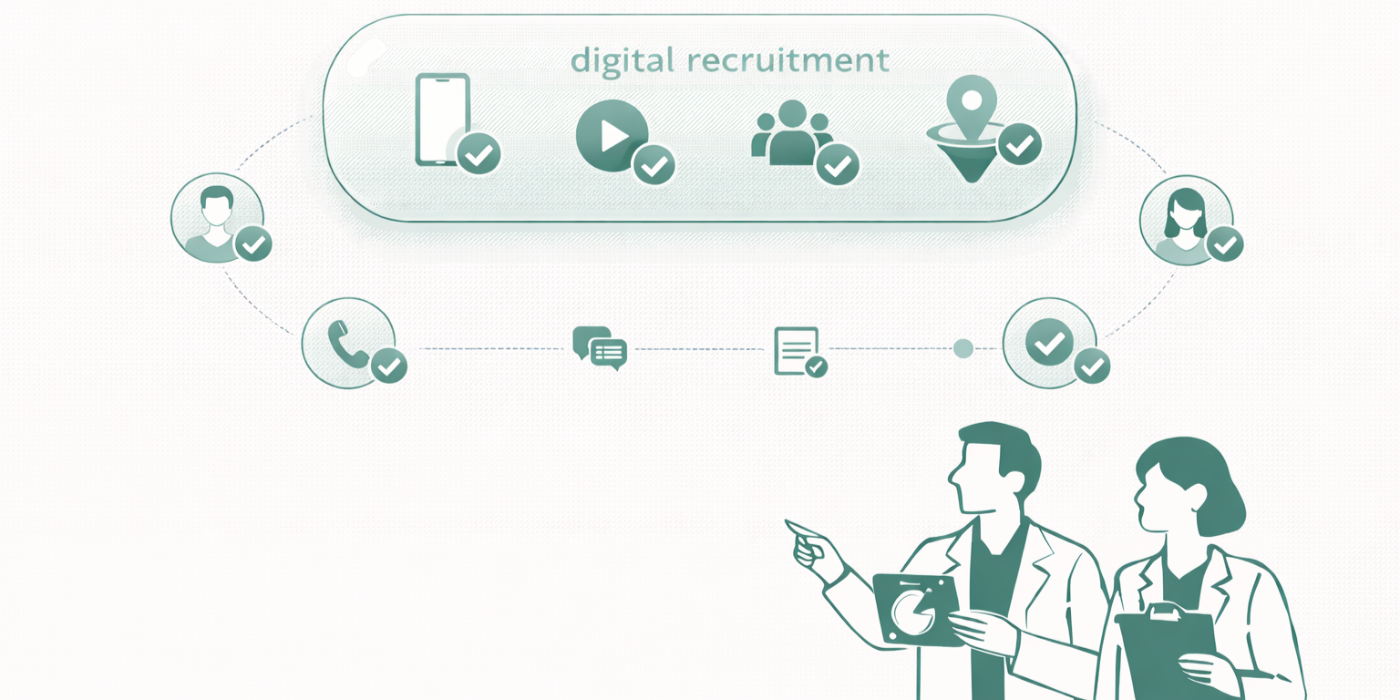
Next, connect TikTok content to measurable funnel steps. A video should lead somewhere specific: a landing page, pre-screening form, FAQ library, webinar, call scheduler, or site-specific information page. That is where lessons from top CRO market leaders, clinical research staffing infrastructure, networking groups and forums, and clinical research conferences become useful: the organizations that learn fastest usually combine education, operations, and feedback loops better than everyone else.
Teams should also train coordinators and investigators to speak in patient language. The future winners will not hide experts behind polished brochures. They will put credible professionals on camera in a format patients can actually understand. That human layer will matter even more as AI transforms clinical trials, remote audits expand, digital biomarkers spread, and virtual or immersive trial models increase patient confusion and curiosity at the same time.
Most importantly, track the right metrics. Vanity reach is useless if it does not improve qualified leads, reduce screen-fail waste, shorten enrollment timelines, diversify participants, or improve retention. TikTok should be measured as part of recruitment operations, not as a detached brand experiment.
6. FAQs About TikTok and Clinical Trial Recruitment
-
Yes, especially for awareness-stage education, trust building, and early patient intent. It fits broader shifts in digital health adoption, patient recruitment trends, real-world evidence integration, and decentralized research models.
-
Trials involving chronic conditions, visible symptoms, lifestyle impact, caregiver involvement, stigma, or younger demographics are especially well suited. Studies in tech-enabled environments can also benefit when paired with education around wearable-powered trials, AI-assisted recruitment, patient retention prediction, and technology adoption in research.
-
Treating TikTok like a place to post generic ads instead of patient-centered education. The strongest content answers real concerns around informed consent, patient safety oversight, placebo-controlled designs, and randomization.
-
It can, if teams build multilingual, community-specific, trust-aware content instead of one-size-fits-all messaging. This becomes especially relevant as organizations expand into emerging clinical trial markets, monitor country-level shifts in trial competitiveness, and rethink recruitment access outside traditional site ecosystems.
-
Teams need approved scripts, claim boundaries, escalation pathways, moderation rules, privacy controls, and training grounded in GCP requirements, audit preparedness, ethical responsibilities in research, and research compliance best practices.
-
Success should be tied to operational outcomes: qualified lead volume, screen-fail reduction, faster enrollment, broader demographic reach, lower education friction, and better retention. Those outcomes should be read alongside insights from patient recruitment trends, resource allocation in trials, vendor management, and stakeholder communication strategy.
