
Patient-Run Clinical Trials: The Radical Idea Pharma Can’t Ignore
Patient-run clinical trials sound radical only if you are still imagining research through a fully sponsor-controlled, site-heavy model. The moment you look at modern patient behavior, digital health adoption, decentralized workflows, rare disease advocacy, and real-world data generation, the idea stops looking fringe and starts looking inevitable. Patients already organize communities, track symptoms, compare outcomes, and identify gaps faster than many legacy systems.
The real question is not whether patient-run clinical trials will emerge. It is whether pharma, CROs, regulators, and research professionals will learn how to work with them without destroying safety, data quality, ethics, or trust. To understand that shift, it helps to ground the discussion in state of clinical trials 2025 industry trends, real-world evidence integration trends, clinical research technology adoption, and patient recruitment and retention trends.
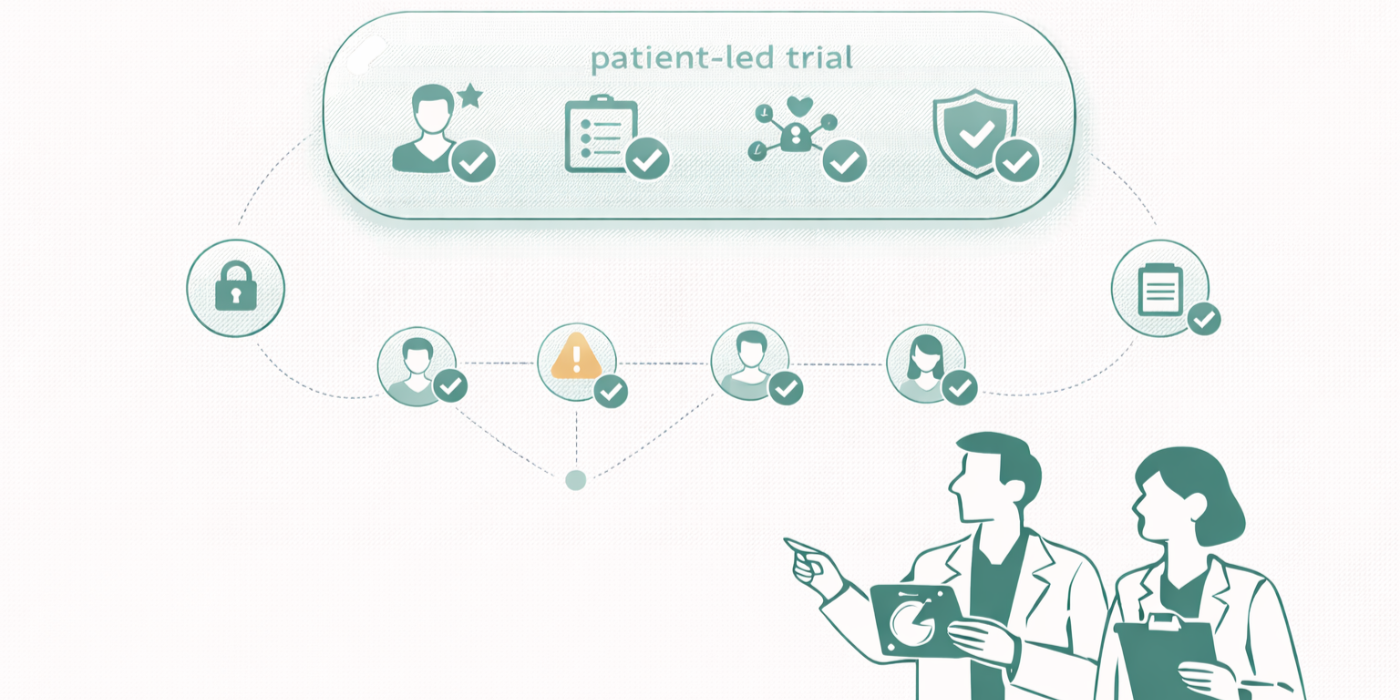
1. Why Patient-Run Clinical Trials Are No Longer a Fringe Concept
The old research model assumes expertise flows in one direction: sponsor designs, investigator executes, site coordinates, patient complies. That model still matters, but it no longer explains the full reality of how evidence gets generated. Patients now build disease communities, share protocol interpretations, document side effects, compare outcomes, track biomarker changes, and spot practical barriers long before a traditional study team reacts. Once you understand that, patient-run trials stop sounding like activism theater and start looking like a market response to slow, expensive, exclusionary research systems. That shift becomes easier to grasp when read alongside clinical trial volunteer registries and platforms, top clinical research journals and publications, clinical research networking groups and forums, and best LinkedIn groups for clinical research professionals.
What makes the idea powerful is not the slogan “patient-led.” It is the operational pressure beneath it. Traditional trials often fail where patients feel the pain most: narrow eligibility, burdensome site visits, poor communication, low transparency, inconsistent retention strategy, and endpoints that matter more to a publication plan than to life with disease. When those frustrations compound, communities begin building their own infrastructure for education, recruitment, remote tracking, and peer support. That is exactly why professionals in clinical research associate roles and career path, clinical research coordinator responsibilities and certification, clinical trial manager career roadmap, and clinical research project manager career path need to pay attention.
There is also a strategic mistake pharma keeps making: assuming patient participation equals patient alignment. It does not. A participant can enroll in a trial and still feel unheard, overburdened, underinformed, and used as a data source rather than treated as a long-term stakeholder. Patient-run trial models challenge that imbalance by asking harder questions about who defines success, who owns the practical burden, and who gets a voice in protocol design. These questions connect directly to primary vs secondary endpoints clarified with examples, blinding in clinical trials explained clearly, randomization techniques in clinical trials, and placebo-controlled trials what researchers must understand because scientific rigor does not excuse human irrelevance.
| Patient-Run Trial Element | What It Looks Like in Practice | Why Patients Push for It | Main Risk / Failure Mode | How Research Teams Should Respond |
|---|---|---|---|---|
| Community-led recruitment | Advocacy groups bring in participants directly | Faster reach and more trust | Selection bias | Build screening controls and transparent eligibility logic |
| Patient-defined endpoints | Symptom relief and function prioritized | Clinical outcomes feel disconnected from daily life | Weak validation | Co-design validated patient-reported measures |
| Remote consent | Digital onboarding and education | Less site burden | Inadequate comprehension checks | Use robust eConsent plus comprehension confirmation |
| Wearable-generated data | Continuous passive monitoring | Captures reality outside visits | Data noise and device variability | Standardize devices and analytic rules |
| At-home assessments | Nurse visits or self-collected measures | Less travel friction | Technique inconsistency | Create training, certification, and verification steps |
| Community protocol feedback | Patients review draft study burden | Prevents impractical designs | Scope drift | Separate feasibility input from final governance |
| Shared data dashboards | Participants see personal and cohort trends | Higher transparency | Unblinding or behavior distortion | Control what is shared and when |
| Patient-run registries | Communities maintain prospect databases | Readiness for future studies | Privacy and governance gaps | Create compliant governance and access policies |
| Peer support layers | Participants support one another during study | Better retention | Information contamination | Define guardrails on discussion topics |
| Self-reported symptom logs | Frequent patient-entered diaries | Captures lived experience better | Recall and reporting bias | Use validated prompts and missing-data rules |
| Home delivery of study supplies | Drug or kit shipment direct to participants | Convenience and broader reach | Chain-of-custody failures | Strengthen accountability and temperature control |
| Patient advisory governance | Formal seats in trial oversight | Real influence, not tokenism | Role ambiguity | Define remit, authority, and conflict rules |
| Participant education libraries | Disease and protocol explainers built for laypeople | Reduces confusion | Oversimplification | Layer plain language with escalation paths |
| Decentralized assessments | Televisits replace many site visits | Access for remote patients | Variable quality and licensing issues | Map jurisdiction and quality standards |
| Participant-owned records | Patients contribute their own longitudinal data | Richer history | Verification problems | Use source verification tiers |
| Digital biomarkers | Continuous proxy measures from devices | Detects change earlier | Analytic overreach | Validate against clinically meaningful outcomes |
| Cross-border participation | Patients join from multiple regions | Rare disease access | Regulatory fragmentation | Use country-specific compliance pathways |
| Patient-moderated communications | Community reps help guide discussion | Trust and responsiveness | Misinformation spread | Train moderators and create escalation routes |
| Participant compensation redesign | Burden-based reimbursement | Fairer participation | Undue influence concerns | Use ethics review and burden justification |
| Real-time feedback loops | Patients flag friction immediately | Faster protocol adaptation | Too many reactive changes | Formalize change control thresholds |
| Social recruitment campaigns | Communities amplify study outreach | Scale and speed | Overpromising benefits | Review content and claims carefully |
| Patient-led feasibility mapping | Communities identify barriers before launch | Prevents dropout later | Anecdotal bias | Pair experience with structured evidence |
| Adaptive support services | Transport, care coordination, reminders | Better retention | Uneven implementation | Track service quality as part of trial ops |
| Open-result expectations | Patients want timely return of findings | Respect and reciprocity | Premature interpretation | Plan staged and contextualized disclosure |
| Community-owned biobanks | Patient groups influence sample governance | Trust in future use | Governance complexity | Build clear secondary-use controls |
| Participant retention councils | Former participants advise on dropout risk | Practical fixes that sites miss | Anecdotes overgeneralized | Combine with analytics and site data |
2. What Patient-Run Trials Get Right That Traditional Clinical Research Often Gets Wrong
Patient-run models force research to confront a painful truth: many protocol problems are not scientific problems first. They are human-friction problems. A protocol can be statistically elegant and still fail because it assumes patients can miss work repeatedly, travel long distances while symptomatic, decode complex consent language, remember dozens of reporting steps, and keep showing up without any felt sense that the study understands their life. If that sounds harsh, it is because it is true. That is why smart professionals keep studying clinical trial patient recruitment and retention trends, how to become a clinical research coordinator, guide to becoming a lead clinical research coordinator, and clinical trials coordinator career pathway.
One major strength of patient-run or patient-shaped trials is they surface meaningful endpoints earlier. Patients often care about function, fatigue, cognition, symptom volatility, sleep disruption, treatment burden, and the practical ability to live normally. Sponsors may care about biomarker movement, progression-free survival, or narrow regulatory endpoints. Both matter, but when patient reality gets excluded too early, trials answer questions that are technically impressive and commercially useful yet emotionally hollow. The tension becomes clearer through biostatistics in clinical trials, case report form definition, types, and best practices, data monitoring committee roles in clinical trials, and clinical trial success rates by therapeutic area.
Patient-run thinking also improves recruitment honesty. Communities know what people are afraid of, what rumors are circulating, what previous trial experiences damaged trust, and what language makes outreach sound manipulative. Traditional recruitment often hides behind polished messaging that ignores lived objections. Patients, by contrast, can articulate the actual blocker: transportation, childcare, invasive procedures, fear of placebo, privacy concerns, digital burden, or prior dismissal by clinicians. That insight strengthens not only enrollment but also protocol feasibility, site communication, and retention design. Those same skills connect with top 100 clinical trial sites and SMOs recruiting study coordinators, top 100 hospitals and health systems running clinical trials, top 75 academic medical centers with active clinical trials, and top 75 clinical trial patient recruitment companies and tech solutions.
Another uncomfortable truth: patient-led energy often spots operational nonsense faster than legacy teams. If a diary is too long, patients abandon it. If a wearable is irritating, patients stop wearing it. If a telehealth workflow is confusing, patients miss visits. If symptom questions do not match the disease experience, data become performative rather than meaningful. This is where patient-run trials pressure pharma to stop optimizing for internal convenience alone. Professionals working in clinical data manager career roadmap, clinical data coordinator career path, lead clinical data analyst career guide, and top 100 clinical data management and EDC platforms should treat that pressure as an advantage, not a threat.
3. Where Patient-Run Trials Can Fail Badly If Governance Is Weak
The biggest mistake in discussing patient-run trials is romanticizing them. Patient leadership does not automatically create high-quality evidence. Passion does not replace protocol discipline. Community trust does not replace informed consent controls. Rich lived experience does not automatically produce valid endpoint selection, reliable source documentation, or clean adverse event workflows. In fact, if governance is weak, patient-run models can fail in exactly the places critics fear most: inconsistent data capture, privacy breaches, biased recruitment, uncontrolled communication, unverified outcomes, and poorly managed safety signals. Anyone serious about this future must understand gcp compliance essentials for clinical research associates, managing clinical trial documentation essential CRA techniques, managing regulatory documents for CRCs, and handling clinical trial audits gcp preparation essentials.
Safety is the first place where good intentions collapse without process. If patients are self-reporting symptoms through apps, community forums, shared dashboards, or informal check-ins, who determines what counts as an adverse event, what qualifies as serious, what requires follow-up, and what triggers escalation? Delay in those decisions is not a theoretical problem. It is a subject protection problem. That is why any patient-led model must be deeply connected to essential adverse event reporting techniques for CRCs, drug safety reporting essential timelines and regulatory requirements, aggregate reports in pharmacovigilance step-by-step guide, and mastering regulatory submissions in pharmacovigilance.
Bias is the second major danger. Patient-run recruitment can create highly motivated, highly networked cohorts that do not represent broader populations. Community enthusiasm can also distort reporting behavior. Participants may unconsciously overreport improvement because they believe in the mission, or overcommunicate with one another in ways that contaminate blinded assumptions, symptom interpretation, or adherence behavior. This is not an argument against patient-run trials. It is an argument for stronger design. Research teams need fluency in blinding in clinical trials, randomization techniques in clinical trials, placebo-controlled trials, and data monitoring committee roles precisely because enthusiasm is not a substitute for control.
There is also a governance illusion that hurts many “patient-centric” pilots: assuming a patient advisory board alone solves structural issues. It does not. Token input without authority is branding, not governance. Real governance means role clarity, audit trails, decision rights, escalation paths, privacy controls, training standards, and dispute resolution. Without that scaffolding, patient-run trials become vulnerable to the worst of both worlds: all the burden of innovation, none of the protections of established clinical operations. That is why emerging leaders should also study regulatory and ethical responsibilities for principal investigators, patient safety oversight in clinical trials, research compliance and ethics mastery for research assistants, and clinical compliance officer career guide.
4. How Pharma, CROs, and Clinical Operations Teams Should Respond Without Killing the Idea
The smartest response is not rejection and not surrender. It is structured partnership. Pharma should stop asking, “How do we keep control?” and start asking, “Which parts of research must remain tightly governed, and which parts improve when patients gain real design influence?” That distinction matters. Safety reporting, investigational product handling, consent compliance, auditability, and regulatory reporting cannot become casual. But recruitment language, visit burden, endpoint relevance, support services, communication design, and retention strategy often improve dramatically when patients have more control. That balance fits naturally with effective stakeholder communication in clinical trial project management, clinical trial resource allocation project management mastery, vendor management in clinical trials essential PM skills, and clinical research project manager salary trends.
CROs should be especially alert. Patient-run models threaten any vendor whose value proposition depends on complexity opacity. If a CRO is slow, bloated, overly site-centric, and poor at participant communication, patient-led ecosystems will expose that weakness quickly. On the other hand, CROs that become strong in decentralized coordination, patient advisory integration, digital operations, home-health logistics, and hybrid data quality controls will become more valuable, not less. That is why industry professionals should study top CRO market share analysis, top 50 contract research vendors and solutions platforms, top 50 remote clinical trial monitoring tools, and clinical research staffing agencies complete directory and reviews.
Clinical operations teams should respond by redesigning workflows around evidence-worthy convenience, not convenience theater. That means fewer nonessential site visits, clearer digital instructions, burden-based reimbursement logic, more flexible scheduling, participant-facing dashboards that do not compromise blinding, and retention support based on real behavior rather than generic reminders. It also means using patient communities before protocol finalization, not after enrollment collapses. These operational changes align with clinical research technology adoption report, the rise of wearable tech in future clinical trials, smart pills and digital biomarkers inside the clinical trial revolution, and predicting patient dropout how AI will solve retention.
The point is not to let patients run wild. The point is to recognize where traditional systems are blind. Patient-run pressure reveals where protocols are impractical, where communication is sterile, where recruitment assumptions are wrong, and where outcome logic feels disconnected from the disease reality. The organizations that survive this shift will not be the most controlling. They will be the most adaptive while remaining inspection-ready. That is also why teams should keep a close eye on why decentralized clinical trials will eliminate 80 percent of traditional research sites, ai-powered clinical trials how robots will run your next study, the end of clinical trial monitors how remote ai audits will take over, and how AI will predict clinical trial failures before they happen.

5. The Future of Patient-Run Trials and Why Clinical Research Careers Must Adapt Now
Patient-run trials are not a side conversation. They are part of a larger reordering of clinical research authority. As evidence generation becomes more digital, more continuous, more community-informed, and less confined to traditional site walls, roles across the industry will change. CRAs will need stronger remote oversight judgment. CRCs will need better participant education systems. Project managers will need hybrid operational models. Pharmacovigilance teams will need cleaner digital signal handling. Data teams will need better methods for integrating participant-generated information without surrendering rigor. This evolution connects directly to how to become a clinical research associate CRA definitive career guide, clinical research monitor career roadmap, senior clinical research associate career path, and clinical research salary report by role and location.
There is also a competitive talent angle that many professionals are missing. The researchers who understand patient-led evidence models, remote workflow governance, digital biomarker skepticism, and community-centered protocol design will be more valuable than those trained only in legacy site routines. Employers do not need people who merely defend the old model. They need people who can modernize it without compromising subject protection or regulatory credibility. That is why smart professionals should follow clinical research continuing education providers, clinical research certification providers directory detailed comparison, clinical research conferences and events global directory, and top freelance clinical research professionals directories and platforms.
For sponsors, the strategic risk is simple: if patients can organize faster than you can adapt, your trials become harder to recruit, harder to retain, and easier to criticize publicly. For regulators, the challenge is to encourage innovation without blessing chaos. For researchers, the job is to distinguish what should be democratized from what must remain tightly controlled. For patient communities, the challenge is to turn moral urgency into auditable systems. That is the real frontier. And it is why patient-run trials are not a gimmick. They are a stress test for whether the industry can finally build research that is scientifically rigorous, operationally modern, and genuinely participant-centered. Anyone serious about that future should also study global clinical trial market report growth projections and analysis for 2025-2030, top emerging markets for clinical trials in 2025, the impact of regulatory changes on clinical trials 2025 analysis, and mind control clinical trials how neuroscience will change human health by 2030.
6. FAQs About Patient-Run Clinical Trials
-
A patient-run clinical trial is a study model in which patients or patient communities play a far more active role in shaping recruitment, protocol burden, endpoint relevance, communication, data contribution, governance input, or support design than in traditional sponsor-led studies. It does not have to mean patients replace investigators or sponsors. More often, it means the power balance shifts meaningfully. To understand where those boundaries matter, review clinical trial protocol management key CRC responsibilities, informed consent procedures mastering GCP compliance, gcp compliance strategies for clinical research coordinators, and regulatory and ethical responsibilities for principal investigators.
-
They can be, but only if patient influence is paired with rigorous governance, validated measures, strong safety workflows, controlled data capture, and clear audit trails. Patient energy alone does not create valid evidence. Scientific credibility depends on design quality and execution discipline. That is why it helps to study biostatistics in clinical trials, case report form best practices, data monitoring committee roles, and clinical trial auditing and inspection readiness.
-
Because recruitment is harder, retention is expensive, trust is fragile, digital data streams are richer, and patient communities can now organize at scale. Ignoring those dynamics is no longer commercially safe. The pressure becomes obvious when comparing clinical trial patient recruitment and retention trends, clinical research technology adoption report, top 75 clinical trial patient recruitment companies, and top CRO market share analysis.
-
The biggest risks are biased recruitment, weak adverse event governance, inconsistent data quality, privacy failures, role confusion, and communication channels that compromise blinding or protocol integrity. Those risks are manageable, but only if addressed early. For stronger grounding, review drug safety reporting essential timelines, blinding in clinical trials, randomization techniques, and research compliance and ethics mastery.
-
Not fully. The more realistic future is hybrid. Some elements will remain tightly site-controlled, especially where safety procedures, investigational product handling, or complex assessments require trained oversight. But many elements will become more decentralized, community-informed, and participant-shaped. That is why this conversation fits naturally with why decentralized clinical trials will eliminate 80 percent of traditional research sites, top 100 hospitals and health systems running clinical trials, top 75 academic medical centers with active clinical trials, and top 50 remote clinical trial monitoring tools.
-
CRAs, CRCs, clinical trial managers, project managers, pharmacovigilance specialists, clinical data professionals, regulatory specialists, and compliance leaders all benefit because patient-led models affect recruitment, retention, communication, data capture, oversight, and safety systems. Anyone planning long-term growth should review clinical research associate CRA roles skills and career path, clinical research coordinator responsibilities and certification, pharmacovigilance associate career roadmap, and regulatory affairs specialist career roadmap.
