
How To Get a Pharmacovigilance Certification in Mississippi: Everything You Need to Know in 2026-27
Mississippi professionals can use pharmacovigilance certification to pursue drug safety, clinical safety, adverse-event intake, medical information, safety quality, and regulatory operations roles. The strongest pathway combines structured training with clinical trial safety monitoring, adverse event reporting compliance, global pharmacovigilance requirements, and ICH-GCP certification in Mississippi.
This guide explains how to select credible training, build practical evidence, approach Mississippi’s research ecosystem, and convert certification into a focused 2026-27 employment strategy.
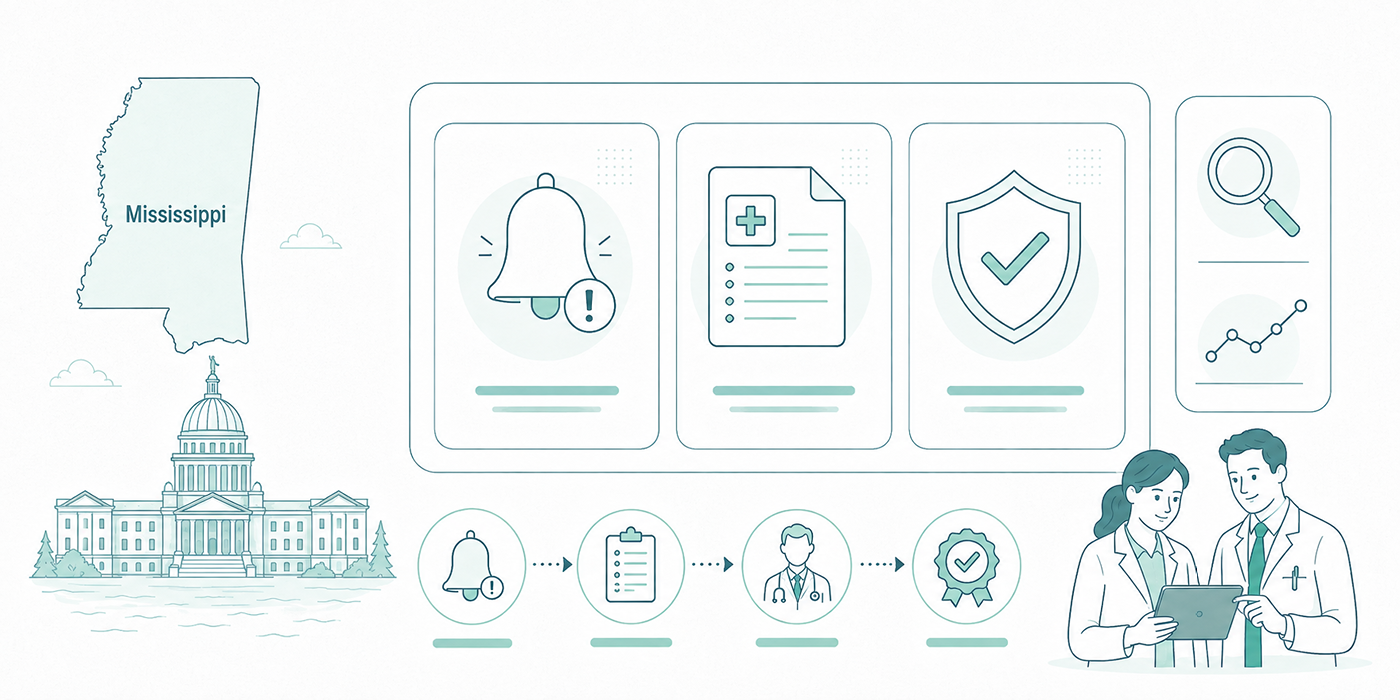
1. Understand What Pharmacovigilance Certification Means in Mississippi
Pharmacovigilance involves collecting, evaluating, monitoring, communicating, and preventing adverse effects and other medicine-related safety problems. Entry-level professionals may handle safety intake, case validation, follow-up, narrative writing, medical coding, duplicate detection, regulatory timelines, literature surveillance, and case quality control.
A pharmacovigilance certificate functions as a professional training credential. Mississippi separately regulates pharmacist practice through the Mississippi Board of Pharmacy, which maintains licensing, renewal, registration, and verification processes for pharmacy professionals and facilities. The Board’s pharmacist pathway includes pre-licensure experience and examination requirements. Pharmacovigilance operations roles generally use employer-defined education, experience, and competency criteria unless the position specifically requires licensed clinical practice.
This distinction should shape your career plan. Time spent searching for a state-issued pharmacovigilance license will produce little progress. Employers are more likely to evaluate your understanding of individual case safety reporting, clinical safety oversight, patient protection under GCP, and pharmacovigilance inspection readiness.
Identify the roles your training should support
Useful entry-level and transitional job titles include:
Drug Safety Associate
Pharmacovigilance Associate
Safety Case Processor
Adverse Event Intake Specialist
Clinical Safety Coordinator
Medical Information Associate
Literature Surveillance Associate
Product Complaint Specialist
Safety Quality Associate
Pharmacovigilance Operations Coordinator
Clinical Trial Safety Assistant
Regulatory Safety Coordinator
Each role draws on a different combination of clinical data verification, protocol adherence, medical terminology, case documentation, quality control, and cross-functional research communication.
Registered nurses may bring clinical assessment, patient interviewing, and medical-history interpretation. Pharmacists may contribute medication knowledge, interaction awareness, and therapeutic context. Clinical research coordinators can transfer experience from site monitoring visits, protocol deviation management, sponsor communication, and serious adverse-event escalation.
Life-sciences graduates should strengthen medical terminology, drug-development knowledge, regulatory timelines, and essential research-assistant competencies. Quality professionals can build on deviation investigation, document control, root-cause analysis, corrective actions, and clinical research quality management.
Prepare for the 2026-27 reporting environment
FDA launched the Adverse Event Monitoring System public dashboard in March 2026. The agency is using AEMS to consolidate safety information across FDA-regulated product categories and has moved historical FAERS drug-safety data into the newer environment. FDA also provides AEMS resources for E2B(R3) electronic individual case safety report submissions.
Training for 2026-27 should therefore explain established FAERS concepts alongside AEMS terminology, public safety data, structured submissions, and modern signal review. A course that presents FAERS as the complete current environment may leave learners with outdated interview language.
MedWatch remains relevant for voluntary safety reporting. FDA Form 3500 is intended for healthcare professionals, Form 3500B serves patients and consumers, and Form 3500A supports mandatory reporting in applicable situations. Reports may involve adverse events, medication or product-use errors, quality problems, and therapeutic failures.
These reporting routes connect with safety case intake, investigator reporting duties, trial data integrity, and global regulatory compliance.
| Competency | What Your Course Should Teach | Evidence You Should Produce | Hiring Risk When Missing | CCRPS Resource |
|---|---|---|---|---|
| 1. PV lifecycle | How safety information moves from receipt through assessment, submission, surveillance, and risk action. | A complete workflow map showing teams, handoffs, timelines, and quality controls. | You may understand definitions while struggling to explain real safety operations. | Safety monitoring practices |
| 2. Valid ICSR criteria | How to identify an identifiable patient, identifiable reporter, suspected product, and adverse event. | A worksheet classifying fictional reports as valid, invalid, or pending clarification. | Valid cases may be missed or incomplete reports may enter processing incorrectly. | Adverse-event reporting |
| 3. Day-zero determination | How organizational awareness, receipt dates, minimum criteria, and follow-up affect reporting clocks. | A timeline exercise covering initial receipt, transfer, validation, and submission. | Incorrect clock decisions can produce late-reporting findings. | Trial timeline management |
| 4. Seriousness assessment | How to evaluate death, life-threatening events, hospitalization, disability, congenital anomaly, and medically important events. | A decision log explaining the seriousness criterion applied to each case. | Expedited cases may be mishandled or escalated late. | Safety oversight |
| 5. Severity distinction | How clinical intensity differs from regulatory seriousness. | A comparison of mild, moderate, and severe events with different outcomes. | Confusing the terms can expose shallow regulatory understanding. | Patient-safety principles |
| 6. Expectedness | How to compare an event with the correct reference safety information. | A documented assessment using a fictional label or investigator brochure. | Using the wrong reference can distort reporting and aggregate analysis. | Investigator responsibilities |
| 7. Causality assessment | How timing, alternative causes, dechallenge, rechallenge, history, and biological plausibility affect assessment. | Three concise causality rationales supported by case facts. | Unsupported conclusions create rework during medical review. | Medical monitor oversight |
| 8. Case intake | How to capture spontaneous, solicited, study, literature, digital, and product-complaint reports. | Completed intake forms from simulated telephone, email, and web reports. | Critical information can disappear during the first contact. | Research communication |
| 9. Follow-up strategy | How to prioritize missing information according to medical and regulatory value. | Targeted questions for hospitalization, pregnancy, death, and medication-error cases. | Generic requests may burden reporters while producing weak information. | Patient communication |
| 10. Narrative writing | How to create chronological, medically coherent, concise, and traceable narratives. | A polished narrative built from disorganized source information. | Medical reviewers may need to reconstruct the case manually. | Documentation discipline |
| 11. MedDRA concepts | How reported concepts map to medical terminology without unsupported interpretation. | A coding log explaining selected terms and rejected alternatives. | Weak coding damages retrieval, trend analysis, and signal detection. | Clinical data review |
| 12. Product coding | How to classify suspect, interacting, and concomitant products and standardize product names. | An exercise covering generic names, brands, formulations, and combination products. | Inconsistent product data compromises reconciliation and retrieval. | Data integrity |
| 13. Duplicate detection | How to compare patient details, reporters, products, events, dates, and countries. | A duplicate-assessment form for several closely matched cases. | Duplicate submissions may inflate apparent case volume. | Data verification |
| 14. Case quality control | How to check consistency across coding, dates, products, narratives, seriousness, and assessments. | A quality review of a deliberately flawed safety case. | Defects may remain hidden until submission or inspection. | Quality management |
| 15. Clinical-trial safety | How protocol rules, investigator reporting, sponsor assessment, and expedited reporting connect. | A flowchart covering investigator-to-sponsor safety escalation. | Postmarketing knowledge alone leaves major clinical safety gaps. | GCP safety reporting |
| 16. Postmarketing surveillance | How spontaneous reports, literature, support programs, and digital sources contribute to surveillance. | A source matrix showing intake, follow-up, and processing requirements. | Different report sources may enter the wrong workflow. | Global PV compliance |
| 17. Literature surveillance | How to identify reportable cases and relevant safety findings in publications. | An inclusion-and-exclusion log for abstracts and full-text articles. | Reportable literature cases may remain undiscovered. | Training resources |
| 18. Signal detection | How case series, clinical review, literature, disproportionality, and external evidence contribute to signals. | A basic signal-validation memo with evidence gaps and next steps. | Raw case frequency may be mistaken for a confirmed relationship. | Signal monitoring |
| 19. Benefit-risk thinking | How disease severity, treatment effect, alternatives, uncertainty, and preventability shape decisions. | A structured one-page benefit-risk discussion. | Safety findings may be evaluated without therapeutic context. | Clinical ethics |
| 20. Aggregate reporting | How individual cases contribute to periodic and development safety reports. | An outline showing report sections, data sources, and analyses. | Progression into aggregate safety roles becomes harder. | Regulatory reporting |
| 21. Risk management | How identified risks, potential risks, missing information, and risk-minimization measures are managed. | A risk table with monitoring actions, owners, and success measures. | Signal findings may remain disconnected from risk reduction. | Risk controls |
| 22. Reconciliation | How safety records are compared with clinical, medical-information, complaint, and vendor systems. | A tracker documenting discrepancies, owners, aging, and closure evidence. | Cases may remain missing or inconsistent across departments. | Record integrity |
| 23. Product complaints | How to recognize adverse events embedded in quality and device complaints. | A classification exercise involving mixed safety and complaint scenarios. | Safety information can remain trapped inside quality systems. | Quality strategies |
| 24. Medication errors | How to document errors, exposure, outcomes, contributing factors, and potential harm. | A structured medication-error case assessment. | Process failures may be recorded without useful causal information. | Safety-reporting guidance |
| 25. Privacy and confidentiality | How to handle identifiable health information, access controls, redaction, and secure escalation. | A de-identification and information-routing exercise. | Careless sharing creates privacy and contractual exposure. | Ethical conduct |
| 26. Deviations and CAPA | How to investigate late cases, missed follow-up, coding defects, and procedural failures. | A root-cause analysis with measurable corrective and preventive actions. | Superficial remediation allows failures to recur. | Deviation management |
| 27. Audit readiness | How procedures, training, case evidence, metrics, CAPAs, and vendor records support inspections. | A mock inspection-request tracker and evidence checklist. | Teams may struggle to produce defensible records under pressure. | PV audits and inspections |
| 28. Safety database literacy | How workflow states, case fields, queries, locks, audit trails, and submissions function. | A database-field and case-workflow mapping exercise. | Systems-based interview questions may expose practical gaps. | Database verification |
| 29. Vendor oversight | How service levels, quality metrics, case exchange, reconciliation, and escalation are controlled. | A vendor oversight dashboard with thresholds and escalation triggers. | Outsourced work may create hidden compliance exposure. | Team leadership |
| 30. Cross-functional escalation | How safety teams communicate with clinical, medical, regulatory, quality, data, and legal stakeholders. | An escalation email, decision log, and concise meeting summary. | Accurate findings may fail to reach the correct decision-maker. | Communication skills |
2. Choose a Pharmacovigilance Certification That Builds Employable Skills
Begin with the syllabus, assessment process, and instructor expertise. A certificate title tells employers very little about the work you completed. Your training should give you defensible examples involving case validity, seriousness, follow-up, narrative development, quality review, and regulatory decision-making.
A serious curriculum should cover the ICH E2 safety guideline family. ICH E2A establishes definitions and standards for expedited clinical safety reporting, E2B(R3) addresses electronic transmission of individual case safety reports, and E2E supports pharmacovigilance planning.
Clinical safety learners also need current GCP knowledge. ICH E6(R3) was adopted in January 2025, while Annex 2 was adopted in 2026 to address additional considerations for trials involving decentralized elements, pragmatic designs, and real-world data.
These standards connect directly with investigator responsibilities, remote and on-site monitoring, risk-based monitoring, and clinical trial data integrity.
Inspect the curriculum before enrolling
Request the full module list and confirm direct coverage of:
Pharmacovigilance terminology and lifecycle responsibilities
Valid ICSR criteria and report classification
Initial receipt and day-zero determination
Seriousness, severity, expectedness, and causality
Clinical-trial and postmarketing safety workflows
MedWatch, AEMS, and electronic reporting concepts
Follow-up strategy and reporter communication
Chronological case narrative writing
MedDRA principles and product coding
Duplicate detection and case quality control
Literature surveillance and case identification
Signal detection, validation, and prioritization
Aggregate reporting and benefit-risk evaluation
Risk-management principles
Reconciliation and safety agreements
Product complaints and medication errors
Deviations, root-cause analysis, and CAPA
Audits, inspections, metrics, and vendor oversight
A course targeting clinical safety should connect these subjects with medical monitor responsibilities, GCP monitoring techniques, investigator meeting strategy, and adverse-event reporting requirements.
Demand practical assessment
Multiple-choice questions test recognition. Pharmacovigilance work requires defensible decisions when information is incomplete, contradictory, poorly organized, or medically ambiguous.
Strong assessments should require you to:
Determine whether a report meets minimum validity criteria.
Establish the initial receipt date and reporting clock.
Classify seriousness with written justification.
Evaluate expectedness against the correct reference.
Draft targeted follow-up questions.
Write a coherent medical chronology.
Select appropriate medical terminology.
Review a case for quality defects.
Reconcile conflicting safety records.
Investigate a late case and propose CAPA.
These activities align with clinical trial data verification, pharmacovigilance audit preparation, quality management practices, and safety-monitoring expectations.
Evaluate instructor access and feedback
Ask who reviews assignments and how feedback is delivered. Useful feedback explains why a report meets validity criteria, why an event qualifies as medically important, which missing information carries the greatest value, and where a narrative introduced unsupported interpretation.
Ask the provider:
Do instructors have direct drug-safety or clinical-research experience?
Will an expert review my practical assignments?
Does the program cover AEMS and current FDA reporting resources?
Are clinical-trial and postmarketing workflows included?
Are MedDRA exercises provided?
How long does course access remain active?
Are regulatory updates included?
Are reassessment and certificate fees disclosed?
Does the certificate show hours or competencies?
Can I examine a sample assignment before paying?
Supplement formal study with the directory of free clinical research resources, clinical research professional associations, online communities for researchers, and the interactive clinical research career map.
3. Follow a Step-by-Step Mississippi Certification and Career Plan
Step 1: Select two target roles
Collect 15 to 20 current descriptions for two related jobs. Drug Safety Associate and Safety Case Processor create one useful pairing. Clinical Safety Coordinator and Clinical Research Coordinator create another.
Build a spreadsheet containing:
Required education
Preferred clinical background
Years of experience
Safety responsibilities
Required regulations
Database expectations
Writing responsibilities
Therapeutic-area preferences
Quality duties
Location restrictions
Travel expectations
Use the clinical research salary comparison tool, global career-opportunity map, research association directory, and online researcher community directory to understand the wider market.
A focused target prevents résumé dilution. Applications aimed simultaneously at medical monitoring, entry-level processing, signal science, regulatory submissions, and trial project management usually communicate an unclear professional direction.
Step 2: Complete Mississippi GCP preparation
Clinical pharmacovigilance depends on understanding participant protection, investigator obligations, source documentation, protocol requirements, sponsor oversight, and safety escalation. Complete ICH-GCP certification in Mississippi before or alongside your pharmacovigilance program.
Regional applicants can also examine GCP certification in Alabama, GCP certification in Louisiana, GCP certification in Tennessee, and GCP certification in Arkansas when planning a broader Southern job search.
Step 3: Convert every module into work evidence
Passive viewing creates weak recall. Each major module should generate a practical artifact.
After studying validity, classify ten fictional reports. After learning seriousness, document your rationale. After studying narratives, transform disorganized notes into a chronological medical account. After learning quality control, inspect a case containing deliberate date, coding, product, and assessment defects.
Build at least these six privacy-safe samples:
ICSR validity and day-zero worksheet
Seriousness, expectedness, and causality assessment
Targeted follow-up questionnaire
Complete adverse-event narrative
Case quality-control checklist
Late-report root-cause analysis and CAPA
Expand the portfolio through clinical data review exercises, protocol compliance scenarios, clinical safety guidance, and trial data-integrity principles.
Use fictional or completely de-identified material. Patient information, employer procedures, sponsor documents, database screenshots, safety agreements, and confidential study records should stay outside your portfolio.
Step 4: Practice scenario-based interviews
Prepare to explain your reasoning aloud. Interview questions may include:
A report identifies a patient and product but gives no clear event. What happens next?
A hospitalization occurred for observation only. How would you assess seriousness?
Two reports may describe the same patient. Which data points would you compare?
A source document conflicts with an entered event date. How would you proceed?
A case approaches its deadline with incomplete medical information. What receives priority?
A product complaint includes dizziness and a fall. Which workflows could apply?
A reporter refuses follow-up. How should the attempt be documented?
A safety case was submitted late. How would you investigate the cause?
Build your answers through adverse-event compliance guidance, medical monitor oversight, audit and inspection preparation, and ethical patient-safety requirements.
Step 5: Build a role-specific résumé
Replace broad claims with completed actions:
Evaluated simulated reports against the four minimum ICSR criteria.
Determined initial receipt dates and reporting clocks for fictional cases.
Applied seriousness, expectedness, and causality frameworks.
Prepared medically prioritized follow-up questions.
Produced chronological narratives from unstructured source material.
Reviewed cases for coding, date, product, and narrative consistency.
Created a reconciliation tracker covering safety and clinical records.
Completed training in ICH safety guidance, GCP, MedWatch, and AEMS concepts.
Connect transferable experience with remote monitoring workflows, risk-based monitoring, clinical project quality, and research protocol adherence.
What Is Blocking Your Pharmacovigilance Career in Mississippi?
Choose the challenge consuming the most time. Your result identifies the most valuable next action.
4. Convert Your Certification Into Mississippi Pharmacovigilance Opportunities
Mississippi candidates should search beyond job titles containing the word “pharmacovigilance.” The state has clinical research, academic medicine, pharmaceutical sciences, hospital research, oncology trials, translational science, and regulated healthcare operations that can produce direct or adjacent safety experience.
The University of Mississippi Medical Center’s Office of Clinical Trials centralizes clinical research administration and provides project management, recruitment support, data solutions, and regulatory submission assistance. UMMC also describes clinical studies as part of its wider research enterprise, and its cancer program participates in national clinical-trial networks and study groups.
The University of Mississippi School of Pharmacy conducts research across pharmacy practice, pharmaceutics and drug delivery, biomolecular sciences, pharmacology, and related pharmaceutical disciplines. Its Center for Clinical and Translational Science connects School of Pharmacy research with UMMC to move discoveries toward clinically validated therapies.
These institutions do not guarantee a pharmacovigilance vacancy. They demonstrate that Mississippi contains research environments where professionals may build experience in trial logistics coordination, clinical data review, regulatory documentation, and participant safety oversight.
Search four employment channels
Pharmaceutical, biotechnology, and medical-product organizations
Use search terms such as:
Drug safety
Pharmacovigilance
Clinical safety
Postmarket surveillance
Medical information
Product complaints
Adverse events
Regulatory operations
Patient safety
Safety systems
Clinical quality
Complaint investigation
Medical-device employers may use “vigilance,” “postmarket surveillance,” “medical-device reporting,” or “complaint handling.” Your knowledge of pharmacovigilance risk management, quality-management systems, clinical data integrity, and regulatory compliance remains relevant across product categories.
Academic medical centers and research programs
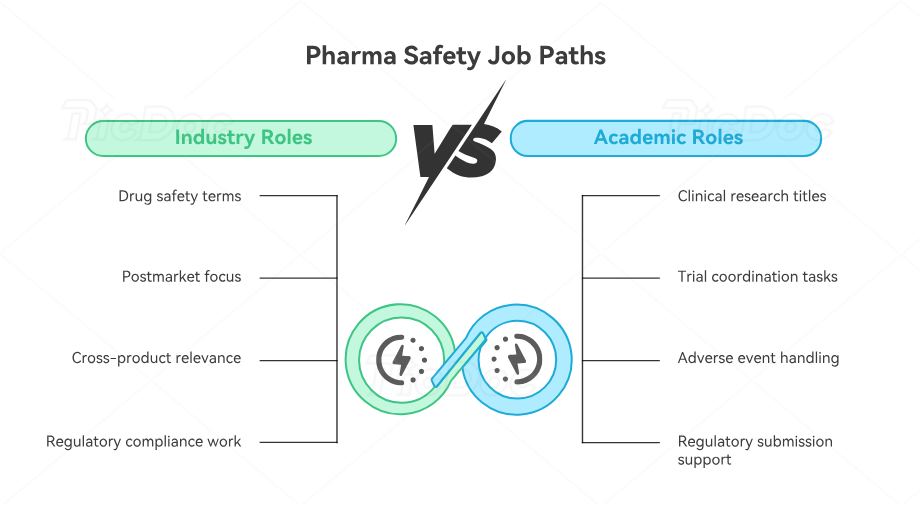
Search for Clinical Research Coordinator, Clinical Trial Assistant, Research Regulatory Coordinator, Data Coordinator, Research Compliance Specialist, Patient Safety Associate, and Research Assistant positions.
These roles can provide experience in investigator responsibilities, site monitoring preparation, protocol deviation handling, and adverse-event escalation.
The strongest bridge roles allow you to review source information, communicate with investigators, track deadlines, resolve queries, document events, support regulatory submissions, or maintain trial records.
CROs and specialized safety vendors
Contract research organizations often divide work into intake, case processing, quality control, medical review, submissions, literature surveillance, aggregate reporting, signal management, and project coordination.
Search for:
Safety Operations Assistant
Drug Safety Coordinator
Case Processing Associate
Safety Intake Specialist
Medical Information Representative
Literature Screening Associate
Safety Quality Associate
Clinical Trial Assistant
Regulatory Operations Coordinator
Demonstrate familiarity with clinical trial timeline management, remote monitoring workflows, clinical project leadership, and inspection-ready documentation.
Remote and regional Southern employers
Remote positions may restrict eligible states, require fixed working hours, demand occasional travel, or prefer previous safety-database exposure. Verify these conditions before investing time in an application.
Expand your search through Mississippi, Alabama, Louisiana, Tennessee, Arkansas, Texas, and national remote employers. Regional preparation can include Alabama pharmacovigilance certification guidance, Louisiana GCP certification, Tennessee GCP certification, and Texas GCP certification.
Use adjacent roles strategically
A clinical research coordinator can translate site-monitoring experience, patient-retention work, protocol deviation management, and investigator communication into safety-relevant evidence.
A medical-information professional can emphasize accurate intake, medically focused questioning, product knowledge, complaint recognition, and escalation. A quality professional can demonstrate deviation investigation, document control, trend analysis, CAPA, and pharmacovigilance inspection preparation.
A regulatory coordinator can build experience through IND and NDA submission processes, GCP compliance, clinical trial data integrity, and project close-out documentation.
Network through technical contribution
Join clinical research professional associations, participate in online clinical research communities, attend free clinical research webinars, and follow relevant oncology research conferences.
Ask informed questions:
Which case-processing defects create the greatest rework?
Which entry-level safety competencies are hardest to teach?
How does the organization divide intake, processing, quality control, and medical review?
Which adjacent role offers the strongest route into drug safety?
How has AEMS affected terminology, reporting, or systems training?
Which privacy-safe work samples demonstrate readiness?
These questions show that you understand operational pain points and respect the complexity of safety work.
5. Plan Your Timeline, Costs, Portfolio, and Career Return
A realistic pathway includes coursework, practical exercises, GCP training, portfolio development, résumé alignment, networking, applications, and interview preparation. A rushed certificate may leave you unable to defend basic case decisions.
Use a 12-week preparation schedule
Weeks 1-2: Research and GCP foundations
Study clinical development, trial phases, participant protection, safety stakeholders, informed consent, investigator duties, source documentation, and reporting pathways.
Use Mississippi GCP certification guidance, investigator GCP responsibilities, ethical trial conduct, and protocol adherence training.
Weeks 3-5: Individual case safety reporting
Concentrate on validity, day zero, seriousness, severity, expectedness, causality, intake, follow-up, narratives, coding, duplicates, and case quality.
Reinforce the material through adverse-event reporting compliance, clinical safety monitoring, data verification skills, and clinical data-integrity guidance.
Weeks 6-7: Postmarketing and signal work
Study spontaneous reporting, literature surveillance, aggregate reports, signal validation, benefit-risk assessment, risk management, and safety communication.
Connect these subjects with global pharmacovigilance compliance, medical monitor responsibilities, patient-safety principles, and regulatory compliance for medical professionals.
Weeks 8-9: Quality and inspection readiness
Study late cases, deviations, root-cause analysis, CAPA, reconciliation, procedural compliance, vendor oversight, metrics, audits, and inspection evidence.
Use pharmacovigilance audit techniques, clinical quality management, protocol deviation guidance, and clinical project close-out procedures.
Weeks 10-12: Employment conversion
Complete your portfolio, rewrite your résumé, practice interviews, join professional communities, and begin focused applications.
Use the clinical research salary tool, career-opportunity map, professional association directory, and online research community directory.
Calculate the complete cost
Compare:
Tuition
Examination charges
Reassessment fees
Course-extension costs
Required books or software
Instructor access
Assignment feedback
Career-support quality
Certificate renewal requirements
Time required for practical work
Request the syllabus, assignment descriptions, completion requirements, refund terms, access period, and complete fee schedule before paying.
A lower-priced program can provide strong value through rigorous instruction and practical assessment. A high-priced program can deliver weak value through passive recordings and a basic quiz.
Watch for warning signs
Avoid programs built around:
Guaranteed employment claims
Guaranteed salary claims
Vague instructor qualifications
No case-processing exercises
No ICH E2 coverage
Outdated FDA reporting information
Hidden certificate or reassessment fees
High-pressure enrollment tactics
Testimonials without clear learning outcomes
Claims that certification automatically replaces experience
Your return comes from the full package: formal training, work samples, transferable experience, GCP knowledge, safety-monitoring competence, regulatory understanding, and inspection readiness.
6. FAQs About Pharmacovigilance Certification in Mississippi
-
Many pharmacovigilance operations roles use employer-defined education, experience, and competency requirements. Mississippi professional licensing applies when a position requires practice as a pharmacist or another regulated healthcare professional. The Mississippi Board of Pharmacy maintains the state’s pharmacist licensing and registration processes.
Review each vacancy carefully. Safety intake, case processing, literature surveillance, quality, medical information, and regulatory operations may accept scientific, clinical, research, or data-oriented backgrounds.
Strengthen your preparation through Mississippi GCP training, adverse-event compliance, patient-safety principles, and global pharmacovigilance requirements.
-
Professionals enter pharmacovigilance from nursing, medicine, biology, biotechnology, public health, clinical research, medical information, regulatory affairs, quality assurance, data management, and pharmacy.
A nurse may align with intake and clinical follow-up. A science graduate may target case processing or literature surveillance. A coordinator can translate site-monitoring experience, protocol-deviation management, clinical data review, and investigator communication into safety evidence.
-
Completion time depends on curriculum depth, practical assignments, prior knowledge, instructor feedback, and weekly study hours. Assess the amount of applied work alongside the advertised duration.
Budget additional time for GCP certification, clinical safety practice, portfolio construction, résumé revision, and inspection-readiness training.
-
Online training can give Mississippi residents access to specialized safety education without relocation. Its career value depends on curriculum quality, instructor expertise, practical assessment, regulatory updates, and the evidence you create.
Strengthen online study through the free clinical research training directory, clinical research associations, researcher communities, and remote monitoring guidance.
-
Include skills you can support with examples:
ICSR validity assessment
Day-zero determination
Seriousness and expectedness
Causality assessment
Follow-up strategy
Case narrative writing
MedDRA concepts
Duplicate detection
Case quality control
Literature surveillance
Reconciliation
Regulatory timelines
CAPA and inspection readiness
Pair those keywords with evidence from safety-monitoring training, adverse-event reporting, data-integrity practice, and PV audit preparation.
-
Coordinators frequently work with protocol requirements, source documents, participant communication, adverse-event collection, investigator assessment, sponsor escalation, and reporting timelines.
Translate those responsibilities precisely. Explain how you identified reportable information, gathered missing clinical details, documented investigator assessments, protected confidentiality, and supported sponsor deadlines.
Close remaining gaps through CRC monitoring guidance, protocol deviation training, clinical trial data review, and formal safety-monitoring education.
