
How to Get a Pharmacovigilance Certification in Alabama: Everything You Need to Know in 2026–27
Pharmacovigilance certification can prepare Alabama professionals for careers in drug safety, adverse-event processing, clinical safety, signal management, medical information, and regulatory compliance. The strongest programs teach you how to evaluate safety information, preserve source accuracy, meet reporting deadlines, and communicate risks across the product lifecycle.
This guide explains how to choose credible training, understand the 2026–27 regulatory environment, build practical evidence, and connect certification with Alabama clinical research opportunities, Good Clinical Practice training, clinical safety monitoring, and global pharmacovigilance compliance.
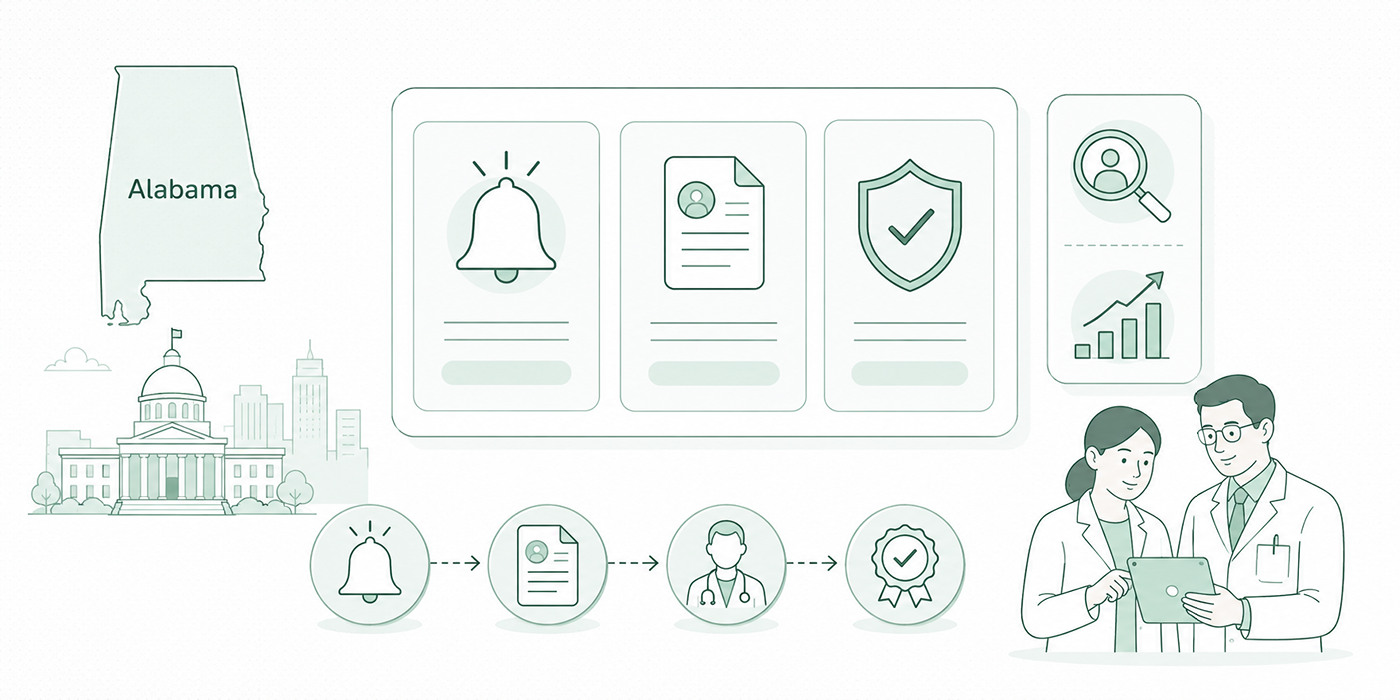
1. What Pharmacovigilance Certification Means in Alabama in 2026–27
Pharmacovigilance covers the detection, assessment, understanding, and prevention of adverse effects and other medicine- or vaccine-related problems. Its scope extends from first-in-human studies through clinical development, marketing authorization, postapproval surveillance, safety-signal evaluation, risk management, and regulatory action. A valuable certification should therefore connect individual adverse-event reports with the larger benefit-risk decisions that influence labeling, trial conduct, prescribing information, and patient protection.
Alabama does not issue a universal state pharmacovigilance license. Employers judge candidates through their education, safety training, clinical or scientific background, regulatory knowledge, practical ability, and the responsibilities attached to the vacancy. A certificate can strengthen your application, while positions involving licensed clinical duties may separately require an active pharmacy, nursing, medical, or other professional license.
This distinction protects candidates from assuming that any downloadable certificate creates immediate job eligibility. A recruiter may ask you to evaluate a sample adverse-event report, determine whether the case is valid, distinguish seriousness from severity, identify the regulatory clock start date, recommend follow-up questions, or explain why a case requires escalation. Those expectations connect directly with serious adverse-event definitions, adverse-event reporting compliance, investigator safety responsibilities, and sponsor oversight obligations.
A complete program should teach development and postmarketing pharmacovigilance. Development safety includes adverse events arising during trials, IND safety reports, reference safety information, investigator communications, Development Safety Update Reports, safety-data reconciliation, and assessment of emerging risks. Postmarketing pharmacovigilance includes spontaneous reports, literature cases, patient-support programs, market-research programs, product complaints involving adverse events, digital sources, periodic reporting, signal management, and risk-minimization activities.
The regulatory context changed meaningfully in 2026. FDA finalized ICH E2D(R1) in March 2026, updating terminology and standards for postapproval individual case safety reports while addressing newer information sources such as social media, market-research programs, and patient-support programs. A program based only on traditional phone, email, and healthcare-professional reports will leave an important modern safety-data gap.
FDA’s Adverse Event Monitoring System also makes E2B(R3) knowledge increasingly valuable. FDA states that organizations still using E2B(R2) may continue doing so through September 30, 2026, during the transition. Once an organization begins submitting cases in E2B(R3), its submissions are expected to continue through that standard. Training should explain how clinical interpretation, controlled terminology, case fields, validation rules, acknowledgements, and data quality affect successful electronic reporting.
This technical transition does not mean beginners must become software developers. Entry-level professionals need to understand why inaccurate dates, incomplete product information, unsupported medical assumptions, duplicate cases, inconsistent coding, and missing follow-up can create submission failures or distorted safety data. Relevant preparation includes clinical-trial data review, clinical data-integrity responsibilities, quality-management strategies, and pharmacovigilance inspection readiness.
Alabama also offers a strong environment for developing adjacent experience. UAB operates extensive clinical-trial infrastructure, and its Academic Research Organization for Clinical Trials brings together regulatory affairs, industry relations, financial services, clinical billing review, and trial-management support. Southern Research describes itself as a contract research organization with preclinical and clinical capabilities, creating another example of the research and life-science ecosystem available within the state.
These organizations do not guarantee that a pharmacovigilance vacancy will be open when you apply. They demonstrate why Alabama candidates should search beyond the exact phrase “pharmacovigilance associate.” Clinical research, medication safety, regulatory coordination, medical information, quality assurance, research nursing, clinical data, and trial-safety positions can all provide experience that supports a later move into dedicated drug-safety work.
| Alabama Pharmacovigilance Certification Decision Matrix for 2026–27 | ||||
|---|---|---|---|---|
| Course Checkpoint | What the Training Should Cover | Practical Evidence to Create | Career Value | Dangerous Gap |
| 1. PV lifecycle | Safety activities from trials through postapproval use | Product-safety lifecycle map | Builds workflow context | Memorizing definitions without understanding the system |
| 2. ICH E2 framework | Global pharmacovigilance requirements | E2A–E2F comparison sheet | Supports multinational work | Studying a single guideline in isolation |
| 3. Valid case criteria | Identifiable reporter, patient, product, and event | Case-validity worksheet | Essential for intake roles | Starting full processing before establishing validity |
| 4. Initial receipt date | Awareness rules and regulatory clock protection | Day-zero decision log | Protects submission compliance | Calculating timelines from the data-entry date |
| 5. Seriousness | Serious adverse-event criteria | Seriousness assessment | Supports expedited reporting | Confusing seriousness with intensity |
| 6. Severity | Clinical intensity and grading | Severity comparison exercise | Improves medical accuracy | Calling every severe event serious |
| 7. Expectedness | Comparison with current reference safety information | Expectedness rationale | Supports reporting decisions | Using an outdated reference document |
| 8. Causality | Reporter, investigator, and company assessments | Causality reasoning note | Prepares for medical review | Treating chronology as proof of causation |
| 9. Case triage | Safety-reporting requirements | Prioritized intake queue | Protects urgent deadlines | Processing only in arrival order |
| 10. Follow-up | Case-specific questions based on missing critical data | Targeted follow-up request | Improves case completeness | Sending generic questionnaires repeatedly |
| 11. Event coding | Source-faithful medical terminology selection | Coding rationale log | Supports structured analysis | Coding diagnoses unsupported by the report |
| 12. Product coding | Ingredients, formulation, route, and suspect status | Product-identification exercise | Improves database quality | Selecting the wrong formulation or strength |
| 13. Narrative writing | Clear chronology, clinical coherence, and source fidelity | Complete safety narrative | Common interview competency | Copying disconnected database fields into prose |
| 14. Duplicate management | Patient, reporter, product, event, and date matching | Duplicate-search record | Protects case counts | Treating follow-up reports as new cases |
| 15. Case quality control | Quality-management principles | Completed QC checklist | Prepares for reviewer roles | Focusing on spelling while missing clinical contradictions |
| 16. Clinical-trial safety | Clinical safety monitoring | Trial-safety workflow | Supports development PV | Learning postmarketing safety alone |
| 17. IND safety reports | IND reporting context | Reporting-decision exercise | Useful for sponsor roles | Reporting every clinical event as a suspected reaction |
| 18. E2D(R1) | Modern postapproval sources and ICSR standards | Source-classification chart | Essential for 2026–27 readiness | Ignoring patient programs and digital channels |
| 19. E2B(R3) | Electronic ICSR fields, transmission, and validation | Field-mapping exercise | Supports current reporting operations | Learning legacy transmission formats alone |
| 20. Literature surveillance | Searching, screening, assessing, and documenting decisions | Literature-review log | Creates an accessible entry pathway | Saving articles without recording assessment outcomes |
| 21. Signal management | Detection, validation, prioritization, assessment, and action | Signal-validation memorandum | Supports advanced PV roles | Treating increased reporting as confirmed causality |
| 22. Aggregate reports | DSURs and cumulative benefit-risk evaluation | Aggregate-report outline | Useful for medical writing | Presenting counts without clinical interpretation |
| 23. Reconciliation | Clinical and safety data review | Reconciliation tracker | Connects PV with trial data | Closing discrepancies without documented evidence |
| 24. Risk management | Safety concerns, risk minimization, and effectiveness measures | Risk-control plan | Supports benefit-risk work | Listing risks without measurable controls |
| 25. Audit readiness | PV audit and inspection preparation | Inspection-readiness file | Supports quality roles | Preparing only after an audit notice |
| 26. CAPA | Root cause, corrective action, prevention, and effectiveness | Completed CAPA case | Useful for compliance positions | Using retraining as the automatic correction |
| 27. Vendor oversight | Sponsor and provider oversight | Performance dashboard | Supports global operations | Assuming outsourcing removes accountability |
| 28. Privacy | Minimum necessary personal data and controlled access | Privacy-review worksheet | Relevant to every PV role | Including unnecessary identifiers in narratives |
| 29. Assessment quality | Scenario-based testing and practical assignments | Scores and reviewed exercises | Shows more than attendance | Selecting instant certification without evaluation |
| 30. Career application | Clinical research templates and practice tools | De-identified competency portfolio | Strengthens interviews | Submitting a certificate-only résumé |
2. How to Choose the Right Pharmacovigilance Certification Program
Start by identifying the role you want within pharmacovigilance. Case-processing positions emphasize intake, validity, triage, coding, narrative writing, follow-up, quality review, and timely submission. Clinical-safety positions require stronger knowledge of trial conduct, investigational products, investigator assessment, reference safety information, and expedited reporting. Signal-management and aggregate-reporting roles demand deeper medical interpretation, data analysis, cumulative review, and benefit-risk evaluation.
This role-first approach prevents you from buying a program whose content sounds impressive while missing the competencies employers actually test. Review several vacancies and compare their recurring requirements with the curriculum. Candidates targeting trial safety may benefit from pairing pharmacovigilance education with Alabama ICH-GCP certification, investigator GCP responsibilities, ethical patient-safety principles, and protocol-deviation management.
Examine the curriculum closely. A foundational course should take you through the full ICSR lifecycle, beginning with receipt and validity and continuing through day-zero determination, triage, duplicate review, data entry, coding, seriousness, expectedness, causality, narrative writing, follow-up, quality control, medical review, submission, and case amendment. Courses that devote most of their material to broad definitions can leave graduates unable to manage a realistic case.
The program should also explain why each step exists. For example, an initial receipt date protects the reporting timeline, duplicate review prevents artificial inflation of safety data, targeted follow-up improves clinically important information, and source-faithful narratives allow reviewers to understand the event without introducing unsupported conclusions. These concepts should connect with SAE reporting procedures, clinical safety best practices, clinical-trial data integrity, and regulatory compliance management.
Current regulatory coverage is another decisive filter. Look for ICH E2A, E2B(R3), E2D(R1), E2E, and E2F, along with U.S. IND safety reporting, postmarketing reporting, MedWatch, electronic ICSR submission, aggregate reporting, and pharmacovigilance planning. ICH offers a training program covering the complete E2A–E2F family, which can help you evaluate whether a commercial certification curriculum addresses the major guideline areas.
The assessment should test judgment through realistic scenarios. A credible examination may present an incomplete consumer report, a serious event with conflicting dates, a literature article that could duplicate an existing case, or a trial event with uncertain causality. You should have to determine what is known, what remains missing, which decisions require medical escalation, and which documentation protects the audit trail.
Also inspect the certificate and supporting records. The completion document should show your name, provider, course title, completion date, and a method of verification. Preserve the curriculum, assessment result, and practical assignments. These records allow an employer to distinguish substantial education from a certificate generated after a brief unassessed presentation.
Cost deserves attention after content, acceptance, assessment, and practical value have been reviewed. Use the clinical research certificate comparison, free clinical research training directory, clinical research professional associations, and clinical research salary tool to judge whether a larger educational investment supports your intended pathway.
3. How to Earn the Certification and Build Practical Competence
Begin by creating a role profile from actual job descriptions. Review openings for pharmacovigilance associate, drug-safety specialist, safety case processor, medical-information associate, clinical-safety coordinator, literature-surveillance analyst, and safety-quality specialist. Record the medical, regulatory, technical, documentation, and communication skills that appear repeatedly. This produces a learning plan based on hiring demand rather than guesswork.
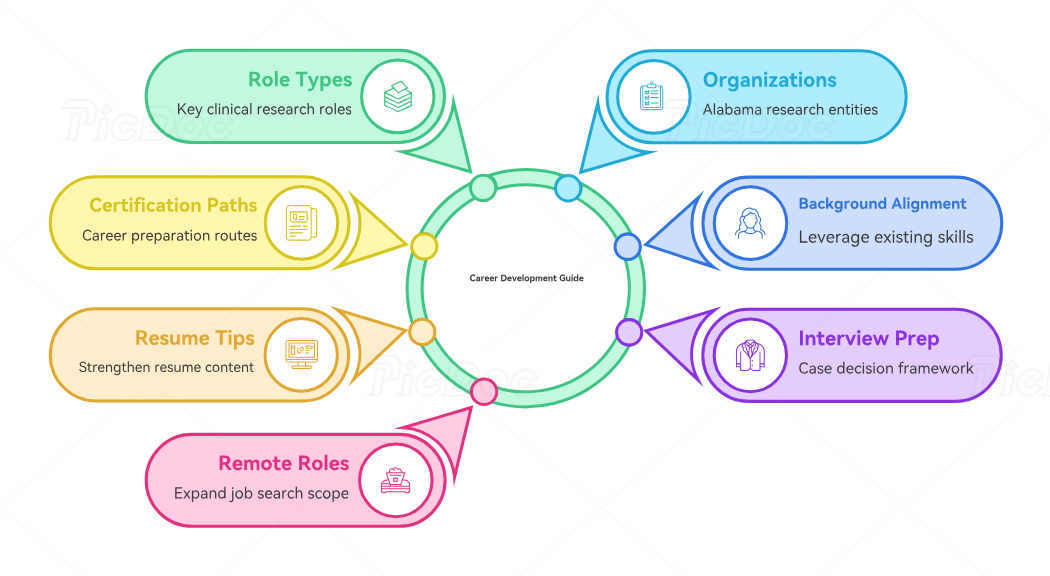
Next, strengthen the knowledge your background does not already provide. Pharmacists may already understand drug classes, interactions, contraindications, and medication histories, yet need more practice with global reporting workflows and safety databases. Nurses often bring clinical chronology, patient assessment, documentation, and escalation skills, while requiring deeper training in case coding, regulatory timelines, and aggregate reporting. Life-science graduates may understand biology while needing stronger medical terminology and practical case interpretation.
A strong study method connects every data field with its purpose. The event-onset date helps establish chronology. The receipt date protects the regulatory clock. Seriousness criteria influence expedited handling. Suspect-product details and dechallenge information support causality evaluation. Reporter comments preserve the original clinical assessment. Follow-up status shows whether important gaps remain unresolved.
FDA’s current IND safety-reporting information explains that sponsors must report suspected adverse reactions that are both serious and unexpected when evidence suggests a causal relationship. This requires careful evaluation because temporal association alone does not automatically make an event a reportable suspected adverse reaction.
Study this area alongside IND application requirements, IND and NDA regulatory submissions, clinical-trial amendments, sponsor safety responsibilities, and global regulatory guidelines.
Narrative writing deserves sustained practice because it exposes weak reasoning quickly. A coherent narrative identifies the patient appropriately, explains relevant medical history, describes product exposure, presents the event chronologically, records investigations and treatment, states the outcome, preserves the reporter’s assessment, and identifies missing information. It should make uncertainty visible instead of filling gaps with assumptions.
Use expressions such as “the reporter stated,” “the date was unavailable,” or “no additional information was provided” where appropriate. Silent correction of conflicting source information damages traceability. Unsupported diagnoses can distort coding, causality, expectedness, and signal evaluation. Practice with clinical-trial templates, clinical-data verification techniques, quality-management controls, and the GCP compliance self-assessment.
After completing the course, download the certificate, score report, syllabus, and completed exercises. Check the spelling of your name, completion date, course title, certificate number, and verification details. Save these records in a professional training folder and maintain a separate backup.
Then create a portfolio using fictional or fully de-identified information. Include one spontaneous nonserious report, one serious clinical-trial case, and one literature case requiring duplicate review. For each example, document validity, initial receipt date, seriousness, expectedness, causality information, event coding, product role, narrative, follow-up priorities, reporting route, and quality-control findings.
Add a mock literature log, safety-to-clinical database reconciliation tracker, CAPA record, and signal-validation note. The portfolio should show your reasoning without presenting practice work as paid experience. Combine it with PV audit preparation, clinical safety-monitoring guidance, research-team communication strategies, and clinical research ethics resources.
What is blocking your Alabama pharmacovigilance career?
Select your biggest obstacle to receive a focused next step.
4. How to Build Pharmacovigilance Experience in Alabama
Search by responsibility as well as job title. A role called clinical research coordinator may involve adverse-event collection, source documentation, sponsor communication, safety follow-up, and regulatory submissions. Medical-information teams may identify reportable adverse events during product inquiries. Medication-safety specialists evaluate risks within health systems, while regulatory coordinators maintain safety correspondence and submission records.
UAB’s expanding clinical-trial organization shows the range of operations surrounding research, including regulatory affairs, industry relationships, trial-management systems, financial services, and study conduct. Southern Research also provides preclinical and clinical research capabilities within Alabama’s life-science ecosystem. These environments can help candidates understand where safety, data, regulatory, and quality functions intersect, although available roles and hiring requirements must be checked directly.
Use that broader view when searching. Explore Alabama clinical research certification pathways, clinical research career opportunities, professional clinical research associations, and online clinical research communities to identify adjacent routes.
Your existing background should determine how you position yourself. A pharmacist can emphasize pharmacology, medication reconciliation, contraindications, interactions, counseling, and literature interpretation. A nurse can highlight clinical chronology, patient assessment, hospitalization, treatment response, escalation, and accurate documentation. A public-health professional can contribute epidemiology, surveillance, population-risk analysis, and health communication.
Life-science graduates should develop medical terminology, case interpretation, regulatory foundations, and structured writing. Data professionals can offer reconciliation, database quality, duplicate detection, metrics, reporting, and analytical discipline, while strengthening their understanding of medical context and source fidelity. These capabilities connect with clinical-trial data review, risk-based monitoring, trial quality-management systems, and remote monitoring workflows.
Your résumé should convert general claims into specific evidence. “Knowledge of adverse-event reporting” tells a recruiter very little. A stronger entry explains that you completed scenario-based assessments of case validity, seriousness, expectedness, follow-up, narrative quality, and reporting timelines. You can also state that you produced fictional case narratives, reviewed contradictory dates, created a literature-screening log, or practiced safety-data reconciliation.
Prepare for interviews by using a consistent decision framework. When presented with a case, establish whether the minimum validity criteria are present, identify the initial receipt date, protect the applicable timeline, assess seriousness, preserve the reporter’s wording, identify clinically important missing details, request targeted follow-up, escalate medical concerns, and document each decision.
This approach demonstrates controlled reasoning. Strengthen it through SAE reporting guidance, pharmacovigilance audit techniques, global PV compliance, clinical safety-monitoring practices, and safety-reporting compliance.
Remote positions can expand your search beyond Alabama, particularly in case intake, literature surveillance, quality control, medical information, safety-data reconciliation, and operational support. Remote work increases the importance of secure data handling, precise written communication, reliable deadline management, documented escalation, and disciplined use of controlled systems.
5. What to Learn for 2026–27 and Which Mistakes to Avoid
E2D(R1) should be part of your current learning plan. The final FDA guidance addresses postapproval safety information from traditional and newer sources, including social media, market research, and patient-support programs. Professionals must understand how source type affects case evaluation, follow-up, awareness, privacy, duplicate management, and reportability.
This development also connects pharmacovigilance with changing patient behavior. Reports may originate through websites, applications, social platforms, support services, and other digital interactions. Study these changes alongside patient-influencer trends, social-media trial recruitment, patient-run clinical trials, and virtual clinical-trial models.
E2B(R3) competence is another valuable differentiator. FDA’s AEMS transition requires organizations to work with structured electronic ICSR information and current implementation resources. Case processors need to understand how their decisions affect data fields and submissions, even when technical transmission is handled by another team.
Learn how acknowledgement messages, validation failures, controlled terminology, local data elements, and follow-up versions affect the reporting lifecycle. Connect electronic reporting with clinical-trial data integrity, global regulatory directories, IND and NDA submissions, and clinical-data verification.
Signal management also deserves more attention than many introductory courses provide. A potential signal requires validation, prioritization, assessment, documentation, and a decision about further action. An increase in case counts may reflect genuine risk, stimulated reporting, changes in product use, publicity, duplicate cases, or incomplete denominator information. Strong signal work combines clinical judgment, epidemiology, case review, exposure data, and transparent reasoning.
Several shortcuts can damage your credibility. One is describing all severe events as serious. Another is assigning causality based only on timing. Additional risks include inventing missing facts, changing source language, overlooking duplicates, using the wrong awareness date, copying database fields into an incoherent narrative, and closing follow-up before critical information has been pursued.
Confidentiality failures are particularly serious. Never use identifiable patient, reporter, investigator, or employer information in a portfolio or interview. Fictional cases and properly de-identified exercises can demonstrate competence safely. Use clinical research ethics resources, ethical conduct guidance, GCP compliance assessment, and clinical-trial templates to keep practice controlled.
Another mistake is collecting multiple certificates without building deeper capability. A focused sequence usually creates stronger evidence: pharmacovigilance foundations, current ICH and FDA knowledge, Good Clinical Practice training, practical case exercises, supervised experience, and advanced education aligned with your role.
6. Frequently Asked Questions About Pharmacovigilance Certification in Alabama
-
Alabama does not issue a general pharmacovigilance license for drug-safety professionals. Employers establish education, training, experience, and competency requirements for each role. A separate professional license may be required when the position includes duties legally reserved for pharmacists, nurses, physicians, or other regulated healthcare professionals.
Review each vacancy and match its requirements with Alabama clinical research certification, Alabama GCP certification, clinical safety-monitoring education, and global regulatory compliance.
-
Pharmacovigilance teams recruit from pharmacy, nursing, medicine, life sciences, public health, clinical research, epidemiology, data management, and quality backgrounds. The strongest candidates understand their existing advantages and deliberately fill the missing areas.
A life-science graduate may need stronger medical terminology and practical case work. A data professional may need clinical interpretation and safety-reporting logic. A clinical research coordinator can build from adverse-event compliance, protocol-deviation handling, monitoring-visit preparation, and clinical-data review.
-
The duration depends on the provider, curriculum, assessment model, practical assignments, and your previous clinical or scientific knowledge. Completion speed provides limited insight into training quality.
Evaluate whether the program teaches case validity, day zero, seriousness, expectedness, causality, coding, narratives, follow-up, electronic reporting, literature surveillance, signal management, and quality control. Useful supporting areas include SAE assessment, PV audit readiness, clinical safety monitoring, and global PV compliance.
-
A current course should address the ICH E2 guideline family, FDA IND safety reporting, U.S. postmarketing reporting, MedWatch, E2D(R1), E2B(R3), aggregate reporting, safety-signal evaluation, and pharmacovigilance planning. FDA’s E2D(R1) final guidance and AEMS electronic-reporting transition make modern data sources and structured ICSR reporting especially important for 2026–27 learners.
Connect these areas with global clinical research regulations, IND application guidance, sponsor responsibilities, and adverse-event reporting compliance.
-
Certification can strengthen a remote application when it is supported by practical evidence, medical understanding, precise writing, secure data-handling habits, deadline discipline, and an ability to work within controlled procedures. Remote opportunities may exist in intake, case processing, literature surveillance, quality control, reconciliation, medical information, and operational support
Prepare through remote monitoring workflows, research-team communication, global pharmacovigilance compliance, and PV inspection readiness.
-
GCP training is highly relevant for development pharmacovigilance and clinical-trial safety positions because it explains participant protection, investigator responsibilities, sponsor oversight, protocol compliance, documentation, and safety communication within trials.
Combine Alabama ICH-GCP certification with investigator GCP responsibilities, ethical patient protection, sponsor oversight, and clinical-trial safety practices.
