
How To Get a Pharmacovigilance Certification in Maine: Everything You Need to Know in 2026-27
A pharmacovigilance certification can help Maine professionals move into drug safety, clinical safety, case processing, medical information, and regulatory operations. Employers still expect evidence that you can apply the material, so your pathway should combine structured training with clinical trial safety monitoring, adverse event reporting, and practical case-analysis skills.
This guide explains how to select a credible program, build job-ready evidence, navigate Maine’s expanding life-sciences environment, and connect your certification with GCP training in Maine and global pharmacovigilance compliance.
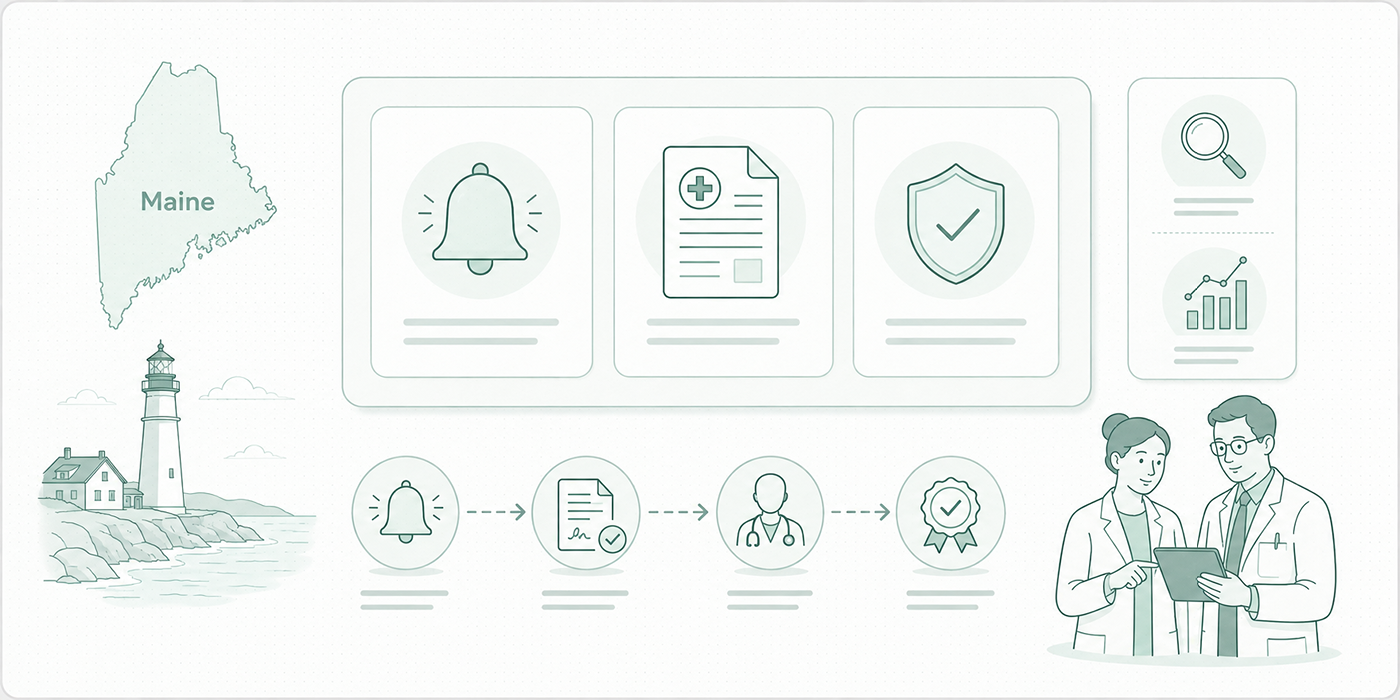
1. Understand What a Pharmacovigilance Certification Means in Maine
Pharmacovigilance covers the collection, evaluation, monitoring, communication, and prevention of safety problems associated with medicines and other regulated medical products. A strong program should teach you how safety information moves from a patient, investigator, pharmacist, call center, or published article into a validated individual case safety report.
In Maine, pharmacovigilance certification functions as a professional training credential. Pharmacist licensure remains a separate regulated pathway administered through the Maine Board of Pharmacy. The state’s licensing materials address credentials such as pharmacist and pharmacy-technician practice, while pharmacovigilance roles are generally evaluated through education, safety knowledge, relevant experience, and employer-specific qualifications.
This distinction matters because applicants sometimes spend months searching for a “Maine pharmacovigilance license” instead of building the competencies employers inspect. Those competencies include patient-safety principles, serious adverse event reporting, medical terminology, case validity, causality assessment, expectedness, MedDRA coding, follow-up strategy, narrative writing, regulatory timelines, and pharmacovigilance inspection readiness.
The FDA describes pharmacovigilance as one of the core functions used to evaluate medicine safety throughout the product lifecycle. Its safety activities include postmarketing surveillance, pharmacoepidemiology, medication-error analysis, and risk management. The agency’s MedWatch program receives reports involving serious adverse events, product-quality problems, therapeutic failures, and product-use errors.
For 2026-27 candidates, one particularly important development is the FDA’s implementation of the Adverse Event Monitoring System, or AEMS. The system is designed to consolidate previously separate reporting environments across FDA-regulated product categories. Your training should therefore explain established FAERS terminology while preparing you for the evolving AEMS environment.
A certificate becomes valuable when it supports a defined career direction. A registered nurse might target safety intake or clinical safety. A pharmacist may pursue medical review, aggregate reporting, or signal management. A life-sciences graduate may begin with case processing, literature surveillance, or safety operations. A clinical research coordinator can build on protocol-deviation management, patient-retention experience, and site-monitoring knowledge.
Before enrolling, write down three target job titles. Useful entry and transition roles include:
Drug Safety Associate
Pharmacovigilance Associate
Safety Case Processor
Adverse Event Intake Specialist
Medical Information Specialist
Clinical Safety Coordinator
Pharmacovigilance Quality Specialist
Safety Operations Associate
Literature Surveillance Associate
Product Safety Specialist
This prevents a common failure pattern: earning a broad certificate, placing one line on a résumé, and sending identical applications to unrelated positions. Employers need to see alignment between your training, your evidence, and the daily responsibilities of the role.
| Competency | What You Must Be Able to Do | Evidence to Build During Training | Hiring Risk When Missing |
|---|---|---|---|
| 1. PV foundations | Explain the safety lifecycle from case intake through regulatory submission, signal review, and risk minimization. | Create a one-page end-to-end safety workflow. | You may sound theoretical during interviews. |
| 2. Valid-case criteria | Identify an identifiable patient, identifiable reporter, suspected product, and adverse event. | Classify ten sample reports as valid, invalid, or pending follow-up. | Invalid cases may enter the database or valid cases may be missed. |
| 3. Seriousness assessment | Recognize death, life-threatening events, hospitalization, disability, congenital anomaly, and medically important events. | Complete a seriousness decision worksheet with rationale. | Expedited-reporting timelines can be triggered incorrectly. |
| 4. Severity distinction | Separate clinical intensity from regulatory seriousness. | Compare mild, moderate, and severe events against seriousness criteria. | Severity and seriousness may be incorrectly treated as interchangeable. |
| 5. Expectedness | Compare an event with the correct reference safety information. | Document expectedness decisions using sample labels or investigator brochures. | Incorrect reference documents can distort reportability. |
| 6. Causality assessment | Evaluate temporal relationships, dechallenge, rechallenge, alternatives, and biological plausibility. | Write structured causality rationales for three cases. | Unexplained conclusions weaken medical review. |
| 7. ICH E2A | Apply definitions and expedited-reporting principles for clinical safety information. | Build an E2A terminology reference sheet. | Core clinical safety concepts remain fragmented. |
| 8. ICH E2B(R3) | Understand structured ICSR data and electronic transmission requirements. | Map case information to major E2B data fields. | Database and submission workflows become harder to learn. |
| 9. ICH E2C(R2) | Understand the purpose and structure of periodic benefit-risk evaluation reports. | Outline the sections of a mock PBRER. | Aggregate-reporting roles remain inaccessible. |
| 10. ICH E2D | Apply postapproval safety data-management principles. | Compare postmarketing and clinical-trial case workflows. | Postmarketing reporting obligations may be misunderstood. |
| 11. ICH E2E | Connect identified risks, potential risks, and missing information with pharmacovigilance planning. | Draft a simplified safety-specification table. | Risk-management discussions remain superficial. |
| 12. Case intake | Capture information accurately from spontaneous, solicited, literature, digital, and study sources. | Complete intake forms from simulated calls and emails. | Critical source information can disappear at first contact. |
| 13. Source documentation | Preserve reporter language, dates, attachments, and audit trail information. | Create a source-document quality checklist. | Case traceability becomes difficult during inspection. |
| 14. Follow-up strategy | Request missing information based on medical and regulatory importance. | Draft targeted follow-up questions for five incomplete cases. | Generic questionnaires generate low-value responses. |
| 15. Narrative writing | Write chronological, medically coherent, concise case narratives. | Produce two complete narratives from unstructured notes. | Poor narratives slow medical review and quality control. |
| 16. MedDRA coding | Select terms that accurately represent reported concepts without adding interpretation. | Code a practice set and document term-selection reasoning. | Inconsistent coding weakens retrieval and signal analysis. |
| 17. Drug coding | Standardize suspect, interacting, and concomitant products. | Build a product-coding exercise with trade and generic names. | Product data may become difficult to aggregate. |
| 18. Duplicate detection | Compare patient, reporter, event, product, dates, and narrative similarities. | Perform duplicate assessments on paired case examples. | Duplicate submissions can inflate safety counts. |
| 19. Expedited reporting | Determine when clocks start, which cases qualify, and where escalation is required. | Create a timeline decision tree. | Late reporting can create significant compliance exposure. |
| 20. Case quality control | Review consistency across coding, seriousness, dates, products, narrative, and assessment fields. | Quality-check a deliberately flawed case. | Errors may survive until submission or inspection. |
| 21. Reconciliation | Compare safety data with clinical, product-complaint, medical-information, and vendor records. | Create a reconciliation tracker and discrepancy workflow. | Cases may remain missing across functional systems. |
| 22. Literature surveillance | Screen publications for reportable cases and emerging safety information. | Document inclusion and exclusion decisions for sample abstracts. | Reportable literature cases can be overlooked. |
| 23. Signal detection | Recognize patterns requiring validation, prioritization, and assessment. | Prepare a basic signal-validation memo. | Frequency alone may be mistaken for meaningful evidence. |
| 24. Benefit-risk thinking | Evaluate safety findings alongside disease severity, treatment effect, alternatives, and uncertainty. | Write a concise benefit-risk discussion. | Safety conclusions may lack clinical context. |
| 25. Risk management and REMS | Understand risk minimization, communication, implementation, and evaluation. | Design a simplified risk-minimization plan. | Risk-management roles may remain beyond reach. |
| 26. Product complaints | Recognize when a complaint also contains a reportable adverse event. | Classify mixed complaint-and-safety scenarios. | Safety information can remain trapped in quality systems. |
| 27. Privacy and confidentiality | Handle identifiable health information using controlled, minimum-necessary practices. | Redact and route a mock report appropriately. | Informal sharing can create privacy and trust failures. |
| 28. Safety database literacy | Understand case fields, workflow states, queries, locks, audit trails, and submissions. | Create a database-field mapping exercise. | Applicants may struggle with systems-based interview questions. |
| 29. CAPA and inspection readiness | Investigate deviations, identify root causes, and design measurable corrective actions. | Draft a CAPA from a late-reporting scenario. | Weak remediation can allow failures to recur. |
| 30. Cross-functional communication | Escalate safety issues clearly to clinical, regulatory, medical, quality, and vendor teams. | Write an escalation email and meeting summary. | Technically correct findings may fail to drive action. |
2. Choose a Certification Program That Builds Employable Skills
Start by evaluating the curriculum instead of the certificate title. Programs often use similar language while delivering very different levels of preparation. One course may provide recorded definitions and a multiple-choice exam. Another may train you to assess cases, write narratives, identify missing information, apply reporting timelines, and defend decisions. The second structure gives you stronger material for interviews and entry-level work.
A credible curriculum should cover the ICH E2 guideline family. ICH E2A addresses definitions and expedited clinical safety reporting. E2B(R3) supports the electronic transmission of individual case safety reports. E2E focuses on lifecycle pharmacovigilance planning, while related E2 guidance addresses postapproval reporting and aggregate safety evaluation.
Look for direct instruction in:
Valid ICSR criteria
Seriousness, severity, expectedness, and causality
MedDRA terminology selection
Case intake and follow-up
Narrative construction
Clinical-trial and postmarketing reporting
Literature case processing
Signal detection and management
Aggregate reports
Risk-management plans
Safety agreements and reconciliation
Quality control, deviations, CAPA, audits, and inspections
FDA MedWatch, FAERS, and the AEMS transition
Global safety requirements and escalation pathways
A Maine learner who wants broad clinical-research mobility should also understand investigator responsibilities under GCP, research protocol adherence, clinical-trial data integrity, and remote monitoring practices. Safety teams routinely depend on information generated by investigators, coordinators, monitors, laboratories, medical monitors, and data managers.
Evaluate the assessment method
A final exam can test recall. Practical assessments reveal whether you can work through ambiguity. Favor a program that requires several of the following:
Validity assessment of incomplete reports
Seriousness and expectedness decisions
A structured follow-up plan
A complete case narrative
MedDRA coding exercises
A regulatory timeline calculation
Quality review of a flawed ICSR
A simple signal-validation exercise
A CAPA or root-cause analysis
A mock safety interview or case presentation
These activities connect naturally with clinical-trial data review, medical-monitor safety oversight, regulatory compliance for medical professionals, and quality-management strategies.
Examine instructor and support quality
Instructor biographies should show experience in drug safety, clinical research, regulatory affairs, medicine, pharmacy, nursing, quality, or safety systems. Pay attention to whether the course offers substantive feedback. Automated scoring may tell you that an answer is wrong; useful feedback explains why your case was invalid, which follow-up question had the highest priority, or why a reporting clock began on a particular date.
Ask the provider:
Who reviews practical assignments?
How long will you retain course access?
Are regulations and system changes updated?
Does the program teach both U.S. and international frameworks?
Will you complete case-processing exercises?
Does the certificate state the competencies or training hours?
Is career support tailored to specific safety roles?
Can the provider show sample learning outcomes?
Supplement formal training with the directory of free clinical-research resources, the clinical-research associations directory, and the best online communities for researchers. FDA also maintains training and continuing-education resources for healthcare professionals, academia, industry, and students.
Match training depth to your background
Healthcare professionals usually bring terminology, patient assessment, or medication knowledge. They may need more training in regulatory clocks, database workflows, MedDRA, aggregate reporting, and global requirements.
Clinical-research professionals often understand protocols, source records, deviations, and investigator communication. They should deepen their knowledge of case processing, safety surveillance, literature review, signal management, and global regulatory compliance.
Recent science graduates should build a stronger foundation in medical terminology, clinical-trial structure, documentation, and essential research-assistant training. They can then add trial-logistics coordination, research-team communication, and safety case exercises.
Experienced safety professionals should target advanced capabilities such as signal assessment, aggregate reporting, risk management, vendor oversight, audits, safety governance, and pharmacovigilance inspection techniques.
3. Follow a Step-by-Step Maine Pharmacovigilance Certification Plan
Step 1: Define your destination role
Collect 15 to 20 job descriptions for one or two target roles. Search Maine-based, New England, remote, sponsor, CRO, safety-vendor, biotechnology, pharmaceutical, and medical-device opportunities. Record repeated requirements in a spreadsheet.
Your columns should include:
Job title
Experience requested
Degree or clinical qualification
Safety responsibilities
Required regulations
Database exposure
Therapeutic-area preferences
Writing requirements
Quality responsibilities
Remote-location restrictions
Use the interactive clinical-research career map to understand the wider market, then compare your options with the clinical-research salary tool. Geographic flexibility matters because Maine candidates may find suitable work through local research institutions, regional New England employers, and national remote teams.
Step 2: Complete foundational GCP training
Pharmacovigilance decisions are shaped by protocol requirements, investigator obligations, source documentation, and subject protection. Complete Maine ICH-GCP certification alongside your safety education.
Regional learners can also compare GCP certification in New Hampshire, Massachusetts GCP certification, and Vermont GCP certification. These pages can help professionals planning broader New England applications.
Step 3: Complete the pharmacovigilance curriculum actively
Treat every module as an opportunity to produce evidence. After learning validity criteria, classify sample reports. After learning seriousness, document your reasoning. After studying narratives, write one from messy source material. After learning follow-up, rank questions by regulatory and medical value.
Build connections between modules. For example:
Case intake determines whether minimum criteria exist.
Day zero begins when reportable information reaches the organization.
Follow-up improves medical assessment and completeness.
Coding supports retrieval and analysis.
Narrative quality affects medical review.
Case quality affects downstream aggregate reporting.
Aggregate data can contribute to signal detection.
Signals may lead to labeling, communication, or risk-minimization action.
That connected view is more valuable than memorizing isolated definitions from pharmacovigilance certification guides for California, Connecticut, Delaware, or Colorado.
Step 4: Build a privacy-safe portfolio
Create fictional or fully de-identified work samples. Never place patient information, sponsor documents, employer procedures, safety-database screenshots, or confidential study materials in your portfolio.
A useful entry-level portfolio can include:
A valid-case decision worksheet
A seriousness and expectedness assessment
A follow-up questionnaire
A chronological case narrative
A mock MedDRA coding log
A duplicate-case evaluation
A regulatory timeline calculation
A literature-screening decision log
A reconciliation tracker
A CAPA exercise
Connect these samples with safety-monitoring best practices, clinical-trial data verification, protocol-adherence principles, and clinical-trial data integrity.
Step 5: Practice role-specific interviews
Prepare to explain your decisions aloud. Recruiters often learn more from your reasoning than from a memorized definition.
Practice questions such as:
What makes an adverse-event report valid?
How would you determine day zero?
How do seriousness and severity differ?
Which missing details would you request first?
How would you process a report that also includes a product complaint?
What would you do when two reports appear to describe the same patient?
How would you respond to a late case?
How would you write a concise narrative from conflicting source information?
How would you protect confidentiality during escalation?
What would you check during case quality control?
Use adverse-event compliance guidance, audit-readiness techniques, clinical-safety oversight guidance, and ethical patient-safety principles to strengthen your answers.
What Is Blocking Your Pharmacovigilance Career in Maine?
Choose the closest answer to receive a focused next step.
4. Convert Your Certification Into Maine and Remote Job Opportunities
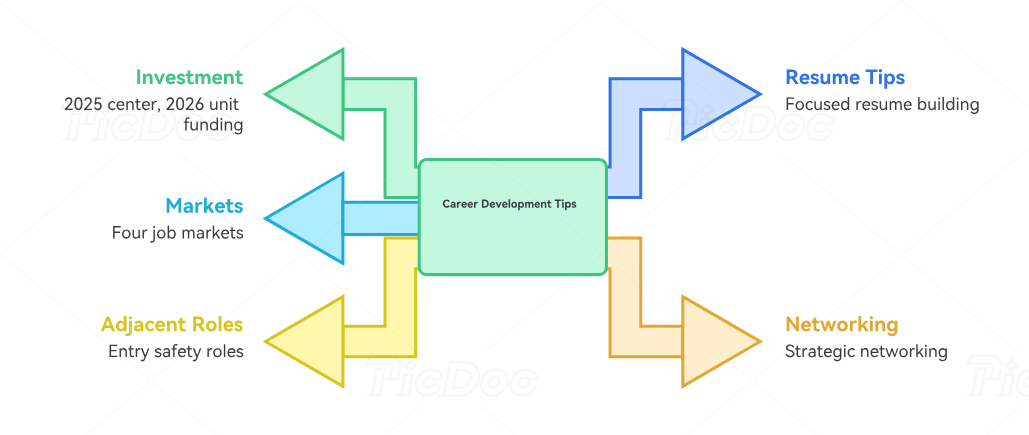
Maine’s life-sciences environment is receiving new investment. The state created the Maine Life Sciences Center in 2025 to support sector growth, talent, infrastructure, and innovation. MaineHealth also announced funding in May 2026 for Maine’s first dedicated clinical research unit in Biddeford, expanding local clinical-research capacity and early-career research opportunities.
MaineHealth already supports biomedical research and clinical trials across its system, including activity through the MaineHealth Institute for Research and community hospitals. Its clinical-trial environment gives Maine professionals potential pathways into research coordination, regulatory support, data operations, safety reporting, and adjacent roles that can later support a pharmacovigilance transition.
Your search should include four markets:
Local Maine organizations
Look for hospitals, research institutes, biotechnology companies, laboratories, medical-device organizations, academic research teams, health systems, and vendors. Search beyond the exact word “pharmacovigilance.” Useful terms include:
Drug safety
Patient safety
Clinical safety
Adverse events
Safety surveillance
Medical information
Product complaints
Clinical research
Regulatory operations
Quality assurance
Clinical data
Research compliance
New England hybrid opportunities
Maine professionals can expand their search into the wider regional life-sciences corridor. Review opportunities connected with Massachusetts pharmacovigilance preparation, New Hampshire GCP training, Rhode Island GCP certification, and Connecticut pharmacovigilance certification.
Check travel expectations carefully. A position labeled remote may still require quarterly office attendance, residency in an approved state, or availability during a fixed time zone.
National remote safety roles
Maine JobLink carried 2026 listings for positions involving pharmacovigilance knowledge, safety systems, patient-safety project management, and cross-functional work with pharmacovigilance teams. This shows why Maine residents should search remote and nationally distributed employers alongside local organizations.
Remote hiring raises the competitive threshold. Your résumé must quickly demonstrate that you understand controlled workflows, documentation quality, timelines, escalation, confidentiality, and independent task management. Strengthen it with evidence from remote and on-site monitoring, risk-based monitoring, clinical-trial timeline management, and project quality management.
Adjacent-entry roles
Your first safety-relevant position may carry a different title. Consider research assistant, clinical research coordinator, medical-information associate, product-complaint specialist, regulatory coordinator, quality specialist, clinical data coordinator, trial-support associate, or safety-intake representative.
A coordinator with experience in site operations oversight, investigator meetings, protocol-deviation handling, and patient education resources can translate that background into safety-relevant language.
Build a focused résumé
Replace phrases such as “knowledge of pharmacovigilance” with evidence-based bullets:
Assessed fictional safety reports against four minimum ICSR validity criteria.
Prepared chronological case narratives from unstructured source information.
Applied seriousness, expectedness, and causality frameworks to simulated reports.
Developed targeted follow-up questions based on medically significant missing information.
Reviewed mock cases for coding, date, narrative, product, and assessment consistency.
Created a reconciliation tracker for safety, clinical, and product-complaint records.
Completed training in ICH E2 principles, MedDRA concepts, FDA reporting, and GCP.
Your résumé should also surface transferable experience. A nurse can emphasize clinical assessment and patient communication. A pharmacist can highlight medication knowledge, interactions, and counseling. A coordinator can show protocol compliance and SAE escalation. A data professional can emphasize validation, reconciliation, and controlled documentation. A quality professional can demonstrate deviation investigation, CAPA, and audit readiness.
Network through useful contributions
Join professional clinical-research associations, participate in online research communities, attend oncology research conferences, and track free clinical-research webinars.
Useful networking questions include:
Which entry-level safety skills are hardest to teach after hiring?
How does your team divide intake, processing, quality control, and medical review?
Which adjacent roles create the strongest route into pharmacovigilance?
How are AEMS changes affecting safety operations?
Which work samples demonstrate readiness without exposing confidential material?
Which therapeutic areas are expanding within your organization?
Questions grounded in workflow create stronger conversations than immediately requesting a referral.
5. Plan Your Timeline, Budget, and Career Return
A realistic pathway usually includes training, applied exercises, portfolio development, résumé alignment, networking, and interviewing. Completing the course quickly can help only when comprehension remains high. Pharmacovigilance work involves decisions that may affect reporting compliance and patient safety, so rushed memorization creates weak interview performance.
A practical 12-week structure is:
Weeks 1-2: Career and regulatory foundations
Study the drug-development lifecycle, clinical-trial phases, GCP, safety stakeholders, MedWatch, and ICH E2 concepts. Review investigator responsibilities, ethical trial conduct, and research protocol adherence.
Weeks 3-5: Individual case processing
Focus on intake, validity, seriousness, expectedness, causality, follow-up, narratives, coding, duplicates, and regulatory clocks. Practice using adverse-event reporting guidance and clinical-trial safety-monitoring principles.
Weeks 6-7: Postmarketing and aggregate safety
Study literature surveillance, periodic reports, signal detection, risk management, reconciliation, and benefit-risk evaluation. Connect this material with global pharmacovigilance compliance and medical-monitor safety responsibilities.
Weeks 8-9: Quality and inspection readiness
Learn case quality control, deviations, root-cause analysis, CAPA, procedural compliance, metrics, audits, and vendor oversight. Use pharmacovigilance audit techniques, quality-management strategies, and clinical-trial data-integrity guidance.
Weeks 10-12: Employment preparation
Finish your portfolio, revise your résumé, optimize your LinkedIn profile, schedule informational conversations, and conduct mock interviews. Compare local, regional, and remote openings through the clinical-research career map and salary comparison tool.
When comparing costs, calculate total career value rather than tuition alone. Include:
Course price
Exam or reassessment fees
Extension charges
Required software or textbooks
Live-instruction access
Assignment feedback
Career-support depth
Time away from paid work
Renewal or continuing-education requirements
A low-cost course can deliver good value when it provides rigorous material and applied work. An expensive program can produce poor value when the learning remains passive. Request a syllabus, sample lesson, assessment description, refund terms, and completion requirements before paying.
Watch for these warning signs:
Guaranteed employment claims
Unclear instructor qualifications
No practical case exercises
No mention of ICH E2 guidance
Outdated regulatory terminology
Training centered entirely on definitions
Hidden exam or certificate fees
Pressure to enroll immediately
Testimonials without verifiable learning outcomes
Claims that one certificate replaces experience
Your return comes from converting the course into measurable capability. One certificate line has limited persuasive power. A certificate supported by case exercises, a privacy-safe portfolio, strong interview reasoning, and familiarity with clinical safety, regulatory compliance, data integrity, and inspection readiness gives employers a clearer reason to interview you.
6. FAQs About Pharmacovigilance Certification in Maine
-
Pharmacovigilance certification serves as professional education for drug-safety work. Maine pharmacist licensure applies when a position requires you to practice as a pharmacist. Review every job description carefully because a medical-review or pharmacist-designated role may require an active clinical license, while case processing, safety operations, literature surveillance, and quality roles may accept broader scientific, clinical, or research backgrounds. Maine’s Board of Pharmacy publishes the state’s pharmacist and pharmacy-related licensing requirements.
Combine your safety education with Maine GCP certification, adverse-event compliance training, and ethical patient-safety principles.
-
Yes. Employers hire candidates from nursing, medicine, pharmacy, biology, biotechnology, public health, clinical research, regulatory affairs, medical information, quality, data management, and related fields. The suitable entry point depends on your background.
A nurse may be competitive for intake, follow-up, or clinical safety. A science graduate may target case processing or literature surveillance. A research coordinator may connect site-monitoring experience, protocol-deviation management, data-review skills, and SAE escalation with safety operations.
-
Program length varies according to curriculum depth, delivery format, assessment requirements, and your weekly study time. Evaluate the number of applied exercises alongside the advertised completion period.
A learner with clinical or research experience may progress quickly through medical terminology or GCP content while spending more time on E2B, MedDRA, case workflows, signal detection, and aggregate reports. Recent graduates may require additional preparation through research-assistant training, clinical-trial logistics, and research communication.
-
Employers assess the provider, curriculum, assessment quality, relevance, and evidence of application. Online delivery can support Maine residents who need schedule flexibility or access to specialized instructors outside the state.
Strengthen an online certificate with a documented portfolio, free clinical-research training, participation in professional associations, and knowledge of remote clinical operations.
-
Include skills you can explain and demonstrate. High-value examples include ICSR validity assessment, case intake, seriousness, expectedness, causality, MedDRA concepts, follow-up, narrative writing, duplicate detection, literature surveillance, regulatory timelines, case quality control, reconciliation, signal detection, CAPA, and inspection readiness.
Support those keywords with evidence. “Completed a simulated ICSR quality review across patient, product, event, coding, dates, narrative, and assessment fields” carries more weight than “familiar with drug safety.” Link your capabilities with safety best practices, audit preparation, and global regulatory requirements.
-
A coordinator may already possess several transferable competencies: source-document review, protocol compliance, adverse-event collection, investigator communication, follow-up, timeline management, documentation, and escalation.
Translate these responsibilities into safety language. Explain how you identified reportable events, gathered missing details, documented investigator assessments, maintained subject confidentiality, and met sponsor timelines. Strengthen remaining gaps through CRC retention strategies, site-monitoring preparation, protocol-deviation handling, and formal pharmacovigilance training.
