
The Ultimate Guide to Getting Your Good Clinical Practice (ICH-GCP) Certification in New Hampshire: Everything You Need to Know in 2026-27
New Hampshire clinical research careers reward people who can turn protocol language into clean, compliant site behavior. In 2026-27, ICH-GCP certification should help you prove that you understand consent, delegation, source documentation, deviations, safety reporting, monitoring readiness, and inspection discipline. Whether you are moving from healthcare into coordination, aiming for CRA work, or strengthening sponsor-side credibility, pair your clinical research certification in New Hampshire with practical GCP habits, site monitoring skills, adverse event reporting, protocol deviation control, and data integrity proof that hiring managers can actually see.
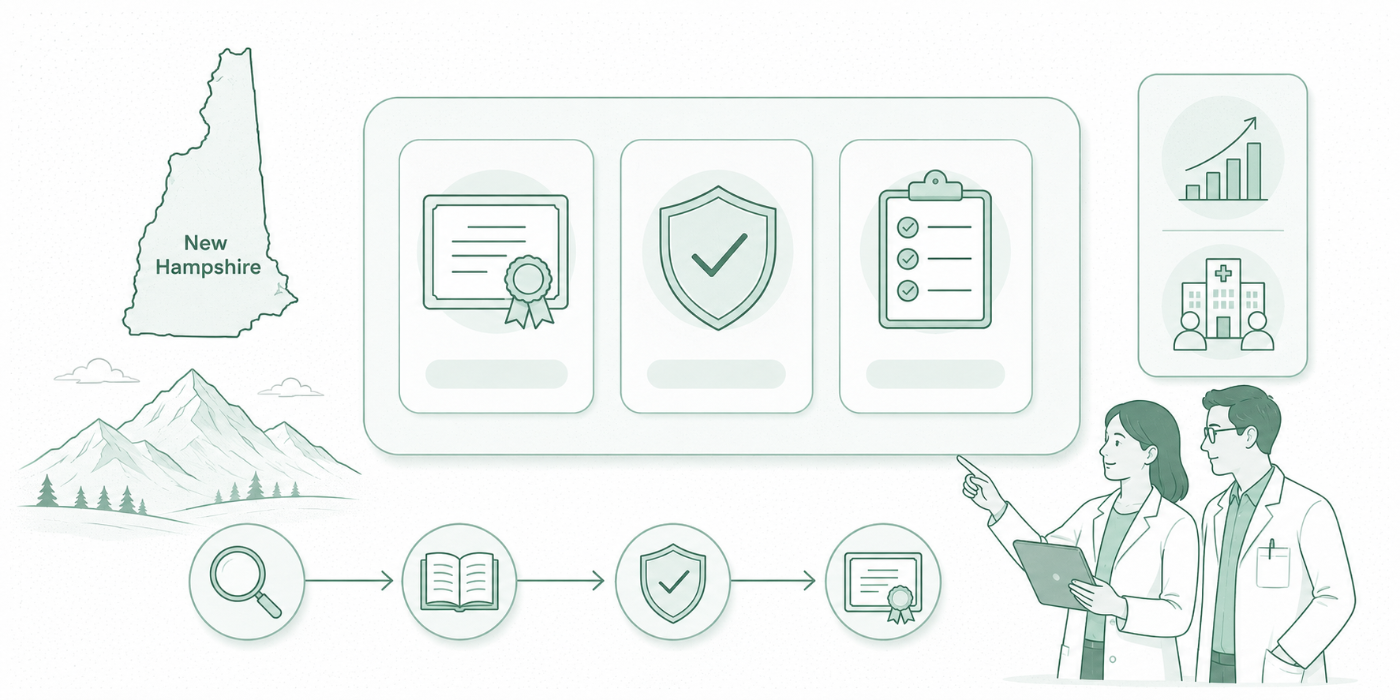
1. What ICH-GCP Certification Means for New Hampshire Professionals in 2026-27
ICH-GCP certification is valuable because it gives structure to decisions that can easily become messy inside real trial work. A New Hampshire coordinator, research assistant, nurse, pharmacist, CRA trainee, regulatory specialist, or site manager needs more than a certificate screenshot; they need the ability to explain how informed consent is documented, how delegation is controlled, how source data connects to EDC entries, how safety monitoring protects participants, and how GCP monitoring techniques catch small issues before they become inspection findings.
The biggest mistake New Hampshire candidates make is treating GCP as a memorization course. Employers care about whether you can reduce site risk. A candidate who can explain investigator responsibilities under GCP, the difference between an AE and SAE, why contemporaneous documentation matters, when a protocol deviation needs escalation, and how a corrective action should be written will stand out faster than someone who simply says they “completed training.” Strong candidates connect ICH-GCP to ethical conduct and patient safety, clinical trial site operations, clinical trial sponsor responsibilities, and quality management strategies in plain language.
For New Hampshire, the smart play is regional positioning. The state sits near major clinical research markets, academic centers, community sites, remote CRO roles, and sponsor operations that may pull from broader New England talent pools. That means your GCP certification should be supported by a visible skill stack: clinical research certification in Massachusetts, ICH-GCP certification in Massachusetts, ICH-GCP certification in Maine, ICH-GCP certification in Vermont, and ICH-GCP certification in Connecticut all fit the same broader hiring geography.
| Career Situation | Best GCP Focus | Proof Hiring Teams Want | CCRPS Internal Resource |
|---|---|---|---|
| Entry-level healthcare worker moving into research | Consent, participant protection, documentation basics | Explain how consent notes, source records, and visit windows protect participants | New Hampshire clinical research certification |
| CRC candidate applying to hospital or site roles | Enrollment, visit flow, deviation prevention | Show a sample visit checklist and deviation escalation process | patient retention strategies for CRCs |
| Research assistant with limited trial exposure | Source documentation, ALCOA-style habits, query response | Describe clean data entry, correction discipline, and document traceability | research assistant communication strategies |
| Nurse transitioning into clinical trials | AE capture, safety documentation, patient education | Connect clinical observations to protocol-defined reporting requirements | GCP adverse event reporting |
| Pharmacy professional entering study drug work | Accountability, storage, chain of custody, blinding control | Explain how investigational product errors become compliance risk | IND application guide |
| CRA trainee targeting monitoring roles | SDV, SDR, issue escalation, monitoring reports | Build a monitoring-readiness checklist and mock follow-up letter | remote and on-site monitoring visits |
| Site coordinator preparing for sponsor review | Regulatory binder, delegation log, training files | Demonstrate a document reconciliation habit before every monitor visit | site monitoring visit guide |
| Regulatory affairs beginner | IRB submissions, amendments, essential documents | Explain amendment impact on consent, training, and version control | clinical trial amendments guide |
| Data coordinator or EDC user | Query logic, audit trails, source-to-EDC consistency | Share a query reduction workflow that protects data integrity | clinical trial data review |
| Principal investigator strengthening oversight | Delegation, supervision, safety review, protocol compliance | Show regular oversight notes, staff training review, and escalation pathways | investigator GCP responsibilities |
| Site manager cleaning up recurring deviations | Root cause, CAPA, process redesign | Turn deviation trends into preventive workflows | protocol deviation corrective actions |
| Project coordinator supporting trial timelines | Milestones, dependencies, start-up readiness | Map training, IRB approval, contract, budget, and activation dependencies | clinical trial timelines |
| Budget-facing site professional | Protocol procedures, invoice triggers, pass-through costs | Connect GCP activities to budgetable operational work | clinical trial budget management |
| Candidate targeting sponsor-side work | Oversight, vendor management, risk-based quality | Discuss how sponsors maintain quality across delegated tasks | clinical trial sponsor roles |
| Pharmacovigilance career starter | SAE timelines, causality, seriousness, follow-up | Separate AE, SAE, SUSAR-style thinking, and follow-up logic clearly | SAE reporting procedures |
| Remote-role applicant | Digital source access, remote monitoring etiquette, privacy | Show how to prepare clean documents for remote review without oversharing | GCP monitoring techniques |
| Quality-focused professional | Risk identification, issue management, CAPA evidence | Build a small quality tracker with owner, date, status, and preventive step | clinical research quality management |
| Candidate choosing among credentials | Program fit, recognition, role alignment, practical outcomes | Compare training based on job tasks rather than course length alone | certificate programs compared |
| Career changer with weak resume signals | Transferable skills, compliance language, proof projects | Translate patient care, admin, lab, pharmacy, or data work into trial value | clinical research career opportunities |
| Candidate worried about interviews | Scenario answers, escalation judgment, documentation discipline | Prepare five GCP stories around errors, deadlines, participants, and teamwork | free clinical research training resources |
| Site preparing for inspection readiness | Essential documents, training logs, consent review, audit trails | Run a monthly mini-audit before problems pile up | GCP compliance self-assessment |
| Coordinator handling difficult enrollment | Eligibility, retention, participant education, scheduling friction | Create scripts that reduce confusion while preserving consent quality | patient education resources |
| Professional building a resource library | SOPs, templates, CRFs, logs, trackers | Use templates to standardize work without copying blindly | clinical trial templates directory |
| Candidate who wants networking leverage | Associations, communities, conferences, referrals | Ask stronger questions about GCP pain points instead of generic job requests | professional associations directory |
| CRA candidate learning risk-based monitoring | Critical data, critical processes, risk signals | Explain how monitoring intensity follows patient safety and data risk | risk-based monitoring strategies |
| Global trial support professional | Regulatory differences, country expectations, ethics oversight | Discuss GCP as a baseline while respecting local regulatory requirements | global regulatory guidelines |
| New Hampshire professional exploring nearby markets | Regional mobility, hybrid roles, academic and CRO pathways | Position your GCP certification for New England-wide hiring conversations | Massachusetts ICH-GCP certification |
2. How to Choose the Right ICH-GCP Training Path in New Hampshire
The right ICH-GCP training path depends on the job you want, the evidence you can show, and the risk you must learn to control. A CRC candidate should prioritize consent, scheduling, documentation, eligibility, participant communication, and patient retention strategies. A CRA candidate should prioritize monitoring visits, SDV logic, action items, protocol compliance, and risk-based monitoring. A regulatory candidate should prioritize essential documents, IRB communication, version control, trial amendments, and global regulatory guidelines.
A strong course should help you answer practical questions: What makes a consent process defensible? Who should be on the delegation log? How should staff document re-training after a protocol update? When does a missed assessment become a deviation? How do you respond when EDC data conflicts with source? How should a site prepare before a monitor asks for records? These are the problems behind clinical trial data review, interactive start-up checklists, clinical trial templates, ethics and compliance resources, and GCP compliance self-assessment.
New Hampshire candidates should also think regionally. A local resume gains strength when it speaks to nearby clinical research ecosystems and remote sponsor/CRO workflows. If you are applying beyond the state, connect your ICH-GCP certification to clinical research certification in Massachusetts, clinical research certification in Connecticut, ICH-GCP certification in Maine, ICH-GCP certification in Vermont, and CRA certification in Massachusetts when building your internal-link and learning map.
The best training outcome is a job-ready story. After completing GCP training, create a one-page “GCP readiness sheet” for yourself. Include five examples: how you would document informed consent, how you would identify and escalate a deviation, how you would prepare a regulatory binder, how you would answer an EDC query, and how you would respond to an SAE. That single sheet turns SAE reporting procedures, investigator oversight, budget-aware coordination, clinical trial timeline management, and project close-out procedures into interview material.
3. New Hampshire Clinical Research Career Routes That Actually Use GCP Daily
For a clinical research coordinator, GCP shows up in the details that participants never see but auditors always find. Consent dates must match. Eligibility evidence must support enrollment. Protocol windows must be tracked before they close. Delegation logs must reflect real responsibilities. Training files must support who performed what task and when. A coordinator who can discuss site monitoring preparation, handling protocol deviations, patient education materials, clinical trial budget management, and participant retention sounds ready for the job before the interview ends.
For CRA candidates, GCP becomes judgment. The role requires knowing which finding needs coaching, which one needs escalation, which one threatens patient safety, and which one signals a broken process. A monitor who simply lists issues creates workload. A monitor who connects findings to risk creates value. Build your CRA story around remote and on-site monitoring, risk-based monitoring strategies, data review and verification, investigator meeting strategy, and GCP monitoring techniques.
For regulatory, safety, and quality roles, ICH-GCP certification becomes a common language across departments. Regulatory teams need version control, submission discipline, and essential document readiness. Safety teams need clean AE/SAE capture, follow-up, and escalation. Quality teams need CAPA that fixes the process behind the error. If you are building toward these paths, study clinical research regulatory guidelines, pharmacovigilance best practices, global pharmacovigilance compliance, pharmacovigilance audits and inspections, and quality management in clinical research.
The painful truth: many applicants say they are “GCP trained,” then freeze when asked what they would do if a participant signs the wrong consent version, a PI is unavailable for oversight, an SAE appears in source before EDC, or a monitor finds repeated missing assessments. Your advantage comes from practicing those scenarios. Use free clinical research training resources, join clinical research communities, review professional associations, compare clinical research certificate programs, and track clinical research salary expectations so your plan stays grounded.
What is your biggest New Hampshire ICH-GCP certification blocker right now?
Choose one. Your answer points to the fastest practical fix.
4. How to Turn ICH-GCP Training Into Job-Ready Proof
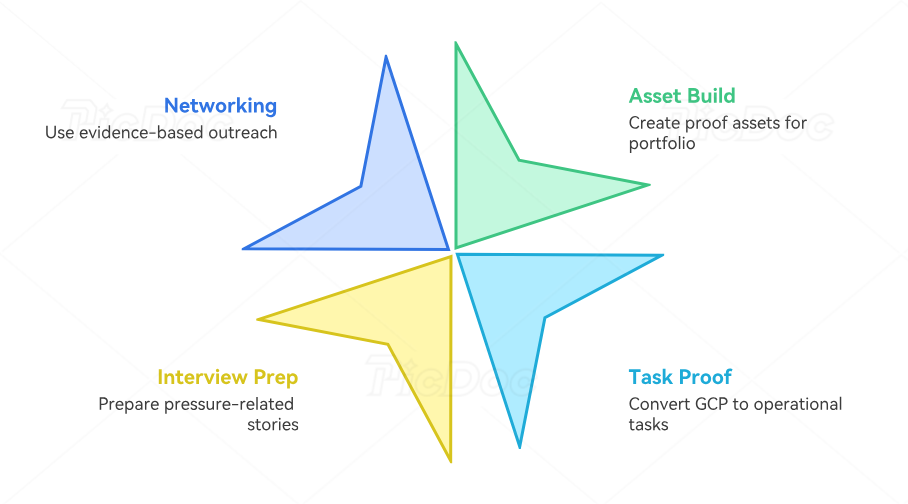
After certification, build a portfolio of small proof assets. You do not need confidential study documents. You can create clean, fictional, training-safe examples that show judgment. Make a mock deviation log with root cause and CAPA. Create a consent process checklist. Draft a monitoring visit preparation list. Build a source-to-EDC reconciliation checklist. Write five interview answers using adverse event reporting, SAE procedures, protocol deviation corrective actions, clinical trial amendments, and clinical trial templates.
Your resume should convert GCP into operational language. Replace broad claims with task-based proof: “Prepared regulatory files for monitoring review,” “supported consent documentation,” “tracked protocol-required assessments,” “resolved data discrepancies with source review,” “maintained training and delegation records,” and “escalated safety documentation according to study process.” Those lines pair naturally with clinical trial site operations, data integrity responsibilities, clinical trial data review, project close-out procedures, and leadership in clinical trial teams.
For interviews, prepare answers around pressure. Hiring teams remember candidates who can talk through risk calmly. Use stories like: a participant arrives outside the protocol window; a lab value creates a safety concern; a consent form version changes before a visit; a monitor requests missing training documentation; a PI delegates a task to someone whose training record is incomplete. Strong answers should name the risk, protect the participant, preserve data integrity, escalate to the right person, and document the action. That is how ethical conduct in GCP, investigator responsibilities, quality management strategies, site monitoring visits, and clinical research career opportunities become career leverage.
Networking should also become evidence-based. When you contact a coordinator, CRA, regulatory specialist, or site manager, ask about real friction: consent re-training, source corrections, EDC query volume, monitor follow-up, protocol amendments, participant retention, or inspection readiness. That gives you better conversations than asking for “advice.” Use clinical research professional associations, online clinical research communities, clinical research conferences, free training resources, and certificate program comparisons to keep those conversations specific.
5. Common Mistakes That Waste Time, Money, and Momentum
The first mistake is completing ICH-GCP certification without learning how trial work feels under pressure. Definitions are useful, but clinical research errors happen in timing, handoffs, documentation gaps, version confusion, unclear delegation, and weak escalation. If your learning plan does not include protocol deviation examples, GCP monitoring techniques, clinical trial data integrity, SAE reporting procedures, and site operations oversight, your certificate may look good while your interview answers stay thin.
The second mistake is ignoring role fit. A CRC, CRA, regulatory coordinator, safety specialist, project manager, and PI all use GCP differently. A CRC needs visit execution and participant-facing discipline. A CRA needs monitoring judgment and follow-up clarity. A regulatory professional needs document control and submission readiness. A safety professional needs accurate AE/SAE logic. A project manager needs timeline, risk, and cross-functional escalation control. Study accordingly through CRC budget strategies, CRA monitoring visits, regulatory affairs mastery, pharmacovigilance compliance, and clinical trial project management.
The third mistake is weak regional positioning. New Hampshire candidates can become too narrow in how they search. Build your resume and LinkedIn around New Hampshire roles, nearby New England options, hybrid sponsor/CRO work, and transferable site skills. Use nearby guides like ICH-GCP certification in Massachusetts, ICH-GCP certification in Connecticut, ICH-GCP certification in Rhode Island, clinical research certification in New York, and clinical research certification in Pennsylvania to understand broader market language.
The fourth mistake is hiding behind certificates without building confidence. You should be able to explain five issues from memory: informed consent error, missed visit window, missing PI oversight note, late AE documentation, and EDC/source mismatch. For each issue, explain impact, escalation, documentation, corrective action, and prevention. That one exercise pulls together interactive GCP self-assessment, interactive start-up checklists, clinical trial templates, quality management, and risk-based monitoring into one practical skill set.
6. FAQs About ICH-GCP Certification in New Hampshire
-
Many New Hampshire employers, sponsors, CROs, sites, and research teams expect GCP familiarity because trial work touches participant safety, protocol compliance, source documentation, and data integrity. ICH-GCP certification helps you speak the language of the field and gives your resume a stronger compliance signal. For the best result, connect it with clinical research certification in New Hampshire, ethical conduct in GCP, investigator responsibilities, adverse event reporting, and data integrity responsibilities.
-
Start with participant protection, informed consent, investigator oversight, essential documents, protocol compliance, safety reporting, source documentation, monitoring, and inspection readiness. Then move from theory into scenarios. Practice what you would do if consent is incomplete, a protocol window is missed, source conflicts with EDC, an SAE needs follow-up, or a monitor finds missing training documentation. Use SAE reporting procedures, protocol deviation examples, GCP monitoring techniques, clinical trial amendments, and clinical trial templates.
-
Yes, especially when you pair it with monitoring-specific proof. CRA hiring conversations revolve around SDV, SDR, critical data, follow-up letters, site communication, action items, escalation, and risk-based review. If your current role is CRC, nurse, research assistant, data coordinator, or regulatory support, translate that experience into monitoring readiness. Study remote and on-site CRA monitoring, risk-based monitoring strategies, clinical trial data review, site monitoring visit preparation, and CRA certification in Massachusetts for broader regional positioning.
-
Put the certificate in your education or certification section, then support it with task-based bullets. Mention source documentation, informed consent support, regulatory binder maintenance, EDC query resolution, deviation tracking, safety escalation, visit scheduling, participant communication, or monitor visit preparation when accurate. The certificate gets attention; proof gets interviews. Strengthen your resume with research assistant collaboration skills, patient retention strategies, clinical trial budget management, site operations oversight, and quality management strategies.
-
Create a 14-day skill sprint. Days 1-3: review consent, source documentation, delegation, and safety reporting. Days 4-6: practice deviations, CAPA, amendments, and monitor findings. Days 7-9: build mock checklists for visit prep, regulatory files, and EDC query response. Days 10-12: write interview stories. Days 13-14: update your resume and apply. Support the sprint with GCP compliance self-assessment, interactive start-up checklists, free clinical research training resources, online clinical research communities, and professional associations.
-
A broader regional search can help because clinical research hiring often crosses state lines through hybrid, remote, academic, CRO, sponsor, and regional site roles. Keep New Hampshire as your anchor, then map nearby markets and remote-friendly positions. Build a learning trail across ICH-GCP certification in Massachusetts, ICH-GCP certification in Maine, ICH-GCP certification in Vermont, ICH-GCP certification in Connecticut, and clinical research career opportunities.
