
How To Get a Pharmacovigilance Certification in Illinois: Everything You Need to Know in 2026–27
Illinois offers a strong base for professionals pursuing drug-safety careers, particularly through Chicago’s pharmaceutical, biotechnology, medical-device, hospital, academic-research, and healthcare-services ecosystem. Earning a valuable credential requires a plan that combines clinical-trial safety monitoring, adverse-event reporting compliance, global pharmacovigilance requirements, and inspection-ready quality practices. This guide explains how to select a credible program, build job-ready evidence, avoid weak credentials, and convert certification into Illinois and remote pharmacovigilance opportunities during 2026–27.
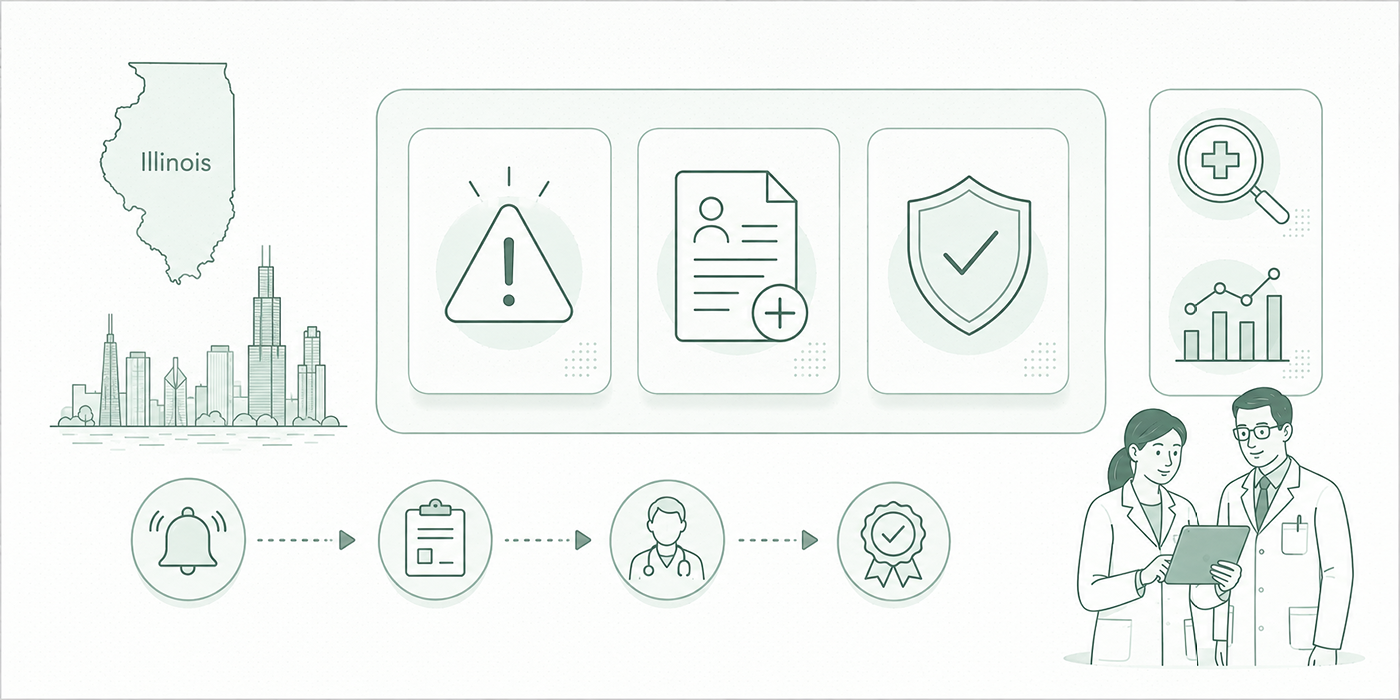
1. Understand What Pharmacovigilance Certification Means in Illinois
A pharmacovigilance certification verifies structured training in detecting, evaluating, documenting, communicating, and reducing medicine-related safety risks. A credible curriculum should connect clinical-trial safety practices, adverse-event reporting rules, ethical patient-protection principles, clinical-data integrity, and global regulatory compliance. Employers frequently examine how well candidates can apply these concepts to incomplete reports, conflicting evidence, urgent timelines, and controlled safety workflows.
Illinois professional licensing and pharmacovigilance education serve different purposes. The Illinois Department of Financial and Professional Regulation licenses regulated pharmacy professions, including pharmacies, registered pharmacists, registered pharmacy technicians, and controlled-substance activities. Pharmacovigilance training prepares professionals for corporate, research, regulatory, safety-operations, and healthcare-industry roles. Candidates who already hold a healthcare license should keep that credential current while building specialized knowledge through GCP certification guidance for Illinois, investigator-responsibility training, medical-monitor safety oversight, and regulatory submission education.
Illinois provides a substantial life-sciences environment in which pharmacovigilance skills can transfer across pharmaceutical companies, biotechnology organizations, medical-device businesses, research institutions, healthcare systems, consulting firms, safety vendors, and clinical research organizations. The Illinois Economic Development Corporation identifies Medline, Abbott, AbbVie, Fresenius Kabi, Baxter, and GE HealthCare among notable state employers. It also reports more than 15,500 life-sciences companies and over 618,000 people employed across the broader Illinois life-sciences sector. Candidates can use the interactive clinical-research career map, worldwide salary comparison tool, professional-association directory, and clinical-research community directory to map this ecosystem more strategically.
Job seekers should search beyond the exact phrase “pharmacovigilance associate.” Relevant titles can include drug-safety associate, safety case processor, safety intake specialist, medical-information associate, product-surveillance specialist, clinical-safety coordinator, pharmacovigilance quality specialist, literature-surveillance associate, regulatory-safety specialist, and safety operations analyst. Reviewing clinical-research career opportunities, free professional training resources, researcher networking communities, clinical-research associations, and oncology research conferences can reveal adjacent pathways that conventional job searches miss.
| Decision Criterion | High-Value Program Standard | Evidence to Request | Expensive Failure Signal | Supporting CCRPS Resources |
|---|---|---|---|---|
| 1. Career objective | The curriculum identifies whether it prepares learners for case processing, safety operations, compliance, medical review support, or signal work. | A role-to-module map connecting lessons with real responsibilities. | The provider markets one credential as sufficient for every PV position. | Career opportunities and salary comparisons. |
| 2. ICSR lifecycle | Training follows a case from intake and validation through coding, assessment, QC, submission, follow-up, and closure. | A complete simulated case-processing exercise. | Case processing appears as a brief vocabulary lesson. | Safety monitoring and AE reporting. |
| 3. Minimum case criteria | Learners identify an identifiable patient, identifiable reporter, suspect product, and reportable adverse event. | Ambiguous examples requiring valid-versus-invalid case decisions. | Students memorize four criteria without resolving incomplete reports. | Data verification and data integrity. |
| 4. Day-zero determination | The program explains when reporting clocks begin across affiliates, vendors, call centers, literature sources, and study sites. | Timestamped intake scenarios with documented reasoning. | The clock begins only after database entry or medical confirmation. | Timeline management and trial logistics. |
| 5. Seriousness assessment | Students apply regulatory seriousness criteria and understand medically important events. | Scenarios involving hospitalization, disability, congenital anomalies, death, and intervention. | Seriousness and symptom severity are treated as interchangeable. | Reporting compliance and patient safety. |
| 6. Expectedness assessment | Expectedness is evaluated against the correct reference safety information for the reporting context. | Exercises using labels, investigator brochures, and controlled reference documents. | Expectedness decisions rely on general medical familiarity. | Protocol adherence and GCP responsibilities. |
| 7. Causality reasoning | Training covers chronology, dechallenge, rechallenge, alternative causes, concomitant therapy, and medical history. | Written causality reasoning for uncertain and conflicting cases. | Every event received after exposure is classified as product-related. | Medical oversight and clinical review. |
| 8. Expedited reporting | Learners apply reporting timelines according to seriousness, expectedness, causality, study status, and jurisdiction. | Timed classification exercises with regulatory rationale. | One submission deadline is applied to every case type. | IND/NDA submissions and global compliance. |
| 9. MedDRA coding | The program teaches concept selection, lowest-level terms, preferred terms, hierarchy review, and version control. | Verbatim-to-code exercises followed by instructor or rubric-based QC. | MedDRA appears only in slides defining the dictionary. | Data review and quality management. |
| 10. Product coding | Students distinguish suspect, interacting, and concomitant products while preserving formulation and indication details. | Cases involving brand names, generics, combination products, and incomplete exposure information. | Products are entered without evaluating their role in the case. | Data integrity and medical compliance. |
| 11. Narrative writing | Narratives remain chronological, medically coherent, objective, concise, and consistent with structured fields. | Before-and-after narratives scored against a transparent rubric. | Students copy source documents into an unstructured paragraph. | Research communication and documentation discipline. |
| 12. Follow-up strategy | Training prioritizes missing information capable of changing validity, seriousness, causality, outcome, or submission requirements. | A targeted questionnaire created from an incomplete case. | Follow-up consists of requesting every blank database field. | Stakeholder communication and effective follow-up. |
| 13. Duplicate management | Students compare patient characteristics, products, event dates, reporters, geography, and case narratives. | Near-duplicate records requiring merge, link, or separation decisions. | Duplicate detection depends on patient initials alone. | Verification skills and quality controls. |
| 14. Literature surveillance | The curriculum covers search strategy, article screening, valid-case identification, clock start, documentation, and source retention. | A journal article converted into correctly separated safety cases. | Literature monitoring is taught as basic keyword searching. | Research resources and reporting obligations. |
| 15. Clinical-trial safety | Learners understand AE, SAE, SUSAR, sponsor, investigator, site, IRB, and ethics-committee responsibilities. | A mapped workflow from site awareness through sponsor assessment and reporting. | Postmarketing processes are applied to every trial case. | Trial safety and investigator duties. |
| 16. Postmarketing safety | Training distinguishes spontaneous reports, solicited reports, patient-support programs, market research, and product complaints. | Source-specific case-intake scenarios. | Every post-approval report follows the same pathway. | AE compliance and safety ethics. |
| 17. Signal detection | The course addresses case-series review, data mining concepts, validation, medical assessment, prioritization, and escalation. | A concise signal-assessment memo supported by traceable evidence. | A high report count is presented as proof of causation. | Safety signals and evidence review. |
| 18. Aggregate reporting | Students understand the inputs, purpose, structure, and benefit-risk logic of periodic safety reports. | An exercise converting case trends into an aggregate conclusion. | Report acronyms are memorized without understanding data flow. | Periodic compliance and report quality. |
| 19. Risk management | Training covers safety concerns, routine controls, additional minimization measures, effectiveness indicators, and lifecycle revision. | A risk-minimization plan linked to a defined safety concern. | Risk-management plans are treated as static documents. | Safety strategy and cross-functional leadership. |
| 20. Safety database logic | Learners understand fields, workflow states, audit trails, queries, locks, submissions, acknowledgements, and user permissions. | Sandbox access, guided simulations, or detailed workflow exercises. | Database experience consists of watching a software demonstration. | Audit-trail integrity and workflow quality. |
| 21. Reconciliation | The course explains comparison across safety, clinical, product-quality, medical-information, and partner data. | A discrepancy tracker with owners, deadlines, evidence, and resolution status. | Reconciliation appears as an unexplained checklist item. | Cross-source review and deadline control. |
| 22. SOP literacy | Students learn to follow controlled procedures, identify conflicts, document deviations, and escalate uncertainty. | An SOP-driven case exercise with traceable decisions. | Regulations are taught while company procedures are ignored. | Deviation handling and quality systems. |
| 23. Case quality control | QC covers critical fields, coding, chronology, source consistency, narrative accuracy, and submission readiness. | A corrected case accompanied by a completed QC checklist. | Quality review is reduced to grammar and spelling. | Critical data protection and case verification. |
| 24. Audit readiness | Training covers traceability, interviews, evidence retrieval, findings, root-cause analysis, CAPA, and effectiveness checks. | A mock inspection finding resolved through a defensible CAPA. | Inspection preparation relies on memorized definitions. | PV inspections and CAPA design. |
| 25. Privacy safeguards | The course teaches minimum-necessary access, secure transfers, redaction, controlled storage, and appropriate case discussion. | Exercises identifying privacy failures in source documents and communications. | Real patient information appears in classroom or portfolio assignments. | Research ethics and secure data handling. |
| 26. Global PV awareness | Students compare FDA, ICH, EU GVP, affiliate, partner, and country-specific responsibilities. | Exercises requiring local-versus-global reporting decisions. | A U.S.-only workflow is described as universal. | Global PV systems and global associations. |
| 27. E2B(R3) readiness | The curriculum explains structured safety-data transmission, data elements, acknowledgements, validation, and implementation impact. | Current lessons reflecting FDA’s 2026 electronic-reporting transition. | The course relies entirely on legacy E2B(R2) material. | Electronic submissions and regulatory change. |
| 28. Practical assessment | Completion requires learners to demonstrate case decisions, writing, coding, QC, and compliance reasoning. | Scored assignments, feedback, and published passing standards. | The certificate unlocks after passive video completion. | Supplemental learning and applied safety skills. |
| 29. Career translation | The provider helps learners convert training into resume evidence, interview examples, role targets, and professional language. | PV-specific resume guidance, interview cases, and portfolio templates. | Career support consists of a general job-board link. | Market targeting and industry networking. |
| 30. Continued access | Learners retain access to updates, templates, webinars, regulatory changes, and refresher modules. | A written access policy and curriculum-update schedule. | Access expires before graduates can revisit complex material. | Continuing education and professional development. |
2. Follow the Illinois Pharmacovigilance Certification Process Step by Step
Step 1: Choose the job family before choosing the course
Start by selecting one primary career track. Case-processing roles require strong intake, validity, seriousness, coding, narrative, follow-up, and QC skills. Compliance roles require deeper knowledge of global pharmacovigilance systems, PV audits and inspections, clinical-project quality controls, regulatory submissions, and data-integrity responsibilities. Signal and aggregate-reporting positions generally require greater medical, epidemiological, statistical, and benefit-risk experience.
Review at least 20 job descriptions before enrolling. Record the qualifications, systems, source types, deliverables, therapeutic areas, and years of experience requested. Use the clinical-research salary tool, career-opportunity map, clinical-research association directory, research networking directory, and free training resource directory to distinguish market requirements from course-provider marketing.
Step 2: Audit your transferable experience
Pharmacists may bring pharmacology, medication reconciliation, clinical terminology, patient counseling, and drug-interaction knowledge. Nurses may contribute patient assessment, medical documentation, escalation judgment, and healthcare communication. Clinical research coordinators may already understand site-monitoring visits, protocol-deviation management, patient-retention operations, trial-budget responsibilities, and GCP adverse-event reporting.
Research assistants, biology graduates, public-health professionals, data specialists, medical writers, and quality professionals can also build credible entry routes. Relevant transferable evidence includes working under controlled procedures, protecting confidential data, reviewing inconsistent records, meeting fixed timelines, writing factual summaries, escalating risks, and documenting corrections. Strengthen gaps through essential research-assistant training, protocol-adherence guidance, research-team communication strategies, trial-logistics responsibilities, and clinical-data verification skills.
Step 3: Verify curriculum depth and regulatory currency
A 2026–27 program should address ICSR validation, seriousness, expectedness, causality, Day 0, expedited timelines, MedDRA, product coding, narratives, follow-up, duplicate detection, literature surveillance, clinical-trial safety, postmarketing reporting, signal detection, aggregate reports, risk management, reconciliation, CAPA, audits, and safety databases. Cross-check the curriculum against pharmacovigilance safety practices, global PV compliance, AE-reporting requirements, inspection-readiness techniques, and IND/NDA submission processes.
Electronic reporting deserves particular attention during 2026–27. FDA requires commercial IND sponsors using database-to-database transmission through ESG NextGen to submit applicable premarketing ICSRs using E2B(R3) as of April 1, 2026. FDA also states that postmarketing ICSRs submitted through ESG NextGen must use E2B(R3) beginning October 1, 2026. A current program should explain structured data fields, validation, acknowledgements, controlled terminology, transmission failures, and the operational relationship between case quality and electronic submission.
Step 4: Complete each module through deliberate practice
Create an output for every major competency. After case-validity training, assess five ambiguous source reports. After seriousness training, classify events and defend each decision. After narrative training, convert disorganized medical information into a chronological account. After quality training, inspect a deliberately flawed case using principles from clinical-data integrity, clinical-data verification, quality-management systems, PV inspection preparation, and trial-timeline control.
Passive completion creates a dangerous confidence gap. A learner may recognize terms such as SUSAR, MedDRA, PBRER, and CAPA while remaining unable to process a messy report. Employers often expose that gap through scenario questions. Practical outputs force you to identify where your reasoning breaks, where chronology becomes unclear, and where a missing fact could change reporting obligations.
Step 5: Pass the assessment and preserve evidence
Save your certificate, syllabus, transcript, learning-hour record, assessment score, verification details, course version, and major assignment feedback. Keep a private skills index showing which modules support case processing, regulatory knowledge, medical writing, quality control, and audit readiness. Connect this evidence with Illinois GCP certification guidance, ethical research conduct, investigator GCP responsibilities, clinical-trial safety oversight, and regulatory medical compliance.
Step 6: Convert the certificate into demonstrable capability
A resume statement such as “completed pharmacovigilance certification” carries limited evidentiary weight. Replace it with carefully scoped competencies: assessed fictional ICSRs for minimum criteria and seriousness; drafted chronological safety narratives; designed targeted follow-up requests; applied controlled coding logic; completed case QC; and evaluated simulated reporting timelines. Support this language through AE compliance knowledge, global regulatory training, quality-management practices, data-review techniques, and audit-readiness methods.
3. Build the Skills Illinois Pharmacovigilance Employers Need
Case intake and validation
Candidates should be able to examine calls, emails, forms, medical records, literature articles, product complaints, and study-site communications for minimum reportability criteria. They should identify missing information without delaying clock initiation. Practice should integrate adverse-event reporting compliance, clinical-data verification, clinical-trial data integrity, trial-logistics coordination, and research protocol adherence.
A useful training case contains uncertainty. The patient may be identifiable through age and sex without a name. The reporter may be a caregiver whose contact details remain unavailable. The suspect product may appear under a misspelled brand. The event may be described as “felt unwell” with no diagnosis. Strong candidates separate what is known, what is missing, what is reportable, and what requires follow-up.
Medical and regulatory assessment
Seriousness, expectedness, and causality answer different questions. Candidates should distinguish each concept and explain the evidence supporting their conclusion. Study clinical-trial safety monitoring, medical-monitor responsibilities, investigator GCP obligations, ethical patient-protection standards, and regulatory submission requirements together because safety decisions depend on their interaction.
For example, an event may be severe in intensity while failing to meet a regulatory seriousness criterion. A listed event may still require reporting when the case meets another applicable rule. A physician’s causality opinion may differ from the sponsor’s assessment, and both may need preservation. Candidates who collapse these distinctions create inaccurate submissions and inspection vulnerabilities.
Safety narrative writing
An effective narrative tells the medical story in chronological order. It identifies relevant exposure, onset, symptoms, investigations, treatment, clinical course, outcome, medical history, concomitant products, dechallenge, rechallenge, and reporter assessment. Build this skill through research communication strategies, clinical-data review, protocol-adherence training, data-integrity responsibilities, and medical-monitor safety oversight.
Weak narratives often fail through hidden contradictions. The structured fields may show an event start date that differs from the prose. A medication listed as concomitant may appear as suspect elsewhere. Hospitalization may be mentioned without admission dates. The outcome may be “recovered” while the closing sentence describes ongoing symptoms. Quality-focused writing requires medical clarity and field-to-narrative consistency.
Coding and database literacy
Entry candidates should understand how verbatim information becomes structured data. MedDRA coding requires preservation of the reported medical concept, suitable term selection, hierarchy awareness, and version control. Product coding requires accurate drug identification and role classification. Database literacy includes workflow states, audit trails, queries, case locks, submissions, acknowledgements, and reconciliation. These skills connect directly with clinical-data integrity, quality-management strategies, clinical-data verification, trial-milestone management, and PV audit readiness.
Commercial database access can remain limited during training. Candidates can still demonstrate workflow understanding through structured spreadsheets, fictional case forms, audit-trail simulations, and reconciliation exercises. The objective is to show that you understand controlled data movement, review checkpoints, ownership, and traceability.
Quality, compliance, and inspection readiness
Safety departments work under strict procedures and submission clocks. A missed handoff, incorrect Day 0, unresolved discrepancy, overwritten source record, or undocumented correction can create compliance exposure. Build quality judgment through PV audit and inspection techniques, clinical-research quality management, protocol-deviation management, clinical-trial timeline control, and project close-out procedures.
Practice writing a CAPA response. Describe the issue, immediate correction, scope assessment, root cause, preventive action, accountable owner, completion date, and effectiveness check. Avoid using “human error” as the final root cause. Investigate why the workflow allowed the mistake to occur or escape detection.
What is blocking your Illinois pharmacovigilance career?
Choose the problem costing you the most time. Your answer will identify the highest-priority fix.
4. Compare Program Costs, Timelines, and Provider Quality
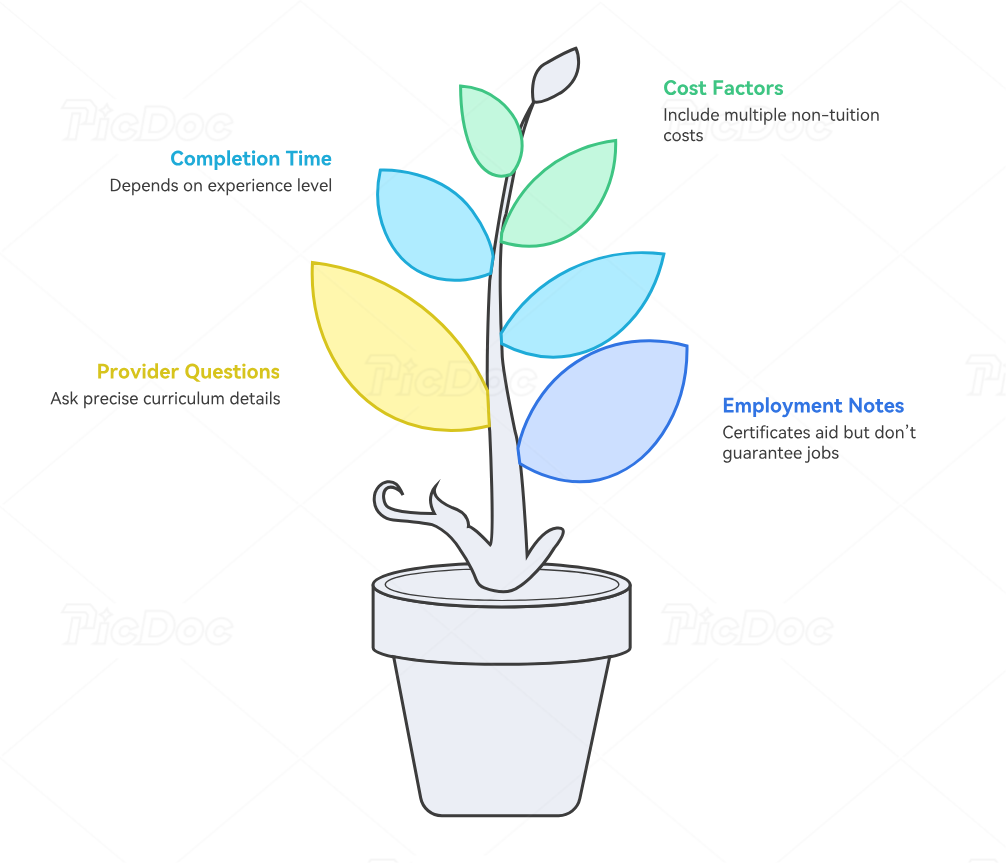
A worthwhile certification cost includes more than tuition. Calculate examination fees, retake costs, textbooks, software access, renewal requirements, mentorship, career support, and the value of continued curriculum access. A low-cost program can become expensive when graduates must purchase additional training in adverse-event reporting, global regulatory compliance, PV audit readiness, clinical-safety monitoring, and regulatory submissions.
Completion time should reflect the depth of the program and your weekly capacity. A learner with clinical research experience may move quickly through GCP and trial-safety modules while needing additional practice in MedDRA, aggregate reporting, and database workflows. A career changer may require more time for medical terminology, seriousness assessment, and case narratives. Build a schedule that incorporates free clinical-research webinars, Illinois GCP preparation, ethical research training, research protocol education, and data-review practice.
Ask providers precise questions before paying:
How many complete ICSRs will I process?
Will an instructor or rubric evaluate my narratives?
Does the curriculum cover E2B(R3) and FDA’s 2026 implementation?
Will I practice seriousness, expectedness, causality, and Day-zero decisions?
Are MedDRA exercises included?
Will I complete quality-control and reconciliation tasks?
Does the program cover clinical-trial and postmarketing cases?
How is the certificate verified?
How long will I retain access?
Which career-support services are included?
Answers should be supported by written curriculum evidence. Compare provider claims with quality-management standards, PV inspection expectations, trial-safety responsibilities, data-integrity principles, and medical-monitor oversight.
Treat guaranteed-employment language as a major warning. A certificate can improve knowledge, professional vocabulary, confidence, and screening credibility. Hiring outcomes also depend on education, transferable experience, application quality, location, technical evidence, communication, and employer demand. Strengthen the complete profile through clinical-research communities, professional associations, career-market research, salary benchmarking, and continuing professional education.
5. Use a 90-Day Illinois Pharmacovigilance Career Plan
Days 1–15: Define your market position
Choose two primary job titles and three adjacent titles. Analyze at least 20 vacancies from Illinois and national remote employers. Track repeated requirements involving ICSRs, MedDRA, narratives, literature, quality control, reconciliation, safety databases, and regulated timelines. Use the clinical-research career map, salary comparison tool, professional-association directory, research community directory, and free training directory.
Build an Illinois employer map by category: pharmaceutical and biotechnology organizations, medical-device companies, hospitals and academic medical centers, CROs, safety vendors, healthcare consultancies, medical-information providers, and public-health contractors. Illinois’ economic-development agency identifies life sciences, healthcare, and MedTech as state growth sectors, while its industry profile highlights a concentration of major employers and research infrastructure in the broader Chicago region.
Days 16–30: Master foundational case decisions
Focus on minimum criteria, Day 0, seriousness, expectedness, causality, reporting priority, coding, narratives, follow-up, and duplicate review. Create a one-page decision aid supported by AE-reporting guidance, trial-safety practices, global PV compliance, medical-monitor responsibilities, and investigator GCP duties.
Days 31–45: Build three fictional case packets
Create one spontaneous postmarketing case, one serious clinical-trial case, and one complex case involving a product complaint, medication error, or possible duplicate. Each packet should include an intake summary, validity decision, Day-zero analysis, seriousness rationale, expectedness review, causality information, coding explanation, narrative, follow-up questions, and QC checklist. Apply clinical-data integrity, data-verification techniques, quality-management controls, protocol-deviation practices, and PV audit-readiness methods.
Keep every patient, reporter, investigator, institution, and product detail fictional. A portfolio should demonstrate reasoning while protecting confidentiality. Include a statement explaining that each case was created for educational purposes and contains no real patient information.
Days 46–60: Rebuild your resume and LinkedIn profile
Use a headline aligned with your target role. Connect your prior background with safety operations in the summary. Add your certification with its exact name, provider, completion date, training hours, and verification information. Describe applied competencies using language supported by clinical-safety monitoring, global compliance, regulatory submissions, clinical-project quality, and medical regulatory compliance.
Avoid claiming commercial database experience after completing a demonstration. Accurate wording could include “trained in safety-database workflow concepts, including audit trails, queries, workflow states, and submission tracking.” Credibility grows when the scope of each claim matches the evidence you can defend during an interview.
Days 61–75: Network through specific technical conversations
Join relevant clinical-research communities, identify suitable professional associations, attend free research webinars, review oncology research conferences, and study global career opportunities. Ask professionals about workflow, team structure, entry-role responsibilities, quality expectations, and skills that shorten onboarding.
Replace generic networking messages with targeted questions. A message asking how a team divides intake, case processing, medical review, and QC demonstrates preparation. A request for a job from a stranger creates little professional value.
Days 76–90: Apply selectively and prepare for scenarios
Apply to positions where your evidence addresses most core responsibilities. Tailor the opening third of the resume to each vacancy. Prepare six interview stories involving an incomplete case, urgent escalation, conflicting data, missed-deadline risk, quality error, and difficult follow-up. Structure answers with principles from trial-logistics coordination, research-team communication, clinical-trial timeline management, data-review mastery, and clinical-project leadership.
Expand geographically when appropriate. Illinois candidates can compare nearby professional markets through the Indiana GCP certification guide, Iowa GCP certification guide, Wisconsin GCP certification guide, Missouri GCP certification guide, and Michigan GCP certification guide.
6. Frequently Asked Questions About Pharmacovigilance Certification in Illinois
-
Illinois IDFPR licenses regulated pharmacy professions, including pharmacies, pharmacists, pharmacy technicians, and controlled-substance activities. Pharmacovigilance employers generally evaluate relevant education, specialized training, technical capability, experience, and role fit. Licensed healthcare professionals should separately maintain any state credential required for their underlying practice. Build safety-specific expertise through Illinois GCP preparation, AE-reporting training, global PV compliance, and clinical-safety monitoring.
-
The timeline depends on curriculum depth, assessment requirements, previous clinical knowledge, and weekly study capacity. A learner should reserve time for practical case processing, narrative writing, coding, follow-up, quality control, and interview preparation. Supplement formal coursework with free clinical-research webinars, clinical-data review practice, quality-management education, and PV inspection training.
-
Pharmacists often possess valuable medication knowledge, therapeutic familiarity, clinical terminology, and patient-safety experience. They should add PV-specific competencies such as minimum case validation, Day-zero determination, seriousness, expectedness, narratives, MedDRA, follow-up, and reporting workflows. Useful resources include clinical-trial safety practices, global regulatory compliance, AE-reporting requirements, medical-monitor responsibilities, and PV audit readiness.
-
Life-science, public-health, research, regulatory, data, quality, and medical-writing backgrounds can support entry into selected safety roles. The applicant needs evidence connecting prior experience with regulated documentation, confidential information, data review, deadline management, and risk escalation. Develop that bridge through research-assistant training, protocol-adherence guidance, clinical-data verification, research communication skills, and clinical-research quality management.
-
Suitable targets may include drug-safety associate, pharmacovigilance associate, safety intake specialist, medical-information associate, ICSR processor, literature-surveillance associate, clinical-safety coordinator, reconciliation analyst, and PV quality assistant. Search through the clinical-research career map, compare pay through the salary tool, join researcher communities, explore professional associations, and attend free career-building webinars.
-
Many safety activities can be completed within controlled digital environments, including intake, case processing, literature surveillance, QC, reconciliation, medical-review support, and aggregate-report assistance. Eligibility depends on employer location policies, data-security controls, jurisdiction, system access, and employment arrangements. Demonstrate remote readiness through data-integrity practices, remote monitoring discipline, global PV compliance, team communication, and trial-timeline management.
