The Ultimate Guide to Getting Your Good Clinical Practice (ICH-GCP) Certification in Michigan: Everything You Need to Know in 2026-27
Getting an ICH-GCP certification in Michigan can sharpen your clinical research credibility before you ever sit across from a hiring manager. Michigan has strong healthcare, academic, hospital, oncology, device, public health, and sponsor-connected research pathways, so candidates need more than interest. They need proof that they understand participant protection, protocol compliance, source documentation, safety reporting, and inspection-ready conduct. A focused Good Clinical Practice foundation, strong clinical research certification planning, practical investigator responsibility knowledge, and clear ethical conduct training can move your application from “interested” to “ready.”
1. Why ICH-GCP Certification Matters in Michigan Clinical Research in 2026-27
Michigan clinical research careers often sit at the intersection of hospital systems, university research, specialty clinics, community-based recruitment, device studies, oncology trials, cardiology studies, public health projects, and sponsor-driven multicenter work. That mix creates opportunity, and it also raises the bar. A research assistant in Ann Arbor, a CRC in Detroit, a regulatory assistant in Grand Rapids, a research nurse in Lansing, or a CRA covering Midwest sites must know how trials protect participants and preserve credible data. That is why GCP monitoring techniques, protocol deviation control, SAE reporting procedures, and clinical trial data integrity become career survival skills.
ICH-GCP certification gives Michigan candidates the language of regulated trial conduct. It helps you explain informed consent, investigator oversight, source notes, delegation logs, adverse event reporting, essential documents, privacy, investigational product accountability, monitoring, and sponsor communication without sounding vague. Hiring teams can quickly tell when a candidate has only heard the terms and when a candidate can connect those terms to site pressure. A prepared applicant can discuss site monitoring visits, risk-based monitoring strategy, clinical trial amendments, and quality management systems in a way that sounds immediately useful.
The strongest reason to get certified is practical confidence. Many candidates in Michigan already have adjacent experience in healthcare, life sciences, pharmacy, nursing, data, administration, lab work, or patient scheduling. The challenge is translating that experience into clinical research language. ICH-GCP training helps you show that you understand why a late lab, missed visit, outdated consent form, unreported symptom, unsigned note, or unclear delegation record can affect participant safety and data reliability. Pairing certification with CRC strategy, CRA career planning, global regulatory guideline awareness, and clinical research networking gives you a cleaner path into interviews.
| GCP Skill Area | Best For in Michigan | What It Proves | Common Failure Mode | CCRPS Resource to Strengthen It |
|---|---|---|---|---|
| Informed consent process | CRC, research nurse, assistant roles | You understand consent as participant protection | Treating consent as paperwork instead of process | Ethical conduct and patient safety |
| Investigator oversight | PI support, site operations, regulatory teams | You understand who owns trial conduct | Assuming sponsor instructions replace PI accountability | Investigator responsibilities under GCP |
| Adverse event documentation | Hospital, oncology, device, specialty clinic roles | You can recognize and document safety signals | Confusing symptoms, medical history, AE, and SAE | Adverse event reporting compliance |
| Serious adverse event escalation | Interventional and high-risk study teams | You understand urgency, causality, and timelines | Waiting too long because the record feels incomplete | SAE definition and reporting |
| Protocol deviation handling | CRC, CRA, QA, and site lead candidates | You can respond after trial conduct breaks from plan | Logging deviations without root cause or prevention | Protocol deviations and CAPA |
| Source documentation | Entry-level clinical research applicants | You know how trial evidence is created | Trusting memory, email, or EDC alone | Clinical trial data review |
| Data integrity | Data coordinator, CRC, PI-support roles | You understand traceability and audit confidence | Changing records without clear rationale | Clinical trial data integrity |
| Essential document control | Regulatory assistant and startup roles | You can maintain inspection-ready files | Filing documents without dates, versions, or approval context | Trial startup checklist |
| Delegation log discipline | Site operations and coordinator roles | You understand task authorization and training records | Letting staff perform tasks before documented delegation | Site operations oversight |
| Monitoring visit readiness | CRC and CRA-track learners | You can prepare records before sponsor review | Trying to clean records during the visit | Site monitoring visit guide |
| Remote monitoring security | Hybrid site and regional CRA roles | You can share and review records responsibly | Using weak file-sharing habits for sensitive trial data | Remote and on-site monitoring |
| Risk-based monitoring thinking | CRA, sponsor, QA, and PM-track candidates | You can prioritize critical data and critical processes | Treating every finding with the same urgency | Risk-based monitoring strategies |
| Protocol amendment execution | Regulatory, CRC, startup, and site lead teams | You understand IRB, training, version, and procedure impact | Using a new procedure before approval and retraining | Clinical trial amendments |
| Sponsor-site communication | CRC, CRA, regulatory, and PM support roles | You can escalate clearly with evidence | Sending vague problems without proposed next steps | Sponsor roles and responsibilities |
| Patient retention ethics | Longitudinal and community-based studies | You can support follow-up without pressure | Over-contacting participants or creating coercive tone | Patient retention strategies |
| Safety monitoring basics | PV, nursing, CRC, and study assistant roles | You can connect safety patterns to trial obligations | Missing reportable changes across visits | Safety monitoring best practices |
| Regulatory guideline literacy | Sponsor-facing and global study candidates | You can interpret standards beyond one local SOP | Memorizing acronyms without operational judgment | Regulatory guidelines directory |
| Quality management | Lead CRC, QA, PM, and site manager pathways | You can prevent repeat issues | Writing CAPA that only says “retrain staff” | Quality management strategies |
| Clinical trial timelines | Startup, operations, and PM support roles | You understand activation and milestone pressure | Missing dependencies between approval, training, and enrollment | Clinical trial timelines |
| Budget awareness | CRC, site lead, PM, and PI support roles | You understand operational decisions carry financial impact | Separating visit work from billing and budget consequences | Clinical trial budget management |
| Inspection readiness | Every site and sponsor-facing role | You can explain trial records under pressure | Depending on scattered inbox history to prove compliance | GCP compliance self-assessment |
| CRA interview readiness | Michigan candidates targeting regional monitoring | You can discuss oversight with examples | Giving textbook monitoring answers without site logic | CRA career guide |
| Certification path selection | Learners comparing credentials | You can select training by role fit and outcome | Choosing by name alone without skill alignment | Certificate program comparison |
| Professional networking | New Michigan clinical research applicants | You can build relationships around useful questions | Joining groups and only asking for job leads | Clinical research communities |
| Free resource supplementation | Budget-conscious learners and career switchers | You can reinforce weak areas after certification | Collecting resources without practicing scenarios | Free training resources |
| Salary and role planning | CRC, CRA, regulatory, PV, and data candidates | You can connect certification to targeted roles | Applying everywhere with one generic résumé | Clinical research salary tool |
2. Who Should Get ICH-GCP Certified in Michigan?
ICH-GCP certification is valuable for Michigan learners entering clinical research from nursing, pharmacy, biology, public health, medical assisting, health administration, laboratory work, data operations, patient scheduling, quality assurance, or regulatory administration. It is especially helpful when your background already proves discipline, confidentiality, patient communication, or documentation accuracy, yet your résumé lacks direct trial language. A healthcare worker can connect daily patient care to ethical conduct in GCP, a data worker can connect accuracy to clinical trial data review, a regulatory assistant can connect document control to clinical trial amendments, and a career switcher can compare paths through clinical research certification programs.
The certification works best for candidates who want to remove doubt. A hiring manager may like your degree, healthcare experience, or interest in research, then still worry about whether you understand consent, protocol windows, source notes, safety escalation, confidentiality, and sponsor expectations. ICH-GCP training gives you the vocabulary to answer those concerns. A CRC-track applicant should be ready to discuss visit flow, participant communication, retention, and source documentation. A CRA-track applicant should understand monitoring visit preparation, risk-based monitoring, remote monitoring expectations, and GCP monitoring techniques.
Michigan candidates should also think about geography and site type. A candidate near large academic centers may see research assistant, regulatory, oncology, data, startup, and coordinator roles. A candidate outside a major metro area may find hybrid, remote, regional monitoring, or site support opportunities. GCP certification helps in both cases because trial standards travel across settings. Whether the study is hospital-based, clinic-based, decentralized, sponsor-led, or academic, the core expectations remain participant safety, protocol compliance, documentation reliability, and escalation discipline. That is where global regulatory guidelines, clinical trial sponsor responsibilities, site operations oversight, and GCP self-assessment strengthen your readiness.
The credential is also useful for people already employed in healthcare who want internal mobility. Research departments often need staff who can handle patient communication, scheduling, record review, consent logistics, lab coordination, query follow-up, and regulatory file maintenance. A medical assistant can become more competitive by learning source documentation and protocol adherence. A nurse can become more competitive by linking patient assessment to AE and SAE workflows. A pharmacist can connect product handling to participant protection. A public health graduate can connect community recruitment to patient retention strategies, clinical trial patient education resources, virtual clinical trial trends, and clinical research career opportunities.
3. What a Strong ICH-GCP Certification Should Teach You
A strong ICH-GCP certification should make you operationally useful. It should teach the principles behind ethical and scientific trial conduct, then connect those principles to real decisions at the site, sponsor, CRO, regulatory, and monitoring level. The course should cover participant rights, informed consent, investigator responsibilities, sponsor responsibilities, IRB or ethics oversight, protocol compliance, adverse event reporting, essential documents, confidentiality, monitoring, data integrity, quality management, and inspection readiness. The value comes from applying those topics to problems such as late safety reporting, missing consent documentation, unsigned source notes, untrained staff, outdated procedures, and unresolved EDC queries. Use adverse event reporting compliance, investigator responsibilities, protocol deviation examples, and data integrity guidance to build that applied understanding.
The best learners focus on judgment. They learn how to identify a risk, check the protocol, involve the right person, document accurately, preserve participant safety, and prevent recurrence. That matters because interviews often test your thinking through scenarios. A coordinator interviewer may ask what you would do if a participant reports hospitalization after a visit. A CRA interviewer may ask how you would handle repeated missing signatures. A regulatory interviewer may ask how an amendment changes consent, training, and file documentation. Strong answers connect the situation to SAE reporting procedures, clinical trial amendments, quality management strategies, and site monitoring visit readiness.
For 2026-27, Michigan candidates should pay close attention to modern trial operations. Hybrid monitoring, decentralized elements, electronic systems, remote source review, wearable or device-generated data, and risk-based oversight all require disciplined thinking. A candidate who only memorizes old definitions can struggle when asked about technology, privacy, remote access, participant communication, and sponsor escalation. A candidate who studies remote and on-site monitoring, clinical trial technology innovations, risk-based monitoring strategies, and interactive GCP compliance assessment can speak to how trials actually operate now.
A strong certification should also help you avoid shallow confidence. Completing a course is useful, then the real advantage comes from converting each module into an example. After learning informed consent, prepare a paragraph on how you would confirm the correct consent version. After learning safety reporting, prepare a paragraph on how you would escalate a possible SAE. After learning monitoring, prepare a paragraph on how you would prepare records before a monitor arrives. After learning data integrity, prepare a paragraph on how you would correct an error transparently. Reinforce those examples with clinical trial data review, clinical trial safety monitoring, clinical trial timelines, and clinical research ethics resources.
4. How to Choose the Right ICH-GCP Certification Path in Michigan
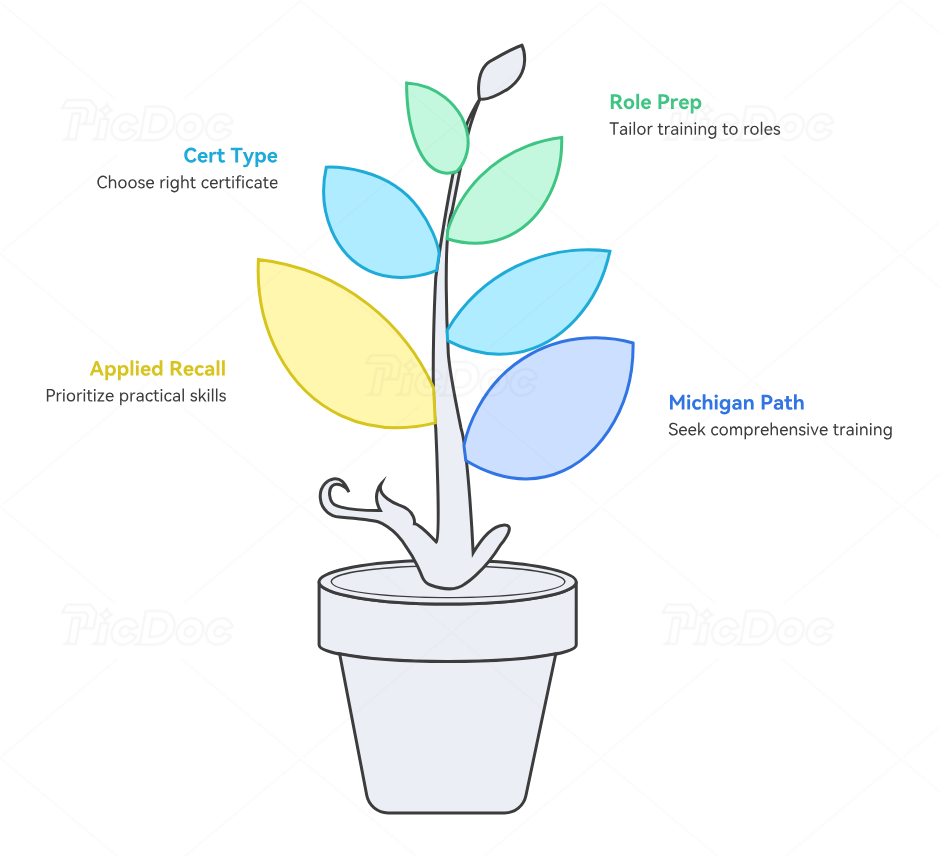
Start with the job function, then choose the training path. A generic GCP certificate can strengthen your résumé, and role-specific preparation makes it useful in interviews. If you want CRC roles, prioritize informed consent, visit flow, scheduling windows, source documentation, patient retention, protocol deviations, and EDC query awareness. If you want CRA roles, prioritize monitoring, issue escalation, follow-up letters, SDV or SDR concepts, site relationships, and risk-based review. If you want regulatory roles, prioritize IRB submissions, amendments, essential documents, version control, and startup timelines. Use CRC retention guidance, CRA monitoring mastery, trial startup checklists, and clinical trial amendment guidance as your map.
A strong Michigan certification path should give you more than a completion badge. It should help you explain how GCP affects decisions under pressure. Look for training that teaches responsibilities of investigators, sponsors, monitors, and site staff; includes participant rights and safety; covers documentation and data quality; addresses electronic records and monitoring; and gives you enough structure to discuss inspection readiness. The best outcome is an applicant who can say, “Here is how I would handle this situation,” then connect the answer to protocol requirements, escalation, documentation, and prevention. Strengthen that kind of response with sponsor role guidance, GCP compliance assessment, quality management strategies, and investigator accountability.
Michigan candidates should also consider whether they need a stand-alone GCP certificate, a broader clinical research certificate, or both. A stand-alone ICH-GCP course can be useful for foundational compliance. A broader clinical research certificate can help if you need structured exposure to roles, operations, documentation, regulatory workflow, and career positioning. Candidates comparing options should look at outcome fit: Does the training help with CRC tasks, CRA readiness, regulatory work, safety reporting, or data review? Review clinical research certificate comparisons, Michigan clinical research certification guidance, GCP certification Alabama guidance, and GCP certification Alaska guidance for a broader comparison mindset.
The most overlooked selection factor is applied recall. A course should help you remember what to do when something goes wrong. Clinical research work rarely breaks in a neat textbook way. A participant may miss a visit, report a hospitalization late, sign the wrong version of consent, complete a procedure outside the window, or have data entered before source is complete. Good training helps you slow down, identify the risk, verify the protocol, involve the right person, document the issue, and help prevent recurrence. Build that thinking with protocol deviation corrective actions, serious adverse event reporting, clinical trial site operations, and clinical trial data integrity.
5. How to Turn ICH-GCP Certification Into Michigan Job Opportunities
After certification, make your résumé function-specific. “ICH-GCP certified” belongs on the page, then your bullets must prove that the certificate connects to work. A patient care background can become research-relevant through participant communication, visit preparation, safety observation, confidentiality, and documentation. A pharmacy background can become research-relevant through investigational product awareness, accountability, labeling, storage, and safety discipline. A data background can become research-relevant through query management, accuracy, traceability, and source-to-EDC thinking. Build your résumé around clinical trial data review, adverse event reporting, patient retention strategies, and site operations oversight.
Your interview preparation should be scenario-driven. Prepare one answer for informed consent, one for a missed visit, one for an SAE, one for a protocol deviation, one for source correction, one for a monitor visit, one for a delayed query, and one for an amendment. Each answer should show the same discipline: identify the issue, check the protocol and SOPs, protect participant safety, escalate to the right person, document clearly, and prevent repeat problems. Interviewers trust candidates who can calmly handle messy details. Practice with site monitoring visit guidance, clinical trial amendments, quality management strategy, and GCP monitoring techniques.
Networking should be precise. Michigan candidates can stand out by asking useful, role-aware questions rather than sending generic “I am interested in clinical research” messages. A better message says: “I recently completed ICH-GCP training and I am building practical readiness in informed consent, source documentation, AE escalation, and monitoring readiness. For entry-level CRC or research assistant roles, which skill would you recommend strengthening first?” That kind of outreach shows humility and preparation. Use clinical research professional associations, clinical research communities, free training resources, and clinical research career opportunity maps to build relationships with signal.
Finally, create a 30-day post-certification plan. During week one, review informed consent, AE reporting, and source documentation. During week two, study deviations, monitoring, and data integrity. During week three, build résumé bullets and interview examples for your target role. During week four, apply to focused roles and message people in Michigan research networks with practical questions. This makes your certification active instead of decorative. Add depth through pharmacovigilance best practices, regulatory affairs mastery, clinical trial budget management, and clinical research salary planning.
6. FAQs About ICH-GCP Certification in Michigan
-
Many clinical research employers expect GCP training for roles that touch participants, source records, safety reporting, monitoring, regulatory files, investigational product, or trial data. Even when a job post frames it as preferred, certification helps prove you understand the basic rules of ethical and compliant trial conduct. It is especially useful for candidates moving from healthcare, science, administration, pharmacy, nursing, or data into research. To strengthen your foundation, review GCP compliance self-assessment, ethical conduct training, investigator responsibilities, and Michigan clinical research certification guidance.
-
Many focused ICH-GCP courses can be completed quickly, but practical readiness takes more than finishing modules. The better goal is to complete the course, then spend extra time turning each topic into an interview-ready example. Practice how you would handle informed consent, missing documentation, protocol deviations, adverse events, monitor findings, and data corrections. This turns the certificate into usable proof. Build that readiness with SAE reporting procedures, protocol deviation guidance, monitoring visit preparation, and clinical trial data review.
-
The most direct matches include clinical research coordinator, research assistant, clinical research nurse, regulatory assistant, data coordinator, site startup assistant, CRA trainee, pharmacovigilance assistant, quality support specialist, and trial operations assistant. The credential helps when your background already includes accuracy, patient communication, documentation, healthcare workflows, confidentiality, or science knowledge. For role targeting, study CRC patient retention, CRA monitoring strategy, regulatory guideline directories, and clinical research salary planning.
-
Yes, certification can help entry-level candidates compete when they also translate existing experience into research-relevant skills. Patient scheduling, medical records, documentation, EHR exposure, lab coordination, medication handling, quality checks, data entry, privacy, and healthcare communication can all support an entry-level clinical research application. The key is to frame those experiences around trial conduct. Strengthen your application through trial startup activities, source and data review, site operations oversight, and clinical research communities.
-
Your next study area should match your target role. CRC candidates should study consent, visit flow, source notes, protocol calendars, patient retention, and deviations. CRA candidates should study monitoring, follow-up letters, SDV and SDR concepts, issue tracking, and risk-based monitoring. Regulatory candidates should study IRB submissions, amendments, essential documents, and startup workflows. Safety candidates should study AE and SAE reporting, pharmacovigilance, and audit readiness. A strong stack includes remote monitoring, clinical trial amendments, PV best practices, and free clinical research training resources.
-
List the credential clearly, then add skill language around informed consent, protocol compliance, adverse event reporting, source documentation, data integrity, monitoring readiness, and participant protection. On LinkedIn, post a practical lesson from the certification, such as how a deviation should be escalated or why the consent process requires ongoing attention. Hiring teams notice candidates who can turn training into useful judgment. Support your positioning with GCP monitoring skills, quality management guidance, clinical research associations, and career opportunity resources.
