
How To Get a Pharmacovigilance Certification in Idaho: Everything You Need to Know in 2026–27
Idaho professionals can enter drug safety from pharmacy, nursing, public health, biomedical science, clinical research, regulatory operations, or healthcare data roles. The strongest route combines structured clinical-trial safety monitoring, practical adverse-event reporting, defensible pharmacovigilance compliance, and rigorous audit-readiness skills. This 2026–27 guide explains how to evaluate certification programs, build case-processing competence, use Idaho’s expanding clinical research infrastructure, and convert training into evidence that hiring teams can test during interviews.
1. Understand What Pharmacovigilance Certification Must Prove in Idaho
Pharmacovigilance certification functions as professional training for drug-safety work. Idaho’s Division of Occupational and Professional Licenses maintains a searchable list of regulated professions that includes pharmacists, pharmacy technicians, nurses, physicians, and other licensed clinicians. Pharmacovigilance does not appear as a separately licensed occupation. An applicant can therefore pursue operational drug-safety positions through relevant education, pharmacovigilance training, regulatory compliance knowledge, clinical data-review skills, and documented quality-management competence. Positions involving licensed pharmacy, nursing, or medical practice still require the applicable Idaho credential.
The certificate should prove that you can make controlled decisions from incomplete safety information. Employers may give you a brief report containing a patient, medication, event, uncertain dates, and several missing clinical details. You should be able to assess case validity, identify the receipt date, separate seriousness from severity, determine which facts require follow-up, and document the rationale. These decisions connect case intake, investigator responsibilities, patient-safety principles, and clinical-trial data integrity. A completion badge alone gives recruiters little evidence of how you will behave when a case approaches an expedited-reporting deadline.
Terminology must become operational. An adverse event describes an undesirable medical occurrence following product exposure. An adverse drug reaction involves a suspected causal association. Seriousness depends on the regulatory outcome or medical importance of the event. Severity describes clinical intensity. Expectedness requires comparison against the appropriate reference safety information. Causality requires evaluation of timing, dechallenge, rechallenge, alternative causes, concomitant products, underlying disease, and biological plausibility. These distinctions influence medical-monitor review, sponsor escalation, regulatory submissions, and safety-reporting compliance.
Current certification content should also reflect ICH E6(R3). FDA finalized its E6(R3) Good Clinical Practice guidance in September 2025, incorporating flexible, risk-based approaches and developments in trial design, technology, and conduct. Idaho candidates entering clinical-development safety teams should understand quality by design, proportionate controls, critical-to-quality factors, reliable information, computerized systems, and risk-based oversight. Pairing Idaho GCP certification with risk-based monitoring, remote monitoring skills, and clinical project quality controls creates a stronger safety profile.
Use the following matrix before paying for a program. Every row represents a skill that can appear in a screening exercise, technical interview, case-processing assessment, or quality review
Idaho Pharmacovigilance Certification Decision Matrix: 30 Job-Ready Competencies
| Competency | What Training Should Cover | Evidence You Should Create | Hiring Risk When Missing |
|---|---|---|---|
| ICSR validity | Confirm an identifiable patient, identifiable reporter, suspect product, and adverse event. | A completed case-validity checklist. | Valid reports remain unprocessed while unusable reports enter the workflow. |
| Receipt and day zero | Determine when the organization first possessed sufficient reportable information. | A source-by-source receipt timeline. | Submission clocks begin from the wrong date. |
| AE versus ADR | Separate temporal association from a suspected causal relationship. | A classification worksheet using adverse-event scenarios. | Case narratives and reportability decisions use inaccurate language. |
| Seriousness assessment | Evaluate death, life-threatening events, hospitalization, disability, congenital anomaly, and medical importance. | Ten seriousness assessments with rationale. | Urgent cases may miss escalation timelines. |
| Severity grading | Assess clinical intensity independently from seriousness. | A seriousness-versus-severity decision grid. | Teams escalate intense symptoms while overlooking serious outcomes. |
| Expectedness | Compare an event with the correct investigator brochure, label, or reference safety information. | An expectedness review linked to IND safety reporting. | SUSAR and expedited-reporting decisions become unreliable. |
| Causality | Assess timing, dose relationships, alternatives, dechallenge, rechallenge, and biological plausibility. | A causality memorandum based on medical-monitor principles. | Conclusions become inconsistent or clinically unsupported. |
| Case triage | Prioritize cases using seriousness, urgency, reportability, source, and remaining time. | A ranked intake queue with documented reasoning. | Routine reports consume capacity needed for high-risk cases. |
| Follow-up strategy | Request missing information that can change validity, seriousness, causality, expectedness, or outcome. | A targeted follow-up questionnaire. | Generic questions create delays without improving case quality. |
| Seven-day reporting | Recognize unexpected fatal or life-threatening suspected adverse reactions requiring rapid action. | A seven-day reporting calendar tied to GCP reporting requirements. | The most urgent trial-safety reports breach federal timelines. |
| Fifteen-day reporting | Understand qualifying serious risks and applicable calendar-day calculations. | A deadline exercise with weekends and follow-up information. | Teams confuse internal review dates with regulatory due dates. |
| MedDRA coding | Select precise terms while preserving the reporter’s meaning and avoiding unsupported diagnosis. | A coded event set with quality-review comments. | Poor coding weakens retrieval, aggregate analysis, and signal detection. |
| Product coding | Classify suspect, concomitant, interacting, and historical products consistently. | A standardized medication table. | Duplicate names fragment exposure and product-level analysis. |
| Narrative writing | Produce concise, chronological, medically coherent, and traceable case narratives. | Two complete narratives from raw source records. | Reviewers cannot reconstruct the clinical course or decisive facts. |
| Duplicate detection | Compare patient, reporter, product, event, geography, chronology, and source indicators. | A duplicate-search worksheet. | Case counts inflate and safety signals become distorted. |
| Source reconciliation | Resolve conflicts among clinical notes, forms, emails, laboratory results, and database fields. | A reconciliation log based on clinical data verification. | Contradictory dates, doses, outcomes, and medical histories survive QC. |
| Case quality control | Review completeness, coding, chronology, medical logic, reportability, and submission readiness. | A risk-based quality-control checklist. | Reviewers focus on formatting while missing regulatory impact. |
| Safety-database literacy | Understand workflow states, audit trails, locked fields, queries, submissions, and acknowledgements. | A mock safety-database workflow map. | Applicants know definitions yet cannot explain operational case movement. |
| E2B(R3) | Understand structured ICSR data, regional requirements, message transmission, and validation errors. | An electronic case field-mapping exercise. | The candidate appears unprepared for current reporting-system requirements. |
| Literature surveillance | Screen abstracts and full-text publications for reportable cases and emerging safety evidence. | A literature-screening log with inclusion decisions. | Reportable information remains buried in scientific publications. |
| Signal detection | Integrate case patterns, literature, exposure, clinical judgment, and quantitative findings. | A concise signal-assessment memo. | Statistical alerts are treated as confirmed causal relationships. |
| Aggregate reporting | Connect interval cases, cumulative evidence, exposure, identified risks, and benefit-risk conclusions. | An aggregate safety-report content map. | Individual cases remain disconnected from product-level evaluation. |
| Risk management | Translate identified and potential risks into surveillance and risk-minimization activities. | A miniature risk-management plan. | Safety findings produce vague actions without measurable controls. |
| Clinical-safety reconciliation | Compare safety databases with clinical databases, SAE logs, and investigator records. | A reconciliation tracker informed by GCP monitoring techniques. | Safety information differs across systems and remains unresolved. |
| Vendor oversight | Define responsibilities, data-exchange timelines, metrics, escalations, and quality checks. | A safety-data exchange responsibility matrix. | Sponsors and vendors each assume the other party owns an urgent task. |
| SOP interpretation | Translate controlled procedures into consistent operational decisions. | An annotated SOP workflow. | Regulatory theory fails during company-specific processing. |
| Deviation management | Document failures, assess impact, identify root causes, and define corrective actions. | A deviation record using deviation-management principles. | Recurring errors receive superficial retraining. |
| CAPA development | Design corrective and preventive actions tied to verified root causes and effectiveness checks. | A CAPA plan with owners, dates, and success measures. | Actions close administratively while the original risk continues. |
| Inspection readiness | Retrieve evidence, explain decisions, reconcile metrics, and answer inspectors accurately. | A mock package based on pharmacovigilance inspection techniques. | Teams provide inconsistent explanations and incomplete records. |
| Safety communication | Adapt risk information for investigators, regulators, healthcare professionals, and patients. | A safety communication informed by patient-education principles. | Technically accurate information fails to support safe decisions. |
2. Follow a Step-by-Step Route to Pharmacovigilance Certification
Step 1: Choose the role you want the certification to support
Start with a target workflow. A safety case processor handles intake, validation, coding, narratives, follow-up, and quality checks. A clinical safety associate may reconcile serious adverse events, communicate with sites, and support investigator reporting. A pharmacovigilance quality associate concentrates on audit readiness, procedural compliance, deviations, CAPA, and metrics. A regulatory safety professional needs deeper IND and NDA submission knowledge. A medical-monitor pathway requires advanced clinical education and trial-safety oversight.
This decision prevents expensive overtraining. Someone seeking entry-level case processing needs repeated ICSR practice more urgently than advanced epidemiological modeling. A nurse moving toward clinical safety may need stronger regulatory terminology and database exposure. A biology graduate may need clinical interpretation and medical narrative practice. A research coordinator may already understand protocol adherence, site monitoring, trial logistics, and research communication, yet require formal drug-safety processing skills.
Step 2: Audit your current experience against the role
Build a two-column competency inventory. The first column should contain tasks from target job descriptions. The second should show evidence from your education, employment, volunteering, projects, or certification work. Pharmacy experience can support medication reconciliation, contraindication review, interaction assessment, and patient counseling. Nursing experience can support clinical chronology, symptom assessment, escalation, and documentation. Clinical research experience can support source-data review, protocol compliance, participant protection, and adverse-event reporting.
Mark every missing competency as a training requirement. Common gaps include MedDRA coding, narrative writing, day-zero determination, expectedness assessment, E2B(R3), aggregate reports, signal management, database workflows, and vendor reconciliation. This exercise protects you from choosing a broad program that spends many hours on familiar material while giving little practice in the precise skills blocking employment.
Step 3: Evaluate programs through their outputs
Review the syllabus at module level. Look for ICSR intake, seriousness, expectedness, causality, follow-up, MedDRA, narrative construction, literature surveillance, signal detection, aggregate reporting, risk management, quality systems, inspections, and global regulations. Confirm that the program includes current GCP requirements, practical safety-monitoring workflows, regulatory compliance, and inspection preparation.
Ask what learners must produce. Strong assessments include case-validity exercises, coding decisions, reporting-clock calculations, narratives, duplicate searches, signal evaluations, and quality-control reviews. Passive videos and multiple-choice quizzes can support knowledge acquisition, although they reveal little about judgment under uncertainty. Before enrolling, verify instructor access, assessment feedback, retake rules, completion requirements, course-update practices, access duration, refund terms, and whether the credential can be independently verified.
Step 4: Combine pharmacovigilance with Idaho-focused GCP preparation
Drug-safety work within clinical development relies on GCP. You need to understand sponsor and investigator responsibilities, safety information exchange, participant protection, protocol-defined reporting, informed consent, source records, monitoring, and essential documentation. Pair your PV program with the Idaho ICH-GCP certification guide, GCP adverse-event requirements, investigator obligations, and ethical patient-safety principles.
E6(R3) knowledge can differentiate applicants who trained recently from candidates relying on older course material. Learn how critical-to-quality factors affect monitoring, documentation, system selection, data review, and safety escalation. Study risk-based monitoring methods, remote and on-site monitoring, project quality strategies, and clinical-trial milestone control.
Step 5: Build a production-based study schedule
Assign every study block a deliverable. During week one, create a terminology map and case-validity checklist. During week two, classify seriousness, severity, expectedness, and causality across 15 scenarios. During week three, complete intake, follow-up, coding, and narrative exercises. During week four, practice IND safety timelines, data reconciliation, quality review, and deviation handling.
Later weeks should produce a literature log, signal memo, aggregate-report map, risk-management summary, audit response, and CAPA plan. This approach turns study time into interview evidence. It also reveals where your reasoning breaks down. A learner who repeatedly misclassifies hospitalization-related events needs targeted seriousness practice. A learner who writes lengthy narratives needs chronology and relevance drills. A learner who misses reporting deadlines needs repeated day-zero and calendar exercises.
Step 6: Create a de-identified pharmacovigilance portfolio
Build a portfolio using fictional products, fictional patients, and simulated source information. Include two complete case assessments, two narratives, one MedDRA exercise, one follow-up questionnaire, one duplicate evaluation, one reporting-clock worksheet, one signal memo, one QC checklist, and one CAPA example. Align each item with clinical safety monitoring, data-integrity requirements, regulatory reporting, and audit-readiness controls.
Document assumptions and unresolved questions. Reviewers want to see how you handle ambiguity. A polished answer built on invented facts weakens credibility. A disciplined answer stating what is known, what remains unknown, what could change the decision, and which follow-up action is required demonstrates mature safety reasoning.
Step 7: Test yourself under interview conditions
Give yourself 20 minutes to evaluate a simulated report. Confirm validity, identify day zero, classify the event, assess seriousness, identify expectedness and causality limitations, propose follow-up, and calculate urgency. Then present your decision aloud in two minutes. Repeat the exercise with consumer reports, healthcare-professional reports, clinical-trial cases, literature cases, product complaints, and vendor-transmitted cases.
Score each attempt across case-processing accuracy, regulatory timing, medical reasoning, and quality documentation. Certification becomes useful when you can defend decisions clearly without searching course notes.
3. Master the Technical Skills Employers Will Test in 2026–27
ICSR processing should become your first complete workflow. Explain how a case moves through receipt, validation, duplicate search, triage, data entry, coding, narrative development, medical review, quality control, submission, acknowledgement, follow-up, and closure. Identify the owner, deadline, source evidence, and quality gate for every stage. Connect this workflow with clinical safety best practices, trial data verification, project timeline management, and global PV compliance.
Learn reporting clocks through realistic sequences. FDA states that sponsors must report qualifying unexpected fatal or life-threatening suspected adverse reactions as soon as possible and within seven calendar days after initial receipt. Other qualifying serious risks under the IND safety-reporting requirements generally carry a 15-calendar-day deadline following the relevant determination. Your position may stop short of final sponsor reportability decisions, yet intake and processing teams must recognize urgency immediately. Study IND submission requirements, adverse-event compliance, investigator safety duties, and trial milestone control.
Build E2B(R3) literacy. FDA has accepted E2B(R3) electronic postmarketing ICSR submissions since January 2024 and permits continued E2B(R2) submission during the implementation period through September 30, 2026. ICH released a final E2B(R3) training module in February 2026 focused on technical and practical implementation. Applicants should understand structured safety data, acknowledgements, validation errors, regional implementation requirements, case identifiers, null flavors, message versions, and the operational consequences of rejected transmissions. Connect electronic safety reporting, database quality, regulatory submissions, and inspection readiness.
Practice narrative writing from messy source records. Begin with relevant patient characteristics and medical history. State product exposure clearly. Present the event chronologically. Include investigations, treatment, action taken with the product, outcome, dechallenge, rechallenge, reporter opinion, and company assessment where applicable. Resolve contradictions or document them transparently. Strong narratives support medical-monitor evaluation, data verification, investigator communication, and regulatory review.
Signal detection requires careful interpretation. A case cluster, literature publication, medication-error pattern, disproportionality result, unexpected severity pattern, or new at-risk population may justify evaluation. Assess case quality, biological plausibility, chronology, alternative explanations, exposure, background rates, confounding, class effects, and external evidence. Separate a preliminary signal from a validated risk. Link your signal work with clinical safety surveillance, aggregate data review, risk communication, and global regulatory management.
Quality-system knowledge determines whether your work remains inspection-defensible. Learn controlled corrections, audit trails, access management, record retention, reconciliation, deviation assessment, CAPA, vendor oversight, procedural change control, metrics, and effectiveness checks. When confronted with a late case or incorrect seriousness field, protect the record, verify source evidence, assess regulatory impact, escalate under procedure, correct through authorized controls, document root cause, and determine whether broader action is required. This sequence combines data integrity, protocol-deviation management, project quality strategy, and PV inspection preparation.
What is blocking your Idaho pharmacovigilance career right now?
Choose the gap creating the most risk. Your result identifies the fastest corrective action.
4. Use Idaho’s Clinical Research Ecosystem Strategically
Idaho’s clinical and translational research infrastructure is expanding. Boise State University, Idaho State University, the University of Idaho, and the Boise Veterans Affairs Medical Center formed the Healthy Idaho Clinical and Translational Research Development program through a five-year, $10.7 million NIH grant announced in November 2025. Its stated priorities include workforce development, research infrastructure, regulatory compliance, data management, professional development, community engagement, and an Idaho-focused practice-based research network. Clinical affiliates include St. Luke’s Health System, Saint Alphonsus Regional Medical Center, Kootenai Health, and the Idaho Community Health Centers Association.
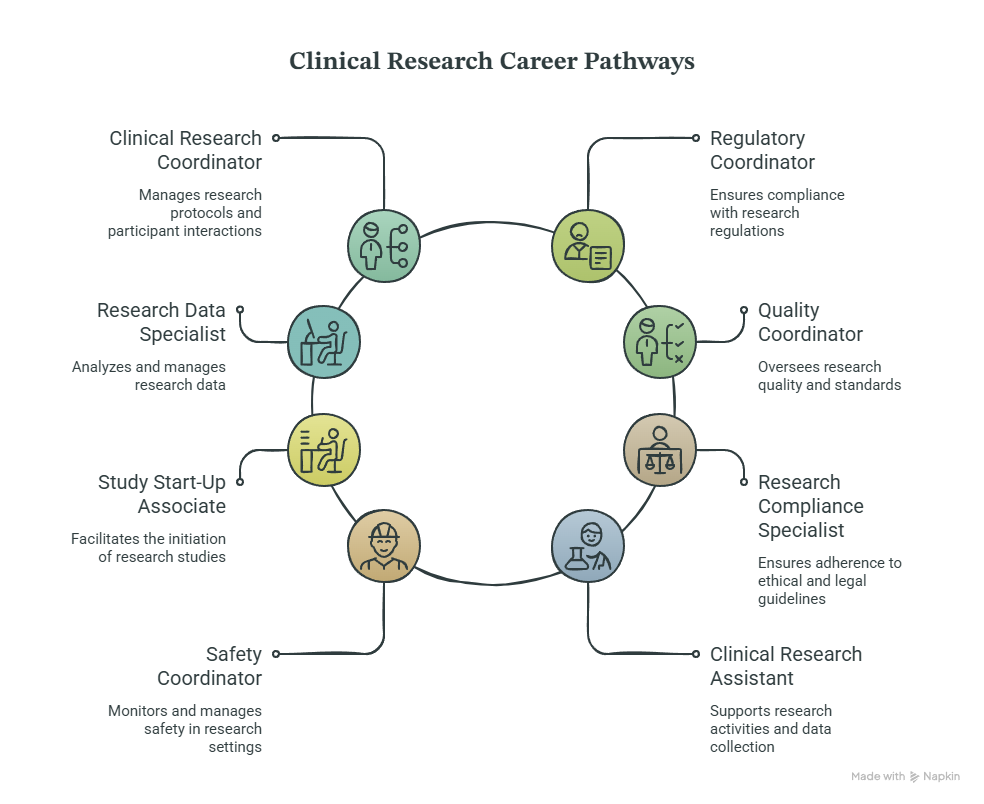
For an aspiring safety professional, this development broadens the number of adjacent pathways worth monitoring. Search for clinical research coordinator, regulatory coordinator, research data specialist, quality coordinator, study start-up associate, research compliance specialist, safety coordinator, and clinical research assistant roles. These positions can develop protocol-adherence skills, trial logistics experience, investigator communication, and clinical data-review competence that transfer into pharmacovigilance.
Boise State’s clinical and translational research program reports collaboration with regional medical organizations and provides networking, mentorship, research-concept support, grant-development resources, and links to human-subject research infrastructure. Its current Healthy Idaho CTR-D structure also includes a Research Design, Compliance, and Data Management core offering statewide support in study design, regulatory compliance, electronic health data access, and data management. These functions create relevant exposure for candidates interested in regulatory operations, research quality management, data integrity, and clinical-trial oversight.
St. Luke’s conducts research involving drugs, devices, treatments, applied research, cancer, cardiology, neurology, nursing, children’s specialties, cystic fibrosis, hemophilia, rheumatology, and other areas. Clinical research environments generate safety information through participant visits, medical records, investigator assessments, laboratory findings, product administration, protocol deviations, and follow-up. Candidates can use these settings to develop adverse-event documentation, site-monitoring knowledge, patient-retention awareness, and participant-safety judgment.
The Boise VA Medical Center reports an active program involving 25 investigators and more than 40 research projects and clinical trials, with work in infectious disease, oncology, gene therapy, respiratory disease, wound healing, and mental health. It also collaborates with Boise State University, Idaho State University, and the University of Washington. Candidates interested in safety can study how these therapeutic areas create different reporting challenges, then strengthen their knowledge through the infectious-disease research directory, oncology conference directory, neurology trial-site directory, and cardiovascular research-site directory.
Idaho State University’s L. S. Skaggs College of Pharmacy offers pharmacy and pharmaceutical-science education, and its combined PharmD/PhD pathway identifies clinical research and pharmaceutical industry research and development among relevant career directions. Pharmacists moving into safety can leverage medication expertise while adding case-processing discipline, global PV regulations, medical-monitor communication, and inspection-ready documentation.
Geography should shape your search terms rather than limit your market. Idaho residents can target local research and healthcare systems while applying to remote sponsor, CRO, vendor, medical-information, and safety-operations teams nationwide. Compare employer expectations across the California pharmacovigilance market, Colorado pharmacovigilance market, Arizona pharmacovigilance market, and Alaska pharmacovigilance market. The comparison reveals which skills transfer across locations and which roles require site-based presence.
5. Convert Your Certification Into Interviews and Career Growth
Begin collecting job descriptions during training. Build a spreadsheet containing employer, title, location, remote status, therapeutic area, required degree, experience threshold, systems, regulations, responsibilities, and preferred credentials. Track repeated terms such as ICSR, MedDRA, case processing, narrative writing, literature surveillance, SAE reconciliation, E2B(R3), quality control, signal management, and aggregate reporting. Expand the search through the clinical research career map, clinical research salary tool, professional association directory, and researcher community directory.
Search by workflow and adjacent title. Useful terms include drug safety associate, pharmacovigilance associate, safety case processor, clinical safety associate, medical information specialist, literature-surveillance associate, regulatory safety associate, safety operations coordinator, PV quality associate, clinical research safety coordinator, and SAE reconciliation specialist. Entry points may also appear through research-assistant roles, trial logistics positions, site operations, and clinical data-review work.
Rewrite your resume around controlled actions. “Completed pharmacovigilance certification” communicates attendance. A stronger bullet might state: “Evaluated simulated safety reports for validity, seriousness, expectedness, causality, follow-up needs, coding accuracy, narrative quality, and reporting urgency.” Another could state: “Performed risk-based quality review of fictional ICSRs using completeness, chronology, coding, data-consistency, and submission-readiness criteria.” These bullets connect your training with safety-reporting competence, case-quality management, data-integrity controls, and PV audit readiness.
Translate prior experience through evidence. A nurse can emphasize clinical assessment, medication administration, adverse-reaction recognition, escalation, and chronological documentation. A pharmacist can emphasize medication histories, interaction review, product knowledge, counseling, and evidence-based pharmacotherapy. A laboratory professional can emphasize specimen traceability, result verification, controlled procedures, deviations, and quality systems. A coordinator can highlight protocol adherence, monitoring support, participant communication, and SAE documentation.
Prepare a repeatable technical-interview structure. Start with the available facts. Confirm case validity and receipt timing. Evaluate seriousness and severity. Explain whether expectedness and causality can be assessed from the supplied information. Identify missing details and prioritize follow-up. State any potential regulatory urgency. Describe procedure-based escalation and documentation. This framework shows patient-safety judgment, regulatory awareness, medical-review discipline, and quality-system thinking.
Use a 30-60-90-day conversion plan. During days 1–30, complete foundational modules, GCP training, terminology drills, and five portfolio pieces. During days 31–60, finish advanced cases, analyze 30 job descriptions, rewrite your resume, optimize your professional profile, and conduct informational conversations. During days 61–90, submit targeted applications, practice timed interviews, attend relevant events, and track rejection patterns. Support the plan through free clinical research training, professional research associations, clinical researcher communities, and global career opportunities.
Track the stage where momentum stops. Applications without screening calls indicate positioning, eligibility, or targeting problems. Screens without technical interviews often reveal weak role alignment. Technical interviews without offers suggest gaps in case reasoning, examples, communication, or system exposure. Diagnose the stage and assign a corrective action. Use safety-monitoring review, regulatory reporting practice, data-review exercises, or audit-readiness training according to the evidence.
6. Frequently Asked Questions About Pharmacovigilance Certification in Idaho
-
Idaho does not list pharmacovigilance as a separately licensed profession. Operational drug-safety positions generally evaluate education, relevant experience, pharmacovigilance competence, regulatory knowledge, data-quality skills, and GCP understanding. A role involving protected pharmacy, nursing, medical, or other clinical practice may separately require the relevant Idaho license.
-
Yes. Online training can support candidates in Boise, Meridian, Nampa, Pocatello, Idaho Falls, Coeur d’Alene, Twin Falls, rural communities, and other locations. Evaluate the program through case assessments, feedback, regulatory currency, instructor access, and portfolio outputs. Strong online training should include clinical safety monitoring, adverse-event compliance, global PV requirements, and pharmacovigilance inspection preparation.
-
Completion time depends on curriculum depth, prior knowledge, assessments, and weekly study capacity. Plan additional time for applied work. A learner who finishes lectures quickly may still require several weeks of case-classification drills, narrative practice, data-reconciliation exercises, and quality-control review. Readiness should be measured through performance rather than the shortest possible completion date.
-
Many case-processing, safety-operations, literature, quality, coordination, data, and regulatory-support roles accept candidates from life sciences, nursing, public health, biotechnology, healthcare administration, and clinical research. Employer requirements vary by role and responsibility level. Strengthen your profile through research-assistant training, clinical data verification, regulatory compliance knowledge, and participant-safety education.
-
Medical-monitor and physician-level safety roles often require advanced clinical credentials because the work includes complex medical judgment, benefit-risk interpretation, investigator guidance, and protocol-level safety decisions. Operational pharmacovigilance roles have broader entry routes. Review medical-monitor responsibilities, medical-monitor regulatory compliance, clinical safety best practices, and investigator GCP duties before selecting a target level.
-
Search for pharmacovigilance associate, drug safety associate, safety case processor, clinical safety associate, medical information associate, safety operations coordinator, literature-surveillance associate, PV quality associate, regulatory safety associate, and SAE reconciliation specialist. Include adjacent clinical research assistant roles, trial logistics positions, research data-review roles, and site operations opportunities.
