
How To Get a Pharmacovigilance Certification in Kentucky: Everything You Need to Know in 2026–27
Kentucky candidates can enter drug safety through pharmacy, nursing, public health, clinical research, biomedical science, healthcare data, regulatory operations, or medication-safety work. The decisive advantage comes from proving competence in clinical-trial safety monitoring, adverse-event reporting, global pharmacovigilance compliance, and inspection-ready quality systems. This guide explains how to select credible certification training, master 2026–27 regulatory workflows, use Kentucky’s clinical research infrastructure, and convert your learning into job evidence that hiring teams can evaluate.
1. Understand What a Pharmacovigilance Certification Must Prove in Kentucky
A pharmacovigilance certificate is a professional training credential used to demonstrate drug-safety knowledge and applied competence. The Kentucky Board of Pharmacy separately issues professional credentials for pharmacists, pharmacist interns, and pharmacy technicians. Candidates seeking operational pharmacovigilance roles should therefore distinguish their educational certificate from any state license required for protected pharmacy, nursing, medical, or other clinical practice. Your intended job description determines whether you need only drug-safety competence or a combination of regulatory knowledge, clinical data-review skills, GCP preparation, and an active professional license.
Your certification should prove that you can make controlled decisions from incomplete safety information. A hiring manager may provide an email mentioning an unnamed patient, a suspected medicine, a symptom, an uncertain onset date, and an unclear outcome. You should identify whether the report contains the minimum elements of a valid individual case safety report, determine which facts are missing, preserve the reporter’s wording, prioritize follow-up, and recognize potential escalation. That exercise draws simultaneously on safety-reporting compliance, clinical data integrity, investigator responsibilities, and medical-monitor oversight.
You must also classify information accurately. An adverse event describes an untoward medical occurrence associated with drug use, regardless of whether causality has been established. A suspected adverse reaction requires evidence supporting a reasonable possibility of a causal relationship. Seriousness is determined by regulatory outcomes such as death, immediate risk of death, hospitalization, significant incapacity, congenital anomaly, or another medically important event. Severity describes clinical intensity. Expectedness requires comparison against the applicable reference safety information. These distinctions control IND safety-report decisions, adverse-event escalation, patient-safety oversight, and clinical safety review.
Reporting-clock competence is another essential test. FDA requires qualifying potential serious risks to be reported as soon as possible and within 15 calendar days after the sponsor determines that the information meets reporting criteria. Unexpected fatal or life-threatening suspected adverse reactions carry a seven-calendar-day deadline from the sponsor’s initial receipt. A Kentucky applicant may begin in intake, reconciliation, literature surveillance, or case processing rather than final reportability assessment, yet every safety professional must recognize information capable of triggering an urgent regulatory submission, medical escalation, investigator notification, or quality investigation.
Modern certification content should incorporate ICH E6(R3). FDA finalized E6(R3) in September 2025, emphasizing participant protection, quality by design, risk-based quality management, proportionality, critical thinking, modern data sources, and technology-enabled trial conduct. Your training should connect Kentucky GCP certification with risk-based monitoring, remote monitoring controls, quality-management strategy, and reliable clinical data.
E2B(R3) knowledge is especially valuable during 2026–27. Commercial IND sponsors using database-to-database transmission have been required to submit applicable serious and unexpected suspected adverse reaction reports to FDA’s AEMS using E2B(R3) since April 1, 2026. For postmarketing ICSRs, organizations that have not transitioned may continue using E2B(R2) through September 30, 2026; submissions through ESG NextGen must use E2B(R3) beginning October 1, 2026. Once a company begins using E2B(R3), FDA expects subsequent ICSRs to remain in that standard. Certification training should therefore combine electronic reporting workflows, database quality controls, regulatory submission knowledge, and inspection-ready traceability.
Use the following matrix to determine whether a certification program develops employable performance or simply awards a completion document.
Kentucky Pharmacovigilance Certification Evaluation Matrix: 30 Job-Ready Competencies
| Competency | What Your Training Should Teach | Evidence You Should Produce | Career Risk When Missing |
|---|---|---|---|
| ICSR validity | Confirm an identifiable patient, identifiable reporter, suspect product, and adverse event. | A completed case-validity checklist. | Valid reports remain unprocessed or unusable reports enter the safety database. |
| Initial receipt date | Determine when the organization first received information capable of starting a safety workflow. | A source-by-source receipt timeline. | Teams calculate regulatory deadlines from the wrong date. |
| AE versus suspected reaction | Separate temporal association from evidence supporting a reasonable causal possibility. | A classification worksheet using adverse-event scenarios. | Case terminology and reportability assessments become unreliable. |
| Seriousness assessment | Apply outcome-based seriousness criteria and medically important event judgment. | Ten assessments linked to medical safety review. | Urgent reports may receive routine processing priority. |
| Severity grading | Assess clinical intensity independently from regulatory seriousness. | A seriousness-versus-severity decision grid. | Severe symptoms and serious outcomes are incorrectly treated as interchangeable. |
| Expectedness | Compare the event with the correct label, investigator brochure, or reference safety information. | An expectedness review based on IND safety requirements. | Expedited-reporting decisions lack a defensible reference. |
| Causality | Evaluate chronology, alternative causes, dechallenge, rechallenge, dose changes, and biological plausibility. | A causality memorandum using medical-monitor principles. | Company and investigator assessments become inconsistent. |
| Case triage | Prioritize reports according to seriousness, source, completeness, urgency, and remaining time. | A ranked queue supported by risk-based quality logic. | Routine reports consume capacity required for high-risk cases. |
| Follow-up planning | Request missing information capable of changing validity, seriousness, expectedness, causality, or outcome. | A targeted follow-up questionnaire. | Generic requests frustrate reporters without improving case quality. |
| Seven-day reporting | Recognize unexpected fatal or life-threatening suspected adverse reactions requiring rapid escalation. | A calendar exercise based on expedited safety reporting. | Critical reports approach or exceed federal deadlines. |
| Fifteen-day reporting | Calculate deadlines for other qualifying serious risks using calendar days. | A deadline worksheet with weekends, follow-up data, and decision dates. | Internal review milestones are mistaken for submission deadlines. |
| MedDRA coding | Select precise terms while preserving reporter meaning and avoiding unsupported diagnoses. | A coded event set aligned with signal-detection needs. | Poor coding weakens retrieval, trend analysis, and aggregate review. |
| Product coding | Classify suspect, concomitant, interacting, and historical products consistently. | A standardized medication table. | Duplicate product names fragment exposure information. |
| Clinical chronology | Reconstruct exposure, onset, investigations, treatment, action taken, and outcome. | A date-based timeline using source-verification methods. | Reviewers cannot understand the relationship between treatment and event. |
| Narrative writing | Create concise, medically coherent, chronological, and traceable safety narratives. | Two complete narratives based on simulated source records. | Critical evidence becomes buried in copied or irrelevant information. |
| Duplicate detection | Compare patient, reporter, product, event, geography, chronology, and source indicators. | A duplicate-search worksheet. | Duplicate cases distort case counts and safety signals. |
| Source reconciliation | Resolve discrepancies across forms, medical notes, emails, laboratory results, and database fields. | A reconciliation log using clinical data-review controls. | Conflicting dates, doses, diagnoses, and outcomes survive review. |
| Case quality control | Review completeness, chronology, coding, consistency, medical logic, and submission readiness. | A risk-based quality-control checklist. | Reviewers correct formatting while missing regulatory impact. |
| Safety-database workflow | Understand intake states, queries, approvals, audit trails, transmissions, follow-up, and closure. | A mock workflow linked to data-integrity controls. | The candidate knows terminology without understanding operational case movement. |
| E2B(R3) | Understand structured data fields, message identifiers, acknowledgements, validation failures, and retransmission. | An electronic field-mapping exercise based on global reporting requirements. | The applicant appears unprepared for current FDA submission infrastructure. |
| Literature surveillance | Screen abstracts and full texts for reportable cases, aggregate evidence, and emerging risks. | A documented literature-screening log. | Reportable safety information remains buried in publications. |
| Signal detection | Integrate case patterns, literature, exposure, clinical judgment, and quantitative evidence. | A concise signal-assessment memorandum. | Preliminary alerts are treated as confirmed causal risks. |
| Aggregate reporting | Connect interval cases, cumulative evidence, exposure, identified risks, and benefit-risk conclusions. | An aggregate-report content map. | Individual cases remain disconnected from product-level safety evaluation. |
| Risk management | Translate identified and potential risks into surveillance and risk-minimization activities. | A risk plan informed by pharmacovigilance compliance. | Safety findings produce vague actions without measurable controls. |
| Clinical-safety reconciliation | Compare safety databases with clinical databases, SAE logs, and investigator records. | A tracker using GCP monitoring techniques. | Safety information differs across systems and remains unresolved. |
| Vendor oversight | Define data-exchange responsibilities, timelines, metrics, quality checks, and escalation routes. | A responsibility matrix aligned with cross-functional oversight. | Sponsors and vendors each assume the other party owns an urgent action. |
| SOP application | Translate controlled procedures into consistent operational decisions. | An annotated SOP workflow. | Regulatory theory fails during company-specific processing. |
| Deviation management | Document failures, assess impact, identify causes, and assign corrective action. | A record based on deviation-management principles. | Recurring errors receive superficial retraining. |
| CAPA development | Connect verified root causes with corrective actions, preventive controls, owners, and effectiveness checks. | A CAPA plan informed by clinical quality management. | Actions close administratively while the original failure continues. |
| Inspection readiness | Retrieve evidence, explain decisions, reconcile metrics, and respond accurately to inspectors. | A mock package using PV inspection techniques. | Teams provide incomplete records and conflicting explanations. |
2. Follow a Step-by-Step Route to Pharmacovigilance Certification in Kentucky
Step 1: Select the role your certification must support. Pharmacovigilance includes several distinct workflows. Case processors handle intake, validity, coding, follow-up, narratives, and quality control. Clinical safety associates may reconcile serious adverse events and support investigator reporting. PV quality associates focus on inspection readiness, deviations, CAPA, procedural compliance, and metrics. Regulatory safety professionals require deeper IND and NDA submission knowledge, while physician-level positions require advanced medical-monitor competence.
Choose one primary destination and one adjacent entry route. A Kentucky pharmacist might target drug safety while considering medication-safety research. A nurse might pursue clinical safety while remaining open to clinical research coordination. A biology or public-health graduate could begin in case processing, literature surveillance, or safety operations. A coordinator can translate protocol-adherence experience, site-monitoring support, trial logistics, and research communication into safety evidence.
Step 2: Complete a competency audit before buying a course. Collect 20–30 current job descriptions matching your target level. Extract every recurring requirement: case intake, MedDRA, seriousness, expectedness, causality, narratives, E2B(R3), literature surveillance, SAE reconciliation, aggregate reporting, signal management, database experience, quality control, and global regulations. Compare those requirements with your existing clinical data experience, patient-safety knowledge, regulatory exposure, and quality-system skills.
This audit reveals the training gaps actually blocking employment. Nurses frequently bring assessment, escalation, chronology, medication administration, and patient communication. Pharmacists often bring medication reconciliation, interaction review, indication assessment, counseling, and adverse-reaction recognition. Laboratory professionals may bring procedural control, traceability, discrepancy investigation, and quality review. Research staff often bring source-documentation experience, protocol compliance, participant protection, and investigator communication.
Step 3: Evaluate programs through practical outputs. Review the syllabus at lesson level. Look for case validity, initial receipt dates, seriousness, severity, expectedness, causality, MedDRA, narratives, duplicate detection, follow-up, reporting clocks, literature surveillance, signal assessment, aggregate reports, risk management, E2B(R3), database workflows, vendor oversight, deviations, CAPA, and inspections. The curriculum should connect PV safety monitoring, global regulatory compliance, adverse-event requirements, and inspection-response techniques.
Investigate how learners are assessed. Strong programs require case classification, deadline calculations, coding exercises, follow-up planning, narrative preparation, duplicate analysis, signal assessment, and quality review. Ask whether instructors provide feedback on reasoning. Confirm access duration, retake rules, curriculum-update practices, credential verification, technical support, completion requirements, and refund terms. A course containing extensive content can still leave a learner unprepared when the assessments reward recognition rather than applied safety decision-making, data verification, regulatory judgment, and quality control.
Step 4: Pair pharmacovigilance training with modern GCP preparation. Clinical-development safety depends on informed consent, participant protection, source documentation, protocol-defined reporting, sponsor oversight, investigator responsibilities, and reliable data. Complete the Kentucky ICH-GCP certification pathway, then deepen your understanding through investigator GCP responsibilities, ethical safety principles, and adverse-event reporting obligations.
Study E6(R3) operationally. Ask how critical-to-quality factors affect safety collection, follow-up, database reconciliation, vendor oversight, monitoring intensity, protocol design, and escalation. Review risk-based CRA monitoring, remote and on-site monitoring, clinical trial quality systems, and trial milestone management. FDA’s final guidance specifically emphasizes flexible, risk-based, technology-aware trial conduct with stronger quality-by-design principles.
Step 5: Build a production-based study schedule. Assign every study week a tangible deliverable. Week one can produce a terminology map, validity checklist, and intake workflow. Week two can cover seriousness, severity, expectedness, causality, and follow-up. Week three can produce coding exercises, narratives, duplicate assessments, and source-reconciliation logs. Week four can cover IND reporting requirements, seven- and 15-day timelines, case quality control, and deviation management.
Later weeks should produce a literature-screening log, E2B(R3) field map, signal memorandum, aggregate-report outline, risk-management summary, audit response, and CAPA plan. Review errors by category. Repeated expectedness mistakes call for more reference-safety-information exercises. Weak narratives require chronology and relevance drills. Missed deadlines require additional receipt-date practice. Production turns pharmacovigilance theory, regulatory guidance, data-integrity principles, and inspection concepts into visible evidence.
Step 6: Create a de-identified pharmacovigilance portfolio. Include two case assessments, two chronological narratives, one MedDRA exercise, one follow-up questionnaire, one duplicate analysis, one reporting-clock worksheet, one database workflow, one signal memorandum, one QC checklist, and one CAPA example. Use fictional patients, products, reporters, and organizations. Build each item around clinical safety monitoring, data-review standards, reporting compliance, and inspection-ready documentation.
State the information available, the information missing, the assumptions used, the questions requiring follow-up, and the procedural escalation that would apply. This prevents you from inventing facts to create an artificially complete answer. A disciplined portfolio demonstrates clinical data integrity, regulatory restraint, patient-safety judgment, and quality-based decision-making.
Step 7: Test yourself under technical-interview conditions. Set a 20-minute timer and review a simulated report. Confirm validity, determine the receipt date, assess seriousness, discuss expectedness, explain causality limitations, prioritize follow-up, and identify possible regulatory urgency. Present the decision aloud in two minutes. Repeat with consumer reports, clinical-trial reports, literature cases, medication errors, product complaints, and vendor-transmitted information.
Score every attempt across case-processing accuracy, reporting-clock control, medical reasoning, data consistency, and documentation quality. Your credential becomes commercially useful when you can defend decisions clearly without searching your notes.
3. Master the Technical Skills Employers Can Test in 2026–27
Start with the full ICSR lifecycle. You should explain how safety information moves through receipt, validation, duplicate search, triage, data entry, coding, narrative preparation, medical review, quality control, submission, acknowledgement, follow-up, reconciliation, and closure. Identify the owner, source evidence, deadline, control point, and escalation route at every stage. This connects clinical safety surveillance, trial data verification, milestone management, global compliance, and case-quality controls.
Practice reporting timelines through sequences rather than isolated definitions. A scenario may involve an initial consumer email, a follow-up healthcare-professional report, an updated diagnosis, and a later outcome. Identify which receipt started the workflow, which information changed the case, whether a reportability determination was possible, and when follow-up became due. FDA’s seven-day timeline applies to unexpected fatal or life-threatening suspected adverse reactions, while other qualifying potential serious risks generally follow a 15-calendar-day deadline. Relevant additional information must also be investigated and submitted promptly.
Your answers should connect the timeline with IND safety submissions, investigator reporting, medical-monitor review, trial milestone control, and deviation assessment. State clearly when the final determination belongs to the sponsor or designated medical reviewer.
Build practical E2B(R3) literacy. You do not need to become a safety-database developer, yet you should understand structured case fields, message identifiers, transmission acknowledgements, follow-up linkage, validation rules, rejected submissions, and audit trails. A medically accurate case can still create compliance risk when its transmission fails or its follow-up cannot be linked correctly. FDA’s current framework requires E2B(R3) for applicable commercial IND ICSRs and moves applicable ESG NextGen postmarketing submissions fully to E2B(R3) beginning October 1, 2026.
Connect electronic reporting with global regulatory management, clinical data integrity, IND submission strategy, pharmacovigilance audit readiness, and quality-management controls.
Narrative writing should convert fragmented records into a medically coherent sequence. Include relevant patient characteristics, medical history, product exposure, event onset, investigations, treatment, action taken with the product, outcome, dechallenge, rechallenge, reporter opinion, and company assessment where applicable. Preserve uncertainty and document contradictions. A strong narrative supports medical safety review, source-data verification, investigator communication, adverse-event compliance, and inspection traceability.
Signal assessment requires disciplined interpretation. A case cluster, literature finding, medication-error pattern, unusual severity distribution, increased reporting frequency, or quantitative alert can justify investigation. Evaluate case quality, chronology, biological plausibility, alternative explanations, exposure, background incidence, confounding, class effects, and external evidence. Separate an observed signal from a validated risk. This distinction supports signal-detection best practices, aggregate data review, risk communication, regulatory decision-making, and patient-safety protection.
Quality-system competence determines whether your work survives inspection. Learn controlled corrections, audit trails, access management, record retention, reconciliation, vendor oversight, procedural change control, deviations, CAPA, metrics, and effectiveness checks. When discovering an incorrect seriousness field or late vendor transmission, preserve the original record, verify the source, assess regulatory impact, escalate through procedure, correct through authorized controls, investigate the cause, and determine whether broader action is required.
That sequence combines data-integrity responsibilities, protocol-deviation handling, clinical quality management, PV inspection preparation, and cross-functional leadership.
What is delaying your Kentucky pharmacovigilance career?
Select the obstacle costing you the most momentum. Your result identifies the strongest immediate corrective action.
4. Use Kentucky’s Clinical Research Ecosystem Strategically
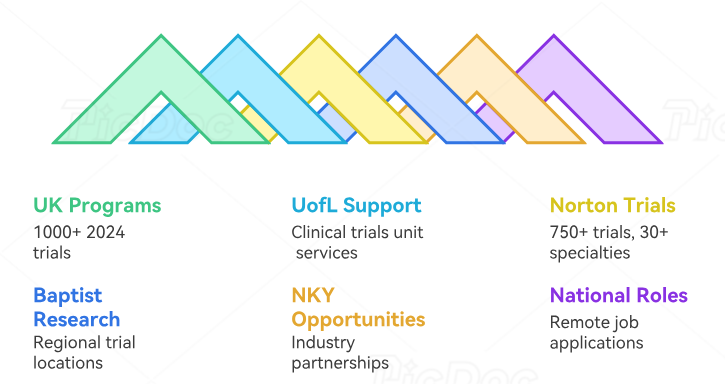
The University of Kentucky offers one of the state’s strongest clinical research entry environments. Its Center for Clinical and Translational Science provides graduate courses, seminars, conferences, online training, credentialing, and workforce-development opportunities. Its August 2026 Clinical Research Essentials program combines online preparation with hands-on instruction for early-career research professionals. Kentucky candidates can use this infrastructure to strengthen GCP understanding, research-assistant competence, protocol adherence, clinical data-review skills, and professional networking.
The scale of UK’s research activity creates several adjacent pathways. The university reported running more than 1,000 clinical trials during 2024, with more than 700 active when its May 2025 summary was published. Relevant roles can include clinical research coordinator, regulatory coordinator, research data specialist, quality coordinator, study start-up specialist, clinical research assistant, and safety coordinator. These positions can develop site-monitoring knowledge, trial-logistics experience, adverse-event documentation, participant-safety judgment, and investigator communication.
The University of Louisville Clinical Trials Unit provides another practical learning environment. Its services include feasibility planning, IRB approvals, consent development, essential regulatory documentation, audit support, SOPs, CAPA development, sponsor interactions, participant engagement, source documentation, electronic data capture, investigative-material handling, and study visits. Those functions map directly onto clinical research quality management, data-integrity controls, protocol-deviation handling, monitoring-visit preparation, and inspection readiness.
UofL Health reports involvement in hundreds of clinical trials with thousands of participants across areas including cardiovascular disease, gastroenterology, neurosurgery, oncology, orthopedics, stroke, and trauma. Therapeutic-area exposure matters because safety workflows differ across acute disease, chronic treatment, surgery, oncology, neurological conditions, and emergency care. Candidates can build subject-matter awareness through the cardiovascular trial-site directory, neurology research-site directory, oncology conference directory, clinical safety-monitoring guide, and medical-monitor responsibilities.
Norton Research Institute offers another significant research pathway in Louisville. Norton reports participation in more than 750 trials and studies across more than 30 specialties, including Phase 1, Phase 2, and Phase 3 investigational drug trials, device studies, health-outcomes research, translational research, and data collection. Its research administration structure includes regulatory affairs, compliance, clinical research operations, finance, and grant operations. Candidates can study these functions to understand clinical trial site operations, regulatory safety compliance, clinical project leadership, source-data verification, and research quality systems.
Baptist Health also maintains clinical research activity across Kentucky and Southern Indiana. Its research locations include Lexington, La Grange, Hardin, and Paducah, while Baptist Health Lexington reports conducting several hundred trials across multiple therapeutic areas since its Clinical Research Center was established. These environments may offer entry points through coordination, regulatory documentation, participant recruitment, data management, and research operations. Develop transferable competence through patient-retention strategies, site-monitoring procedures, research protocol adherence, adverse-event reporting, and trial data review.
Northern Kentucky may provide additional industry-facing opportunities. The Kentucky Cabinet for Economic Development highlighted a 2026 LifeSciKY partnership in Covington focused on life-sciences research, academic-industry collaboration, cell-culture technologies, and biomedical innovation. A previously announced Thermo Fisher Scientific investment in Covington also involved its PPD clinical research business, which provides services to pharmaceutical, biotechnology, medical-device, and academic organizations. These developments justify monitoring Covington and the Cincinnati metropolitan region for clinical research career opportunities, regulatory operations, CRA monitoring roles, project quality positions, and drug-safety support work.
Kentucky residents should also apply nationally for remote positions operated by sponsors, CROs, safety vendors, medical-information providers, and regulatory service teams. Use local institutions for practical research exposure and professional relationships while comparing requirements across the Florida pharmacovigilance market, Idaho pharmacovigilance market, Indiana pharmacovigilance market, and nationwide clinical research career map.
5. Convert Your Certification Into Interviews and Career Progression
Begin your job search during training. Build a spreadsheet containing employer, position, location, remote eligibility, therapeutic area, education requirement, experience threshold, duties, systems, regulations, and preferred credentials. Track repeated terms such as ICSR, MedDRA, SAE reconciliation, E2B(R3), narrative writing, literature surveillance, case quality, signal management, aggregate reporting, and CAPA. Expand your research with the clinical research career map, worldwide salary comparison tool, professional association directory, online research communities, and free training resources.
Search several titles because employers organize safety work differently. Useful terms include pharmacovigilance associate, drug safety associate, safety case processor, clinical safety associate, medical information associate, literature-surveillance associate, regulatory safety associate, PV quality associate, safety operations coordinator, and SAE reconciliation specialist. Include adjacent clinical research assistant positions, trial logistics roles, clinical data-review work, site-operations opportunities, and regulatory support positions.
Write your resume around applied actions. “Completed pharmacovigilance certification” communicates course participation. A stronger bullet states: “Evaluated simulated safety reports for validity, seriousness, expectedness, causality, follow-up requirements, coding accuracy, narrative quality, and reporting urgency.” Another can state: “Performed risk-based quality review of fictional ICSRs using completeness, chronology, coding, consistency, traceability, and submission-readiness criteria.” These bullets connect your training with case-processing competence, adverse-event compliance, data-integrity controls, quality-management methods, and inspection-ready documentation.
Translate previous experience into safety evidence. Pharmacists can emphasize medication reconciliation, interaction review, product knowledge, adverse-reaction recognition, and counseling. Nurses can emphasize clinical assessment, chronological documentation, escalation, medication administration, and patient monitoring. Laboratory professionals can emphasize traceability, controlled procedures, discrepancy investigation, deviation documentation, and quality review. Coordinators can highlight protocol adherence, monitoring support, investigator communication, clinical data verification, and SAE documentation.
Use a fixed structure for technical interviews. Start with the facts supplied. Confirm whether the minimum case elements are present. Identify the source and receipt date. Evaluate seriousness and severity. Explain whether expectedness and causality can be assessed. Identify missing information and prioritize follow-up. Recognize possible urgency. Describe procedure-based escalation, documentation, and quality review. This sequence demonstrates patient-safety judgment, regulatory awareness, medical-review discipline, timeline control, and quality-system thinking.
Apply a 30-60-90-day conversion plan. During days 1–30, complete foundational modules, GCP preparation, terminology drills, and five portfolio items. During days 31–60, finish advanced cases, analyze 30 job descriptions, revise your resume, strengthen your professional profile, and conduct informational conversations. During days 61–90, submit targeted applications, practice timed cases, attend research events, and track rejection patterns. Support the plan through free research webinars, professional clinical associations, researcher communities, career-location research, and Kentucky GCP development.
Track where progress stops. Applications without screening calls frequently indicate targeting, eligibility, or resume-positioning problems. Screens without technical interviews can reveal weak role alignment. Technical rounds without offers may expose gaps in case reasoning, examples, communication, or system knowledge. Assign corrective work according to the evidence: safety-monitoring review, reporting-timeline practice, data-review exercises, regulatory submission study, or inspection-readiness training.
6. Frequently Asked Questions About Pharmacovigilance Certification in Kentucky
-
A pharmacovigilance training certificate is separate from Kentucky professional licensure. The Kentucky Board of Pharmacy lists pharmacist, pharmacist intern, and pharmacy technician credentials. Operational safety positions commonly evaluate education, experience, pharmacovigilance knowledge, regulatory competence, clinical data skills, and GCP understanding. A job involving protected pharmacy, nursing, medical, or other clinical practice may require the applicable state license.
-
Yes. Online training can support candidates in Louisville, Lexington, Bowling Green, Owensboro, Covington, Paducah, Frankfort, and rural communities. Evaluate programs through case-based assessments, feedback quality, regulatory currency, instructor access, and practical outputs. Strong online training should cover safety-case processing, adverse-event compliance, global PV requirements, clinical data integrity, and pharmacovigilance inspection preparation.
-
Completion time depends on curriculum depth, prior knowledge, assessment requirements, and weekly study capacity. Measure progress through performance rather than speed. A learner may finish lectures rapidly while requiring additional weeks for case-classification drills, narrative-writing practice, data-reconciliation exercises, GCP preparation, and quality-control review.
-
Many case-processing, literature-surveillance, safety-operations, data, medical-information, quality, and regulatory-support roles accept candidates from life sciences, nursing, public health, biotechnology, healthcare administration, laboratory science, and clinical research. Requirements vary according to medical responsibility and seniority. Strengthen your profile through research-assistant training, clinical data verification, regulatory compliance knowledge, patient-safety education, and protocol-adherence competence.
-
Relevant research environments include the University of Kentucky, UK Center for Clinical and Translational Science, University of Louisville, UofL Health, Norton Research Institute, Baptist Health research locations, and life-sciences organizations in Northern Kentucky. These organizations span clinical trials, academic research, regulatory operations, research compliance, early-phase studies, data management, and therapeutic-area research. Explore them alongside the clinical research career map, professional association directory, clinical research communities, and free training directory.
-
Search for drug safety associate, pharmacovigilance associate, safety case processor, clinical safety associate, medical information associate, literature-surveillance associate, safety operations coordinator, regulatory safety associate, PV quality associate, and SAE reconciliation specialist. Include adjacent clinical research assistant roles, trial-logistics positions, clinical data jobs, site-operations opportunities, and regulatory affairs roles.
