
How To Get a Pharmacovigilance Certification in Florida: Everything You Need to Know in 2026–27
Florida professionals entering drug safety face a credibility problem: many applicants understand healthcare or life sciences, yet struggle to demonstrate pharmacovigilance case processing, clinical-trial safety monitoring, global regulatory compliance, adverse-event reporting, and inspection readiness. A valuable certification closes that evidence gap. This guide explains how to select the right program, master the workflows employers evaluate, use Florida’s research ecosystem strategically, and convert your credential into interviews during 2026–27.
1. Understand What a Pharmacovigilance Certification Must Prove in Florida
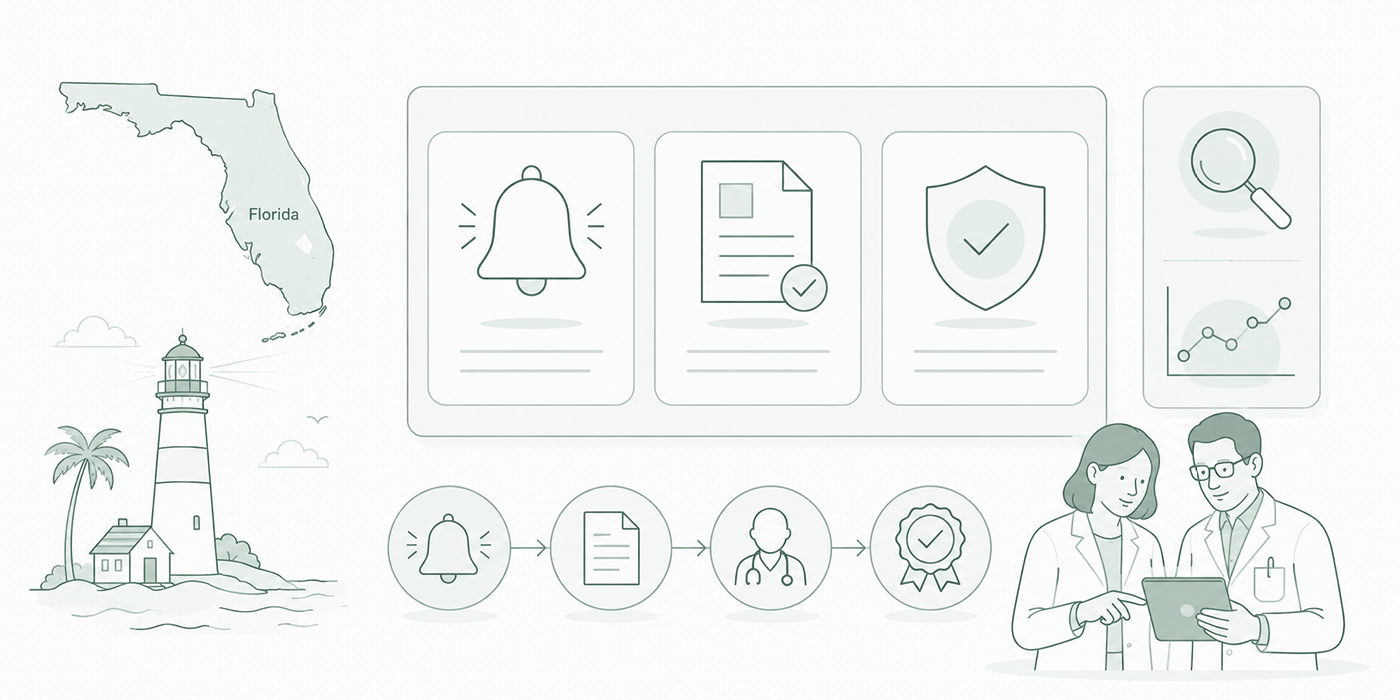
Pharmacovigilance certification functions as a professional training credential rather than a standalone Florida occupational license. Florida’s official regulated-professions directory covers licensed roles such as pharmacists, pharmacy technicians, nurses, and physicians, while pharmacovigilance does not appear as a separately licensed profession. A professional entering drug-safety operations, clinical safety surveillance, regulatory support, safety data review, or pharmacovigilance quality assurance can therefore build eligibility through education, applied training, documentation skills, and relevant experience. Positions involving protected nursing, pharmacy, or medical practice may separately require the appropriate active Florida license.
Your certification should prove that you can evaluate a safety report rather than merely define one. That means identifying the four minimum elements of a potentially valid case—an identifiable patient, an identifiable reporter, a suspect product, and an adverse event—then documenting missing information and initiating appropriate follow-up. Strong training should connect case intake and triage with patient-safety principles, protocol compliance, data-integrity controls, and quality-management systems.
You must also distinguish concepts that inexperienced candidates routinely blend together. An adverse event describes an undesirable medical occurrence associated with product use. An adverse drug reaction carries a suspected causal relationship. Seriousness depends on outcomes such as death, life-threatening circumstances, hospitalization, disability, congenital anomaly, or another medically important condition. Severity describes intensity. Expectedness compares the event against the applicable reference safety information. These distinctions drive SAE documentation, medical review, investigator responsibilities, sponsor escalation, and regulatory submission decisions. FDA identifies specific patient outcomes that qualify an adverse event as serious, making precise classification a core job competency.
Current regulatory awareness is equally important. FDA issued its final ICH E6(R3) Good Clinical Practice guidance in September 2025, emphasizing proportionate risk management, fit-for-purpose systems, quality by design, reliable information, and technology-enabled trial conduct. ICH finalized E6(R3) Annex 2 in June 2026 for additional trial designs and data sources. A 2026–27 certification should therefore integrate modern GCP principles, risk-based monitoring, remote monitoring controls, critical-to-quality thinking, and electronic data verification.
Use the following matrix to test whether a Florida pharmacovigilance program teaches employable performance or simply awards a completion document.
Florida Pharmacovigilance Certification Decision Matrix: 30 Competencies Employers Can Test
| Competency | What Your Certification Should Teach | Evidence You Should Produce | Hiring Risk When Missing |
|---|---|---|---|
| Case validity | Confirm the minimum elements required to open and process an ICSR. | A completed case-validity checklist. | Invalid cases enter the database or valid cases remain unprocessed. |
| AE versus ADR | Separate temporal association from suspected causal association. | A decision tree linked to clinical safety monitoring. | Incorrect reportability and misleading narratives. |
| Seriousness assessment | Apply death, life-threatening, hospitalization, disability, congenital anomaly, and medical-importance criteria. | Ten classified adverse-event scenarios. | Missed expedited-reporting obligations. |
| Severity grading | Assess clinical intensity separately from regulatory seriousness. | A severity-versus-seriousness comparison worksheet. | Moderate events may be escalated incorrectly while serious events are overlooked. |
| Expectedness | Compare reported events with the correct reference safety information. | An expectedness review using an investigator brochure or label. | Incorrect SUSAR and IND safety-report decisions. |
| Causality | Evaluate temporal relationships, dechallenge, rechallenge, alternatives, and biological plausibility. | A causality assessment connected to medical-monitor review. | Unsupported conclusions and inconsistent medical evaluations. |
| Follow-up strategy | Ask focused questions that improve clinical completeness and regulatory usefulness. | A prioritized follow-up questionnaire. | Repeated generic requests frustrate reporters and leave critical gaps unresolved. |
| Case triage | Prioritize reports according to seriousness, reportability, clock start, and medical urgency. | A triage queue with documented rationale. | High-risk cases compete with routine reports and approach deadline breaches. |
| Day-zero determination | Identify when the organization first possessed sufficient reportable information. | A receipt-timeline exercise based on email, phone, literature, and vendor sources. | Incorrect clock starts create late submissions. |
| Seven-day reporting | Recognize unexpected fatal or life-threatening suspected adverse reactions requiring rapid escalation. | A reporting-clock exercise tied to IND submission requirements. | Critical clinical-trial safety reports miss federal timelines. |
| Fifteen-day reporting | Apply expedited timelines to qualifying serious and unexpected safety information. | A calendar-based submission plan. | Teams confuse business days with calendar days or delay medical review. |
| MedDRA coding | Select accurate lowest-level terms and understand preferred-term and system-organ-class hierarchy. | A coded event set with rationale and quality checks. | Overcoding, undercoding, and signal dilution. |
| Drug coding | Standardize suspect, concomitant, interacting, and historical products. | A cleaned medication list with duplicate control. | Fragmented product data and unreliable aggregate analysis. |
| Narrative writing | Create chronological, medically coherent, concise, and traceable safety narratives. | Three complete narratives derived from raw source documents. | Reviewers cannot reconstruct the case or understand decisive evidence. |
| Source-document reconciliation | Identify discrepancies between forms, emails, clinical notes, and database fields. | A reconciliation log modeled on clinical data verification. | Contradictory dates, outcomes, doses, and medical histories remain unresolved. |
| Duplicate detection | Compare patient, reporter, product, event, geography, and timeline indicators. | A duplicate-search worksheet. | Case counts inflate and signal calculations become distorted. |
| Quality control | Review completeness, coding, chronology, causality, seriousness, and submission readiness. | A risk-based QC checklist linked to quality management. | Errors recur because reviewers check formatting instead of regulatory impact. |
| E2B(R3) | Understand structured ICSR data fields, transmission logic, acknowledgements, and validation failures. | A field-mapping exercise for electronic safety submission. | Candidates appear outdated during the 2026 reporting-system transition. |
| Safety database literacy | Understand intake, workflow states, audit trails, locked fields, queries, and submissions. | A mock database workflow map. | The candidate knows definitions yet cannot explain operational case movement. |
| Literature surveillance | Screen scientific publications for reportable cases, aggregate evidence, and emerging risks. | A literature-screening log with inclusion decisions. | Reportable information remains buried in abstracts or full-text articles. |
| Signal detection | Combine case review, disproportionality, clinical judgment, literature, and exposure context. | A concise signal-assessment memo. | Statistical alerts are treated as confirmed causal risks. |
| Aggregate reporting | Understand periodic safety reports, cumulative data, interval cases, and benefit-risk evaluation. | An aggregate-report content map. | Individual cases remain disconnected from product-level risk assessment. |
| Risk management | Connect identified and potential risks with surveillance and minimization measures. | A miniature risk-management plan. | Safety findings fail to produce measurable mitigation actions. |
| Clinical-trial reconciliation | Reconcile safety databases with clinical databases, serious-event logs, and investigator records. | A reconciliation tracker informed by GCP monitoring techniques. | Cases appear in one system while remaining absent or inconsistent in another. |
| Vendor oversight | Define responsibilities, exchange timelines, metrics, escalation routes, and quality controls. | A safety-data exchange responsibility matrix. | Each party assumes the other party owns an urgent action. |
| SOP application | Translate written procedures into defensible operational decisions. | An annotated SOP workflow. | The candidate memorizes regulations while ignoring company-controlled processes. |
| Deviation management | Document missed steps, assess impact, investigate causes, and implement corrective actions. | A deviation and CAPA example based on deviation-management principles. | Recurring failures receive superficial retraining without root-cause control. |
| Audit-trail review | Explain who changed safety data, when it changed, why it changed, and whether authorization existed. | An audit-trail investigation exercise. | Data corrections lack traceability and inspection credibility. |
| Inspection readiness | Retrieve evidence, explain decisions, reconcile metrics, and respond accurately to inspectors. | A mock inspection package using PV audit techniques. | Teams scramble for records and provide inconsistent explanations. |
| Safety communication | Convert complex risk evidence into clear messages for investigators, regulators, healthcare professionals, and patients. | A safety notice informed by patient-education principles. | Technically correct information fails to support safe decisions. |
2. Follow a Seven-Step Route to Pharmacovigilance Certification
Step 1: Define your target role before choosing a course. “Pharmacovigilance” covers several workflows. An entry-level case processor needs strong intake, validation, coding, follow-up, narrative, and submission-clock skills. A clinical safety associate may also reconcile trial data and support investigators. A regulatory affairs professional needs broader submission knowledge. A medical monitor requires advanced clinical judgment. A quality specialist focuses on procedural control, deviations, CAPA, and inspection evidence. Select one primary destination and one adjacent role.
Step 2: Map your existing background to safety work. Nurses can translate patient assessment, chronology, clinical escalation, and documentation into case-review evidence. Pharmacists can use medication knowledge, interaction assessment, indication review, and adverse-reaction counseling. Biology and public-health graduates can emphasize scientific interpretation, epidemiology, research methods, and data quality. Clinical research coordinators can connect protocol adherence, site operations, source verification, investigator communication, and SAE escalation directly to safety responsibilities.
Step 3: Evaluate the certification through its assessments. Ask whether learners classify realistic cases, complete follow-up plans, code medical concepts, write narratives, calculate reporting deadlines, review literature, investigate duplicates, and defend decisions. Passive video completion produces weak interview evidence. Case-based assessment develops the reasoning employers can probe. CCRPS currently describes its Advanced Pharmacovigilance and Regulatory Affairs Certification as a CPD-accredited, online program with more than 160 modules, case studies, safety-signal content, global regulatory coverage, and career support. Review the current curriculum, assessment rules, completion requirements, refund terms, and instructor access before enrolling.
Step 4: Build a study schedule around production, rather than consumption. Assign each study week a tangible deliverable. Week one can produce a terminology map and case-validity checklist. Week two can produce seriousness and expectedness exercises. Week three can focus on ICSR processing, MedDRA decisions, narrative writing, submission clocks, and database quality control. Later weeks can cover signals, aggregate reports, risk management, audits, and interviews.
Step 5: Complete GCP training alongside pharmacovigilance. Safety work within clinical development depends on GCP responsibilities, protocol-defined reporting, investigator oversight, informed consent, source documentation, sponsor communication, and participant protection. Pairing your PV credential with ICH-GCP certification, ethical-conduct training, investigator-responsibility knowledge, monitoring competence, and data-integrity awareness gives you a stronger clinical-development profile.
Step 6: Create a de-identified portfolio. Include one case-validity checklist, two case assessments, one follow-up questionnaire, two narratives, a MedDRA coding exercise, a duplicate evaluation, a safety timeline, a signal memo, and a QC checklist. Use fictional products and patients. State the assumptions behind every decision. A portfolio should demonstrate reasoning without exposing patient information, sponsor data, proprietary procedures, or confidential study details. That protects you from the confidentiality mistakes frequently made by candidates trying to prove clinical research experience, site-monitoring knowledge, regulatory competence, audit exposure, or data-review skills.
Step 7: Validate your readiness through timed scenarios. Give yourself 20 minutes to read a report, establish validity, identify missing data, assess seriousness, evaluate expectedness, determine urgency, and draft follow-up questions. Then explain the decision aloud in two minutes. This exercise exposes hesitation, terminology gaps, and weak logic before an interviewer does. Certification completion becomes far more valuable when you can defend your case-processing decisions, reporting timelines, clinical interpretation, quality controls, and regulatory escalation without reading from notes.
3. Master the Technical Skills Employers Will Test in 2026–27
Begin with ICSR processing because it connects most entry-level safety duties. You should be able to explain how a report moves from initial receipt through validation, duplicate search, data entry, coding, medical assessment, narrative preparation, quality control, submission, acknowledgement, follow-up, and closure. Each transition should have an owner, timestamp, quality requirement, and escalation route. Study case-processing workflows, trial-safety oversight, data-review methods, project milestones, and quality controls as one connected system.
MedDRA requires more depth than memorizing its hierarchy. You need to code the reported concept accurately, preserve the reporter’s meaning, avoid diagnosing beyond the source, distinguish signs from diagnoses, recognize product-use issues, and understand how coding choices affect retrieval and signal evaluation. MedDRA is the standardized international medical terminology used across premarketing and postmarketing regulatory activities, while Standardised MedDRA Queries support retrieval of coded data during safety investigations. Combine coding practice with signal detection, case quality, medical review, and regulatory reporting.
Learn reporting clocks through scenarios. FDA states that unexpected fatal or life-threatening suspected adverse reactions under an IND must be reported as soon as possible and within seven calendar days. Other qualifying serious risks generally follow a 15-calendar-day reporting requirement. Your role may involve intake or processing rather than the sponsor’s final reportability determination, yet every person in the workflow must recognize urgency. Practice with IND safety-report scenarios, adverse-event compliance, investigator escalation, trial timeline management, and sponsor communication.
Signal detection requires disciplined interpretation. A disproportionality result, cluster of cases, literature finding, medication-error pattern, or unexpected clinical observation may justify further evaluation. It does not automatically establish causality. A sound assessment considers case quality, biological plausibility, temporal patterns, dechallenge and rechallenge, alternative explanations, exposure, background incidence, confounding, class effects, and external evidence. FDA may respond to a validated risk through labeling changes, REMS development or modification, additional data collection, or public safety communication. Connect safety-signal evaluation with risk management, aggregate review, patient communication, and inspection documentation.
Finally, understand data integrity. Safety teams need audit trails, controlled corrections, documented rationale, access restrictions, reconciliation, version control, validated systems, and traceable source information. An interviewer may ask what you would do after discovering a conflicting onset date, an overwritten seriousness field, an unreviewed duplicate, or a late vendor transmission. Use a structured answer: protect the record, verify the source, assess regulatory impact, escalate according to procedure, document the investigation, correct through authorized controls, and evaluate whether CAPA is required. That reasoning links PV inspection readiness, clinical data integrity, protocol-deviation handling, quality management, and global compliance.
What is blocking your Florida pharmacovigilance career move right now?
Choose the obstacle costing you the most momentum. Your result gives you the fastest corrective action.
4. Use Florida’s Clinical Research Ecosystem Strategically
Florida offers several routes into safety-related work because its research activity spans academic medicine, cancer research, health systems, clinical trial sites, pharmacy research, sponsors, vendors, and remote national teams. The University of Florida’s Clinical and Translational Science Institute supports training and professional development for clinical research professionals, while UF’s College of Pharmacy maintains research and training in pharmacoepidemiology and safety sciences. These environments can help candidates connect pharmacovigilance knowledge with clinical research training, professional associations, research communities, and career opportunities.
South Florida candidates should monitor roles connected with the University of Miami, health systems, research institutes, sponsors, and CRO operations. A current University of Miami Clinical Research Safety Associate description explicitly connects clinical research with regulatory affairs and pharmacovigilance teams, illustrating how safety responsibilities can sit inside broader research operations. Search for titles such as clinical research safety associate, safety coordinator, regulatory coordinator, clinical data specialist, drug safety associate, and research compliance specialist. Pair that search with trial-logistics knowledge, research-assistant training, regulatory compliance, protocol adherence, and safety reporting.
Tampa-area applicants can study Moffitt Cancer Center’s research structure to understand adjacent entry points. Moffitt describes clinical trial operations involving research nurses, trial coordinators, research data specialists, regulatory specialists, contracting staff, and multidisciplinary clinical teams. Each function touches information that can affect participant safety, protocol compliance, documentation, and escalation. Relevant preparation includes oncology research awareness, site-operations oversight, patient-retention strategy, investigator-meeting skills, and clinical safety monitoring.
Jacksonville candidates can evaluate research opportunities connected with Mayo Clinic’s Florida campus and regional trial operations. Mayo reports clinical and epidemiological research across its Florida, Arizona, and Minnesota campuses and maintains active clinical trials in Jacksonville. This creates pathways through coordination, data management, regulatory support, quality, safety documentation, and participant-facing research. Strengthen your profile through monitoring-visit knowledge, clinical data verification, participant-safety principles, site logistics, and research communication.
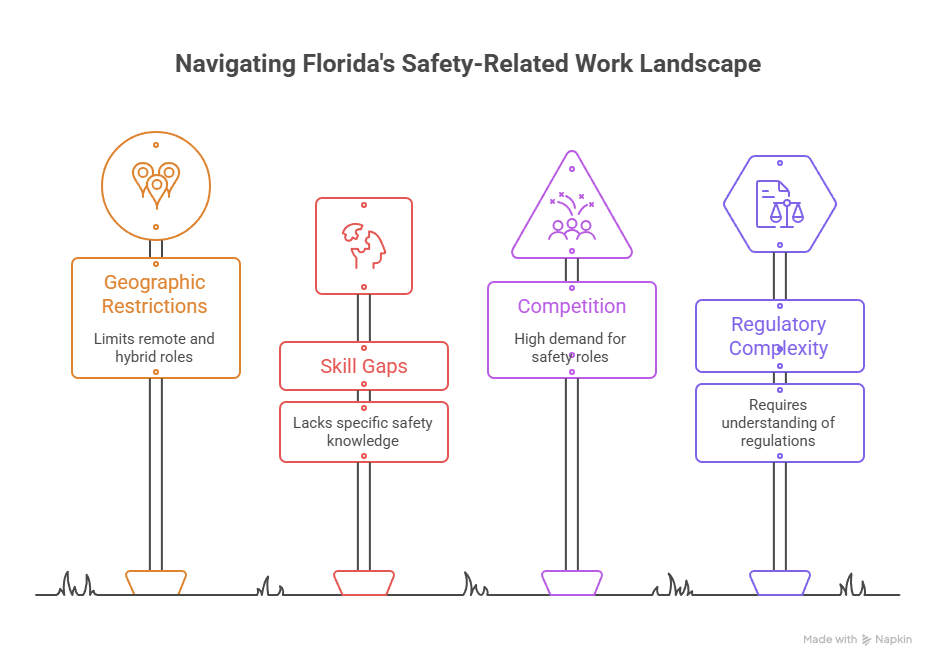
Geography should expand your search rather than restrict it. Many sponsor and CRO safety teams support products nationally or globally, allowing Florida residents to compete for remote and hybrid positions. Compare Florida opportunities with the wider markets discussed in the California pharmacovigilance guide, Arizona pharmacovigilance guide, Colorado pharmacovigilance guide, Connecticut pharmacovigilance guide, and Delaware pharmacovigilance guide. This comparison helps you recognize which skills transfer across state boundaries.
5. Convert Your Certification Into Interviews and Career Growth
Start your job search before completing the course. Collect 30 relevant postings and build a frequency table of required tasks, systems, regulations, therapeutic areas, degrees, experience levels, and preferred credentials. Search titles including pharmacovigilance associate, drug safety specialist, ICSR case processor, clinical safety associate, safety operations coordinator, medical information specialist, regulatory safety associate, literature-surveillance associate, and PV quality specialist. Use the clinical research career map, salary comparison tool, professional association directory, clinical research communities, and free training directory to widen your evidence and network.
Write your resume around controlled actions rather than course attendance. “Completed pharmacovigilance training” communicates exposure. “Evaluated simulated safety reports for validity, seriousness, expectedness, causality, follow-up requirements, MedDRA coding, narrative quality, and submission urgency” communicates capability. Add measurable scope where accurate: number of cases reviewed, exercises completed, narratives written, quality checks performed, or regulatory scenarios analyzed. Connect your evidence with case-processing expertise, audit readiness, safety-monitoring knowledge, GCP responsibilities, and regulatory compliance.
Prepare for scenario-based interviews. A hiring manager may describe a report from a patient, physician, study coordinator, social-media post, literature article, or product complaint. Start by stating what information is available. Confirm case validity. Identify the source and receipt date. Separate seriousness from severity. Assess whether expectedness and causality can be determined from the information provided. Identify follow-up gaps. Explain urgency without claiming authority beyond your role. Document assumptions. Escalate according to procedure. This structure demonstrates patient-safety judgment, data-integrity discipline, communication skills, timeline control, and quality-based escalation.
Use a 30-60-90-day conversion plan. During the first 30 days, finish your certification, terminology map, reporting-clock exercises, and first five portfolio items. During days 31–60, complete GCP training, analyze job descriptions, rewrite your resume, optimize your LinkedIn profile, and conduct three informational conversations. During days 61–90, apply selectively, practice timed case scenarios, attend professional events, request feedback, and track interview failure points. Supplement the plan with clinical research webinars, professional communities, research associations, career-location research, and certification exam preparation.
Track leading indicators rather than waiting for an offer to judge progress. Useful measures include targeted applications submitted, referral conversations completed, recruiter responses, screening interviews, technical interviews, scenario scores, portfolio reviews, and repeated objections. Ten applications with zero screens may indicate positioning or eligibility problems. Several screens with no technical progression may reveal weak workflow knowledge. Technical rounds without offers may expose communication, examples, or role-fit issues. Diagnose the stage, then apply the relevant career training, case simulations, regulatory review, safety-monitoring practice, or quality-management preparation.
6. Frequently Asked Questions About Pharmacovigilance Certification in Florida
-
Pharmacovigilance itself does not appear as a standalone licensed profession in Florida’s official regulated-professions directory. Most drug-safety operations positions evaluate candidates through education, experience, pharmacovigilance certification, GCP knowledge, safety-reporting competence, regulatory understanding, and data-quality skills. A position requiring activities reserved for a pharmacist, nurse, physician, or another regulated clinician may require an active professional license.
-
Yes. Online delivery suits Florida residents targeting local, hybrid, and remote safety teams. Evaluate the program through its curriculum, assessments, instructor support, case simulations, regulatory currency, completion rules, and portfolio value. A strong online program should include ICSR processing, MedDRA practice, signal evaluation, inspection preparation, and global reporting requirements.
-
Completion time depends on program depth, weekly availability, assessment requirements, and prior clinical or regulatory knowledge. CCRPS currently presents its advanced pharmacovigilance and regulatory affairs program as a multiweek online course containing more than 160 modules. Build additional time for case-processing practice, exam preparation, GCP education, portfolio development, and career research. A rushed completion date has limited value when the learner cannot apply the material during an interview.
-
Many operational, case-processing, quality, coordination, literature, data, and regulatory-support positions accept candidates from broader life-science, healthcare, nursing, public-health, biotechnology, and clinical-research backgrounds. Your competitiveness depends on the employer and level of medical responsibility. Strengthen your application through pharmacovigilance training, research-assistant competencies, clinical data review, regulatory compliance, and patient-safety knowledge.
-
Use several titles because employers organize safety functions differently. Search for drug safety associate, pharmacovigilance associate, safety case processor, clinical research safety associate, safety operations coordinator, medical information associate, literature-surveillance associate, regulatory safety associate, PV quality associate, and clinical safety coordinator. Expand the search through the global career map, professional association directory, clinical research communities, salary comparison tool, and free training directory.
-
Certification strengthens your regulatory vocabulary, workflow knowledge, and credibility. Employers still need evidence that you can classify ambiguous reports, protect data quality, meet timelines, communicate clearly, and follow controlled procedures. Pair the credential with case simulations, narrative-writing practice, GCP competence, inspection-readiness knowledge, and quality-management skills. This combination gives interviewers several forms of evidence instead of one certificate line.
