
The Rise of Longevity Clinical Trials: Are We on the Verge of Extending Life?
Longevity clinical trials are moving from the scientific fringe into a serious translational battleground. What used to sound like speculative anti-aging hype is now being reframed in far more disciplined terms: delaying frailty, compressing late-life disease, extending healthspan, and targeting the biological mechanisms that make people vulnerable to multiple chronic conditions at once. That shift matters because the real prize is not immortality. It is slowing the processes that drive cancer risk, neurodegeneration, metabolic collapse, immune dysfunction, cardiovascular decline, and loss of function across decades.
For clinical research professionals, this category is both exciting and unforgiving. Longevity studies force hard questions about endpoints, trial duration, biomarkers, patient selection, protocol burden, ethics, and statistical interpretation. They also create enormous room for misunderstanding. If teams cannot distinguish scientific promise from commercial noise, they will misread the whole space. If they can, longevity trials may become one of the most important clinical research expansions of the next decade.
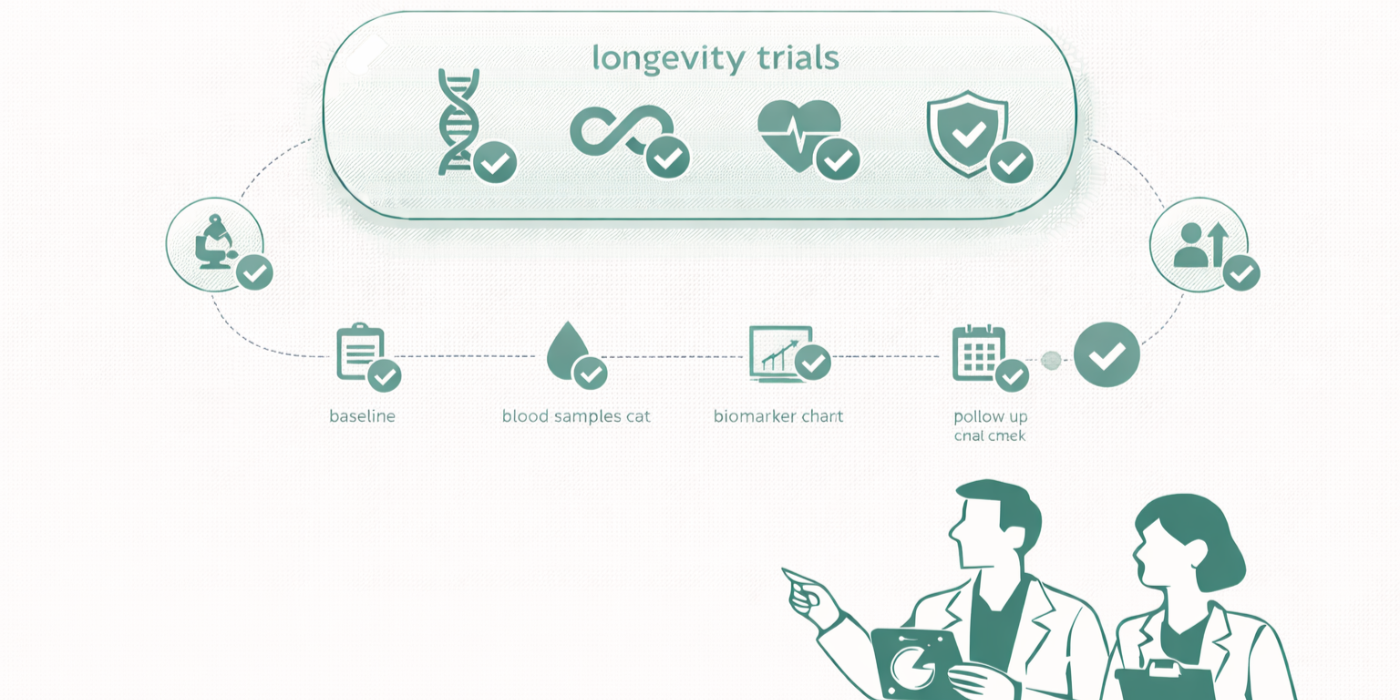
1. Why Longevity Clinical Trials Are Suddenly Being Taken More Seriously
The rise of longevity trials is not happening because the public suddenly became obsessed with living forever. It is happening because aging is increasingly being treated as a risk architecture rather than a background fact. Researchers are asking a more productive question: what if the same biological mechanisms that increase age also increase vulnerability to multiple diseases at once? If that is true, then targeting those mechanisms may reduce broad downstream harm more efficiently than fighting each disease in isolation.
That is why longevity research is attracting attention from translational medicine, biotech, digital health, biomarkers, real-world data, and prevention strategy all at once. Instead of chasing only one-condition outcomes, many programs are exploring whether biological aging signals can help explain why some patients decline faster, recover worse, or accumulate disease burden earlier. That logic overlaps with how teams think about biostatistics in clinical trials, primary vs secondary endpoints, randomization techniques in clinical trials, and blinding in clinical trials.
The pressure behind longevity trials is also economic and operational. Modern health systems are overwhelmed by chronic disease, polypharmacy, multimorbidity, and long-duration care needs. A trial that credibly shows improvement in resilience, functional independence, recovery, or disease-free years would carry implications far beyond one specialty. That is why teams studying state of clinical trials 2025 industry trends, real-world evidence integration trends, clinical research technology adoption, and clinical trial success rates by therapeutic area should watch this category closely.
But seriousness should not be confused with simplicity. Longevity trials are difficult because they test broad biological claims in systems built to validate narrow clinical claims. That tension is exactly why this field matters. It is forcing clinical research to confront whether current trial design is good enough for interventions aimed at aging biology rather than just disease labels.
2. What Longevity Trials Are Actually Trying to Extend: Lifespan, Healthspan, or Functional Independence?
One reason longevity content gets distorted is that “extending life” sounds dramatic but is usually too blunt to be scientifically useful. Serious longevity trials are more likely to focus on extending healthspan than lifespan alone. Healthspan means the period of life spent with acceptable function, autonomy, cognition, and resilience. That distinction matters because a therapy that adds years without improving function is not solving the problem most patients actually fear.
This is where trial design becomes strategic. A credible longevity study may track gait speed, grip strength, recovery from acute stress, inflammatory markers, hospitalization patterns, cognitive performance, sarcopenia risk, or time to clinically meaningful decline. Those are not glamorous endpoints, but they are often more actionable than vague promises about “age reversal.” Teams that understand case report form best practices, data monitoring committee roles, placebo-controlled trial design, and clinical trial protocol management are better equipped to keep these studies coherent.
The deeper problem is that aging unfolds across systems, not departments. Oncology, neurology, metabolism, cardiovascular function, immunity, and mobility are all part of the same late-life risk picture. Longevity trials therefore sit awkwardly inside a research ecosystem that still prefers single-indication clarity. That does not make longevity trials weak. It makes them operationally demanding. Investigators and project teams may need more sophisticated outcome frameworks, more thoughtful cohort selection, and more disciplined statistical planning than many conventional studies require.
There is also a patient communication challenge. When teams speak loosely about anti-aging, they attract the wrong expectations. When they explain the real goal as delaying frailty, preserving cognition, improving resilience, or reducing multi-condition vulnerability, they sound less flashy but more credible. That kind of clarity aligns with informed consent mastery under GCP, regulatory and ethical responsibilities for principal investigators, patient safety oversight in clinical trials, and handling clinical trial audits and preparation essentials.
The industry will make real progress only when it stops asking, “Can we make people live forever?” and starts asking, “Can we measurably delay the biological and functional decline that makes later life smaller, riskier, and more dependent?”
3. The Hardest Scientific Problem: Proving Longevity Benefits Without Waiting Forever
Every exciting longevity claim collides with the same brutal reality: human aging is slow, variable, and entangled with lifestyle, socioeconomic conditions, comorbidities, environment, genetics, and adherence. That makes clean signal detection difficult. If a trial must wait decades to prove benefit, translation slows. If it relies on weak surrogate endpoints, credibility collapses. This is the central challenge of longevity research.
That is why biomarkers matter so much, but also why they are dangerous when oversold. Biological age clocks, inflammatory profiles, mitochondrial markers, digital phenotyping, recovery signatures, and multimodal risk panels may help shorten timelines. But none of them should be treated like magical shortcuts. A biomarker becomes valuable only when it is connected to meaningful clinical outcomes through careful validation. Otherwise the field drifts into expensive storytelling.
Clinical teams need unusual discipline here. The right question is not whether a marker changes. The right question is whether that change predicts something patients, payers, regulators, and clinicians actually care about. That requires stronger thinking around biostatistics in clinical trials, aggregate reports in pharmacovigilance, drug safety reporting requirements, and managing regulatory submissions in pharmacovigilance.
Longevity trials also amplify recruitment and retention pain points. Studies may need older adults, at-risk populations, or participants willing to stay engaged across longer windows with more layered monitoring. That is why operational fundamentals cannot be weak. Teams need better clinical trial patient recruitment and retention strategies, more intelligent use of clinical trial volunteer registries and platforms, smarter collaboration with clinical research staffing agencies, and stronger visibility across clinical research networking groups and forums.
The trials that win will not necessarily be the ones with the boldest claims. They will be the ones that define realistic hypotheses, choose meaningful populations, use disciplined endpoint hierarchies, and resist the temptation to confuse early biomarker movement with proof of meaningful life extension.
4. Why Longevity Trials Could Reshape the Entire Clinical Research Industry
Longevity research is not just another therapeutic niche. It could alter the structure of study design across multiple categories because it rewards integrated thinking. Trials targeting aging biology may require combinations of digital biomarkers, wearable data, functional testing, imaging, laboratory signals, patient-reported outcomes, and real-world follow-up. That puts pressure on every operational layer, from site coordination to vendor oversight to data governance.
In practice, this means longevity studies may accelerate demand for professionals who can work across silos. A CRC who understands managing regulatory documents, adverse event reporting, GCP compliance strategies, and time management for the CRC exam becomes more valuable in these complex studies because participant burden and documentation burden can both rise quickly.
The same applies to CRAs and PMs. Longevity trials can generate diffuse risk: protocol deviations from home-based data capture, vendor inconsistencies, cross-system documentation gaps, endpoint ambiguity, and retention failures that quietly damage interpretability. Teams with strong foundations in GCP compliance essentials for CRAs, clinical trial auditing and inspection readiness, managing clinical trial documentation, and vendor management in clinical trials will be better positioned to contain that risk.
Longevity trials may also push greater adoption of decentralized and hybrid methods. Older adults, mobility-limited populations, and prevention-focused cohorts are especially sensitive to protocol burden. Remote follow-up, home-based assessments, wearable-enabled endpoints, and pragmatic real-world data capture may be essential rather than optional. That aligns with broader signals from AI-powered clinical trials, predicting patient dropout through AI, remote AI audits and monitoring pressure, and the wider move toward wearable tech powering future clinical trials.
In other words, longevity trials could become a forcing function. They expose what happens when traditional clinical research methods are asked to study something broad, slow, systemic, and prevention-oriented. That pressure could make the entire industry smarter.

5. Are We Really on the Verge of Extending Life, or Just Better at Marketing the Idea?
This is the question serious professionals cannot avoid. The longevity space attracts enormous hope because it touches the deepest human fear: decline. That makes it fertile ground for exaggerated claims, vanity biomarkers, underpowered studies, and commercial narratives that sound scientific without being truly clinical. So the right stance is neither cynical dismissal nor breathless belief. It is disciplined scrutiny.
Yes, there are valid reasons to take longevity trials seriously. Aging mechanisms are biologically meaningful. Multi-disease vulnerability is real. Functional decline does not happen by accident. It emerges from measurable processes that may be modifiable. But that does not mean the field is already proving that humans can meaningfully extend lifespan with robust, reproducible clinical interventions at scale. More likely, the near-term wins will be narrower and still important: better resilience, delayed frailty, stronger recovery, improved function, lower inflammatory burden, cleaner risk stratification, or slower decline in specific at-risk populations.
That is still a huge development. If a trial can delay one year of severe frailty, preserve cognitive function longer, reduce hospitalization cycles, or improve later-life independence, that is not a disappointing outcome. That is clinically and socially significant. Professionals following global clinical trial market growth projections, top emerging markets for clinical trials, the impact of regulatory changes on clinical trials, and top CRO market share analysis should recognize that credible longevity science could reshape investment, regulation, and site specialization even before dramatic lifespan headlines ever materialize.
The industry’s credibility will depend on resisting overstatement. The fastest way to damage longevity research is to promise revolutionary life extension before the evidence supports it. The smartest way to build trust is to frame the field around measurable, patient-relevant benefit and operational rigor. Longevity trials do not need miracle language. They need clean science, clear endpoints, careful communication, and evidence strong enough to survive scrutiny from regulators, clinicians, patients, and payers alike.
6. FAQs
-
Lifespan refers to how long a person lives. Healthspan refers to how long that person lives with meaningful function, autonomy, and lower disease burden. Most credible longevity trials are more likely to focus first on healthspan because it is more clinically relevant and more measurable in practical research settings. Teams building expertise through clinical research associate career pathways, clinical research coordinator career roadmaps, clinical data manager career guides, and principal investigator career roadmaps should understand that distinction early.
-
Because waiting for hard survival outcomes can take too long. Biomarkers may help researchers detect biological changes earlier and design more efficient studies. But they are only useful if they are linked to meaningful clinical outcomes. A changing biomarker without real-world relevance can mislead sponsors and patients. That is why teams also need strong foundations in case report form design, biostatistics, and clinical trial documentation control.
-
They may include drug-based interventions, metabolic therapies, inflammation-targeting approaches, senescence-related strategies, digital monitoring programs, nutrition-based protocols, exercise-linked interventions, and recovery-focused therapeutics. Some will be high-tech and others surprisingly pragmatic. The real dividing line is not glamour. It is whether the mechanism, endpoint plan, and patient population fit together logically. That operational reasoning connects closely to clinical trial resource allocation mastery, vendor management in clinical trials, and effective stakeholder communication.
-
Not mostly, but the field does contain a dangerous amount of hype. There is real science, real translational interest, and real clinical need. There is also a temptation to overinterpret early signals or market preliminary findings like proven anti-aging breakthroughs. Professionals who understand research compliance and ethics, regulatory submissions in pharmacovigilance, handling audits under GCP, and patient safety oversight are usually better protected against that noise.
-
Yes. As the field grows, demand may increase for CRAs, CRCs, PMs, data managers, regulatory professionals, pharmacovigilance experts, MSLs, and medical monitors who can manage complex multi-endpoint studies with strong participant retention and clear scientific communication. Career-minded readers may want to explore best job portals for clinical research careers, clinical research certification providers, continuing education providers, and top freelance clinical research platforms.
-
We may be closer to extending healthy function and delaying decline than to dramatically extending maximum human lifespan in a proven, scalable way. That is still a major shift. The verge we may be standing on is not necessarily immortality or extreme lifespan extension. It is the possibility that clinical trials could begin validating interventions that make aging slower, later-life disease less compressive, and independence more durable. If that happens, it will count as one of the most important advances modern clinical research has delivered.
