Top Clinical Trial Technology Innovations Ranked (2026 Report)
In 2026, the teams pulling ahead in clinical research are not the ones buying the most software. They are the sponsors, CROs, and sites using remote monitoring tools, EDC platforms, compliance software, patient recruitment platforms, and virtual trial models to remove the exact bottlenecks slowing startup, enrollment, monitoring, and inspection readiness.
This 2026 report ranks the innovations creating the biggest advantage across execution speed, data quality, patient convenience, documentation control, and safety visibility. The real test is practical: which tools reduce preventable protocol deviations, strengthen GCP compliance, improve adverse event reporting, support cleaner randomization, and give trial teams faster answers than manual work ever could.
1) Why Clinical Trial Technology Matters More in 2026 Than It Did Even Two Years Ago
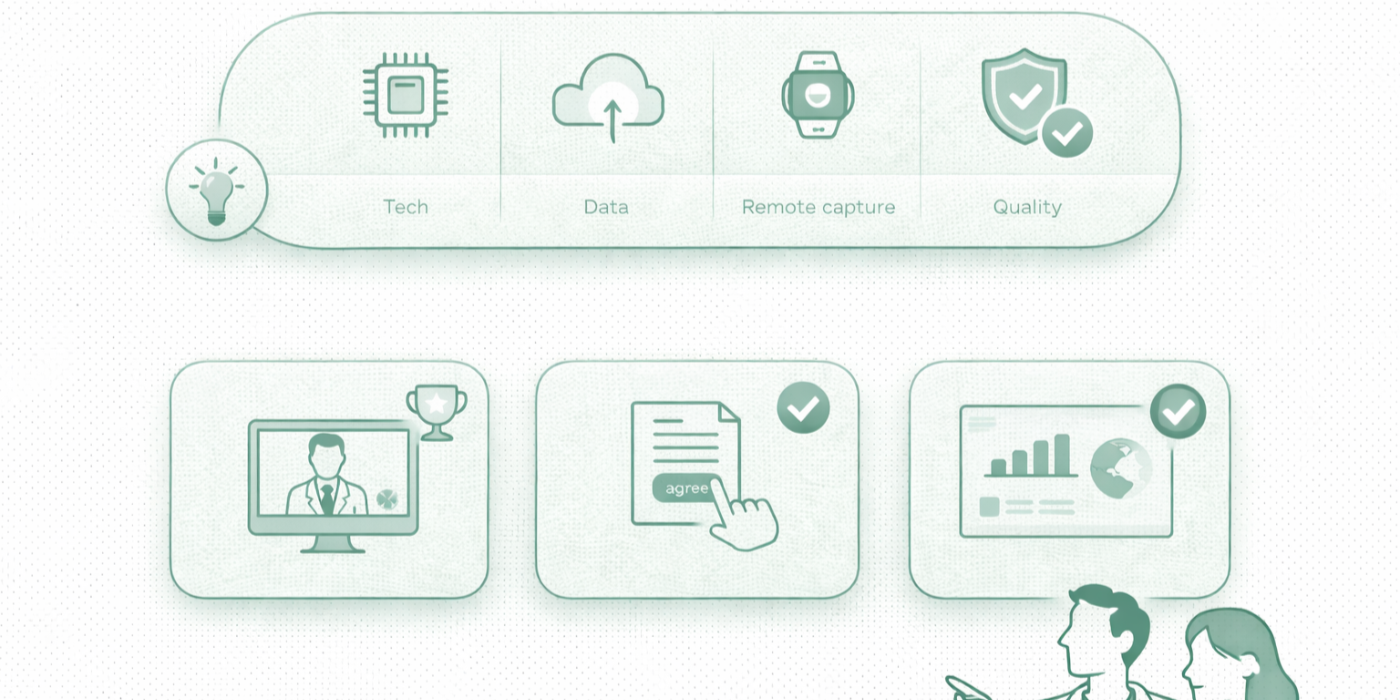
Clinical trial technology is no longer a support function. It now determines whether a study moves cleanly from startup to first patient in, whether sites stay responsive after activation, whether monitors can surface real risk before a finding becomes a deviation, and whether safety teams can see signal drift before it becomes a regulatory headache. When clinical trial sponsor responsibilities, vendor management, and resource allocation get more complex, weak technology architecture becomes a hidden tax on every department.
The old failure pattern was obvious but tolerated: duplicate data entry, fragmented site communication, lagging consent documentation, query backlogs, safety follow-up delays, disconnected vendor reports, and late visibility into enrollment risk. Today, those problems are less forgivable because mature alternatives exist. A coordinator who understands protocol management, regulatory documents, and informed consent should not still be trapped in workflows designed for paper-era studies.
That is why this ranking uses five hard filters. First, does the technology reduce operational drag tied to CRC responsibilities, CRA monitoring, or PI oversight? Second, does it improve patient-facing execution such as recruitment, consent, retention, or remote follow-up? Third, does it strengthen audit posture around documentation, audits, and inspection readiness? Fourth, can it integrate with the rest of the stack instead of becoming another silo? Fifth, does it create measurable value fast enough to survive budget scrutiny from clinical operations and finance leaders?
The rankings below are built for people dealing with real trial pain: slow startup, weak site engagement, protocol complexity, enrollment unpredictability, data lag, late safety visibility, and the constant pressure to do more with fewer clean hours.
| Technology | Best For | Biggest Advantage | Main Risk / Failure Mode | Most Important Buyer Question |
|---|---|---|---|---|
| Hybrid decentralized trial platforms | Reducing visit burden and geographic limits | Improves access and retention for dispersed populations | Overused when protocol procedures still require heavy site handling | Which visits can truly move remote without breaking quality? |
| eConsent systems | Version control, re-consent, multilingual workflows | Stronger documentation and better patient comprehension tracking | Looks modern but fails if comprehension is not actually measured | Can the system prove understanding, not just signature capture? |
| eSource capture tools | Reducing transcription and source-to-EDC lag | Fewer manual errors and faster data availability | Poor site adoption if workflow is slower than current practice | Does this remove work from sites or add a second layer? |
| EDC / CDMS platforms | Core data capture and cleaning | Central backbone for structured trial data | Weak build quality creates downstream query chaos | How fast can forms, edit checks, and integrations be changed? |
| CTMS platforms | Milestones, study oversight, team accountability | Improves visibility across startup and execution | Becomes a passive tracker if nobody trusts the data | Will operations teams use it daily or only for reporting? |
| RTSM / IRT systems | Randomization, supply, visit schedule logic | Protects allocation integrity and inventory accuracy | Configuration mistakes can disrupt enrollment or dosing | How strong is change control when amendments hit mid-study? |
| ePRO / eCOA tools | Symptom capture and endpoint collection | Higher-frequency patient data with less site burden | Low compliance if app UX is weak or reminders are noisy | How will adherence be monitored and rescued? |
| Wearables and digital biomarkers | Continuous, passive data collection | Captures patterns impossible in infrequent site visits | Data overload without endpoint discipline | Which signals are clinically meaningful versus just abundant? |
| Remote monitoring platforms | Risk visibility and centralized review | Finds issues earlier than periodic onsite checks | Teams confuse dashboard volume with insight | What signals actually trigger action and escalation? |
| RBQM analytics engines | Risk scoring and trend detection | Directs monitoring effort where failures are most likely | Bad thresholds create alert fatigue and mistrust | How transparent are the scoring rules? |
| eTMF intelligence | Document completeness and inspection readiness | Reduces hidden filing gaps and aging artifacts | Metadata quality collapses if ownership is vague | Can the system detect missing, late, and misfiled documents? |
| Document QC automation | QC for signatures, dates, version alignment | Prevents inspection findings caused by avoidable errors | False confidence if human exception review is weak | Which QC checks are automated, and which still need humans? |
| AI recruitment matching | Finding likely participants faster | Improves prescreening speed and reduces wasted outreach | Overpromises if site workflows cannot convert leads | How many matched leads become consented patients? |
| Volunteer registry integrations | Feeder pipelines into recruitment workflows | Broader visibility for eligible populations | Low value if registry data is stale or poorly segmented | How current and filterable is participant data? |
| Site performance analytics | Enrollment benchmarking and rescue planning | Helps operators reallocate effort before sites underperform badly | Misleading if startup lag and geography are ignored | Are sites being compared fairly against protocol reality? |
| Retention forecasting tools | Predicting missed visits and dropout risk | Lets teams intervene earlier with patient support | Weak if behavioral signals are not tied to action paths | What interventions trigger when risk climbs? |
| Protocol simulation tools | Testing feasibility before launch or amendment | Reduces costly design choices that burden sites and patients | Ignored when teams rush startup under timeline pressure | Can this quantify visit burden and downstream change impact? |
| Lab data exchange platforms | Importing results cleanly across labs and systems | Reduces manual handling and reconciliation delays | Mapping errors can poison downstream analytics | How fast are abnormal-result feeds visible to the study team? |
| Safety case intake automation | Case processing and intake triage | Shortens lag between receipt and review | Bad classification creates dangerous queue blind spots | How are serious cases separated from routine noise? |
| Signal detection workbenches | Trend detection and safety review | Earlier recognition of meaningful safety patterns | Teams drown in weak signals without triage logic | What is the signal review governance model? |
| Regulatory submission tools | Submission packaging and deadline control | Reduces late or incomplete filings | Becomes brittle if source systems are not synchronized | Can timelines, source data, and approvals be traced in one place? |
| Supply chain platforms | Drug forecasting and site inventory planning | Prevents stockouts and waste across sites | Poor forecast assumptions break even great systems | How quickly can resupply logic adapt to enrollment swings? |
| Vendor oversight dashboards | Cross-vendor accountability and SLA tracking | Exposes hidden delays between handoffs | Vendors game metrics if definitions are weak | Are KPIs operational or merely presentation-friendly? |
| Identity verification and consent authentication | Remote consent integrity and participant validation | Protects trust in decentralized workflows | Too much friction can hurt conversion | How secure is the process without harming patient completion? |
| Communication workflow tools | Escalations, cross-functional alignment, documentation trails | Reduces email chaos and ownership ambiguity | Another channel becomes another silo | What decisions and actions become more traceable? |
| Medical writing and document tools | Protocols, narratives, reports, controlled documents | Speeds quality drafting and review cycles | Weak review governance leads to version confusion | How are comments, approvals, and final versions controlled? |
| Compliance workflow platforms | CAPAs, deviations, training, traceability | Creates stronger quality systems across studies | Rigid workflows slow frontline teams if overbuilt | Does it improve corrective action speed or just admin volume? |
| Training management systems | Role-based training control and refreshers | Reduces preventable errors tied to outdated training | Completion does not equal competency | Can managers link training to performance failures? |
| Integration middleware and data layer tools | Connecting CTMS, EDC, safety, labs, and vendors | Eliminates the most expensive form of trial waste: fragmentation | Underfunded integration work ruins otherwise good tools | Can data move reliably across systems without manual reconciliation? |
2) The Top Clinical Trial Technology Innovations Ranked for 2026
10. AI-Powered Recruitment Matching and Prescreening
The recruitment stack deserves a high ranking because too many studies still fail before technology ever touches monitoring or safety. When patient recruitment, volunteer registries, and recruitment companies are disconnected, sites waste time chasing low-intent leads. The best AI matching tools do not merely surface names. They reduce prescreening waste, improve referral quality, and give coordinators cleaner conversations faster. Their weakness is that they can only accelerate a broken recruitment process; they cannot rescue vague inclusion logic or weak site follow-up.
9. Site Performance Analytics and Enrollment Forecasting
Most study teams already know which sites are struggling. They just know too late. Strong site analytics combine startup lag, referral flow, screen failure patterns, subject conversion, missed visit behavior, and site responsiveness into one operating view. That matters for operators managing site selection, investigator site management, clinical trial PM planning, and resource allocation. The upside is faster rescue decisions. The trap is lazy benchmarking that compares fundamentally different sites as if they were identical.
8. Smart RTSM / IRT with Supply Forecasting
Randomization technology ranks high because allocation errors, dosing confusion, or site stockouts can destabilize a study faster than many teams admit. Advanced randomization systems, stronger blinding controls, integrated supply chain platforms, and clean logic around placebo-controlled trials create stability where protocol complexity often creates fragility. This is not glamorous technology, but it protects core trial integrity. In 2026, smarter forecasting and faster amendment handling separate resilient studies from operationally brittle ones.
7. eTMF Intelligence and Automated Document QC
A shocking number of study teams still discover filing gaps only when an audit, closeout push, or regulatory request forces a scramble. That is why intelligent eTMF oversight and document QC rank this high. Technology that flags missing signatures, late artifacts, wrong versions, stale metadata, or unfiled essential documents improves CRA documentation, strengthens audit preparation, and reduces exposure during inspection readiness work. This category wins because it reduces preventable embarrassment. It fails when ownership is unclear and teams assume software can replace disciplined filing habits.
6. Wearables, ePRO, and Digital Biomarker Capture
Continuous or high-frequency patient data is one of the most meaningful advances in the field, but only when it maps to real scientific decisions. The value appears when endpoints, sample size assumptions, biostatistical planning, and digital health trends are aligned. Wearables can reveal adherence drift, symptom fluctuation, or functional change that site visits miss. The danger is collecting oceans of data that sound innovative but add little decision value, while also creating compliance, device support, and signal interpretation burdens.
5. Hybrid Decentralized Trial Orchestration
Decentralized technology deserves its position because it expands access, reduces patient friction, and supports retention in protocols that would otherwise bleed participants. The best tools coordinate remote visits, telehealth touchpoints, home health logistics, patient reminders, and study communication without making the site feel irrelevant. When tied to virtual clinical trials, patient dropout prediction, patient safety oversight, and PI responsibilities, these platforms become force multipliers. They fail when sponsors decentralize for fashion instead of protocol fit.
4. eConsent with Comprehension Analytics and Identity Controls
eConsent is no longer just a convenience upgrade. In complex studies, it is an operational control system for understanding, re-consent, version management, multilingual delivery, and traceability. Mature eConsent platforms strengthen consent best practices, reduce errors during amendments, align with GCP training requirements, and protect teams against avoidable documentation gaps. The real breakthrough is not electronic signature capture. It is measurable participant understanding and cleaner proof that the right version, the right person, and the right timing all lined up.
3. eSource and Structured Source-to-EDC Workflows
If one category most directly attacks daily site inefficiency, it is eSource. When source data is structured closer to the point of care, teams reduce transcription delays, manual reconciliation, and the frustrating loop where queries exist only because data moved through too many hands. Strong eSource strategy improves CRF quality, supports better study documentation, creates cleaner data management workflows, and lowers the site burden that quietly damages morale. The challenge is adoption: if the new workflow feels slower than the old one, sites will resist it.
2. Unified Risk-Based Monitoring and Centralized Analytics
Remote monitoring is not the innovation. Smart prioritization is. The strongest 2026 platforms combine remote monitoring tools, risk management, protocol deviation controls, DMC oversight logic, and operational metrics into one decision layer. That matters because monitors do not need more dashboards; they need sharper signals. The gain is earlier intervention on true risk. The failure mode is alert fatigue, where teams drown in activity and still miss what matters.
1. Interoperable Trial Data Layers That Connect the Entire Stack
The most valuable innovation in 2026 is not the flashiest screen. It is the invisible architecture that connects CTMS, EDC, labs, recruitment, supply, safety, eTMF, and vendor systems into one trustworthy operating environment. Without it, even excellent tools create duplicated effort, conflicting reports, delayed reconciliation, and executive confusion. With it, clinical operations managers, project managers, clinical data managers, and safety teams finally operate from the same truth. This is the category with the greatest leverage because fragmentation is still the industry’s most expensive and least glamorous problem.
3) What Separates Real Clinical Trial Innovation From Expensive Demo Theater
The fastest way to waste money in clinical research is to buy technology based on surface polish instead of failure reduction. A platform should not be judged by how modern its dashboard looks. It should be judged by whether it shortens decision time, reduces quality leakage, or helps teams avoid expensive rework. If it cannot improve study startup discipline, stakeholder communication, protocol compliance, and site execution, it is probably theater.
The best technology choices share four traits. First, they remove a specific burden from the frontline role, whether that is the CRC, CRA, research assistant, or data manager. Second, they integrate into the existing workflow instead of demanding parallel documentation. Third, they create a measurable leading indicator such as fewer query cycles, faster consent completion, shorter case processing lag, or lower document aging. Fourth, they make post-error investigation easier by preserving traceability.
Bad technology decisions usually share one of three flaws: the buyer never defined the failure mode, the vendor oversold AI where workflow design was the true problem, or the trial team underestimated change management. A mediocre process wrapped in premium software is still a mediocre process.
What is your biggest clinical trial technology blocker right now?
Choose one. Your answer points to the fastest fix.
4. How Sponsors, CROs, and Sites Should Actually Implement These Technologies
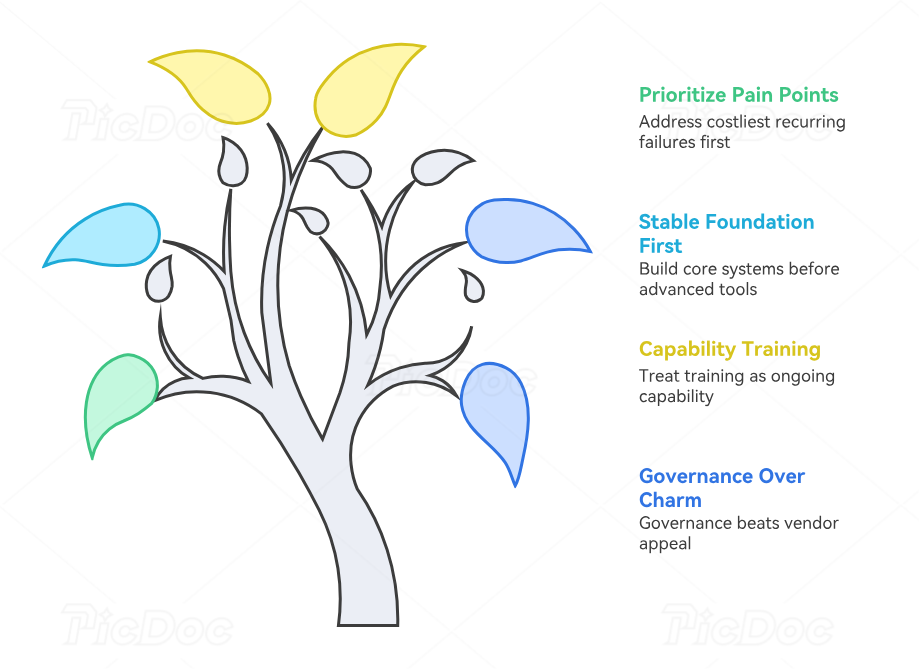
The smartest implementation strategy is not “buy the top-ranked tool first.” It is “identify the most expensive recurring failure in your current operating model, then buy the technology that removes that failure with the least downstream complexity.” If a study is bleeding time through fragmented oversight, invest first in integration and unified operational planning. If recruitment is the true constraint, fix patient sourcing, volunteer flow, and site conversion execution before purchasing more monitoring analytics.
For most organizations, the clean sequence is this. First, stabilize foundational systems: EDC, CDMS, consent control, document governance, and integration points. Second, layer technologies that improve execution speed, such as eSource, remote monitoring, and recruitment intelligence. Third, add advanced optimization tools like retention forecasting, signal analytics, and protocol simulation once the underlying data is trustworthy. Teams that reverse that order usually buy “advanced” tools that end up reporting on broken inputs.
Implementation also fails when training is treated as a launch checkbox instead of a capability program. A platform touching GCP practice, AE handling, regulatory submissions, or safety reporting needs role-based training, clear escalation rules, and leader visibility into where usage breaks down. If nobody owns the last 10 percent of workflow friction, the first 90 percent of technology value never materializes.
The other implementation truth is uncomfortable: governance is more important than vendor charm. Teams need named owners, exception review rules, KPI definitions, change control, site feedback loops, and a decision cadence. That is how technology becomes operating leverage rather than another subscription renewal.
5. The Roles and Careers That Will Gain the Most From This Technology Wave
Technology does not eliminate the need for clinical research professionals. It raises the standard for what “strong” looks like inside each role. The modern CRA is more valuable when they can interpret risk signals, guide site correction, and separate true findings from dashboard noise. The modern CRC becomes more valuable when they can run tighter consent, recruitment, documentation, and participant workflows across digital tools without losing the human touch.
The same is true for clinical trial managers, clinical data managers, regulatory specialists, quality professionals, and pharmacovigilance specialists. The winners will not merely know which platform to click. They will know how technology changes risk, timeline control, documentation quality, patient burden, vendor accountability, and inspection posture.
That is why career growth in 2026 is increasingly tied to cross-functional fluency. Someone who understands monitoring, site operations, data flow, safety review, and project management becomes far harder to replace than someone who only knows one narrow task inside one narrow system.
6. FAQs
-
For most sponsors and CROs, the highest-value investment is not one standalone application. It is the integration layer and operating architecture connecting EDC, CTMS-related oversight, eTMF control, safety systems, and site-facing workflows. Fragmentation quietly destroys more value than most visible errors. If systems do not talk, teams reconcile by hand, dashboards disagree, leaders lose trust in reporting, and every downstream decision gets slower.
-
No. Decentralized capabilities are powerful, but they are not universally appropriate. They perform best when visit burden, geography, retention pressure, or access limitations justify remote models. Teams should align them with patient safety oversight, protocol requirements, consent quality, and monitoring strategy. The mistake is assuming remote automatically means better. The right question is whether remote execution reduces friction without weakening oversight or patient experience.
-
The biggest inspection impact usually comes from better document governance, consent traceability, protocol deviation control, and audit-ready monitoring evidence. That means strong eTMF and documentation discipline, better audit preparation, smarter deviation management, and reliable GCP compliance systems. Fancy analytics matter less than whether your trial can prove who did what, when, under which version, with what follow-up, and where the final record lives.
-
Smaller sites should start with the technology that removes the most manual rework from daily operations. That often means better consent control, cleaner source workflows, tighter document organization, and tools that support patient recruitment, study documentation, regulatory readiness, and site management. Small sites should avoid buying complex platforms that promise enterprise-grade analytics before the basics are stable.
-
AI will replace some low-value manual steps, but not the judgment-heavy parts of these roles. The professionals most at risk are the ones who stay purely transactional. The professionals who rise are those who can interpret outputs, investigate anomalies, escalate correctly, train sites, and improve processes across CRA work, CRC execution, data management, and pharmacovigilance operations. Technology raises the bar. It does not erase the need for strong operators.
-
They buy software before defining the failure mode. A team says it wants AI, decentralization, automation, or dashboards, but it never specifies whether the real problem is recruitment leakage, site underperformance, safety lag, vendor misalignment, or documentation weakness. When the problem is vague, the purchase decision gets driven by demos, not operations. That is how expensive technology ends up producing mediocre outcomes.
