
Virtual Clinical Trials: Why Patients Might Never Visit a Site Again by 2030
Virtual clinical trials are no longer a futuristic side experiment. They are becoming the operating logic behind a broader shift in research: fewer unnecessary site visits, more remote oversight, more participant-facing technology, and more trial activity happening where patients actually live. FDA guidance describes decentralized elements as activities that can occur remotely at locations convenient for participants, including telehealth visits, in-home visits, and local healthcare provider visits. EMA likewise frames decentralized trials around flexibility such as home visits, direct-to-patient medicine shipment, and electronic consent, while ICH E6(R3) explicitly recognizes decentralized designs and varied data sources within modern GCP expectations.
That matters because the real barrier in many studies is not scientific ambition. It is patient friction. Travel, missed work, childcare strain, symptom burden, slow enrollment, dropout risk, and poor site accessibility keep crushing otherwise promising protocols. If virtual clinical trials continue maturing through the rest of this decade, many patients may still interact with investigators, nurses, coordinators, and monitors, but not in the old site-first way. To understand that future, it helps to connect this shift with state of clinical trials 2025 industry trends, clinical research technology adoption, real-world evidence integration trends, and patient recruitment and retention trends.
1. Why Virtual Clinical Trials Are Moving From Optional Innovation to Core Strategy
Virtual clinical trials are gaining force because the traditional site-centric model asks patients to absorb too much operational pain. A trial can be scientifically elegant and still fail because participants cannot keep taking unpaid time off, cannot travel repeatedly while symptomatic, cannot coordinate transport, or simply cannot justify the burden of showing up for tasks that could have been done remotely. That pressure is exactly why leaders across clinical research associate roles and career path, clinical research coordinator responsibilities and certification, clinical trial manager career roadmap, and clinical research project manager career path keep colliding with the same reality: convenience is no longer a nice extra. It is a study execution variable.
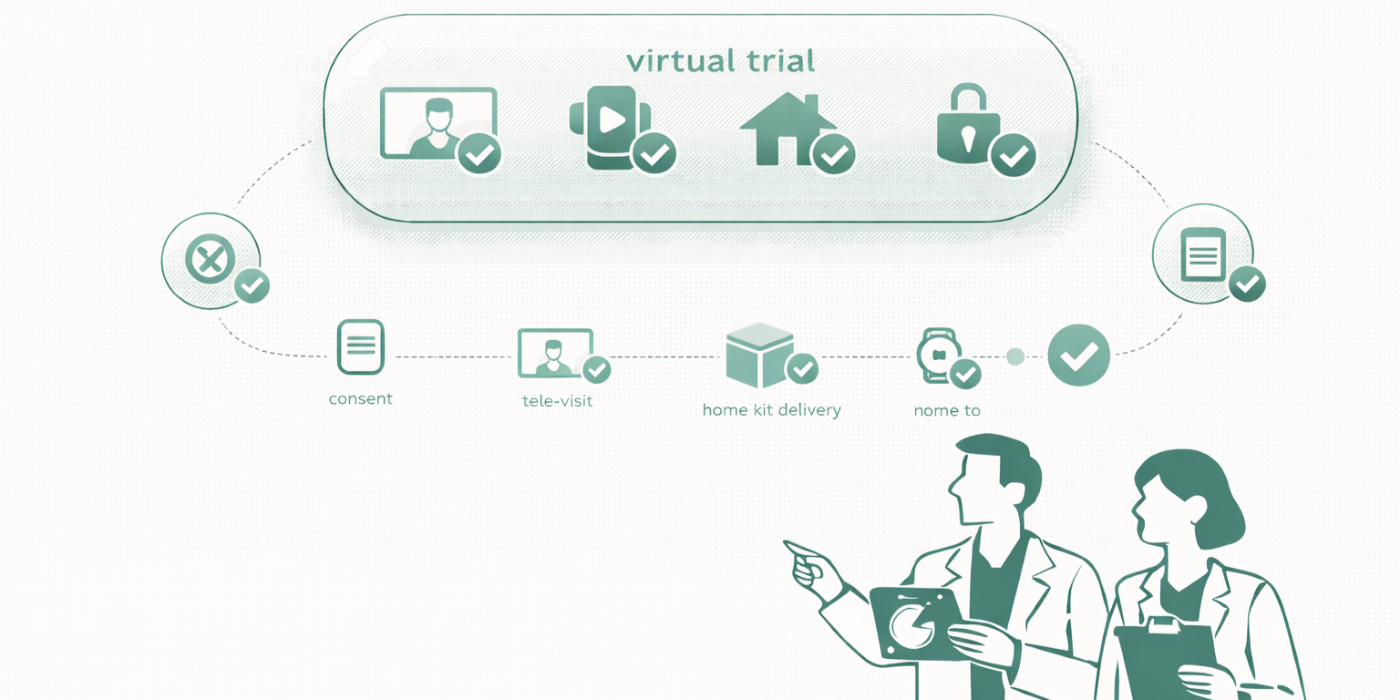
What changes in a virtual model is not the need for rigor. It is the location of trial activity. Consent may be electronic. Visits may be by telehealth. Safety checks may be supported by local providers. Drug accountability may include direct-to-patient logistics. Continuous data may come from wearables rather than sparse site snapshots. Source review may rely on integrated digital systems rather than paper stacks. FDA’s current guidance makes clear that the regulatory standards do not disappear when decentralized elements are used; the same participant protection and data integrity obligations still apply. EMA’s GCP Q&A similarly stresses that role boundaries and investigator responsibilities remain essential even when decentralized approaches are used.
That is why the strongest way to think about virtual trials is not “no rules, just remote.” It is “same accountability, different workflow.” Professionals who miss that distinction often either overhype the model or dismiss it entirely. The better lens is operational redesign: which activities truly require a physical site, and which ones survive better when shifted closer to the patient? That question links naturally with informed consent procedures, gcp compliance essentials for clinical research associates, managing clinical trial documentation, and handling clinical trial audits.
| Virtual Trial Element | How It Works | Main Patient Benefit | Main Operational Risk | What Teams Must Control |
|---|---|---|---|---|
| eConsent | Digital consent workflow with remote review | Less travel and faster onboarding | Poor comprehension | Version control and understanding checks |
| Telehealth visits | Video-based study visits | Reduced visit burden | Assessment inconsistency | Visit scripts and documentation standards |
| Home nursing | Nurses perform protocol tasks at home | Convenience during symptomatic periods | Training variability | Qualification, delegation, oversight |
| Local lab use | Nearby labs replace central site draws | Less travel time | Reference range inconsistency | Lab harmonization and source reconciliation |
| Wearables | Continuous sensor-based data capture | Real-world monitoring | Signal noise | Device validation and missing-data rules |
| ePRO diaries | Patients report symptoms by app | More frequent lived-experience data | Low adherence | Prompt design and compliance monitoring |
| Direct-to-patient IP shipping | Study supplies delivered to home | No pickup visits | Chain-of-custody failure | Temperature, receipt, return tracking |
| Remote monitoring | CRA oversight via digital systems | Faster issue detection | Incomplete source access | Secure source review pathways |
| Home collection kits | Self-collection or assisted sample capture | Greater flexibility | Improper collection technique | Training and sample integrity controls |
| Video-based site training | Remote protocol and system training | Faster activation | Weak retention of critical steps | Competency confirmation |
| Participant portals | Central study dashboard for patients | Clearer communication | Message overload | Role-based communication design |
| Digital reminders | Automated nudges for visits and tasks | Better retention | Alert fatigue | Frequency calibration |
| Local provider partnership | Routine tasks performed near home | Access expansion | Role confusion | Defined responsibilities and documentation |
| Mobile phlebotomy | Sample collection outside main site | Convenient scheduling | Processing delay | Time-to-lab logistics |
| Virtual prescreening | Eligibility checks begin online | Faster recruitment | Incomplete verification | Source-supported eligibility confirmation |
| Digital biomarkers | Passive proxy measures from devices | Earlier trend detection | Overinterpretation | Clinical validation |
| Remote eligibility review | Documents reviewed before travel burden | Less wasted effort | Data privacy exposure | Secure transfer and access controls |
| Remote SAE intake | Digital reporting channels for urgent events | Faster escalation | Missed triage | Escalation workflows and response SLAs |
| Hybrid visit models | Critical visits onsite, routine visits remote | Balanced convenience | Inconsistent workflow mapping | Visit classification by risk |
| At-home drug administration | Some dosing occurs outside site | Less disruption | Administration errors | Suitability criteria and oversight |
| Cloud-based document flow | Trial files shared digitally | Faster access | Version confusion | Audit trail and permissions |
| AI-enabled triage | Systems flag risk patterns for review | Faster prioritization | False reassurance or false alarms | Human review and validation |
| Participant tech support | Dedicated help for devices and apps | Less confusion and dropout | Slow resolution times | Coverage and escalation rules |
| Remote closeout activities | Study wrap-up managed digitally | Faster completion | Loose reconciliation | Final accountability and archival discipline |
| Cross-state telemedicine support | Remote physician interaction across regions | Broader access | Licensing and jurisdiction issues | Local legal and practice mapping |
| Participant-owned data integration | Personal health records feed trial systems | Richer longitudinal history | Verification gaps | Fit-for-purpose source strategy |
2. What Will Actually Push Patients Away From Sites by 2030
Patients will not stop visiting sites because sites become irrelevant. They will stop visiting for many activities because too many visits never needed to be physical in the first place. A medication pickup that can be temperature-controlled and tracked. A routine follow-up that can be handled via telehealth. A diary entry that can happen in an app. A symptom trend that is better captured continuously through a device than once every few weeks in a clinic. By 2030, the pressure will be strongest in studies where burden reduction improves both recruitment and retention without destroying assessment quality. That logic is already visible in FDA’s framing of decentralized elements and in ICH’s effort to make GCP proportionate across evolving designs and data sources.
The real engine behind this shift is not technology by itself. It is patient economics. Every site visit has a hidden price: time off work, transport, parking, fatigue, caregiver coordination, missed school, emotional stress, and symptom disruption. When trials ignore those costs, they create silent exclusion. Patients who live far from major centers, work hourly jobs, care for children, manage mobility issues, or live with unstable symptoms are filtered out before the science even starts. That is why virtual models connect so directly to top emerging markets for clinical trials, why africa is the next big frontier for clinical trials, india’s clinical trial boom, and the countries winning the clinical trial race.
Another driver is data density. Traditional visit schedules capture too little and too late. They flatten real life into narrow site snapshots. A virtual approach can create richer timelines through smart pills and digital biomarkers, the rise of wearable tech in future clinical trials, virtual reality clinical trials, and how augmented reality will turn clinical trials into immersive experiences. But richer data are only useful if they are clinically meaningful, reviewable, and tied to endpoints that matter. That is where primary vs secondary endpoints, biostatistics in clinical trials, case report form best practices, and data monitoring committee roles become non-negotiable.
The final push is competitive pressure. Sponsors, CROs, and tech vendors that keep forcing participants through bloated site routines will lose to models that are easier to join, easier to stay in, and easier to scale. Teams tracking top CRO market share analysis, top 50 remote clinical trial monitoring tools, top 100 clinical data management and EDC platforms, and top 50 contract research vendors and solutions platforms already know the market is moving toward hybrid and virtual-ready operations.
3. The Hard Truth: Virtual Trials Still Fail if Governance Is Weak
Virtual trials only look easy from a marketing distance. In practice, they create a new layer of risk: digital confusion, fragmented source documentation, delayed safety escalation, device nonadherence, home-procedure inconsistency, licensure issues, privacy gaps, and blurred responsibility between sponsors, sites, vendors, local providers, and patients. FDA’s decentralized-trial guidance emphasizes that these studies still require appropriate oversight, clear roles, and fit-for-purpose procedures. EMA’s materials similarly stress that investigator responsibilities do not evaporate just because trial tasks move away from a conventional site.
Safety is the first place weak virtual design gets exposed. If patients are entering symptoms from home, using wearables, interacting with tech support, or seeing local providers outside the main site, who recognizes the emerging adverse event pattern? Who decides whether an event is serious? Who verifies causality inputs, follow-up data, and reporting timelines? A virtual trial that makes reporting easier but triage weaker is not progress. It is a compliance trap. That is why teams must tie virtual design tightly to essential adverse event reporting techniques, drug safety reporting timelines and regulatory requirements, aggregate reports in pharmacovigilance, and mastering regulatory submissions in pharmacovigilance.
Documentation is the second major fault line. Traditional sites have always had documentation problems, but virtual models can multiply them by distributing evidence across portals, apps, telehealth notes, shipment logs, wearable feeds, home nursing records, local lab reports, and sponsor systems. If teams cannot reconstruct exactly what happened, when, by whom, and under what authority, the trial becomes fragile under audit. That is why virtual execution must be anchored in managing clinical trial documentation, managing regulatory documents, clinical trial auditing and inspection readiness, and research compliance and ethics mastery.
Then there is the uncomfortable issue of digital inequality. Virtual does not automatically mean accessible. Some patients lack device literacy, strong connectivity, private space for telehealth, or confidence in remote tech workflows. Others may be overwhelmed by apps, passwords, camera-based assessments, or self-collection kits. A sloppy virtual study can become less inclusive than a well-run site study. The solution is not to abandon virtual design. It is to build support layers, backup workflows, human coaching, and hybrid options. That is where clinical trial volunteer registries and platforms, top patient recruitment companies and tech solutions, clinical research continuing education providers, and clinical research networking groups and forums become unexpectedly useful strategic resources.
4. What Pharma, CROs, and Clinical Ops Teams Must Build Before 2030
The future is not site elimination. It is visit reclassification. Teams need to stop asking whether a study is “virtual” and start asking which activities are best onsite, which are safe and valid remotely, and which should be handled through hybrid local networks. FDA’s guidance explicitly accommodates decentralized elements such as telehealth, in-home visits, and local healthcare provider involvement, while ICH E6(R3) pushes a fit-for-purpose, risk-based approach across evolving designs. That combination points to a more mature model by 2030: not chaos, not total centralization, but structured distribution of trial activities.
For sponsors, the first build is protocol discipline. Too many studies try to bolt virtual tools onto site-first protocols without redesigning burden, endpoints, escalation pathways, or task ownership. A real virtual-ready protocol defines which assessments require direct investigator oversight, which can happen through telehealth, which can be delegated locally, and what evidence is needed to support each activity. That work should be shaped by clinical trial protocol management, informed consent procedures, blinding in clinical trials, and randomization techniques.
For CROs and vendors, the second build is orchestration. A virtual trial lives or dies on how well multiple moving parts stay synchronized: home nursing, eConsent, telehealth platforms, device provisioning, logistics, local labs, remote monitoring, data reconciliation, and safety escalation. Any weak handoff becomes a patient-facing failure. That is why operational leaders need fluency in effective stakeholder communication, clinical trial resource allocation, vendor management in clinical trials, and top 50 remote monitoring tools.
For sites and investigators, the third build is a new oversight muscle. Virtual trials do not reduce responsibility; they redistribute visibility. Investigators must still protect rights, safety, and well-being. CRAs must still identify and escalate risk. CRCs must still maintain process integrity. The difference is that less of the evidence is gathered in a single physical room. That raises the value of professionals who can govern distributed workflows cleanly. It also explains why career growth in this decade will reward people who master how to become a CRA, clinical research monitor career roadmap, senior CRA career path, and clinical compliance officer career guide.

5. Why Patients May Still Visit Sites Sometimes — But Far Less Often
The boldest version of this topic says patients might never visit a site again by 2030. The smarter version says many patients may no longer need to visit a traditional site for most trial activities, especially in studies where safety profile, route of administration, endpoint structure, and technology maturity support remote execution. Some studies will still need physical locations for imaging, complex procedures, first-dose monitoring, specialized equipment, or high-risk interventions. But the center of gravity can still move away from the site even when the site does not disappear.
That distinction matters because overpromising total virtualization hurts credibility. Some therapies require infusion oversight. Some assessments need controlled equipment. Some populations need more in-person support, not less. The real win is not pretending every study can be site-free. The win is stripping out every unnecessary site dependency that exists only because of habit, legacy SOP design, or operational laziness. That is why the future belongs less to “all-virtual” rhetoric and more to intelligent hybrid design tied to why decentralized clinical trials will eliminate 80 percent of traditional research sites, the end of clinical trial monitors how remote AI audits will take over, how AI will predict clinical trial failures before they happen, and AI-powered clinical trials.
Patients will push this transition harder than sponsors do. Once participants experience a study where routine follow-ups happen from home, support is responsive, data capture feels relevant, and logistics respect daily life, going back to heavy site dependence will feel backward. That shift will also affect employer demand. Sponsors will want staff who can run remote oversight. CROs will need stronger hybrid coordinators. Sites will need virtual-first readiness. Data teams will need better fit-for-purpose source strategies. Anyone planning a long career should watch clinical research salary report, top 10 highest-paying clinical research jobs, top 100 CROs hiring CRAs and CRCs, and top 75 remote CRA jobs and programs.
The most likely 2030 outcome is this: site visits become reserved for what truly needs site infrastructure, while everything else is progressively redesigned around the patient. When that happens, the phrase “visit the site” will sound less like the default and more like an exception that needs justification.
6. FAQs About Virtual Clinical Trials
-
A virtual clinical trial is a study that uses decentralized elements so some trial-related activities happen remotely or closer to the participant instead of only at a traditional site. That can include eConsent, telehealth visits, home nursing, wearable-based monitoring, direct-to-patient logistics, and local provider involvement. FDA describes these decentralized elements as remote activities at convenient locations for participants. To understand the operational side, review clinical trial protocol management, gcp compliance essentials for CRAs, informed consent procedures, and managing clinical trial documentation.
-
Probably not completely. The more credible direction is that many routine or lower-risk activities move remote, while specialized, high-risk, or equipment-dependent activities stay onsite. That hybrid future fits current regulator thinking better than an all-or-nothing model. EMA and ICH both support decentralized thinking within continued GCP discipline. For more context, compare decentralized trial predictions, top hospitals and health systems running trials, top academic medical centers with active trials, and remote monitoring tools.
-
Because they reduce travel, schedule disruption, fatigue, and logistical strain while allowing more study participation to happen around real life. That can help both recruitment and retention when done properly. The strongest supporting reading here is patient recruitment and retention trends, clinical trial volunteer registries, top recruitment companies and tech solutions, and clinical research technology adoption.
-
The biggest risks are weak safety escalation, fragmented documentation, poor patient tech support, inconsistent remote assessments, investigational product accountability issues, and role confusion across sites, vendors, and local providers. Those risks are manageable, but only with serious governance. Strengthen this area through drug safety reporting, essential adverse event reporting techniques, clinical trial auditing and inspection readiness, and vendor management in clinical trials.
-
CRAs, CRCs, clinical trial managers, project managers, pharmacovigilance professionals, data managers, regulatory specialists, and compliance leaders all benefit because virtual execution changes monitoring, communication, source strategy, safety handling, and workflow design. Start with CRA roles and career path, CRC responsibilities and certification, clinical data manager roadmap, and regulatory affairs specialist career roadmap.
-
They should start by redesigning protocol burden and role ownership instead of merely adding apps. The first question is not which platform to buy. It is which visits, assessments, and workflows genuinely need a physical site and which can be shifted safely without weakening oversight. FDA’s guidance and ICH’s fit-for-purpose direction both point toward that risk-based approach. Then align operations using effective stakeholder communication, resource allocation mastery, top contract research vendors, and top remote monitoring tools.
