
How to Get a Pharmacovigilance Certification in Arizona: Everything You Need to Know in 2026–27
opportunities for professionals who can evaluate safety information accurately and protect patients throughout a product’s lifecycle. A pharmacovigilance certificate can strengthen your entry into drug safety, safety operations, clinical research, regulatory affairs, and medical information when the curriculum develops practical competence. This guide explains how to select credible training, master individual case safety reports, prepare for E2B(R3), build employer-ready evidence, and pursue Arizona or remote roles using clinical safety monitoring practices, global pharmacovigilance compliance, GCP certification in Arizona, and clinical-research career resources.
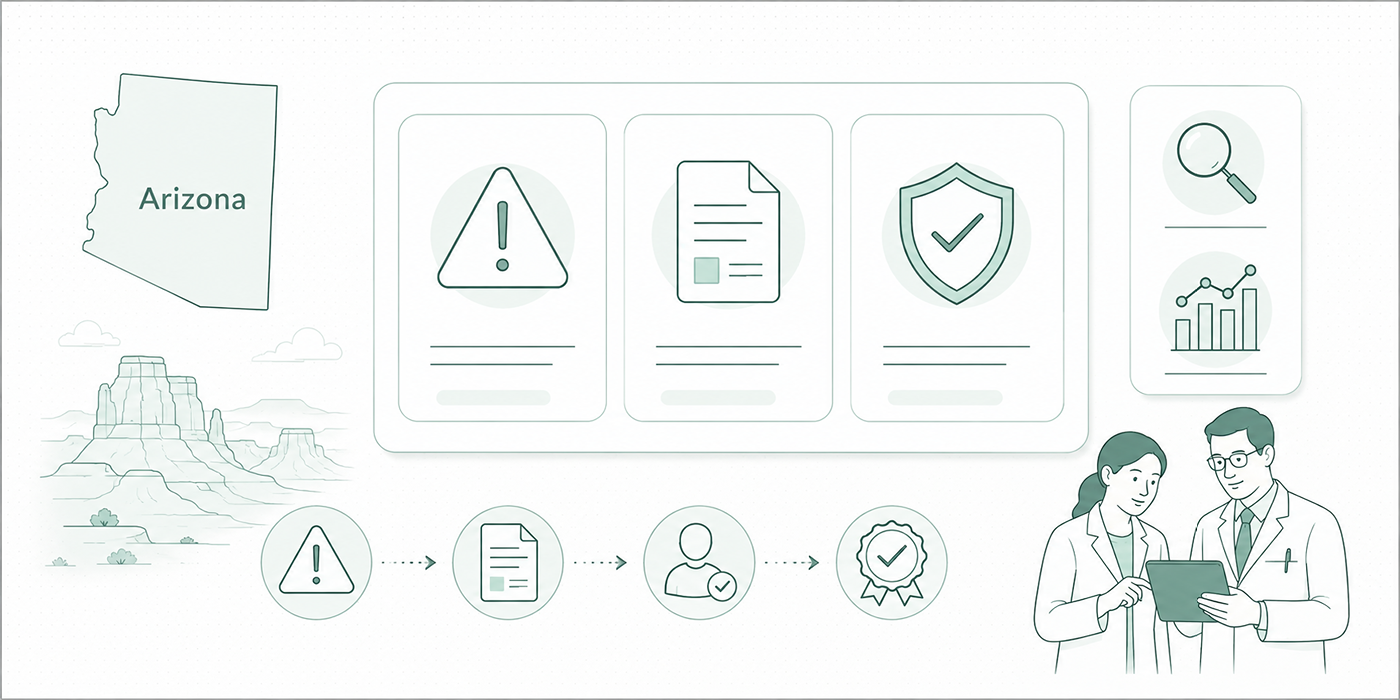
1. What Pharmacovigilance Certification Means in Arizona in 2026–27
Pharmacovigilance covers the detection, assessment, understanding, communication, and prevention of adverse effects and other medicine-related safety problems. The work extends far beyond recording side effects. Safety teams receive reports, determine whether minimum case criteria exist, collect follow-up information, assess seriousness and expectedness, code medical concepts, write narratives, submit reports within applicable timelines, reconcile safety data, investigate signals, support aggregate reports, and maintain inspection-ready records. These functions connect directly with adverse-event reporting compliance, serious adverse event procedures, clinical-trial data integrity, and pharmacovigilance audit preparation.
FDA describes postmarketing safety-data collection and adverse-event reporting as central components of its oversight of drugs and therapeutic biologics. Premarketing trials cannot expose a product to every population, interaction, duration of use, or real-world condition, which means some safety concerns emerge after broader use. FDA’s MedWatch program receives reports of serious reactions, product-quality problems, therapeutic failures, and medication-use errors, while the Sentinel Initiative supports active safety evaluation using electronic healthcare data.
A certificate should therefore develop decision-making competence rather than vocabulary recognition. A learner who knows the definition of an adverse event can still mishandle a case when the reporter provides incomplete dates, an ambiguous product name, several medical conditions, and no explicit causality opinion. Employers need professionals who can separate seriousness from severity, identify missing information, preserve the reporter’s meaning, document follow-up attempts, and escalate a case without inventing facts. Study should connect SAE definitions and timelines, patient-safety principles, protocol-deviation management, and clinical data review.
The 2026–27 reporting environment also raises the value of technical data-standard knowledge. FDA began accepting expedited and non-expedited postmarketing individual case safety reports using ICH E2B(R3), while allowing E2B(R2) submissions during the implementation period through September 30, 2026. Candidates preparing for work that extends into 2027 should understand structured ICSR data, controlled terminology, transmission acknowledgements, case versions, null values, duplicate handling, and the relationship between a safety database and a regulatory gateway.
Arizona applicants can use this transition to differentiate themselves. Many entry-level candidates list “pharmacovigilance knowledge” while remaining unable to explain how a spontaneous report becomes a valid case, why medically important events may qualify as serious, or how a follow-up version differs from a duplicate. Practical competence in global safety compliance, clinical safety monitoring, data-integrity controls, and quality-management systems creates a stronger hiring signal.
Arizona’s life-science community includes biotechnology, medical technology, healthcare, academic research, startups, and established organizations. AZBio describes the state as one of the faster-growing U.S. life-science environments, while its 2026 programming continues to connect biotechnology, healthcare, patient, investor, and innovation communities. That ecosystem can create safety-related work inside pharmaceutical companies, research organizations, device businesses, academic programs, hospitals, consulting operations, and remote national teams.
Most candidates will pursue a provider-issued training certificate or an industry credential rather than an Arizona-specific pharmacovigilance license. Employers may still require additional instruction in company procedures, product knowledge, privacy, Good Clinical Practice, medical terminology, safety-database use, and reporting rules. Your certificate should support those requirements through Arizona clinical-research training, ICH-GCP preparation, regulatory-submission knowledge, and research ethics resources.
2. How to Choose a Credible Pharmacovigilance Certification Program
Begin by deciding which type of credential you need. An introductory certificate suits career changers who need structured exposure to terminology and workflows. An applied case-processing program should develop intake, coding, narrative, follow-up, quality-control, and submission competence. An advanced credential may focus on signal management, aggregate reports, risk management, audits, or global systems. Evaluate each choice against your target role using clinical safety best practices, global regulatory compliance, PV inspection techniques, and clinical certificate comparisons.
The syllabus should explicitly include the ICH E2 family. E2A addresses clinical safety data management and expedited reporting concepts. E2B covers structured transmission of individual case safety reports. E2C addresses periodic benefit-risk evaluation. E2D covers post-approval safety-data management. E2E addresses pharmacovigilance planning, while E2F covers development safety update reports. ICH provides a free training program covering E2A through E2F, which candidates can use to test whether a commercial curriculum has meaningful regulatory depth.
A strong program should also explain the distinction between U.S. and global requirements. FDA systems, MedWatch, postmarketing rules, investigational safety reporting, and REMS belong in U.S.-focused training. EU-oriented work adds Good Pharmacovigilance Practices, EudraVigilance, periodic safety updates, signal management, risk-management plans, and additional monitoring. EMA’s GVP framework spans major pharmacovigilance processes, and revisions continued into 2025–26, including updated material on personal-data masking, risk minimization, and pregnancy or breastfeeding exposure.
Reject curricula built mainly around definitions and multiple-choice recall. Ask the provider whether learners process a complete fictional case, identify missing information, classify seriousness, select medical terms, create a chronology, write a narrative, perform quality control, and explain a reporting decision. Compare those outcomes with SAE reporting procedures, data-review responsibilities, data-integrity expectations, and quality-management strategies.
Check the instructor profile carefully. Useful teaching experience includes case processing, aggregate reporting, signal management, quality assurance, safety systems, regulatory submissions, medical review, audits, or inspection readiness. A broad clinical background can support the course, though learners also need instructors who understand operational safety workflows. Examine whether the program integrates investigator safety responsibilities, sponsor oversight obligations, clinical-trial amendments, and regulatory submission processes.
Verify the certificate itself. It should show your name, provider, course title, completion date, covered curriculum, and assessment result where applicable. Save the syllabus and learning objectives because “pharmacovigilance certification” can describe programs ranging from a short awareness module to months of applied instruction. Employers reviewing applications for remote clinical roles, Arizona clinical research, regulatory affairs, and safety-monitoring work may care more about demonstrated curriculum depth than the certificate title.
Price should be evaluated against deliverables. Valuable outputs include graded case exercises, narrative feedback, coding practice, E2B(R3) instruction, quality-control worksheets, signal assessments, audit scenarios, mentor support, and career tools. A cheaper program becomes expensive when learners finish without anything they can explain during an interview. A premium fee also needs justification through measurable outcomes rather than branding, vague accreditation language, or guaranteed-job claims.
3. The Step-by-Step Process for Earning Certification and Building Practical Evidence
Step 1: Choose a target function. Case-processing roles involve detailed record review, coding, narratives, follow-up, and deadlines. Safety quality roles emphasize procedural compliance, error trends, CAPA, metrics, and inspections. Signal roles require epidemiological thinking, medical review, data interpretation, and benefit-risk analysis. Regulatory-safety roles focus on submissions, commitments, labels, and global requirements. Compare the daily work through clinical safety monitoring, PV regulatory compliance, PV audit preparation, and regulatory affairs mastery.
Step 2: Audit your transferable skills. Nurses and pharmacists may bring medical terminology, medication knowledge, and clinical judgment. Research coordinators may understand adverse events, source records, protocol reporting, and investigator communication. Data professionals may bring reconciliation, quality checks, structured records, and trend analysis. Customer-service or medical-information staff may bring intake, questioning, documentation, and escalation skills. Translate your experience through research-assistant communication, clinical data verification, GCP safety reporting, and clinical quality management.
Step 3: Build a terminology foundation before case processing. Learn body systems, common diagnoses, laboratory terminology, routes of administration, dosage forms, medical abbreviations, outcomes, and seriousness criteria. Practice separating the reported event from the indication, medical history, concurrent conditions, and treatment. Use serious adverse event guidance, clinical data-integrity principles, ethical patient-safety guidance, and clinical-trial templates.
Step 4: Process cases from intake through closure. Begin with simple spontaneous reports, then add missing information, multiple products, several events, pregnancy exposure, medication error, product complaint, hospitalization, and follow-up versions. For each case, record validity, receipt date, source, patient characteristics, product role, event details, seriousness, outcome, reporter causality, follow-up needs, and submission logic. Connect practice with safety-monitoring workflows, global reporting requirements, data-review techniques, and timeline management.
Step 5: Learn E2B(R3) conceptually. Entry-level candidates rarely need to configure a regulatory gateway, yet they should understand why structured fields, controlled terminology, sender and receiver identifiers, case versions, acknowledgements, and validation errors affect submission quality. FDA’s implementation timeline makes this especially relevant for candidates entering the market during late 2026 or 2027. Reinforce the technical concepts through global PV compliance, trial-technology innovations, clinical data integrity, and quality-system controls.
Step 6: Build a fictional portfolio. Create one intake worksheet, two complete case assessments, one narrative, one targeted follow-up questionnaire, one duplicate comparison, one case quality-control checklist, and one introductory signal assessment. Mark every document as a training exercise and use invented data. This solves a painful entry-level problem: candidates can discuss workflows with evidence while avoiding false claims of industry experience. Use clinical-trial template resources, audit-readiness methods, data-review frameworks, and GCP self-assessment tools.
Step 7: Pass the assessment through scenario practice. Explain why a case is valid, defend a seriousness classification, identify the highest-value follow-up questions, organize a chronology, detect conflicting dates, and distinguish a follow-up from a duplicate. Memorized definitions cannot compensate for weak judgment. Prepare through SAE reporting scenarios, protocol-deviation analysis, clinical data verification, and certification-exam time management.
Step 8: Preserve your training evidence. Maintain the certificate, syllabus, assessment score, exercise feedback, E2 topics covered, database topics covered, and any renewal information. Create a credential log showing completion dates and planned refresher dates. This evidence supports applications across Arizona clinical research, pharmacovigilance in neighboring markets, remote safety operations, and global regulatory teams.
4. The Skills Arizona and Remote Employers Are Likely to Test
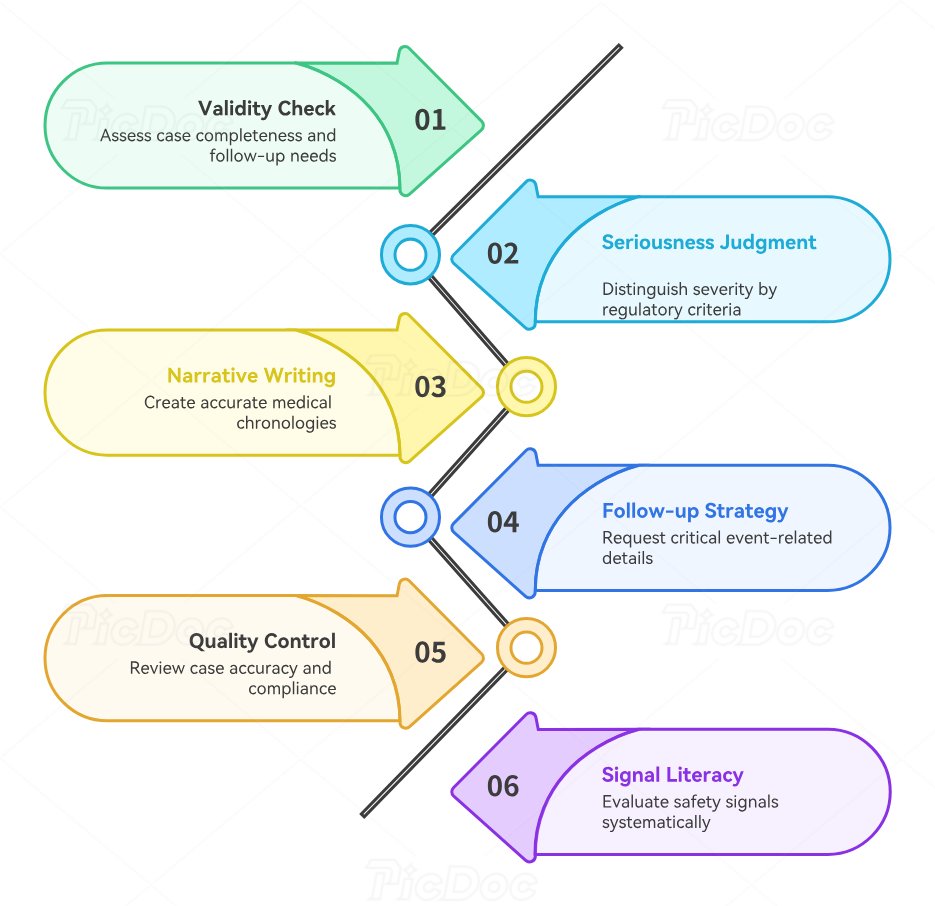
Valid-case reasoning is the first filter. Interviewers may provide a short report such as, “A pharmacist says a patient became dizzy after taking Product X,” then ask what is missing. A strong answer confirms that a potentially identifiable patient, identifiable reporter, suspect product, and adverse event appear present while recognizing that follow-up is needed for dates, dose, indication, medical history, outcome, concomitant medicines, and reporter causality. Demonstrate this logic through adverse-event reporting guidance, SAE reporting procedures, clinical data review, and safety-monitoring practices.
Seriousness judgment receives close attention because errors can affect reporting timelines and patient protection. FDA identifies outcomes such as death, life-threatening events, hospitalization, disability, congenital anomalies, and medically important events when explaining serious adverse events. Candidates should explain that clinical severity describes intensity, while seriousness follows regulatory outcome criteria. Connect the distinction with GCP safety compliance, investigator responsibilities, ethical patient protection, and protocol-deviation escalation.
Narrative writing tests whether you can turn fragmented information into an accurate medical chronology. A useful narrative identifies the patient, indication, relevant history, treatment exposure, event onset, clinical course, investigations, intervention, action taken with the product, outcome, and reporter assessment. Every sentence should help the reviewer understand the event. Copying source text produces clutter, while excessive compression can remove clinically important details. Strengthen this skill through data-verification methods, clinical documentation templates, data-integrity expectations, and quality-management controls.
Follow-up strategy separates thoughtful processors from passive data-entry applicants. The goal is to request information that could change validity, seriousness, expectedness, causality, medical assessment, or regulatory action. For a hospitalization, obtain admission and discharge dates, reason for admission, diagnoses, tests, treatment, outcome, product action, and relevant medical history. For pregnancy exposure, clarify timing, maternal and paternal exposure where relevant, pregnancy progress, outcome, and infant information. Build this judgment through patient-communication methods, safety-reporting procedures, global PV requirements, and patient-safety resources.
Quality control involves more than spelling. Reviewers check case validity, chronology, dates, product-event relationships, seriousness criteria, coding consistency, source fidelity, narrative completeness, follow-up status, submission rules, and documentation. A polished narrative can still conceal a missed seriousness criterion or incorrect receipt date. Prepare with PV audit techniques, quality-management strategy, trial data integrity, and clinical timeline management.
Signal literacy becomes important even when the opening role focuses on case processing. A signal is evaluated through cumulative evidence, clinical context, exposure, biological plausibility, reporting patterns, alternative explanations, and data limitations. FDA’s AEMS public tools and Sentinel support different forms of postmarket safety surveillance, while a REMS may be required for certain medications when additional measures are needed to ensure benefits outweigh serious risks. Study the surrounding concepts through pharmacovigilance best practices, risk-based quality management, global safety compliance, and clinical technology innovations.
5. How to Convert Certification Into an Arizona Pharmacovigilance Career
Create three job-search lanes instead of relying on the title “pharmacovigilance associate.” The first lane should cover direct safety roles such as drug-safety associate, case processor, safety specialist, pharmacovigilance coordinator, and safety quality associate. The second should include adjacent roles such as medical-information specialist, regulatory coordinator, clinical safety assistant, product-complaint specialist, and clinical data coordinator. The third should cover remote or centralized roles with CROs, pharmaceutical companies, biotechnology firms, safety vendors, and consulting teams. Use the clinical career map, professional-association directory, online research communities, and clinical-research salary tool.
Arizona searches should include Phoenix, Scottsdale, Tempe, Mesa, Chandler, Tucson, and location-flexible national positions. Search employer categories alongside job titles: biotechnology, pharmaceuticals, medical devices, clinical research organizations, academic research, healthcare systems, specialty research sites, safety vendors, medical-information providers, and regulatory consulting. Arizona’s growing life-science network makes local industry events and professional communities useful for employer discovery and relationship building. Support networking with the clinical communities directory, professional-association directory, free training directory, and global career-opportunity map.
Replace weak résumé phrases with operational evidence. “Knowledge of adverse events” communicates little. A stronger statement reads: “Completed applied pharmacovigilance training covering valid-case assessment, seriousness, expectedness, causality, targeted follow-up, MedDRA concepts, case narratives, quality control, E2B(R3), and signal fundamentals.” Add transferable experience in healthcare documentation, medication review, data reconciliation, quality assurance, regulatory records, or patient communication. Align the language with clinical safety operations, PV regulatory compliance, audit readiness, and clinical data verification.
Use a 90-day execution plan:
Days 1–15: Select two target roles, analyze 20 vacancies, identify repeated competencies, compare training programs, and complete a baseline knowledge audit. Review clinical safety fundamentals, SAE reporting, global PV compliance, and free clinical-research education.
Days 16–40: Complete core training and process at least ten fictional cases. Include simple spontaneous cases, hospitalization, medication error, pregnancy exposure, product complaint, clinical-trial SAE, literature case, follow-up, and potential duplicate. Use clinical documentation resources, data-integrity guidance, patient-safety principles, and quality-management techniques.
Days 41–55: Pass the assessment, preserve the evidence pack, create the fictional portfolio, and prepare five interview scenarios. Each answer should explain the risk, immediate action, missing information, escalation path, documentation, and preventive control. Practice through PV audit scenarios, clinical safety reporting, data-review exercises, and timeline-management principles.
Days 56–90: Submit targeted applications, contact professionals in safety and regulatory roles, attend Arizona life-science events where practical, and track every application by title, required skill, response, and identified gap. Update the résumé after every ten applications if response remains weak. Expand the search through Arizona clinical-research pathways, remote research opportunities, professional networking resources, and clinical-research communities.
6. Frequently Asked Questions About Pharmacovigilance Certification in Arizona
-
Hiring requirements vary by employer and role. Companies frequently evaluate education, clinical or scientific knowledge, safety training, writing quality, attention to detail, regulatory awareness, and relevant experience together. A strong certificate can document structured preparation, especially when paired with fictional case exercises and transferable healthcare, research, pharmacy, nursing, data, or quality experience. Build supporting knowledge through Arizona clinical-research certification, Arizona ICH-GCP training, clinical safety practices, and global PV compliance.
-
Yes. Online delivery can work well when the program includes graded cases, instructor feedback, scenario-based assessment, technical support, and verifiable documentation. Evaluate the learning activities rather than relying on delivery format. Compare the program against clinical certificate options, free research-training resources, safety-monitoring competencies, and PV audit-readiness requirements.
-
Programs vary from brief awareness modules to comprehensive courses requiring several weeks or months. Time spent becomes valuable when it produces reliable case-processing, medical-writing, coding, quality-control, and regulatory reasoning. A newcomer should allow additional time for medical terminology, seriousness assessment, follow-up strategy, and structured case practice. Reinforce training with SAE reporting guidance, clinical data review, global pharmacovigilance requirements, and clinical quality systems.
-
Many safety roles accept varied educational backgrounds, though requirements depend on the level and function. Medical review and some signal or benefit-risk positions may require advanced clinical credentials. Case processing, operations, quality, data, and coordination roles may accept candidates from life sciences, pharmacy, nursing, public health, clinical research, regulatory affairs, or related disciplines. Strengthen role fit through clinical safety training, research-assistant communication, clinical data-integrity knowledge, and regulatory submissions.
-
Clinical research evaluates investigational products through protocols, sites, investigators, participants, monitoring, and trial data. Pharmacovigilance focuses on safety information across development and postmarketing use. The functions overlap through adverse-event collection, SAE reporting, safety reconciliation, investigator communication, aggregate reporting, and risk assessment. Compare clinical-trial safety monitoring, investigator GCP responsibilities, site-monitoring workflows, and global PV compliance.
-
Conceptual knowledge creates a meaningful advantage for 2026–27 applicants. You should understand that E2B(R3) structures ICSR information for electronic exchange, uses defined data elements, supports case versions, and generates transmission acknowledgements or validation errors. FDA’s transition makes this especially relevant for work beginning in late 2026 or 2027. Build context through PV regulatory compliance, clinical technology analysis, data-integrity controls, and quality-management methods.
